




















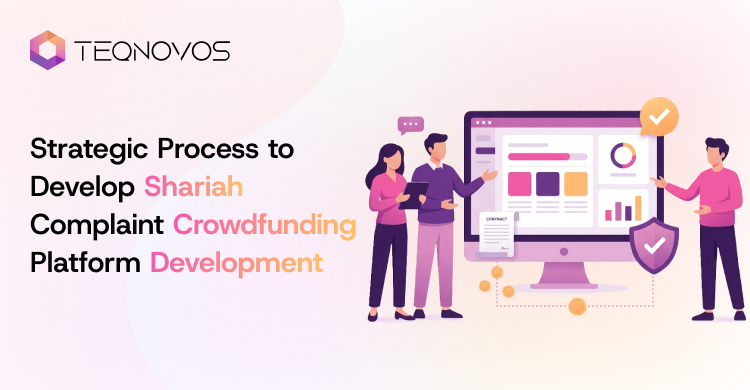
Strategic Process to Develop Shariah-Compliant Crowdfunding Platform Development
Islamic finance is moving into a stronger digital phase. Investors want funding models that follow ethical rules and give clear control over money flow. Businesses also need platforms that can manage and review Shariah in one secure system.
The technical challenge does not come only from calculations. It comes from the way every product choice affects Shariah compliance. Riba means interest, and it must stay outside the funding flow. Zakat means obligatory charity, and it needs a clear calculation model. A standard crowdfunding system cannot meet Islamic finance rules through later fixes. Contract flows, screening tools, purification rules, and compliance checks must be built into the platform before the first user joins.
This makes Shariah compliant crowdfunding platform development important for startups, real estate firms, and social ventures that want to raise funds through halal models. A strong platform must place compliance inside the product structure. It cannot treat Shariah rules as a later add on.
This guide explains the strategic process to build a trusted crowdfunding platform with clear features and growth-focused planning.
Why Shariah Compliant Crowdfunding is Gaining Momentum
The growth of Islamic finance has changed how many investors view funding. They now look for models that support ethical income and transparent project ownership. This demand has made Shariah compliant platform development relevant for businesses that want trusted capital access.
1. Rising Demand for Ethical Finance
Shariah crowdfunding is growing because investors want finance models that feel clear and value driven. Many users no longer focus only on returns. They also want to know where their money goes and how each project earns income. This shift has increased demand for funding platforms that follow Islamic finance rules.
2. Interest Free Funding Models
A halal crowdfunding platform gives businesses a way to raise capital without interest based lending. It can support startups, real estate projects, social ventures, and small businesses through fair funding structures. The model works better when each campaign follows clear screening rules and every investor understands the risk before funding.
3. Strong Digital Adoption
Digital adoption is also pushing this market forward. Investors expect simple onboarding with secure payment platforms and clear portfolio tracking. Businesses need faster approval flows and better campaign control. A modern platform brings these needs into one trusted system.
4. Growth of Islamic Fintech
The rise of Islamic fintech platform development has made this space more practical for founders and financial firms. Platforms now are able to combine compliance checks along with user verifications and reporting tools, all in one place. This makes Shariah based crowdfunding easier to manage at scale.
5. Trust as the Main Driver
This momentum is not only about technology. It is also about trust. Investors want ethical funding options that match their beliefs. Businesses want access to capital without conventional debt models. A well-planned platform serves sides with clarity and value.
Understanding Shariah Principles in Crowdfunding
Shariah based crowdfunding follows a clear financial framework. Each transaction must follow Islamic finance rules. The goal is to protect the fairness and reduce related risks while avoiding prohibited income sources. A platform must build these principles into its core system.

1. Riba Free Structure
Riba means interest, which is not allowed in Islamic finance. A Shariah compliant crowdfunding software must avoid fixed return lending models. The platform should use profit sharing or asset backed structures. This allows investors to earn returns based on real business performance.
- Avoid fixed interest returns
- Use profit sharing agreements
- Link funding to real assets
- Ensure fair risk distribution
2. Gharar Control
Gharar means excessive uncertainty. Every campaign must present clear project details. Investors should know how funds will be used. They should also be informed of the risks involved and expected returns. The platform must support transparent disclosures and structured documentation.
- Provide full project transparency
- Define risks before investment
- Share clear fund usage plans
- Maintain structured documentation
3. Asset Backed Funding
Shariah compliant funding should link to real assets or services. This reduces speculative investment. It also ensures that money flows into productive activities. Real estate and business ventures are common use cases in such models.
- Connect funding to real assets
- Reduce speculative transactions
- Support productive sectors
- Improve investor confidence
4. Profit Sharing Models
Islamic crowdfunding often uses profit sharing agreements. Investors earn returns based on actual profit. not fixed interest. This creates a fair relationship between fundraisers and investors. It also supports sustainability.
- Share profit based on performance
- Avoid guaranteed returns
- Align investor and business goals
- Support extended growth
5. No Maysir Policy
Maysir means gambling or speculative income. A platform must avoid funding models that depend on chance based outcomes or unclear return expectations. Investments should link to real business activity and measurable performance.
- Avoid speculative investment models
- Remove chance based returns
- Link funding to real outcomes
- Ensure a clear return structure
6. Shariah Approval
Each platform must involve a Shariah board. This board reviews contracts and financial flows. Approval ensures that the platform follows Islamic rules at every stage. Regular audits help maintain compliance over time.
- Conduct Shariah board reviews
- Approve all financial contracts
- Audit platform operations regularly
- Maintain ongoing compliance
To support transparency and secure transactions, many platforms also explore solutions offered by a blockchain development company. Blockchain can create clear records to improve trust between investors and fundraisers.
Types of Shariah Compliant Crowdfunding Platforms
A Shariah based funding model can take different forms based on the project goal. Each model must avoid interest, gambling, and unclear returns. The right structure depends on the asset type and revenue model.
1. Donation Crowdfunding
Donation based crowdfunding supports social causes and community programs. Investors do not expect financial returns. This model works well for welfare campaigns and education support. It can also support medical aid and nonprofit projects. The platform must still check every campaign to confirm that funds support halal activities.
2. Reward Based Crowdfunding
Reward crowdfunding allows backers to support a project in exchange for a product or service. It suits startup creators and product launch campaigns. The reward must be clear and fair. The platform should also define delivery terms before users contribute funds.
3. Equity Based Crowdfunding
This model of crowdfunding gives investors ownership in a business or project. It supports startups and growing companies in need of capital. The platform must screen each business activity before approval. It also needs clear profit sharing terms and transparent investor rights.
4. Profit Sharing Crowdfunding
Profit sharing crowdfunding is common in Islamic finance. Investors earn returns based on actual business profit. The model avoids fixed interest and supports fair risk sharing. This type works well for real estate and small business funding, where income can be tracked clearly.
5. Real Estate Crowdfunding
This crowdfunding allows investors to fund property backed projects. The asset based nature makes it suitable for many Islamic finance models. Businesses can also explore real estate tokenization platform development when they want fractional ownership and transparent asset tracking.
6. Debt-Free Funding
Some platforms support businesses through debt-free capital structures. These models use trade or partnership-based agreements instead of interest loans. This makes Islamic crowdfunding platform development useful for founders who want growth capital without conventional debt.
A strong platform supports one model or combines multiple models. The key is to design every workflow around compliance and user trust. This makes crowdfunding platform development more complex than a standard funding website.
Build a secure Shariah compliant crowdfunding platform with Teqnovos working on your project
Schedule a CallStrategic Process to Build a Shariah Compliant Crowdfunding Platform
Building a Shariah compliant crowdfunding product needs clear planning before design and coding begin. The process must connect finance rules with user needs and platform security. Each step should reduce compliance risk and improve investor trust.
Step 1. Define the Platform Model
The business must first decide the funding model. Choose from the various models available that suits the best for scope and goal. This decision shapes the contract and user roles. It also defines the revenue roles and compliance checks.
Step 2. Validate Shariah Rules
A qualified Shariah board should review the platform model. It should check revenue flow campaign rules and user agreements. This helps the team avoid interest uncertainty, gambling, and prohibited business activity.
Step 3. Build the Product Roadmap
A clear roadmap helps the team plan features in the right order. The product roadmap should include all the features and reporting requirements. This stage also helps define the first version of the platform.
Step 4. Plan the Platform Architecture
The architecture must support security and future growth. It should handle all the data related to users and compliance. For Islamic fintech platform development, the system also needs strong access controls and audit trails.
Step 5. Design User Workflows
The platform should make every action simple. Fundraisers should create campaigns with clear details. Investors should review risks and expected returns before funding. Admin teams should approve campaigns through a structured review panel.
Step 6. Develop Core Modules
The development should be able to build core modules to make the platform work seamlessly. Businesses can also hire dedicated developers to manage secure platform logic and fintech workflows with better precision.
Step 7. Test Security and Compliance
Testing must cover more than bugs. The team should test fund flow and campaign approval rules. This step ensures that Shariah compliant crowdfunding platform development meets business and compliance needs.
Step 8. Launch and Improve
The platform should launch with an MVP first. The team can track user behavior and campaign quality along with investor feedback. These insights help improve features and support platform growth.
Key Features of a Shariah Compliant Crowdfunding Platform
A strong platform must support investors, fundraisers, compliance teams, and admins in one place. Each feature should make financial activity clear. It should also protect the fund flow and maintain trust across the funding journey.

1. Shariah Board Oversight
A Shariah board reviews the platform model, campaigns, contracts, and financial flows. This board helps confirm that each activity follows Islamic finance rules before it reaches investors.
- Review all funding models
- Approve campaign contracts
- Audit platform operations
- Maintain ongoing compliance
2. Halal Investment Screening
A halal crowdfunding platform must screen every project before approval. The system blocks businesses linked to alcohol and gambling. It also excludes industries related to pork and adult content.
- Check business activity
- Block haram industries
- Verify fund usage plans
- Approve only eligible campaigns
3. Riba Free Funding Flow
The platform must avoid fixed interest based returns and lending models. It should support fair structures that link returns to real trade assets or business performance.
- Avoid interest based lending
- Remove fixed return models
- Support ethical funding terms
- Link returns to real activity
4. Profit and Loss Sharing
Musharakah means partnership funding. Mudarabah means one party provides capital while another manages the business. These models allow investors to share real profit and risk.
- Share profit by agreement
- Accept real business risk
- Avoid guaranteed returns
- Support fair partnerships
5. Trade Based Funding
These structures help platforms support asset funding without using interest loans. In an Ijarah model, the platform supports lease funding where investors earn from a rental structure.
- Support trade based contracts
- Enable asset financing
- Define profit margins clearly
- Reduce interest based risk
6. Purification of Earnings
Purification of earnings means identifying any minor non permissible income and donating it to charity when required. This feature helps protect platform integrity and investor trust.
- Track income sources
- Flag non permissible income
- Support charity allocation
- Keep records for review
7. Investor Onboarding
The platform should verify every investor before the fund transfer starts. KYC confirms user identity. AML helps detect suspicious fund movement.
- Verify investor identity
- Check the source of funds
- Reduce fake account risk
- Support safer onboarding
8. Campaign Screening
Every campaign should pass a structured review before it goes live. The platform must check the project details and the risk involved with expected returns.
- Review project details
- Check risk disclosures
- Verify campaign documents
- Approve campaigns before launch
9. Secure Management
Payment flow must support approved funding structures. It should protect sensitive financial data and track each transaction with clear status updates.
- Support secure fund transfers
- Track payment status
- Manage escrow based flows
- Enable safe refund handling
10. Fraud Checks
Platforms can use AI software development services to support document checks and fraud detection. This helps teams reduce manual work and improve approval accuracy.
- Detect risky activity
- Review documents faster
- Flag suspicious behavior
- Improve approval accuracy
11. Secure Ownership
Tokenization means converting ownership rights into digital units. It helps platforms manage fractional ownership asset records and investor share tracking with more transparency.
- Support fractional ownership
- Track asset records
- Improve ownership visibility
- Strengthen investor trust
12. Reporting and Audit Logs
Every major platform action should be recorded. Audit logs help track approvals and compliance actions. These records support Shariah reviews and regulatory checks.
- Record user actions
- Track contract updates
- Store approval history
- Support audit reviews
Common Development Challenges in Shariah Compliant Crowdfunding
Building a Shariah based crowdfunding product is complex because it must meet two demands at the same time. The platform must follow fintech rules and follow Islamic finance principles with clear governance. This makes planning more detailed than standard platform delivery.
1. Regulatory Alignment
A Shariah compliant investment platform must follow Islamic finance rules and regional financial laws. This can create confusion when local rules do not clearly define Islamic crowdfunding. The development plan must account for legal review and Shariah approval before launch.
2. Framework Gaps
Many markets still lack a single framework for Islamic crowdfunding. This makes product design sensitive. A platform may need different approval flows for different regions. The business must also document each rule clearly so teams manage campaigns and investor terms without confusion.
3. Governance Costs
Shariah governance requires qualified scholars to conduct regular audits. These needs can raise development and operating costs. Small platforms may find this difficult in the early stage. A strong workflow can reduce manual effort while still keeping expert review in place.
4. Interest Free Models
The platform cannot use standard interest based lending logic. Riba must be avoided in Islamic finance. Developers must build models such as Musharakah and Mudarabah. These models need clear funding flow and risk sharing terms.
5. Campaign Screening
Every campaign must pass strict screening before approval. The platform must block projects linked to gambling and conventional interest based finance. It must also check mixed income sources and unclear business activities. This can slow onboarding, but it protects platform trust.
6. Trust Protection
Investors need strong proof that each project is real and compliant. The platform must reduce fake campaigns and misleading return claims. It should support identity checks and audit logs. These features help build confidence in a newer funding model.
7. Technology Barriers
Crowdfunding platform development needs a secure infrastructure and reliable payment logic. Shariah rules add another layer to this build. Smart contracts and reporting tools must match compliance needs. Poor integration creates fund flow errors or unclear ownership records.
8. Limited Liquidity
Some Islamic crowdfunding models do not provide easy exit options for investors. This can reduce liquidity. The platform should explain holding periods and exit rules. It should also explain payout timelines and resale options if they apply.
9. Investor Education
Many users still understand conventional finance better than Islamic finance. The platform must educate users without making the journey difficult. Clear content risk notes and simple dashboards help investors understand how returns work.
10. Platform Scaling
The platform needs regular updates after launch. Compliance rules may change. New campaigns may need better screening. User traffic may also grow faster than expected. Businesses can use offshore software development services to support testing and scaling with flexibility.
Bring your halal crowdfunding idea to life —with a secure fintech build.
Schedule a CallConclusion
Shariah compliant crowdfunding platform development requires more than a funding website. It needs a clear structure for Shariah review and transparent profit sharing. Each workflow must support ethical finance rules from the first planning stage.
A successful platform should balance compliance and long-term growth. It should also help investors understand how funds move and how returns are earned. Businesses that plan these details early build a stronger product with fewer compliance risks and better market confidence.
Connect with Teqnovos to build a platform focused on trust and sustainable growth. Book a free consultation call with us today!