



















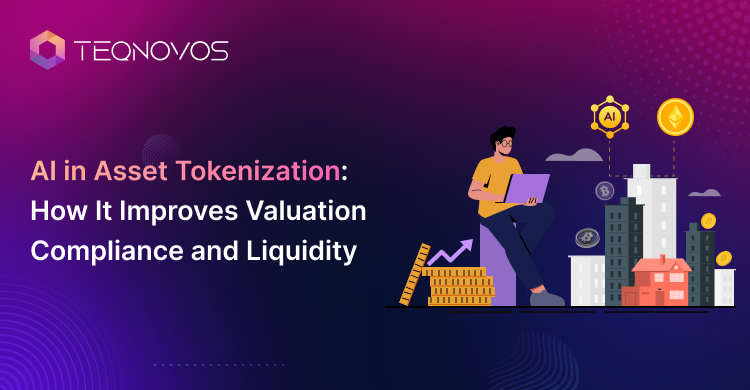
AI in Asset Tokenization: How It Improves Valuation Compliance and Liquidity
Tokenized assets are becoming a serious part of modern finance. Businesses now use digital ownership models to make assets easier to divide, manage, and trade. This growth is especially visible in real estate, private equity, luxury assets, and fund based investment models. As adoption grows, the market needs stronger systems that can support trust at scale. Businesses that need a wider understanding of asset tokenization can explore its process benefits, use cases, and risks before building an AI-powered model.
Yet major challenges still remain. Asset valuation can change due to market trends, demand for asset condition, and investor activity. Compliance also needs constant checks across investor verification, transaction records, and legal controls. Liquidity remains another concern because tokenized assets still need active buyers, clear pricing, and trusted market access.
This is where AI in asset tokenization creates real value. Artificial intelligence can review asset data, detect risks, and support better pricing decisions. It can also improve investor confidence through smarter checks and clearer insights. For businesses exploring real world asset tokenization, the real question is how AI is enhancing tokenized asset valuation and liquidity while making platforms more secure and scalable.
What Makes AI Important in Asset Tokenization?
Tokenized asset systems need more than digital ownership records. They need intelligence that can read asset data, assess market behavior, and support better decisions. This is where AI in tokenization becomes valuable for businesses that want stronger control over pricing risk and investor trust.
An asset tokenization platform handles many moving parts at once. It manages asset records, investor profiles, and transaction activity. Without smart analysis, teams may struggle to understand how each asset performs after launch. AI can review these signals and turn raw platform data into useful business insights.
AI in asset tokenization also improves pricing accuracy. It can study asset condition, market trends, and investor demand. This helps teams adjust valuations with more confidence instead of relying only on delayed reports or manual review.
Compliance is another major area. AI can support investor screening, transaction monitoring, and risk alerts. This helps businesses detect unusual activity faster and keep better control over platform operations.
For RWA tokenization, the value becomes even stronger. Real world assets often include legal documents, physical asset data, and market performance details. AI helps connect these layers and makes the platform more responsive. It gives businesses a clearer view of asset quality, investor behavior, and liquidity potential.
How AI Improves Compliance in Tokenized Asset Markets
Compliance is one of the biggest gaps in tokenized asset markets. Many platforms focus on valuation and liquidity first. Yet tokenized assets still need strong legal control and daily operational checks. This is where AI in asset tokenization can support safer platform growth.
Investor Verification and Risk Screening
Tokenized asset platforms need clear investor checks before ownership access. Artificial intelligence can support KYC checks and AML screening. It can review identity records, risk profiles, and eligibility rules. This helps businesses reduce weak onboarding and protect investor trust.
Smart Compliance Monitoring
Compliance does not stop after onboarding. Every transaction needs review. Every ownership change needs control. AI in tokenization can monitor activity across the platform and flag unusual patterns faster. It can detect suspicious transfers, unusual wallet behavior, and high-risk investor activity. This gives compliance teams better visibility without slowing the user journey.
Audit Ready Transaction Records
An asset tokenization platform must keep clear records for internal teams, regulators, and partners. AI can organize transaction logs, ownership updates, and approval trails. It can also help teams search records faster during audits. This makes reporting easier and reduces manual review pressure.
Regulatory Rule Mapping
Different markets follow different rules. Investor eligibility, asset classification transfer limits, and disclosure needs may change by region. AI can help map these rules across workflows and support alerts when a transaction needs extra review.
For RWA tokenization, this control becomes even more important. Real world assets often involve legal ownership, physical documents, and investor restrictions. AI helps connect these layers into one smarter compliance system. It does not replace legal review. It strengthens the checks that keep tokenized asset markets more transparent, secure, and ready for growth.
Power asset growth with AI. —launch smarter tokenization today
Schedule a CallHow AI Supports Liquidity in Tokenized Assets
Tokenization can make assets easier to divide and transfer. Yet liquidity needs more than fractional ownership. Buyers still need clear pricing, trusted records, and enough market access. Sellers also need better timing and stronger visibility before they exit a position. This is where AI in asset tokenization helps platforms move from basic ownership access to smarter market participation.
Better Buyer and Seller Matching
AI can study investor profiles, asset preferences, past activity, and risk appetite. It can then support better matching between buyers and sellers. This helps platforms show the right assets to the right investors. It also reduces friction in secondary transactions.
Market Demand Forecasting
AI powered asset tokenization can track demand signals across asset types, investor behavior, and market movement. These insights help businesses understand when interest is rising or slowing. This gives platform teams better control over pricing offers and asset release strategies.
Secondary Market Insights
Liquidity often depends on how well a secondary market performs. AI can review trading patterns, price changes, and buyer activity. It can also flag assets that may need better positioning or updated valuation support. This helps teams improve visibility across tokenized asset performance.
Smarter Liquidity Planning
Real world asset tokenization needs careful exit planning because physical assets can carry legal valuation and transfer limits. AI can help analyze portfolio signals and support better decision-making for asset holders. It can also help businesses plan liquidity windows based on investor demand and market readiness.
For RWA tokenization, liquidity grows when investors trust the asset data and market process. AI supports that trust through clearer insights, smarter matching, and stronger pricing intelligence.
How Businesses Can Build an AI-Powered Asset Tokenization Platform
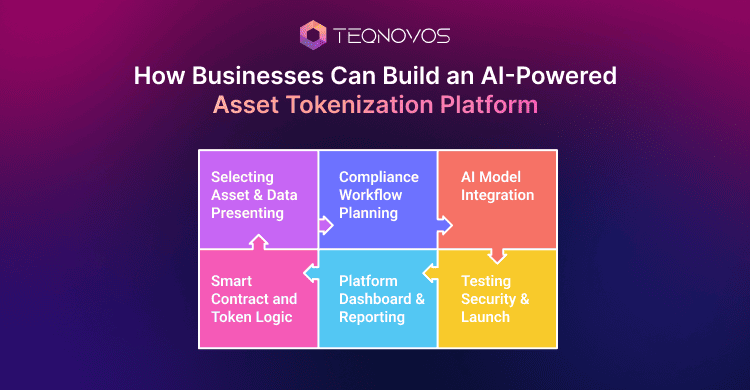
Asset Selection and Data Preparation
Businesses should start by selecting assets with clear ownership value and market demand. Each asset needs proper records before tokenization starts. This can include ownership documents, valuation reports, revenue history, and asset condition details. Clean data helps AI models produce better pricing, risk, and liquidity insights.
Compliance and Investor Workflow Planning
A strong platform needs clear compliance workflows from the beginning. Teams should plan investor onboarding eligibility checks, AML screening, and approval steps. This helps the platform control who can invest, trade, or receive ownership benefits. It also supports audit readiness and reduces operational gaps after launch.
AI Model Integration
AI should support business decisions across the platform. Companies can add valuation models, risk scoring tools, document review systems, and liquidity analytics. These features help teams review asset performance faster. They also support better decisions around pricing, investor activity, compliance alerts, and market demand. Businesses can also use AI software development services to add valuation models, risk scoring tools, and liquidity analytics to tokenized asset platforms.
Smart Contract and Token Logic
Token logic should match the asset model. Businesses need to define ownership rights, payout rules, transfer limits, and secondary market controls. Smart contracts must also go through proper testing before launch. This helps protect investors and reduces risks linked to faulty automation. A trusted blockchain development company can help businesses build secure smart contracts, ownership flows, and token logic for scalable platforms.
Platform Dashboard and Reporting
Admin teams need a dashboard that brings key platform data into one place. The system should show asset performance, investor activity, and ownership changes. A clear dashboard helps decision makers manage the platform with better visibility and less manual work.
Testing Security and Launch
Before launch, businesses should test every major layer of the platform. This includes data accuracy, smart contract logic, and investor workflows. Other important functionalities include compliance checks, payment flows, and dashboard reporting. Security testing is also essential because tokenized assets involve ownership rights and financial movement. Post-launch monitoring helps teams improve the platform as asset activity grows. Companies that need faster execution can hire fintech developers to build secure investor workflows, compliance modules, and asset dashboards.
Key Features of an AI Powered Asset Tokenization Platform
A modern asset tokenization platform needs more than token creation and ownership records. It needs smart features that support valuation control, compliance checks, and market movement. AI powered asset tokenization helps businesses build stronger systems with better insights and faster decision support.
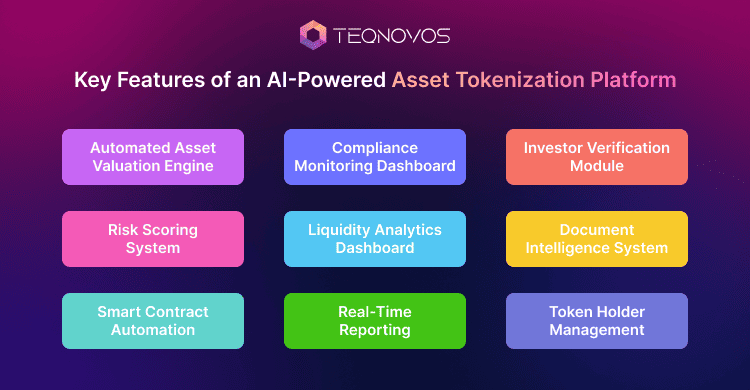
- Automated asset valuation engine
The platform can study asset history, market demand condition reports, and comparable records. This helps teams support more accurate pricing decisions. - Compliance monitoring dashboard
Businesses can track investor checks, transaction activity approval status, and risk alerts in one place. This improves operational control across the platform. - Investor verification module
The system can review identity records, eligibility rules, wallet activity, and risk profiles. This helps reduce weak onboarding and supports safer investor access. - Smart contract automation
The platform can automate ownership transfers, dividend logic, payment rules, and investor rights. This reduces manual work and supports faster execution. - Risk scoring system
AI can review asset behavior, transaction patterns, and market signals. This helps teams detect issues before they affect platform trust. - Liquidity analytics dashboard
Businesses can track buyer interest, secondary market activity, and pricing movement. This supports better exit planning and stronger market access. - Document intelligence system
A real world asset tokenization platform often handles asset papers, ownership records, contracts, and compliance files. AI can read, classify, and organize these documents for faster review. - Real-time reporting
Platform teams can view asset performance, investor actions, and compliance status. This supports faster decisions and clearer business visibility. - Token holder management
The system can manage ownership updates, investor rights communications, and portfolio records. This gives businesses a cleaner way to manage tokenized communities.
These features show why AI in tokenization matters for scalable platforms. It helps businesses move beyond static records and build systems that can analyze, monitor, and improve asset operations over time.
AI in Real World Asset Tokenization Use Cases
AI in real world asset tokenization supports many high value markets where assets need better pricing control, stronger records, and trusted investor access. It helps businesses manage complex asset data and improve decisions across each tokenized ownership model.
Real Estate Tokenization
Real estate assets depend on location, demand, rental income, and market trends. AI can review these signals and support better valuation updates. It can also help investors compare property based tokens with clearer performance insights. Businesses planning property-based investment models can also explore real estate tokenization platform development for secure digital ownership and investor access.
Private Equity Tokenization
Private equity assets often have limited access and slower liquidity. AI in asset tokenization can help platforms review company performance, investor eligibility, risk exposure, and ownership activity. This gives fund managers better control over private market participation.
Luxury Asset Tokenization
Luxury watches, art, cars, diamonds, and collectibles need strong authenticity checks. AI can support document review, ownership tracking, and pricing analysis. It helps platforms build more trust around high value goods that often face verification issues.
Commodity Tokenization
Commodities need active tracking because values change with supply, demand, and global market movement. AI can help monitor pricing patterns and support better decisions across gold, agriculture, and metal backed tokens.
Infrastructure Asset Tokenization
Infrastructure projects involve long-term value and complex investor structures. Real world asset tokenization can make these assets easier to access. AI can support risk review, revenue forecasting, project reporting, and compliance checks.
Invoice and Revenue-Based Tokenization
Businesses can tokenize invoices, contracts, or future revenue streams. AI can review payment history, customer reliability risk levels, and expected cash flow. This helps platforms support smarter asset selection and stronger investor confidence.
Unlock smarter asset ownership. —launch an AI powered platform
Schedule a CallChallenges Businesses Should Consider Before Using AI in Tokenization
AI in tokenization can improve decision-making, but it needs the right planning. Businesses should understand the limits before they add AI to tokenized asset systems.
Data Quality Issues
AI depends on accurate asset data. Poor records, weak ownership details, and missing investor information can affect results. Clean data helps the system support better pricing, risk checks, and reporting.
Model Bias and Human Oversight
AI can produce weak outputs when it learns from limited or uneven data. This can affect risk scoring, pricing signals, and investor recommendations. Teams should review AI outputs often and keep human oversight in every critical workflow.
Legal and Regulatory Uncertainty
Tokenized assets can follow different rules in each region. A real world asset tokenization platform must support investor eligibility, transfer limits, and ownership records. AI can support these checks, but legal review should still guide the final process.
Market Depth Limitations
Liquidity depends on real buyer demand. AI can forecast interest and study market signals. It cannot create active buyers on its own. Businesses need strong market access and investor trust.
Smart Contract Security
Every asset tokenization platform needs secure smart contracts. Ownership transfers, payment logic, token rules, and investor rights must go through proper testing and audits.
Integration Complexity
AI in asset tokenization works best when asset data, compliance workflows, investor systems, and reporting tools connect smoothly. Businesses should plan these layers early to avoid platform gaps after launch.
Conclusion
AI in asset tokenization is changing how businesses manage digital asset ownership. It brings more intelligence to valuation, compliance, and liquidity. Tokenized assets need accurate pricing, stronger checks, and better market access. AI supports these needs through data analysis, risk alerts, compliance monitoring, and liquidity insights.
A smart asset tokenization platform can help businesses move beyond basic token creation. It can track asset performance, review investor activity, and improve transparency across each transaction. This makes tokenized asset systems more reliable and easier to manage at scale. Teqnovos helps companies create scalable systems that support smarter valuation, stronger compliance, and better liquidity control.