













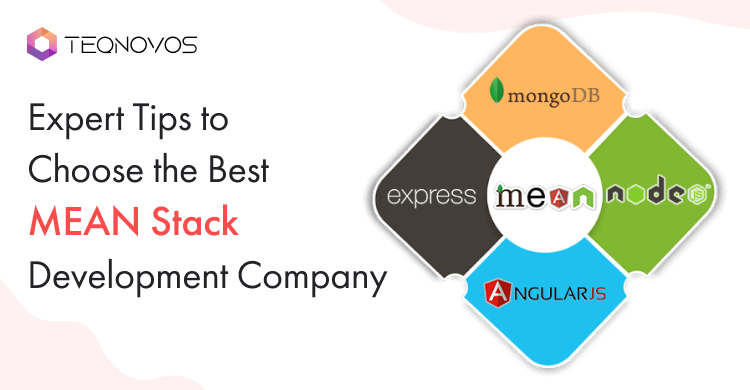
Expert Tips to Choose the Best MEAN Stack Development Company
The MEAN stack remains a practical choice for modern web applications. It uses a JavaScript-based ecosystem across major parts of development. MongoDB manages data and Express.js supports server logic. Angular handles the frontend and Node.js runs JavaScript on the server.
Choosing the right MEAN stack development company takes careful evaluation. Technical knowledge matters. Project experience matters too. Security and testing practices also shape the final result.
Businesses often compare MEAN stack expertise when they need support across the complete application stack. The right fit depends on project needs and technical depth. It also depends on the support businesses offer. This guide explains the key areas that matter during that evaluation.
What is MEAN Stack?
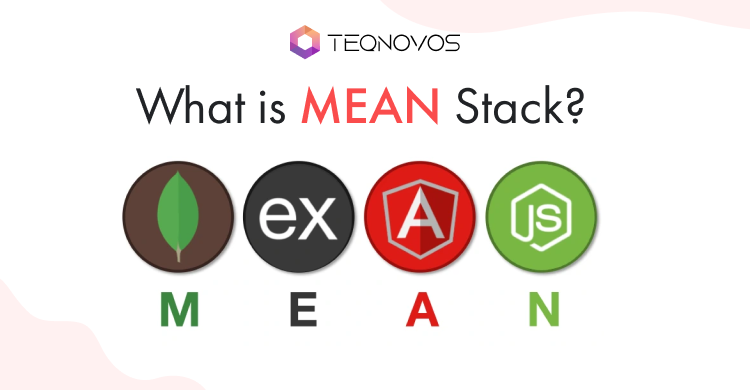
MEAN is a full-stack JavaScript technology stack. The name comes from MongoDB, Express.js, Angular, and Node.js.
Each part has a clear role:
- MongoDB: Stores application data in a document based format.
- Express.js: Handles routing and server application logic.
- Angular: Builds the frontend experience.
- Node.js: Runs JavaScript on the server.
Modern MEAN stack technologies use Angular rather than AngularJS. Angular uses TypeScript as a core part of development. TypeScript adds type checking to JavaScript. It can help teams find many coding errors earlier.
A capable MEAN stack development service provider understands how these tools work together. The team also understands database design and API structure. They also understand application testing and deployment.
Three Reasons to Hire a MEAN Stack Development Company
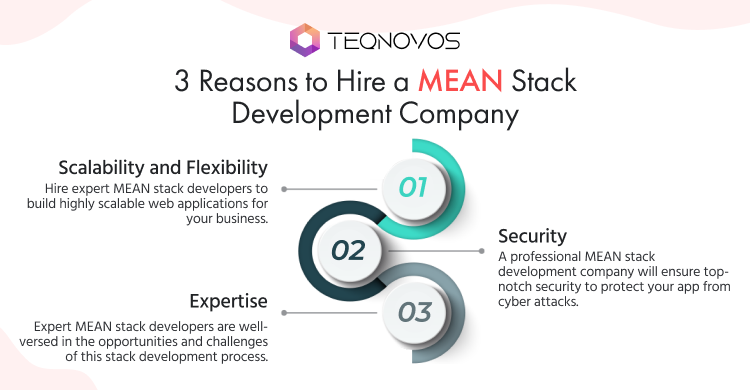
Here are a few prominent reasons to hire a MEAN stack development company for your web app development project.
A development partner can bring experience across the full application lifecycle. This includes planning and architecture. It also includes app development and deployment. Businesses may also use MEAN stack consulting services before development begins. This can help clarify architecture, integrations, and technical risks.
1. Scalability and Flexibility
MEAN based applications can support growth when the architecture is designed for changing demand. Architecture also needs to account for future platform growth. A scalable web platform case study can provide more context on how scalability affects real web projects.
Scalability depends on several factors:
- Database structure
- Indexing
- Caching
- API design
- Infrastructure
- Monitoring
- Code quality
Framework choice alone does not make an application scalable. Good full stack planning connects these technical decisions. The application can then respond better as traffic and data needs change. Infrastructure choices also influence how an application handles changing demand. This guide to cloud computing for business applications explains common cloud models and scaling considerations.
2. Security
Security needs attention across every application layer.
A development team can review:
- Authentication
- Authorization
- Input validation
- Secure session handling
- Transport Layer Security
- Secret management
- Dependency updates
- Database access controls
- Security testing
TLS protects data while it moves between systems. Express also maintains security guidance for production applications. This includes secure transport, input validation, and secure cookie practices. Security is not a single feature. It is an ongoing development practice.
3. Comprehensive Expertise
A team with full stack web development knowledge can connect frontend work with backend logic and database design.
This matters when one problem affects several parts of an application. Slow screens may result from inefficient API calls. Poor database queries can also affect response time.
Experienced MEAN stack developers can trace issues across the stack. They can also work with testing and deployment teams when the project needs broader support.
Skills to Look for When Hiring MEAN Stack Developers
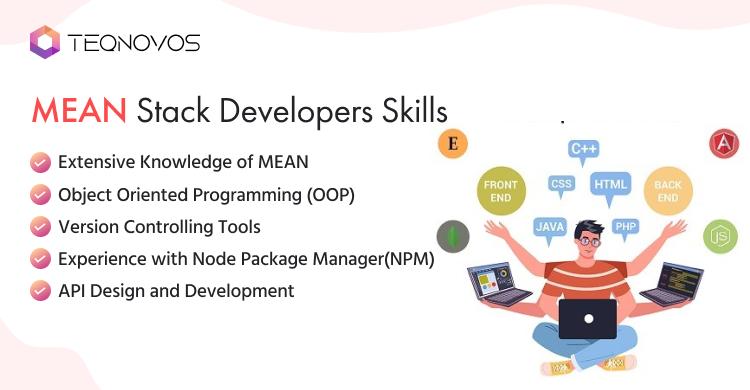
Technical skill is one of the main factors behind a successful project. Modern development requires more than basic knowledge of the four core tools.
A MEAN stack web development company needs current knowledge across Angular, Node.js, Express.js, and MongoDB. It also needs strong programming and testing practices.
1. Complete Knowledge of MEAN Technologies
Developers need practical experience with the complete stack.
MongoDB knowledge includes:
- Data modeling
- Indexing
- Query optimization
- Aggregation
- Backup planning
Angular knowledge now includes TypeScript, routing, forms, component architecture, and testing. Modern Angular development expertise also includes current framework patterns rather than AngularJS practices. Express.js knowledge includes routing, middleware, error handling, and API development.
Node.js knowledge includes asynchronous programming, runtime behavior, package management, and performance. The Node.js project recommends Active Long Term Support or Maintenance Long Term Support releases for production use.
LTS helps release receive maintenance for a defined support period. These MEAN stack technologies work best when the team understands the complete architecture rather than each tool in isolation.
2. JavaScript and TypeScript Knowledge
JavaScript remains central to MEAN development. TypeScript has also become important for modern Angular work.
Developers need a strong understanding of:
- Functions
- Modules
- Promises
- Asynchronous code
- Error handling
- Type safety
- Reusable application logic
Object-oriented programming also supports some application structures. It includes ideas such as encapsulation, inheritance, polymorphism, and abstraction. Strong programming fundamentals help developers make better architecture decisions.
3. Version Control Skills
Git remains a core version control tool. It tracks source code changes and creates a clear development history. GitHub and similar platforms can support code review, issue tracking, and team collaboration.
A good team also uses clear branch rules and review processes. These practices make changes easier to track before release.
4. npm and Dependency Management
npm is a package manager used in the Node.js ecosystem. It helps teams install and manage JavaScript packages. Dependency management also involves version control for packages, security updates, and compatibility checks.
An experienced MEAN stack development services company checks dependencies throughout the project lifecycle. Old packages can create maintenance issues and security risks.
5. API Design and Development
An API allows software components to exchange data and functions. Developers need experience with API structure, security, validation, and testing.
Key areas include:
- Route design
- Authentication
- Authorization
- Error handling
- Input validation
- Documentation
- Versioning
- Third party integrations
REST based APIs are common in web applications that use Node.js and Express.js. Strong API design keeps frontend and backend communication clear.
6. Testing and Deployment
Testing helps teams find problems before users face them. DevOps practices for application development can also support automated testing and controlled deployment through CI and CD workflows. A team working across the full stack also needs a clear release process. That process can include environment setup and rollback planning.
A modern project may include:
- Unit testing
- Integration testing
- API testing
- Frontend testing
- User flow testing
Build Your Next Web Application With the MEAN Stack. Talk to Our MEAN Stack Experts!
Schedule a CallHow to Hire a MEAN Stack Development Company?
The hiring process starts with clear project needs. Businesses need to understand what the product will do and what technical demands it creates. The following areas can make the evaluation more useful.
1. List Project Requirements
The business can define the main project goals first. Clear requirements help the team recommend an architecture that fits the actual product.
A business may use MEAN stack consulting services during this stage when the architecture still needs technical review.
The requirements may cover:
- Core features
- User roles
- Expected traffic
- Data needs
- Security needs
- External integrations
- Deployment environment
- Budget
- Timeline
- Maintenance needs
2. Check Technical Proficiency
Technical evaluation needs to reflect modern development practices.
The review can cover MongoDB data modeling, Express.js routing, Angular architecture, and Node.js runtime knowledge. It can also cover TypeScript, API security, and dependency management.
Businesses can review Node.js development expertise when backend complexity is a major part of the project. The discussion also gives MEAN stack developers a chance to explain past technical decisions. This can reveal how they approach performance issues and architecture tradeoffs.
3. Review the Project Portfolio
A portfolio can show what a development team has handled before. A useful case study also makes the technology stack clear. This web application development case study shows how Node.js with Express.js and MongoDB supported application development.
A portfolio is more useful when it explains the problem and the technical approach.
The review can focus on:
- Similar application types
- Related business problems
- Comparable integrations
- Architecture complexity
- Testing practices
- Maintenance work
4. Review Collaboration and Communication
Good communication keeps technical work connected with project goals. The business can review how the team shares progress and reports risks.
Clear reporting also helps stakeholders understand what changed during development. A reliable MEAN stack development service provider keeps communication structured across planning, development, and testing.
5. Review Maintenance and Support
Application work continues after launch. A MEAN stack development services company can define this scope before development begins. Clear ownership makes future updates easier to plan.
A MEAN stack web development company also needs a process for supported framework versions and production updates.
Maintenance can include:
- Bug fixes
- Dependency updates
- Framework upgrades
- Security patches
- Performance reviews
- Monitoring
- Release support
Need Expert MEAN Stack Development Services? Build Your MEAN Stack Solution With Teqnovos!
Schedule a CallConclusion
Choosing the right MEAN stack development company requires more than checking a list of services. Businesses need to review current technical knowledge and architecture skills. They also need to check their security practices and testing experience.
Modern projects also rely on Angular rather than AngularJS. TypeScript knowledge has become important for frontend work. The strongest evaluation focuses on project fit. It also looks at maintenance and real development experience.
Get in touch with Teqnovos to get started. Build with us!