




























Shopify App Development 101: Introduction, Advantages, and Mistakes to Avoid
E-commerce gives businesses a direct way to sell products and manage customer activity online. Shopify supports this model through store management tools and a large app ecosystem.
A Shopify store can work well with standard platform features. Some businesses still need functions that are unique to their workflow. This is where app development becomes useful.
Shopify app development mistakes can create slow performance, weak integrations, and maintenance problems. Many of these issues start when a project uses old platform methods or unclear requirements.
A clear understanding of current Shopify development helps teams build apps that fit the store and remain easier to maintain.
What Is Shopify Application Development

Shopify is an ecommerce platform for running online stores. It supports products, orders, payments, and customer data inside one commerce environment.
Shopify application development focuses on extending those standard capabilities. An app can connect Shopify with another system. It can automate an internal workflow. It can also add merchant tools or supported checkout features.
This work is different from theme development. Theme development changes the storefront experience. Application Development entails incorporating software logic or an integration that works with the Shopify system.
In most cases, the businesses opt to go for an application from the Shopify App Store if they find the required application already present. However, custom Shopify app development comes into play if there is a need for a unique process or a private integration.
A broader Shopify app development guide explains the full development lifecycle in more detail.
Shopify application development uses the GraphQL Admin API extensively. The GraphQL is a query language that allows the application to ask for specific data. This change matters for teams that build Shopify app features today. Older projects may still contain REST based code. New development needs a clear GraphQL approach.
Advantages of Shopify app development
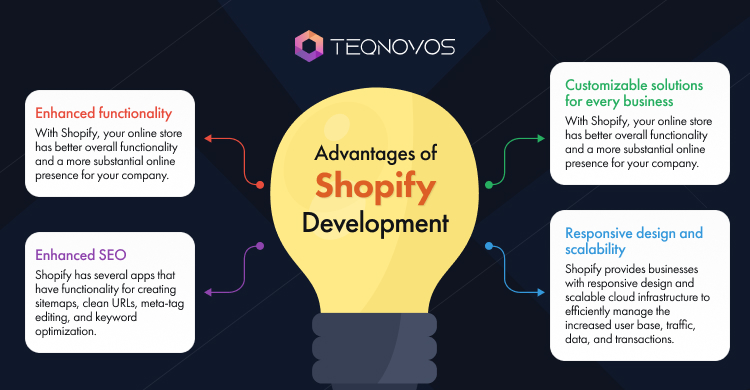
A useful Shopify app solves a real business need. It can improve internal operations or customer interactions without replacing the store platform.
1. Extended Store Functionality
Shopify apps can add functions that are not available in the core setup. An app can connect inventory systems or support custom order logic or automate repetitive store tasks.
Custom Shopify app development gives businesses more control when standard apps do not fit the required workflow. It can also connect several business systems through one controlled process.
Some businesses compare Shopify app development services when the project needs outside technical support. The right development model depends on the workflow and the level of ongoing maintenance involved.
2. Better User Experience
UI design controls how an app presents information and actions. UX design focuses on how easily a person can complete those actions. Shopify uses Polaris as its interface framework across app surfaces. Polaris uses web components for a consistent experience. App Bridge also helps embedded apps work inside Shopify Admin.
Experienced Shopify app developers use these patterns to make app controls feel familiar to merchants. A Shopify mobile application also needs simple navigation and responsive screens. This matters when store teams need to manage tasks away from a desktop device.
3. Focused SEO Support
SEO helps a website improve its visibility in unpaid search results. Shopify apps can support specific SEO tasks. They may help manage structured data or content operations. Some apps also support merchandising tasks that affect how products appear across the store.
An app does not guarantee better rankings. Theme quality and technical site structure still influence organic visibility. This makes the SEO role of an app more specific. The app needs to solve a defined problem instead of making a general ranking claim.
4. Flexible Integrations
Shopify provides the commerce platform. A custom app may still use its own backend, database, and hosting setup. That means app performance depends partly on its own architecture. Developers need to manage API usage and external service failures.
A Shopify app development company can handle this work when a business uses an outside development model. An internal team can also manage it when the required Shopify skills are already available.
The PostGrid Shopify automation case study gives a practical example of how Shopify can connect with an external workflow. The project focused on postcard automation for Shopify stores. This makes it relevant to integration planning rather than general store design.
5. Mobile Commerce Support
A Shopify mobile application can give merchants or customers access to selected store functions on a mobile device.
This approach works best when a clear mobile use case already exists. Repeat ordering, account access, or field store work can justify a dedicated mobile experience. Not every Shopify store needs a separate mobile app. A responsive storefront can be enough when the store does not have a strong mobile specific workflow.
Common Mistakes in Shopify App Development
Building an app inside Shopify requires more than adding features. These mistakes can affect performance and maintenance.
1. Ignoring Shopify Design Standards
An app can work correctly and still feel difficult to use. Unfamiliar controls can slow down simple merchant tasks.
Current Shopify apps use Polaris components across supported app surfaces. App Bridge also controls parts of the Shopify Admin experience around embedded apps.
How to Avoid It
- Follow current Polaris guidance.
- Use familiar Shopify interface patterns.
- Test key workflows with real users.
- Review mobile behavior and accessibility.
Teams can also review current Shopify development tools when planning the technical setup.
2. Neglecting App Performance
Slow apps create friction for merchants. Performance problems can come from heavy data requests, inefficient code, or slow external services.
How to Avoid It
- Request only the data the app needs.
- Reduce unnecessary API calls.
- Cache data when the use case allows it.
- Test slow workflows before release.
- Monitor performance after launch.
Performance matters even more in custom Shopify app development because the app may depend on systems outside Shopify.
3. Using Legacy API Patterns
One of the most serious Shopify app development mistakes is starting a new public app with outdated REST Admin API patterns. Shopify treats the REST Admin API as legacy. New public apps need the GraphQL Admin API.
Teams that build Shopify app features need to understand GraphQL queries and mutations and access permissions. Existing apps with older code also need a practical migration plan.
4. Ignoring API Version Updates
Shopify releases a new API version every three months. Each stable version receives support for at least 12 months. This makes API maintenance part of ongoing app work. An app may work well today and still face problems later if the project stays on an unsupported version.
How to Avoid It
- Track the API version used by the app.
- Review Shopify release notes.
- Test newer versions before support ends.
- Include migration work in maintenance planning.
Ignoring version changes is one of the Shopify app development mistakes that can affect an otherwise stable app.
5. Using Outdated Checkout Methods
Shopify checkout customization has changed. It supports checkout extensions and Shopify Functions for many checkout related use cases. Shopify Functions let developers add custom commerce logic inside the Shopify platform. Checkout extensions add supported interface or behavior changes without relying on older checkout methods.
How to Avoid It
- Use Checkout Extensibility for supported checkout changes.
- Use Shopify Functions when the use case fits.
- Review older Shopify Scripts logic before new development.
- Test checkout changes against the intended store setup.
6. Weak Error Handling
Poor error handling can leave users with unclear messages or no useful feedback.
How to Avoid It
- Handle expected API failures.
- Show clear error messages.
- Log technical issues for debugging.
- Protect sensitive technical details.
- Add a safe retry option when the workflow allows it.
Good error handling also helps Shopify app developers find problems faster during support.
7. Incomplete Testing
A rushed release can introduce bugs or broken integrations. Testing needs to cover more than the main success path.
How to Avoid It
- Test important business logic.
- Test Shopify integrations.
- Test external service failures.
- Test authentication failures.
- Test the production API version.
Businesses reviewing how to hire Shopify developers can use testing knowledge as one practical evaluation point.
8. Adding Features Without a Clear Need
Apps become harder to maintain when every idea turns into a feature. This is another source of Shopify app development mistakes. Each feature adds code and future maintenance.
A smaller app can be more useful when it solves one clear workflow well. Shopify app development services can cover many technical tasks. The project still needs a clear purpose before development starts.
Need a Shopify App Built Around a Specific Workflow? Build Your Custom Shopify App!
Schedule a CallHow Does a Custom Shopify App Differ From Store Development?
Store development and app development solve different needs. Shopify web development services often focus on theme work, page structure, and storefront presentation.
Custom Shopify app development focuses more on software logic and custom workflows. It can also support approved checkout extensions and admin tools. A business may need these areas in one project. The required functions determine the right scope.
When Does a Business Need a Custom Shopify App?
An existing Shopify App Store solution often works for common store requirements. A custom app becomes more relevant when a business has a unique workflow or when several systems need controlled integration.
It can also fit internal processes that standard Shopify apps do not support. The decision depends on fit rather than company size. Businesses can compare the required workflow with existing app capabilities before starting new development.
A related guide explains how custom Shopify apps can support user experience when the store has a genuine need for tailored functionality.
Turn Your Shopify Requirement Into a Revenue-Ready App. Build Your Custom Shopify App Today!
Schedule a CallConclusion
Shopify apps can extend a store beyond standard platform features. Strong results depend on clear requirements and consistent maintenance.
Avoiding Shopify app development mistakes now requires attention to GraphQL and API versions and current checkout tools. It also depends on performance planning and clear error handling.
Businesses comparing Shopify development services or a Shopify app development company can use these areas to evaluate technical fit. A capable Shopify development company also needs experience with the specific workflow involved.
Build your Shopify app with Teqnovos. Connect with us to get started!