














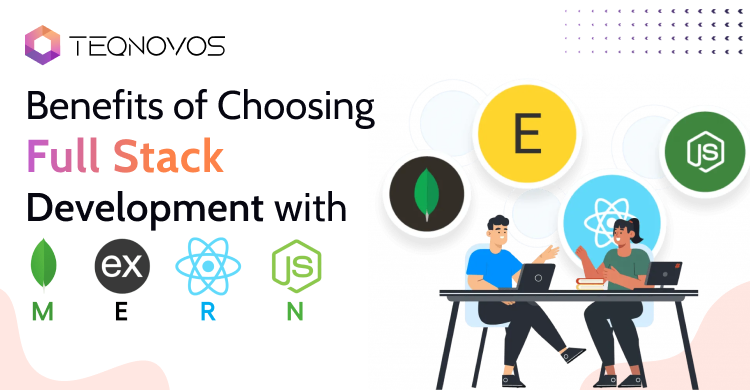
Benefits of Choosing Full Stack Development with MERN
Businesses need a variety of technologies to develop apps. The need for mobile and web applications is expanding quickly. The chosen stack can affect development speed, performance, and future growth. These days, software programs need a strong infrastructure to support them to be viable in a volatile environment. Software or web developers are also responsible for choosing the best stack in terms of performance, adaptability, and scalability.
Businesses exploring MERN stack development services need to understand how the stack works. They also need to know where it provides real value. This article explains the benefits of MERN stack development and the situations in which the stack can support a project.
Stack: What It Is?
A stack is a conceptual configuration that follows the last in, first out (LIFO) rule and consists of multiple related components. The two primary purposes of this commonly used abstract data type are push and pop operations. The top element is the newest component in the stack; hence, push and pop operations are used on it.
Pushing an element onto the stack adds it there, whereas popping an element removes it from the top location. Programming and computer memory management both use the stack concept.
Programming languages and appropriate technologies are combined in a stack. These are usually classified into two types: Technology stacks and Software stacks. The Technology stack is a collection of technologies and tools used to develop and deploy any application or website. On the other hand, a Software stack is a collection of elements that work collaboratively to simplify the execution of the program.
What Is MERN Stack?
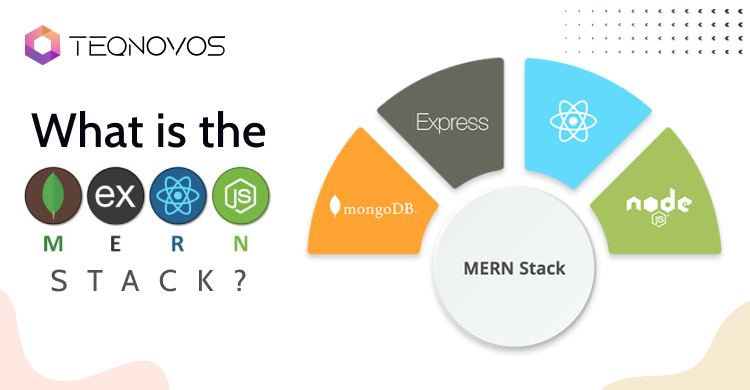
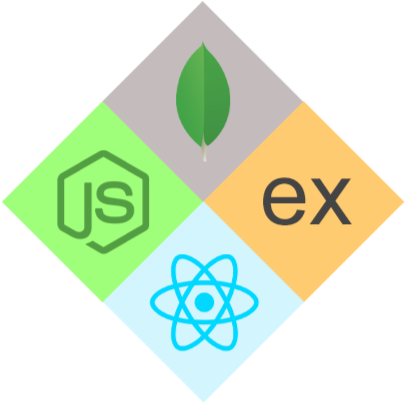
The MERN stack is a combination of modern technologies and traditional methods for developing scalable applications for data systems, front-end, and back-end. It is a platform that can produce dynamic websites and applications by using JavaScript. Companies specifically wish to use it as a platform.
Core Technologies Used in MERN Stack Development
Each part of the MERN stack has a clear purpose. Together, they support the client side, server side, and database layer of an application.
1. MongoDB
MongoDB is a document database with a flexible schema model. It stores data in BSON. BSON means Binary JSON. Its flexible structure can help development teams manage changing application requirements. MongoDB also supports indexing and scaling features. A good database structure still needs careful planning. The data model needs to match the way the application reads and updates information.
2. Express.js
Express.js is a web application framework for Node.js. It helps developers build server routes and APIs. An API allows different software systems or application components to exchange information. Express.js gives developers a lightweight structure for building these connections. Express 5 is now the current stable generation of the framework. It continues to support flexible server development without adding unnecessary complexity.
3. React
React is a JavaScript library for building user interfaces. It uses components to divide an interface into smaller reusable parts. A component can represent a form, a navigation section, or another part of a page. Developers can reuse suitable components across different screens. This approach can make complex interfaces easier to manage. It also supports consistent user experiences across an application.
4. Node.js
Node.js is an open-source, cross-platform runtime environment and library used to run web applications outside of the client’s browser. Originally intended for real-time, push-based architectures, it is utilized for server-side programming and is generally implemented for non-blocking, event-driven servers, including websites and back-end API services.
Build Scalable Web Apps With MERN —Talk to Our MERN Experts Today!
Schedule a CallBenefits of MERN Stack Development
The main benefits of MERN stack development come from its shared JavaScript environment and flexible application structure. Development teams can use connected technologies across the main layers of a web product.
1. Connected Front-End and Back-End Development
MERN creates a clear connection between the user interface, the server, and the database. React manages the interface. Node.js and Express.js manage server logic. MongoDB manages application data. The server can provide REST APIs when the project requires them. REST means Representational State Transfer. It is a common style for API development. It is not a required part of MERN stack development.
This structure can make different parts of an application easier to manage. Teams can update one layer without rebuilding the entire product.
2. Full Stack Development With MERN
Full stack development with MERN allows developers to use JavaScript across client-side and server side development. This reduces the need to switch between several programming languages during regular development work. It can also make collaboration easier between developers working on different parts of an application.
A MERN full stack developer can work with React interfaces and Node.js server logic. Larger projects may still need specialists for security, testing, architecture, and database planning. A full stack development team can bring these skills together when a project has broader technical needs.
A shared programming language makes development more connected. It does not remove the need for specialised technical skills.
3. Flexible API Based Architecture
MERN works well for applications that need a reusable backend. Node.js and Express.js can provide APIs for a React web application. The same backend can also support other approved applications.
This flexibility can help businesses that plan to connect several digital products to the same server environment. React Native is separate from the MERN stack. It is used for native mobile application development. A React Native application can still connect to a backend built with Node.js and MongoDB.
4. Accessible Development Ecosystem
React, Node.js, and Express.js have large developer communities. They also provide extensive technical documentation. MongoDB also provides detailed development resources and tools. Teams can use different tools for MERN stack development to support coding, testing, and database management.
These resources can help a MERN stack developer solve common technical problems and understand platform updates. MongoDB Community Server uses the Server Side Public License. Businesses need to review the licence terms before choosing it for a project.
5. Suitable Performance for Input- and Output-Heavy Applications
Node.js can handle many input and output operations without blocking the application while those operations run. This can work well for APIs, dashboards, messaging features, and other applications that handle frequent network activity.
Performance still depends on application architecture. MERN does not make every application faster by default. A MERN stack development company needs to consider traffic patterns, database activity, and processing needs before choosing an architecture.
6. One Main Programming Language
JavaScript can be used across much of a MERN application. This can reduce language switching for development teams. It can also simplify knowledge sharing between developers working on client-side and server side tasks.
This structure may also make onboarding easier for teams with strong JavaScript experience. MERN stack development services still require skills beyond JavaScript. Security, testing, database design, and cloud deployment remain important parts of professional development.
7. Reusable User Interface Components
React allows developers to build interfaces with reusable components. A well-designed component can be used across different parts of an application. This can reduce repeated interface work.
Reusable components can also improve visual consistency. Their value still depends on how developers plan and structure them.
8. Strong Community Support
The main MERN technologies have active developer communities. Developers can access official documentation, learning resources, and community discussions. This can help teams solve common development issues.
Third-party packages still need proper review. Their security, quality, and maintenance can vary. A skilled MERN full stack developer needs to evaluate these packages before adding them to a project.
9. Flexible User Interface Development
React gives developers control over interface behaviour. The component model can support dashboards, customer portals, and business applications with frequent interface updates. Developers can update interface elements without requiring the server to rebuild the entire page each time. This gives MERN stack development a strong fit for many interactive web products.
10. Cloud-Ready Scalability
MERN applications can run in modern cloud environments. MongoDB provides options that support growing data requirements. Node.js applications can also scale through suitable deployment methods. Scalability still depends on architecture. Database design, caching, infrastructure, and traffic patterns all affect application performance. A MERN stack development company needs to plan these areas before traffic increases. The stack alone cannot guarantee scalability.
When Is MERN Stack Development a Good Fit?
MERN can work well for interactive web applications that use JavaScript across different layers. It can support customer portals, business dashboards, and software platforms. It can also suit API based applications that exchange data frequently between the client and server.
The stack can be useful for teams with strong JavaScript skills. These teams can work across different application layers without introducing several unrelated programming languages. Businesses comparing JavaScript stacks can review this MEAN vs MERN comparison before selecting the right front end framework.
When Might MERN Not Be the Best Choice?
MERN does not suit every project. Applications with highly relational data may benefit from a relational database. The right choice depends on the data model and transaction requirements.
CPU intensive server workloads can also require a different architecture. Some projects may need separate services for heavy processing. Content-focused websites can need additional rendering strategies for search visibility and page performance.
A reliable MERN stack development company needs to review the complete project before recommending the stack. The decision needs to reflect real technical requirements rather than current popularity.
Why Businesses Choose MERN Stack Development Services
Businesses often choose MERN stack development services when they need a connected JavaScript-based development environment. The stack can support flexible APIs, interactive interfaces, and scalable application structures. It can also help development teams work across the main parts of a web product with fewer technology changes.
The final results still depend on planning and technical experience. A skilled MERN stack developer needs to understand more than the four core technologies. Architecture, security, testing, and deployment also affect the quality of the final application.
Turn Your Web App Idea Into a MERN Product —Start Your Project With Our Experts!
Schedule a CallConclusion
Every business wants to become digitally available in today’s time. MERN stack works magically for web development and provides efficient results. ReactJS, Node.js, Express, and MongoDB work together to make the development of modern web applications easier.
Its modular nature is one of its main advantages. Any one of the four components can be used alone or in combination to build a solution that is specifically designed to satisfy specific needs. This adaptability can benefit businesses with increased production and efficiency since it provides boundless chances for development and expansion.
Teqnovos provides MERN stack development services for businesses with different web application needs. Its team can assess project requirements and build solutions around the right technical architecture instead of treating one stack as the right answer for every product.