



























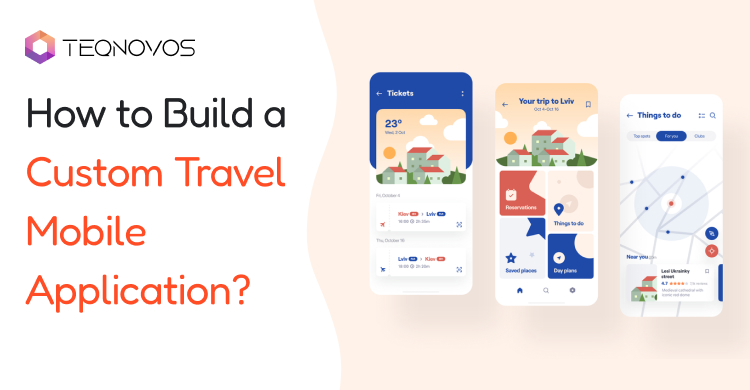
How to Build a Custom Travel Mobile Application?
Travel continues to rely on digital tools for planning and booking. The World Travel & Tourism Council reported that travel and tourism contributed about trillions to global gross domestic product. This growth shows how important digital access has become across the travel sector.
A custom travel mobile application can bring bookings and trip details into one place. It can also give travelers access to live updates and personalized recommendations. The right app can support customer needs and daily business operations.
This guide explains how a travel mobile application moves from an early idea to a working product. It also covers modern features and key cost factors that shape travel mobile app development.
What Is a Travel Mobile App?
Travel apps are software products built for travel and tourism services. Some focus on hotel bookings, while others support car rentals and local transport. Many apps also manage itineraries and destination information.
The main goal is to make travel easier to plan and manage. A well-designed app gives travelers quick access to useful services before a trip and during the journey.
A business gains more value when the app solves a clear customer problem. Repeat bookings and live trip information make an app useful while adding value. Loyalty tools and personalized support can strengthen the overall experience.
Benefits of Travel Mobile Apps
A custom travel mobile application can improve how travelers manage a trip. Customers can check bookings and trip details without switching between several channels.
A travel mobile application can also support better communication. Push notifications can share booking confirmations and schedule changes. In app messaging can help customers reach support teams. Personalized suggestions can help travelers find relevant services.
Modern apps can connect with maps and booking systems as well. This gives users access to current location data and service availability. It also reduces manual steps for the business.
Build a Smarter Travel Mobile App —Talk to Our Travel App Experts Today!
Schedule a CallA Beginner’s Guide to Building a Custom Travel Mobile Application
A clear process makes travel app development easier to manage. The work begins with business goals and user needs. It then moves through planning and design before development starts.
1. Define the Type of App
The first step is to define the main purpose of the product. A hotel group may need a booking app. A mobility provider may need a car rental app. A tour company may need itinerary planning and destination content.
A larger travel business may need one platform that combines several services. This decision affects the feature set and technical setup. It also affects the type of travel software development needed for the project.
Businesses can plan rental functions using car rental app development. It assists with the main parts included in a rental-focused product.
2. Research the Market and Users
Market research helps a business understand what already exists. User research explains what travelers actually need.
The goal is not to copy competitors but to find useful gaps and common pain points. Research can reveal where users leave a booking flow. It can also show which services travelers expect inside an app. These findings help the team define a stronger product direction.
3. Define Requirements and Budget
The next step is to define the core requirements. This includes user flows and supported platforms. It also includes integrations and security needs.
Many teams begin with an MVP of an app with only the features needed to solve the main problem. This approach lets a business test the idea before building a larger version.
Budget planning needs to cover more than design and coding. Map services can also add complexity. Payment systems and artificial intelligence can increase development work. Backend infrastructure and long-term maintenance also affect the budget. Clear travel software development planning can reduce unnecessary changes later.
4. Plan Features and Integrations
The feature set needs to match the service offered by the business. Travel booking app development often depends on external systems. Many of these systems connect through an API. It allows two software systems to exchange data.
Travel apps can use APIs for hotel inventory and flight information. They can also connect with maps and weather services. Flight focused products may also use New Distribution Capability. New Distribution Capability is an International Air Transport Association standard for communication between airlines and travel sellers. Careful integration planning helps the app return accurate information.
5. Design and Test the User Experience
Travel products often involve several steps. Search and booking flows need to remain simple on a mobile screen. Important details such as dates and prices need clear placement.
Teams can use mobile app prototyping before full development. A prototype helps the team test screens and user flows early. This stage also helps the business confirm which features belong in the first release.
6. Choose a Development Partner
A travel app development company needs experience beyond general mobile coding. The team needs to understand APIs and payment flows. It also needs a clear approach to data security and booking logic.
Businesses can review technical experience and past app work before selecting a partner. They can also look at testing methods and maintenance support. Reliable travel app development services cover requirements and design as well as development and launch support.
The broader mobile app development process gives more context on planning and prototyping. It also helps with the testing and maintenance of the app.
7. Build and Test the App
Development begins once the scope and design are clear. Developers build the user interface and backend services. They also connect the required systems.
Testing needs to cover booking flows and payment handling. The team also needs to test different devices and weak network conditions. Security testing matters because travel apps can process account data and payment information.
After launch, the team can monitor crashes and user behavior. Booking completion and support issues can reveal where the product needs improvement.
Features That Matter in Modern Travel Apps
Modern travel products often combine booking tools with trip management. The right travel mobile application can bring these functions into one connected experience. The most useful travel app features depend on the business model and user journey.
Common features include:
- Search and booking tools
- Secure payment processing
- Itinerary management
- Maps and route information
- Live booking updates
- Push notifications
- Offline access
- In app support
- Loyalty tools
- Personalized recommendations
- Artificial intelligence travel assistance
AI can support itinerary ideas and conversational search. It can also help travelers discover destinations and services. These features work best when the system uses current booking data and current location information.
Businesses can use AI software development services to build AI-powered products.
Create Your Custom Travel App —Start Your Travel App Project Today!
Schedule a CallWhat Affects the Cost of a Travel App?
The cost of a travel mobile application depends on its scope and technical requirements. The number of platforms affects development effort. Integrations can increase cost because the app may need to connect with several external systems.
Design complexity can change the budget as well. AI functions and advanced personalization may require more development work. Security and long term maintenance also affect total cost. A clear first release gives the team a better base for estimating the work. It also reduces the risk of adding features before real users provide feedback.
Why Experienced Developers Matter
Travel apps often connect several systems at once. Developers may need to handle booking data and payment flows. They may also work with maps and notifications.
Experience matters because travel products often depend on live information. A booking flow can fail when an integration returns incomplete data. A weak payment process can also create friction at the most important stage of the journey.
Experienced teams can identify these risks early. They can also plan testing and maintenance from the beginning. Companies can hire travel app developers to build reliable products.
Conclusion
A travel mobile application can give a travel business a more connected digital experience. The real value comes from solving a clear user problem and supporting useful services in one place.
Strong travel mobile app development begins with research and product scope. It then moves through design and integrations before development and testing. Security and maintenance remain part of the process after launch.
Get in touch with Teqnovos to bring out the best results. Match real traveler needs and clear business goals to get started.