




























Key Factors to Consider Before Hiring a ReactJS Development Company
Custom web applications now support many parts of business operations. They help companies manage digital products and customer experiences. They also support internal workflows and online services.
React remains a common choice for modern interface development. Its component based structure helps teams reuse interface elements across an application. This can reduce repeated work and make future updates easier.
Choosing the right ReactJS development company takes more than a quick portfolio review. Businesses need to assess technical skills and project experience. They also need to review communication and long term maintenance practices. A suitable team can support cleaner delivery and fewer problems after launch.
What is ReactJS?

React is an open-source JavaScript library for building user interfaces. It lets developers create interfaces with reusable components. Each component can handle a defined part of the user experience.
React also remains widely used. Modern React development focuses on components and state. React also uses a virtual representation of interface changes before updating the browser’s Document Object Model. This idea is often called the Virtual DOM. Modern development also includes Hooks and rendering strategies.
Developers can combine React with routing tools and testing libraries. They can also use frameworks that add features such as server rendering.
Why Choose ReactJS for Development?
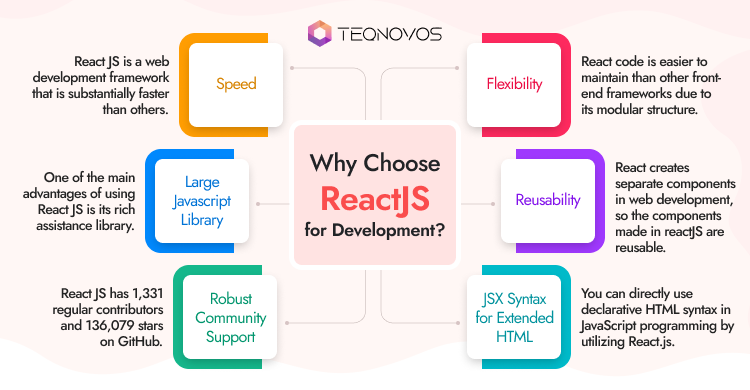
React gives development teams a flexible way to build interactive interfaces. It works well for products that need reusable components and frequent interface updates. Businesses comparing React with other options can also review this Angular vs React vs Vue comparison. The right choice depends on the product structure and technical goals.
1. Faster Development
React allows developers to divide an interface into smaller components. The same component can appear in several parts of an application.
This reduces repeated interface work. It can also make updates easier when a design pattern changes. Teams can update the shared component instead of changing every screen separately.
This benefit can support custom ReactJS development services when a project has repeated layouts and forms. It can also help products with shared navigation and user controls.
2. Flexible Architecture
React focuses on the interface layer. Development teams can connect it with different back end technologies and application programming interfaces. This flexibility also makes React suitable for custom web development where the frontend needs to work with existing systems or a new back end.
React Native also uses React concepts for native mobile applications. React Native remains a separate environment. A web interface does not become a native mobile interface without additional development work. This flexibility makes React useful for front end development across many application types.
3. Mature React Ecosystem
React has a broad ecosystem of frameworks and development tools. Teams can use React Router for routing. They can use Next.js when a project needs a React framework with added application features.
Create React App is no longer the standard starting point for new React applications. Current projects can use a framework or a build tool such as Vite when that setup fits the project.
A capable ReactJS development agency needs current knowledge of these setup choices. Older project habits can create unnecessary migration work later.
4. Reusable Component Structure
Reusable components remain one of the strongest parts of React. Teams can create interface elements once and use them across several screens. This supports visual consistency. It can also make code easier to manage when the application grows.
A provider of custom ReactJS development services can use shared component systems for forms and dashboards. The same approach can support navigation and account areas.
5. Strong Community and Current Tooling
React has extensive documentation and a large developer ecosystem. It also continues to receive active updates. React Compiler can automatically optimize components and Hooks through memoization. Memoization avoids repeated work when the same inputs appear again.
A React development services company can evaluate where this capability fits. Not every project needs the same optimization approach.
6. JSX for Interface Markup
JSX means JavaScript Syntax Extension. It lets developers write interface markup inside JavaScript code. JSX helps developers describe what a React component needs to display. React then handles rendering based on component data and state.
JSX does not make an application fast on its own. Performance also depends on component design and data handling. Rendering choices also affect the final result. Well-structured JSX can support readable front end development across larger applications.
Modernize Your React Application With the Right Expertise! Upgrade Your React App With Expert Developers!
Schedule a CallHow to Choose the Best ReactJS Development Company
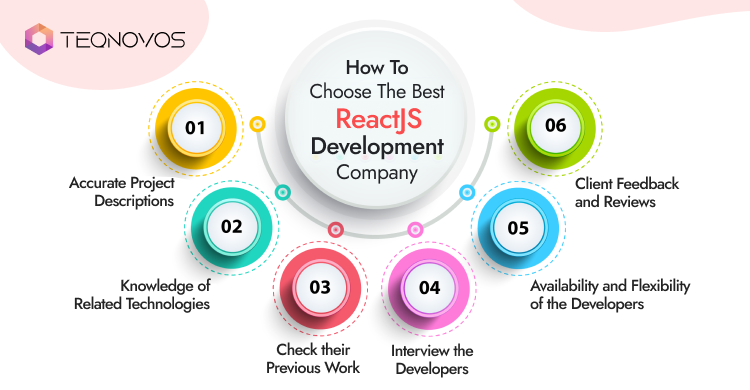
The right development partner depends on the project. Businesses need to look beyond broad claims about React experience. A useful evaluation focuses on actual technical decisions and delivery practices.
1. Define the Project Requirements
Clear requirements make vendor evaluation more useful. A business needs to define the product goal and target users. It also needs to identify important features and integrations.
The scope can cover expected traffic and required platforms. It can also identify existing systems that need to connect with the new application.
A ReactJS web application development company can then review the scope against its actual experience. This makes technical discussions more focused.
Businesses planning custom ReactJS development services can also separate new features from existing areas that need modernization.
2. Review Knowledge of Related Technologies
React projects often depend on technologies outside the React library. Teams may need TypeScript and modern JavaScript. They may also need testing tools and framework knowledge.
Some full stack projects use MERN stack development. The stack combines React on the client side with Node.js and Express.js on the server side.
Some applications use Next.js development for routing and rendering needs. Vite is another common option for React projects that do not need a full framework.
A ReactJS app development company can explain why a specific setup fits the project. It does not need to force the same stack into every application. A React development services company also needs knowledge of testing and accessibility. These areas affect quality long after the first release.
3. Check Modern React Architecture
React development has changed since older React project guides were written. React 19 added new capabilities. Create React App is deprecated. React Compiler is also available for current projects.
A ReactJS development company can explain how it starts a new project today. The team can also explain how it handles older React applications that need upgrades.
Security maintenance matters as well. The React team released critical fixes for React Server Components. This makes dependency monitoring and timely updates part of responsible React maintenance.
Businesses that hire ReactJS developers can ask how the team reviews package updates. They can also ask how security fixes move through testing before release.
4. Check Previous Work
A portfolio can show the type of React work a company has completed. The review needs to go deeper than screenshots.
Businesses can look at application complexity and interface behavior. They can also review accessibility and performance. Projects with complex integrations can reveal how the team approaches architecture. React based web platforms can also show how frontend development connects with testing and backend architecture in a real project.
A ReactJS web application development company can also explain the technical decisions behind previous projects. That context often tells more than a long list of completed work.
5. Interview the Developers
Businesses can evaluate the developers who may work on the project. A practical task can reveal more than broad questions about experience.
The task can test component design and TypeScript knowledge. It can also cover debugging and state management. Testing practices can show how developers approach reliability.
Businesses that hire ReactJS developers can also review communication skills. React projects often require coordination with designers and back end teams.
A ReactJS app development company can provide clarity about who will work on the project. This helps businesses understand the actual skill level available.
6. Review Availability and Collaboration
Availability matters when teams work across different time zones. Clear collaboration matters even more. Businesses can review meeting schedules and response expectations. They can also ask how project changes move through the team.
Custom ReactJS development services often involve several rounds of feedback. A clear process can keep those changes organized. A team offering React.JS development services can also explain how work moves between development and testing. This gives businesses a clearer view of daily delivery.
7. Review Client Feedback and References
Client feedback can provide context that a portfolio cannot show. Reviews can reveal how a company handles deadlines and changes. They can also show how the team responds when problems appear.
Businesses can look for feedback that mentions communication and technical ownership. Comments about maintenance can also be useful.
A ReactJS development agency with relevant references can explain how earlier projects were managed. The focus needs to stay on evidence that relates to the current project.
8. Understand Maintenance & Support
React applications continue to change after launch. Dependencies receive updates. Browser behavior changes. New business requirements also appear. Older applications may also need application modernization when outdated code or architecture starts limiting future updates.
A ReactJS development company needs a clear approach to maintenance. The team can explain how it manages version updates and package reviews.
This is also important for React.JS development services that continue after the first release. Ongoing work can include bug fixes and performance reviews. It can also include accessibility improvements and framework updates.
Looking for Reliable ReactJS Development Support? Build Better React Apps With Our Experts!
Schedule a CallConclusion
React remains a strong option for many web applications. Its component model supports reusable interface development. Its ecosystem also gives teams several ways to structure a project.
A business evaluating a ReactJS development company gains more value by reviewing real technical practices than by relying on broad service claims. The same approach helps when comparing different delivery models.
A suitable team can provide ReactJS development services that match the product architecture and maintenance needs. The final decision needs to reflect the project scope and the experience required to deliver it well.
Get in touch with Teqnovos. Book your free consultation call today!