























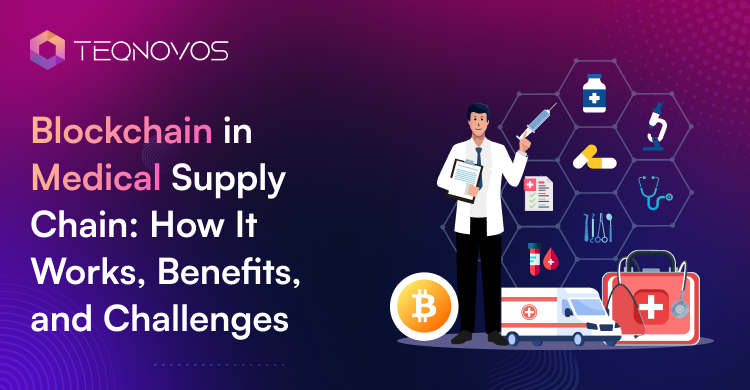
Blockchain in Medical Supply Chain: How It Works, Benefits, and Challenges
Medical products pass through manufacturers, distributors, logistics providers, and healthcare facilities before reaching patients. Each transfer creates records across separate systems, and missing or inconsistent information can make product verification harder or delay action during recalls. Blockchain in medical supply chain creates a shared product history that approved participants can review across the network. It connects product identity with shipment, receipt, and recall events. However, it cannot correct inaccurate source data or poor coordination between partners.
This guide explains how blockchain in healthcare supply chain works, along with its practical use cases. The guide also covers implementation risks, cost factors, and future opportunities. The focus remains on where blockchain creates real value and where another system may offer a better fit.
What is Blockchain in Medical Supply Chain?
Blockchain acts as a distributed ledger, which is a shared digital record stored across authorized systems. In a medical supply network, it records product events created by manufacturers, distributors, logistics providers, and healthcare facilities. These events can include production, shipment, and receipt. It also records verification, return, and recall activity.
The technology can track medicines, medical devices, and other regulated healthcare products. Each approved participant views or adds information based on assigned access rights. Product identifiers and traceability standards remain essential because blockchain does not replace accurate data collection. It becomes one component within broader applications of blockchain technology that require shared records across business networks
How Blockchain Tracks Medical Products Across the Supply Chain
How blockchain is used in medical supply chain actually depends on verified product events recorded at each stage of movement. The process starts when a manufacturer assigns a unique identifier to a medicine or medical product.
- Product registration: The manufacturer records the product code, serial number, batch number, and production details.
- Shipment recording: The system adds a new event when the product leaves the manufacturing facility.
- Partner verification: Distributors and logistics teams scan the product before accepting or transferring it.
- Event validation: Approved network participants confirm that the transaction follows agreed rules.
- Ledger update: The network records the verified event with its time, location, and responsible party.
- Final verification: Pharmacies or healthcare facilities review the product history before accepting the item.
Electronic Product Code Information Services (EPCIS) gives supply chain partners a common format for sharing event data. Blockchain can preserve the history of each submitted event. However, it cannot confirm that an incorrect scan or false entry was accurate at the source. Reliable scanning and product identification remain essential.
Build a More Secure and Transparent Medical Supply Chain. Transform Healthcare Supply Chains Today!
Schedule a CallWho Uses Blockchain in the Medical Supply Chain?
A shared network creates value only when every participant has a clear responsibility. The role of blockchain in medical supply chain operations is to connect these responsibilities through controlled access and consistent product records.
- Manufacturers: Create product identity and batch records before goods enter distribution.
- Repackagers: Update product information when regulated medicines receive new packaging.
- Wholesale distributors: Verify trading partners and maintain records for product transfers.
- Logistics providers: Contribute shipment location, custody, and storage condition data through connected systems.
- Pharmacies and hospital dispensers: Confirm product identity and investigate suspect products before dispensing them.
Manufacturers, wholesale distributors, and dispensers have specific product tracing and verification responsibilities under the Drug Supply Chain Security Act. A blockchain in the healthcare supply chain network can connect its records while limiting each participant to approved data and actions.
Key Blockchain Use Cases in Medical Supply Chains
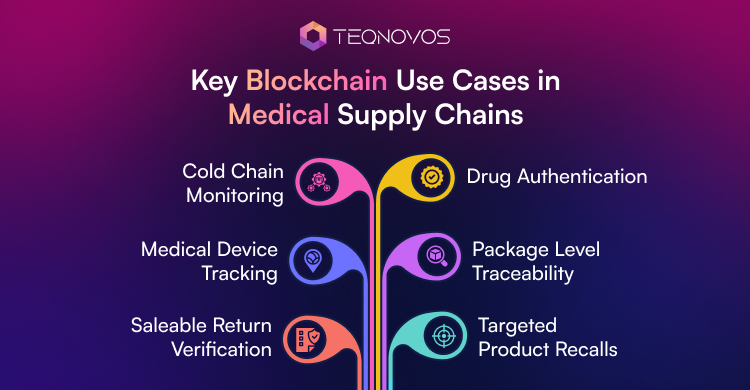
The main blockchain use cases in medical supply chain operations address specific gaps in product identity, handling records, and partner verification. Each application needs reliable source data and integration with existing operational systems.
1. Drug Authentication
Manufacturers can register serialized medicine details before distribution begins. Pharmacies and distributors can compare the scanned identifier with the recorded product history. This process can expose duplicate identifiers, unexplained ownership changes, or products supplied by unauthorized partners. It strengthens verification but cannot confirm authenticity when incorrect information enters the network at the source.
2. Package Level Traceability
Blockchain can connect manufacturing, shipment, and transfer records across approved organizations. This creates a consistent chain of custody for each serialized package. The Drug Supply Chain Security Act requires an electronic and interoperable approach for tracing certain prescription drugs at the package level in the United States. It does not require blockchain as the only solution.
3. Targeted Product Recalls
Batch numbers, shipment events, and receiving locations can help teams identify where affected products moved. This allows manufacturers and distributors to focus recall activity on relevant packages and locations instead of reviewing disconnected records across several systems.
4. Cold Chain Monitoring
Connected temperature sensors can capture storage conditions during transport. The system can link each reading with a shipment or product batch. A smart contract can flag an event when the temperature moves outside an approved range. Blockchain records the event history, while the sensor remains responsible for collecting accurate physical data. Teams also need to address IoT implementation challenges such as sensor accuracy, network interruptions, and device security before treating temperature records as reliable evidence.
5. Medical Device Tracking
Manufacturers and healthcare organizations can record device identity, ownership transfers, and recall status. This creates a product focused history that can remain available when a device changes location or owner.
6. Saleable Return Verification
Wholesale distributors can verify returned prescription products before placing them back into distribution. The recorded product identifier and transaction history can help confirm that the item came through an authorized supply path.
These applications of blockchain in medical supply chain operations work best when organizations agree on product identifiers, access permissions, and correction procedures. The Aushada medicine supply system in India uses blockchain to record drug movement and quality checks across manufacturers, suppliers, and hospitals
Business Benefits of Blockchain in Medical Supply Chains
The benefits of blockchain in medical supply chain operations appear when independent organizations use the same validated event records. The FDA pilot program tested technologies for enhanced product tracing and verification, while the World Health Organization recommends systems that detect falsified medical products and support faster action when risks appear.
-
Shared Visibility
Authorized teams can review a consistent event history, which reduces conflicting records across manufacturers, distributors, and dispensers.
-
Stronger Record Integrity
Cryptographic connections make unauthorized record changes easier to detect. This improves confidence in the audit history, though it does not prove that the original data was correct.
-
Faster Coordination
Approved participants can access relevant product information without requesting separate records from every organization involved.
-
Lower Reconciliation Effort
Consistent event formats reduce the manual work needed to compare shipment, receipt, and ownership records across different systems.
-
Clear Accountability
Each accepted event can include the participant identity and submission time, which clarifies who recorded a specific action.
-
Rule-Based Control
Smart contracts can apply predefined conditions for product transfers, access approval, and exception review. This creates more consistent decisions across the network.
Core Architecture and Integration Requirements
A reliable blockchain in healthcare supply chain cannot operate as an isolated ledger. The architecture needs controlled network access, secure system connections, and consistent event standards.
-
Permissioned Network
A permissioned blockchain limits participation to known organizations with verified identities. Each manufacturer or distributor receives access based on its assigned role. Hyperledger Fabric uses identity policies to control who can submit transactions or view protected records. Businesses can compare Hyperledger and Ethereum before selecting a platform, especially when access control and shared governance are central requirements.
-
On-Chain and Off-Chain Data
The ledger can store product identifiers and cryptographic hashes. A cryptographic hash is a digital fingerprint that reveals when information has changed. Commercial agreements and sensitive business records can remain outside the ledger, while private data controls restrict access to authorised organizations.
-
Existing Software Integration
APIs connect the network with ERP systems, warehouse platforms, and IoT sensors. These integrations allow product events to move between operational systems and the blockchain without repeated manual entry.
-
Shared Data Standards
The applications of blockchain in medical supply chain depend on consistent event data. EPCIS gives trading partners a common structure for sharing product movement and status information. The United States Food and Drug Administration identifies EPCIS as a standard for interoperable pharmaceutical tracing.
Blockchain or a Centralized Database for Medical Supply Chains?
Blockchain in medical supply chain operations works best when several independent organizations need access to the same product records. No single participant controls the complete history. Each approved organization follows shared rules for recording and verifying supply chain events.
A centralised database is more suitable when one organization manages the complete workflow, controls all users, and owns the product data.
| Decision Area | Blockchain | Centralised Database |
| Data control | Shared across approved organizations | Managed by one organization |
| Record validation | Uses agreed network rules | Uses a central administrator |
| Participant access | Based on verified roles | Controlled by the system owner |
| Governance | Requires joint decisions | Follows internal policies |
| System complexity | Higher due to partner coordination | Lower due to central management |
| Best use | Multi organization product tracing | Internal inventory and operations |
Blockchain is not necessary for every supply chain system. It becomes more relevant when trading partners need shared verification across company boundaries. A centralised database remains a better option when one organization controls the users, records, and business processes.
Challenges That Can Limit Blockchain Adoption
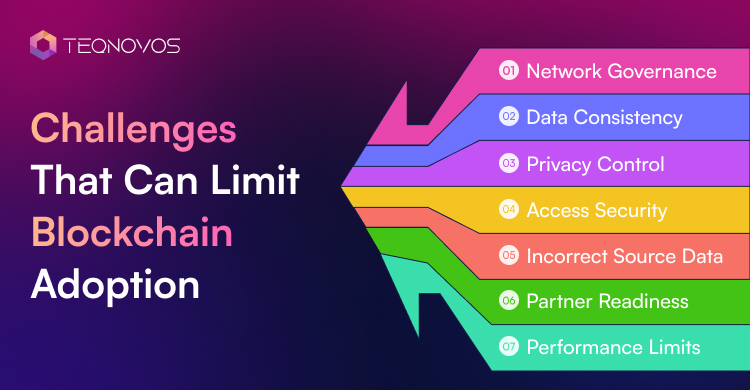
The challenges of blockchain in medical supply chain projects often extend beyond software development. The network may work well during testing, but wider adoption can fail when organizations cannot agree on data rules or shared responsibilities.
-
Network Governance
Every participant needs to understand who approves new members, updates system rules, and removes access. Weak governance can delay decisions and create conflict between trading partners.
-
Data Consistency
Manufacturers, distributors, and dispensers may use different product identifiers or event formats. Shared standards and automated validation are needed before records enter the network.
-
Privacy Control
Commercial agreements, pricing details, and sensitive business records should not remain visible to every participant. The system must apply role based access and keep private information outside the shared ledger where required.
-
Access Security
Lost or compromised access keys can allow unauthorized activity. Secure key storage, regular access reviews, and immediate revocation reduce this risk.
-
Incorrect Source Data
Blockchain preserves submitted records, but it cannot confirm that the original scan or sensor reading was accurate. Reliable devices, verified suppliers, and exception checks remain essential.
-
Partner Readiness
Some supply chain partners may lack the systems or technical teams needed for direct blockchain integration. Simple portals, APIs, and phased onboarding can reduce adoption barriers.
-
Performance Limits
Recording every document and operational detail on the ledger can affect speed and cost. The network should store only essential proofs and events, while larger records remain in connected systems.
A limited pilot can test governance, data quality, and transaction performance before the network expands.
How to Plan a Blockchain Supply Chain Project
A clear implementation plan defines how blockchain is used in medical supply chain operations before development begins. The project should start with one measurable problem and expand only after the pilot proves its value.
-
Define the Operational Problem
The business should identify the exact issue it needs to solve. This may involve delayed product verification, incomplete tracing records, or poor information exchange between trading partners. A broad goal such as improving transparency does not give the project enough direction.
-
Map Participants and Product Events
The project team should identify every organization that creates, verifies, or updates product data. It should also map the events that occur between these participants. This step reveals missing records and unclear responsibilities before they affect the system.
-
Confirm Blockchain Suitability
Blockchain becomes relevant when several independent organizations need to verify shared records without giving one participant complete control. A centralised system may remain more practical when one organization owns the full process and manages every user.
-
Establish Network Governance
Participants should agree on who can join the network, manage disputes, and update operating rules. Permissioned blockchain networks depend on policies agreed by participating organizations. These policies control access and allow the network to evolve through shared approval.
-
Select a Limited Pilot
The first release should focus on one product line, one region, or a small group of trading partners. A limited scope makes it easier to test data exchange and user participation without disrupting wider operations. NIST also uses a minimum viable product approach to test traceability mechanics and implementation challenges in a controlled environment.
-
Build and Test the Workflow
An experienced blockchain development company can turn the approved operating model into a working pilot. Testing should follow real product events and exception scenarios rather than ideal workflows alone. The team should check user access, transaction approval, and integration accuracy.
-
Measure the Pilot Results
The business should compare pilot results with its original problem. Useful measures may include verification time, traceability completeness, and transaction failures.
-
Expand Through Controlled Phases
The organization should add new products and partners only after the pilot meets its success criteria. Each phase should review network capacity, user readiness, and operational impact before further expansion.
Improve Medicine Traceability With a Blockchain-Based Solution. Build Smarter Healthcare With Blockchain!
Schedule a CallHow Much Does Blockchain Medical Supply Chain Development Cost?
A blockchain in pharmaceutical supply chain solution may cost around $40,000 to $300,000 or more. A limited pilot may remain near the lower end. A multi partner enterprise platform with complex integrations and security requirements may move toward the higher end.
The final cost depends on:
- Blockchain platform and network scope
- Software integration and data migration
- Security testing and access controls
- Partner onboarding and user training
- Maintenance and network governance
These figures are rough estimates only. The actual cost depends on product volume, partner count, integration complexity, compliance needs, and deployment scale.
How to Measure Project Success
A pilot should be measured against the existing supply chain process. The business should record its current performance before implementation, then set realistic improvement targets for the selected product line and partner group.
Suggested pilot targets may include:
- Achieve at least 95% completeness across required product event records
- Keep failed or rejected transactions below 2% during stable testing
- Onboard at least 80% of selected pilot partners
- Reduce product verification or exception handling time by 20% to 30%
These figures are planning estimates rather than industry standards. The final targets should reflect current performance, transaction volume, partner readiness, and the original problem the pilot needs to solve.
Future of Blockchain in Medical Supply Chains
The future of blockchain in medical supply chain operations will likely move beyond isolated pilots toward connected traceability networks. Future systems will need to exchange verified product events across different platforms rather than keep records within one blockchain environment.
- Standards based data exchange: EPCIS 2.0 can carry product events and sensor information across organizations and technologies.
- Cross network compatibility: Blockchain platforms may connect with other ledgers and conventional traceability systems through shared data structures.
- Real time condition records: Connected sensors can add temperature and handling information to product histories for medicines that require controlled storage.
- Outcome-focused adoption: Businesses will assess blockchain through verification speed, recall readiness, data completeness, and partner participation rather than technical novelty.
The growth of blockchain in medical supply chain projects will depend on secure electronic exchange and compatibility with existing systems. FDA and NIST guidance already prioritises interoperable and technology-neutral traceability.
Conclusion
Blockchain in medical supply chain operations can improve product visibility and coordination across independent organizations. Its success still depends on accurate source data and clear network governance. Businesses should begin with one practical use case and test the system through a limited pilot before wider adoption. Teqnovos can combine blockchain expertise with healthcare app development services to build connected supply chain systems around secure workflows, system integrations, and long term operational goals. Companies that need a dedicated technical team can hire healthcare app developers to manage blockchain integration, platform testing, and long term product improvements.