



























How Much Does Healthcare Software Development Cost?
The healthcare software development cost can range from $40,000 for a basic product to more than $500,000 for an enterprise platform. The final budget depends on the software type and its technical complexity. It also changes with the number of user roles and required integrations. Security needs and regulatory requirements can increase the development effort. A simple appointment platform may need a smaller budget. A hospital platform with Electronic Health Record integration and clinical workflows will cost much more.
Businesses must also account for testing and cloud infrastructure. Data migration and ongoing maintenance can add further expenses. A clear project scope gives the development team enough information to prepare a more reliable cost estimate. Current cost guides report similar broad planning ranges.
Healthcare Software Cost at a Glance
The healthcare software development cost usually starts at around $30K for a limited product. A basic Minimum Viable Product or MVP may cost $40K to $80K. Mid level software can range from $80K to $150K. Advanced platforms often require $150K to $300K. Enterprise healthcare software can exceed $500K when it includes complex clinical workflows and several integrations. These figures are planning estimates. The final quote depends on the confirmed product scope and compliance requirements.
| Software level | Estimated costEstimated cost | Typical scope | Main cost risk |
| Basic product | $30K to $80K | Booking or simple patient access | Scope growth |
| Mid-level product | $80K to $150K | Several user roles and dashboards | Workflow complexity |
| Advanced platform | $150K to $300K | Real-time features and integrations | Technical dependencies |
| Enterprise platform | $300K to $500K+ | Multi-location clinical operations | Scale and compliance |
| Regulated medical software | Project specific | Clinical or medical device functions | Validation and regulation |
The answer to how much does it cost to build healthcare software becomes more accurate after discovery. The team must confirm every workflow and integration before setting a reliable budget.
Healthcare Software Development Cost
The healthcare software development cost in USA is usually higher because local teams charge higher hourly rates. North American development rates often range from $80 to $150 per hour. Western European rates may range from $50 to $120 per hour. Eastern European teams often charge $30 to $70 per hour. Healthcare specialists may charge more when a project needs complex security or clinical integrations.
| Development region | Estimated hourly rate | Best suited for |
| USA | $80 to $150 | Local collaboration and USA market knowledge |
| Western Europe | $50 to $120 | European market knowledge and regulatory planning |
| Eastern Europe | $30 to $70 | Lower development rates with experienced technical teams |
A lower hourly rate does not always create a lower final budget. Poor requirements can increase development hours. Weak communication can also lead to rework. Businesses should compare healthcare experience and technical skills before they compare rates.
The development location and launch market are separate decisions. A company may hire an Eastern European team for a product that will launch in the USA. The product may still need Health Insurance Portability and Accountability Act safeguards when it handles electronic protected health information for a covered entity or business associate.
A USA-based team may also build software for European users. The General Data Protection Regulation can apply to companies outside the European Union when they offer services to people in the European Union or monitor their behavior.
The best region depends on the available budget and required expertise. It also depends on the target market and preferred collaboration model. Businesses can also hire healthcare app developers based on their required skills and preferred engagement model.
What Factors Affect Healthcare Software Development Cost?
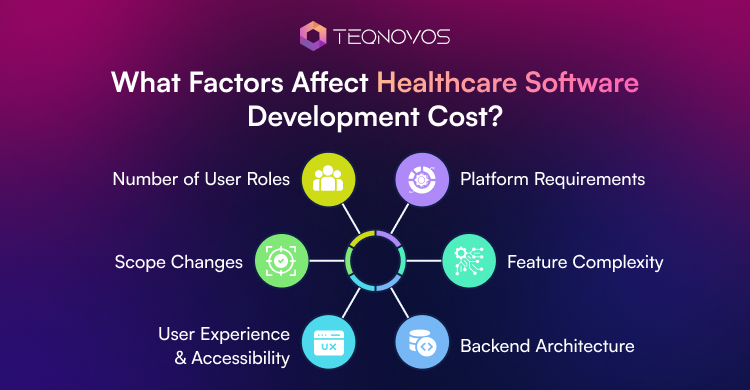
The healthcare software development cost depends on the project scope and technical needs. Each decision changes the time and resources required for development.
-
Number of User Roles
Software built for one user type costs less. A larger platform may serve patients, doctors, nurses, and administrators. Each role needs separate access rules and workflows. It also needs unique screens and testing.
-
Platform Requirements
A web platform needs one development approach. Software built for web and mobile needs more design and development work. The team must also test the product across different devices and operating systems.
-
Feature Complexity
Basic features need less development time. Real-time alerts, video consultations, and automated reports need more technical work. Advanced dashboards and data processing can increase the final budget.
-
Backend Architecture
A small product may use a simple database. Enterprise software needs stronger architecture. It must handle high data volumes and growing user activity. It also needs reliable backup and recovery controls.
-
User Experience and Accessibility
Healthcare workflows must remain simple and clear. Poor navigation can cause mistakes and reduce adoption. Accessibility needs can add more design and testing work.
-
Scope Changes
Frequent changes can increase the budget. New features can affect design, development, and testing. A clear feature list gives the team a better base to estimate how much does it cost to build healthcare software.
Estimate Your Healthcare Software Cost —Talk to Our Experts Today!
Schedule a Call
Breaking Down Healthcare Compliance and HIPAA Costs
Compliance affects the entire software structure. It shapes data storage, user access, and hosting choices. It also affects testing and documentation. A reliable cost estimation to build fully compliant healthcare software must include these requirements from the planning stage. Businesses can review Teqnovos’ guide to data privacy and security in healthcare app development for deeper privacy planning.
HIPAA Requirements in the USA
The Health Insurance Portability and Accountability Act (HIPAA) protects sensitive health information in the USA. The Security Rule requires safeguards for electronic protected health information (ePHI).
The cost to build HIPAA-compliant healthcare software may include:
- Data encryption during storage and transfer
- Secure user authentication
- Role-based access controls
- Detailed audit logs
- Automatic session timeouts
- Secure backup and recovery systems
- Security risk assessments
- Incident response planning
Cloud providers may also need a Business Associate Agreement (BAA). This agreement defines how vendors must handle protected health data. Vendor reviews and legal support can increase the project budget.
HIPAA does not offer a universal software certificate. Each healthcare organization must assess its own security controls and operating processes.
GDPR Requirements in Europe
The General Data Protection Regulation (GDPR) controls how organizations collect and process personal data in Europe. It may also apply to companies outside Europe when they offer services to European users.
European healthcare software may need:
- Clear consent management
- Data access request tools
- Data deletion processes
- Privacy-focused system design
- Data processing records
- Cross-border data controls
- Data breach response procedures
High-risk data processing may require a Data Protection Impact Assessment or DPIA. This assessment identifies privacy risks before the organization launches the software.
European Health Data Space Requirements
The European Health Data Space (EHDS) entered into force on March 26 2025. It will introduce phased requirements for electronic health data access and Electronic Health Record systems across Europe.
Early preparation may require:
- Standard health data formats
- Strong interoperability planning
- Patient data access controls
- Electronic Health Record compatibility
- Clear data sharing permissions
Early planning can reduce future redesign costs.
Medical Device Software Requirements
Software that performs a medical function may face additional regulatory review. This can include diagnosis and treatment support or clinical decision-making.
Medical device software may require:
- Product risk classification
- Clinical validation
- Safety testing
- Technical documentation
- Quality management processes
- Regulatory submission support
Higher-risk products need more evidence and testing. This can make them more expensive than administrative healthcare software.
How Much Do Healthcare Software Integrations and Data Migration Cost?
Integration costs depend on the number of connected systems. They also depend on data quality and access requirements. A simple connection may need limited development work. A complex clinical integration may require detailed planning and testing.
1. Integration Type
Read-only integration usually costs less. It only pulls data from another platform. Two-way integration costs more because both systems send and receive data. The development team must also prevent duplicate records and failed updates.
Healthcare software may connect with Electronic Health Record systems. It may also connect with Electronic Medical Record platforms, laboratory systems, and pharmacy software. Other common connections include insurance portals, payment gateways, medical devices, and wearable devices.
2. Healthcare Data Standards
Fast Healthcare Interoperability Resources (FHIR) defines a standard for electronic healthcare data exchange. Health Level Seven also supports data sharing between clinical systems.
These standards improve compatibility. However, they do not remove all integration work. Each vendor may use different data fields and access rules. The team must review every system before estimating the final cost. A deeper guide to interoperability in healthcare apps explains common data exchange challenges.
3. Vendor Access Requirements
Some vendors charge for sandbox access or technical certification. Others require security reviews before they allow production access. These charges can sit outside the core development budget.
4. Data Migration
Legacy data often needs preparation before transfer. The team may need to audit records and remove duplicate data. It may also need to clean data and convert formats.
Trial migration is also important. It allows the team to check accuracy before the final transfer. Poor data quality can increase both development time and project risk.
A reliable answer to how much does it cost to build healthcare software must include integration and migration costs. Ignoring these tasks can cause delays and unexpected expenses.
Build HIPAA-Compliant Healthcare Software —Get a Free Consultation!
Schedule a Call
Which Healthcare Software Model Costs Less: Custom, SaaS, or White Label?
Choosing the right development model can change the total budget. Each option offers a different balance of control and long term cost. The best choice depends on the product scope and growth plans.
-
Custom Healthcare Software
Custom software gives the business full control over features and integrations. The development team builds the product around specific clinical and operational needs. This model usually needs the highest initial investment. It can still offer better long term value when the product needs unique workflows or complex integrations.
Custom development also gives the business more control over data architecture and compliance planning. The product can grow without major limits from a third party platform. Businesses can compare the pros and cons of custom healthcare app development before choosing this model.
-
Healthcare SaaS
Software as a Service, or SaaS, gives users access to cloud software through a subscription. The healthcare SaaS development cost depends on tenant management, subscription controls, and secure data separation. A multi-tenant platform serves several healthcare organizations from one system. Each organization must keep its data private.
SaaS products also need billing tools, account controls, and usage tracking. They require ongoing cloud management and security monitoring. This model works well for businesses that plan to sell the same core product to several clinics or healthcare providers. Businesses can explore this guide to healthcare SaaS development before choosing a cloud-based product model.
-
White Label Healthcare Software
White label software starts with an existing product. The vendor allows another business to use its own branding and selected features. The white label healthcare development cost is often lower at the start because the core platform already exists.
The cost can increase when the business needs major custom features or several integrations. Recurring licence fees can also raise the long-term expense. The vendor may control future updates and technical changes.
Quick Comparison
| Development model | Initial cost | Customisation | Launch speed | Long-term control |
| Custom software | High | Full | Slower | High |
| Healthcare SaaS | Medium to high | Strong | Moderate | High |
| White label software | Low to medium | Limited | Fast | Low |
Custom software suits complex and unique healthcare workflows. SaaS works well for scalable subscription products. White label software fits businesses that need a faster launch with fewer custom requirements.
Hidden Costs That Can Increase the Final Budget
The initial estimate does not always cover the full product lifecycle. Several ongoing expenses can increase the final healthcare software development cost after launch.
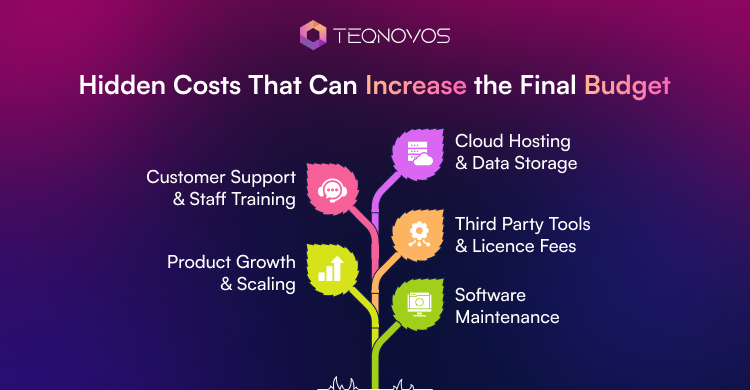
1. Cloud Hosting and Data Storage
Healthcare platforms often store large volumes of sensitive data. Storage needs can grow as more users and records enter the system. Backup environments and disaster recovery systems also add monthly costs.
2. Third Party Tools and Licence Fees
The product may use video calling tools, messaging services, and analytics platforms. It may also rely on identity verification or payment services. Many providers charge monthly fees or usage based fees.
3. Software Maintenance
Healthcare software needs regular updates. The team must fix bugs, update libraries, and maintain compatibility with new devices. Older integrations may also need changes when external vendors update their systems.
4. Customer Support and Staff Training
Doctors and administrators may need onboarding and technical support. Complex workflows can require training materials and guided setup. These activities need dedicated time and resources.
5. Product Growth and Scaling
Higher traffic can increase cloud and monitoring costs. New clinics may also need extra user controls and reporting features. Businesses should plan for these expenses before launch.
A realistic budget should cover both development and long-term operation. This approach reduces the risk of unexpected costs after the product enters the market.
Conclusion
The final healthcare software development cost depends on product scope, compliance needs, and integration depth. A basic platform may need a smaller budget. An enterprise system will require more time and technical planning. Businesses should define user roles, data flows, and target markets before they request a quote.
They should also include hosting, maintenance, and third party fees in the long term budget. A clear discovery process reduces scope gaps and unexpected costs. Teqnovos offers custom healthcare app development services for businesses that need a practical plan based on product goals and regulatory needs.