














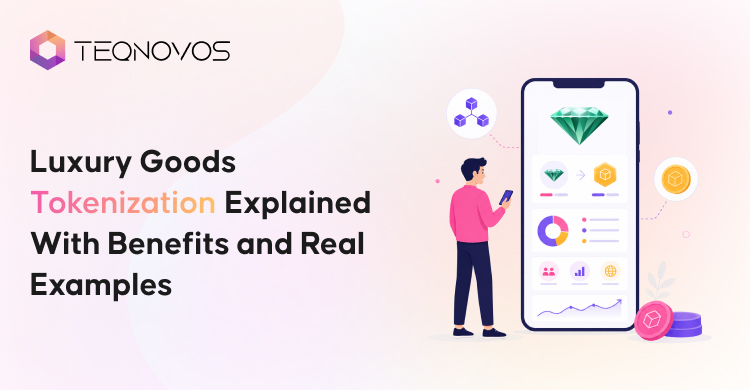
Luxury Goods Tokenization Explained With Benefits and Real Examples
Digital ownership is becoming more common in modern asset markets. Buyers now want clear proof of authenticity and ownership. This matters in the luxury market because high value items often face counterfeit risks.
Luxury goods tokenization connects physical luxury items with blockchain based digital records. These items can include watches, art, jewellery, handbags, cars, and rare collectibles. Each record can support authentic ownership transfer and transaction history.
This shift also connects with real world asset tokenization. However, it is now possible for physical assets to be digitally documented in order to increase transparency and make it easier to manage. This has enabled the luxury industry, such as collectors and brands, to build more trust around high value products. l
What Is Luxury Goods Tokenization?
Luxury goods tokenization is the process of linking a physical luxury item to a digital token on a blockchain. The token works as a digital ownership record. It can show authentic ownership history and transfer details.
The tokenization of luxury goods can apply to watches, jewellery, and other expensive collectibles. Each item keeps its physical value. The digital token adds a secure ownership layer around it.
This is where blockchain tokenization becomes useful. It stores ownership data in a clear and traceable way. This helps buyers, sellers, and collectors verify important details with more confidence.
These tokens are often asset backed tokens. This means the token is connected to a real luxury item. It can represent full ownership or a smaller share of the asset. This makes luxury items easier to track, manage, and transfer in digital markets.
How Luxury Goods Tokenization Works
The tokenization of luxury goods follows a clear process. Each step helps connect the physical item with a secure digital ownership record.
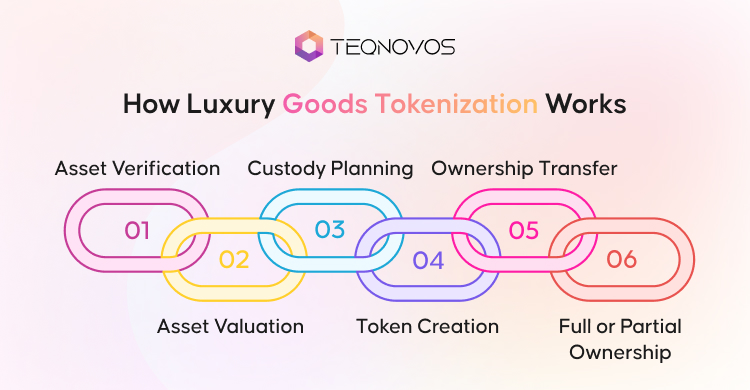
Asset verification
Experts first check the luxury item. They review brand papers, purchase history, and ownership documents. This confirms that the item is real.
Valuation
The item then receives a market value. This may depend on the rarity condition, brand demand, age, and expert appraisal. Valuation helps buyers understand the worth of the asset.
Custody planning
The physical item needs safe storage. It may stay with a verified custodian or an approved owner. Custody keeps the real asset connected to the digital token.
Token creation
The digital token is then created through blockchain tokenization. It can include asset identity, ownership proof, and transfer history. This creates a traceable digital record.
Ownership transfer
Smart contracts for tokenization help manage transfer rules. They can support resale terms, royalty conditions, and shared ownership structures. This makes ownership movement clearer and more secure.
Full or partial ownership
Tokens can represent full ownership or partial ownership. One buyer may own the full token for a luxury watch or artwork. Several buyers may also own smaller shares in the same asset. This makes high value luxury items easier to access, track, and transfer.
Yes. This section will look better with short subheadings. It improves readability and makes each point easier to scan.
Build Trusted Luxury Asset Ownership —Explore Tokenization
Schedule a CallWhy Luxury Goods Need Tokenization
Luxury markets depend on trust. Buyers need to know that a product is genuinely valuable and traceable. Luxury goods tokenization supports this need by adding a verified digital layer to physical assets. It helps improve authenticity checks, ownership tracking, and resale confidence.
Counterfeit Risk Is Growing
Luxury items carry high value. This makes them a common target for counterfeits. Fake watches, jewellery, art pieces, and collectibles can look real. Buyers may find it hard to verify these assets before purchase.
Ownership History Is Often Unclear
Many luxury items lack a clear ownership trail. Paper certificates can get lost, receipts can be damaged, and manual records can be changed or disputed. This makes resale more difficult.
Digital Records Build Buyer Confidence
Tokenization links the physical item with a digital record. This record can show origin ownership history, condition, and past transfers. Buyers can check these details before they complete a purchase.
Blockchain Supports Provenance
Blockchain for luxury goods can store product history in a traceable format. This may include authentication records, repair updates, and resale activity. It helps buyers understand where the item came from and how it moved through the market.
Resale Becomes More Trustworthy
Tokenization can make resale more reliable. Sellers can prove asset history with less friction. Buyers can check important records before purchase. Brands can also protect their reputation by reducing uncertainty around authenticity.
Key Benefits of Luxury Goods Tokenization
Luxury goods tokenization builds stronger trust in high value ownership. It gives buyers better proof, provides sellers stronger records, and helps brands protect asset value across resale and digital markets.
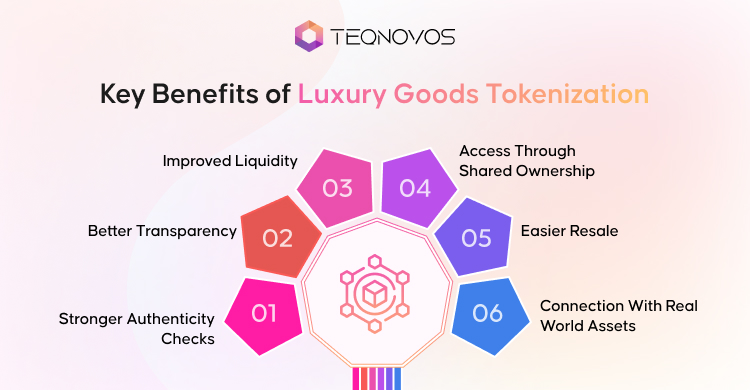
Stronger Authenticity Checks
Luxury buyers want proof before they invest in any expensive collectibles. Tokenization can link each item with verified records. This can help establish a clear history of the origin, ownership, and transactions regarding the particular asset. This makes it easier to confirm that the asset is genuine.
Better Transparency
Traditional ownership often depends on paper documents and manual checks. These records can get lost or changed. The digital tokens help in keeping track of the asset journey more effectively. The buyer can verify all the information before buying the asset.
Improved Liquidity
Luxury assets can be hard to sell quickly. A rare watch or artwork may need the right buyer at the right time. Tokenization can make ownership easier to transfer through digital markets. This supports better liquidity because buyers and sellers can interact with fewer barriers. Advanced models are also shaping how AI in asset tokenization supports valuation compliance and liquidity across digital asset markets.
Access Through Shared Ownership
High value luxury items are often out of reach for many buyers. Fractional ownership of luxury assets can divide one asset into smaller digital shares. This allows more people to access rare assets without buying the full item. It can also open new investment options for collectors and digital asset users.
Easier Resale
Resale trust matters in the luxury market. Buyers want to know the product is real and properly owned. Tokenized records can show past transfers and asset details. This can reduce doubts during resale and make transactions smoother.
Connection With Real World Assets
RWA is helping physical assets move into digital ownership systems. Luxury goods fit this trend well because they carry high value and need strong verification. Tokenization adds a digital layer that can support authenticity and long term asset history.
Real Examples of Tokenized Luxury Assets
Luxury goods tokenization can apply to many high value items. Each asset needs proof of authenticity and ownership records. Tokenization helps create a digital layer that supports these needs.
Watches
Luxury watches often carry strong resale value. A tokenized watch can include brand details, serial number, ownership records, and past transfer data. This helps buyers check the item before purchase.
Fine Art
Fine art needs a clear provenance. A token can record artist details, ownership history, and custody records. This makes it easier to prove where the artwork came from.
Jewellery
Jewellery can be difficult to verify without proper documents. Tokenization can connect diamonds and gold pieces with certificates and ownership proof. This can reduce doubts during resale.
Rare Handbags
Designer handbags often face counterfeit risks. A tokenized record can show product origin, purchase details, condition updates, and resale history. This gives buyers stronger confidence in the item.
Classic Cars
Classic cars need detailed records. A token can store ownership history, restoration records, and insurance details. This supports trust during high value sales.
Wine and Collectibles
Rare wine and collectibles depend on storage conditions and authenticity. Tokenization can track bottle origin, storage history, and ownership transfers. Collectibles can also carry digital proof linked to the physical item.
Asset tokenization helps manage these assets more efficiently in digital markets. Blockchain for luxury goods can support a stronger product history and more transparent resale activity. This gives buyers, collectors, and brands a clearer way to track luxury assets.
Verify Luxury Assets with Blockchain —Build with Teqnovos
Schedule a CallLuxury Goods Tokenization and Fractional Ownership
High value luxury assets often remain limited to a small group of buyers. Rare watches, fine art jewellery, classic cars, and collectibles can cost too much for one buyer to access easily. Tokenization can change this by dividing one luxury asset into smaller digital units.
This model supports fractional ownership of luxury assets. Each digital unit can show partial ownership of the physical item. Buyers do not need to purchase the full asset. They can own a smaller part while still gaining exposure to the value of the item.
Physical assets move into a digital ownership model while the real item stays protected and verified. The digital record can show ownership shares, transfer history, and asset details.
Shared ownership can make luxury markets more accessible. It helps more buyers access assets that were once hard to enter. It can also improve liquidity because smaller ownership units may transfer more easily than the full asset. This creates a more flexible way to manage high value luxury goods in digital markets.
This shared ownership model is also common in real estate tokenization platform development, where high value properties are divided into digital ownership units through blockchain-based records.
Role of Smart Contracts in Luxury Goods Tokenization
Smart contracts are digital rules that run on a blockchain. They help manage how tokenized luxury assets move between buyers, sellers, and platforms. In simple terms, they make ownership transfer more structured.
Smart contracts for tokenization can support automated ownership transfer. When a buyer meets the required conditions, the token can move to the new owner. The record is then updated on the blockchain. They can also manage resale rules. A brand or asset owner may set conditions for approved marketplaces, transfer limits, or verification steps before resale.
Smart contracts can also automate royalty payments. A creator brand or rights holder may receive a set percentage when the asset is resold. Custody conditions are another key use. The contract can link ownership transfer with storage rules inspection status or custodian approval.
Luxury Goods Tokenization vs Traditional Ownership
Traditional ownership often depends on scattered documents and manual checks. Luxury goods tokenization creates a digital ownership record linked to the physical item. The main difference is trust and transparency.
| Comparison Point | Traditional Ownership | Luxury Goods Tokenization |
| Ownership Proof | Depends on paper certificates, receipts, and brand documents | Uses a digital ownership record linked to the physical asset |
| Authenticity Check | Requires manual review and expert inspection | Can store authentication history and asset details |
| Appraisal Process | Often needs repeated manual appraisals before resale | Can record valuation updates and inspection history |
| Resale Speed | Resale may be slow due to verification delays | Digital records can support faster buyer review |
| Traceability | Past ownership may be unclear or incomplete | Transfer history can show how the asset moved over time |
| Document Risk | Papers can be lost, damaged, copied, or changed | Blockchain-based records are harder to alter without a trace |
| Buyer Confidence | Buyers may need extra proof before purchase | Buyers can review asset history before making a decision |
| Market Trust | Trust depends on the sellers’ appraisers and documents | Blockchain for luxury goods supports clearer verification |
Conclusion
Luxury goods tokenization gives high value assets a stronger digital identity. It links physical items with records that support authenticity, ownership history, and easier verification.
It can also improve liquidity by making luxury assets easier to track and transfer in digital markets. In some cases, it can support shared ownership through smaller digital units.
Tokenization does not replace the physical value of luxury goods. It adds a transparent digital layer that can make ownership, resale, and verification more reliable in the future.