




























How AI Identity Verification Helps Businesses Build Digital Trust
Digital onboarding has become a normal part of modern business. Customers open their accounts online, and patients book care for themselves online. Even investors are joining online platforms. This shift has made identity checks more important than ever. It has also created new risks for companies that handle user data and financial activity.
Fraud attempts are becoming harder to spot. Fake profiles can pass weak checks. Stolen documents can move through simple forms. Bad actors can use edited images or synthetic identities to enter digital platforms. Businesses now need faster checks that also protect real users.
AI identity verification helps companies confirm users with greater speed and stronger accuracy. It reviews identity documents and matches the face with an uploaded ID. This helps detect suspicious patterns before they create larger risks. Thus, offering businesses a better way to manage trust during onboarding.
The goal is not only to stop fraud but also to improve user experience. A slow verification process pushes genuine users away. On the other hand, an advanced system reduces delays and supports safer growth across digital products.
Companies building digital investment models can use real estate tokenization platform development to support verified investor access.
What Is AI Identity Verification?
AI identity verification software helps businesses confirm that a user is genuine before access is approved. It smartly checks to examine identity records, face details, and user behaviour. This reduces manual work and supports safer onboarding.
What the system checks
- Identity documents such as identity cards
- Face match between the user and the document image
- Liveness signals to ensure a real person is present
- Device activity and repeated verification attempts
- Suspicious edits in documents or uploaded images
Why it matters for businesses
Digital identity verification gives companies better control during account creation. Genuine users can move through the process faster. Risky users can move into review before approval. This creates a safer journey without slowing down every customer.
Businesses use this process across fintech and online services. It helps protect customer data and reduces fake accounts. It also supports a smoother onboarding experience for users who expect fast digital access.
Also, read our blog on AI in fraud detection. How AI-powered fraud detection systems are helping insurance businesses.
Build a safer identity verification system with Teqnovos. Launch secure onboarding with AI-powered checks and review workflows.
Schedule a CallHow Businesses Verify Users With AI-Based Identity Verification
AI-based identity verification works through a step-by-step process. Each step helps confirm that the user is real. It also helps businesses reduce fraud before account access is approved.
1. Document Capture
The user uploads an identity document through a secure verification screen. The system checks image quality first. It then reads key details such as name, date of birth, and document number. Poor images can move into manual review.
2. Face Match
The user takes a live selfie during onboarding. The system compares the selfie with the photo on the document for authenticity. This helps confirm that the person using the platform owns the submitted document.
3. Liveness Check
Liveness checks help detect fake attempts. The system can identify printed photos and deepfake attempts. This step gives businesses stronger protection against fake profiles and stolen documents.
4. Database Checks
The system compares user details with trusted sources. These checks may include watchlists, sanctions records, address data, or internal risk rules. Regulated businesses use this step to reduce compliance risk before approval.
5. Risk Scoring
AI-powered identity verification reviews the full user journey. It studies document results and repeated attempts. The system then creates a risk score. Low risk users move ahead faster, while the high-risk users move to review.
6. Human Review
Human review supports complex cases. A trained reviewer can check flagged profiles and make a final decision. This keeps the approach appropriate and reduces the chance of denying genuine users.
AI software development services help businesses build custom verification workflows. It helps build secure onboarding and identity automation into their platform.
Essential Key Features of AI Identity Verification Software
The right AI identity verification software should protect digital onboarding at every step. It should verify documents. It should confirm real users. It should detect advanced fraud before access is approved. These features help businesses build faster and more reliable user checks.
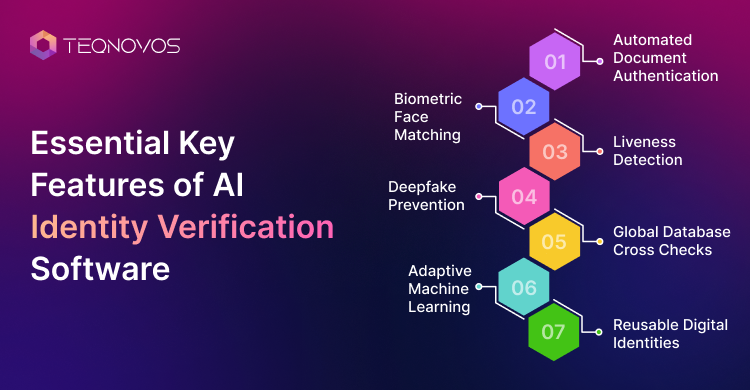
1. Automated Document Authentication
Automated document authentication checks identity cards and other official IDs. The system reads document details and studies patterns, textures, holograms, and expiry data. This helps detect forged or altered documents before approval.
- Reads names, dates, and ID numbers
- Checks holograms and document textures
- Flags expired or edited documents
- Reduces manual document review
2. Biometric Face Matching
Biometric face matching compares the user selfie with the photo on the identity document. The system studies facial details to confirm that both images belong to the same person. This helps verify that the user owns the submitted ID.
- Matches selfie and document photo
- Confirms the account holder
- Reduces stolen ID misuse
- Improves approval accuracy
3. Liveness Detection
Liveness detection checks if the person is physically present during verification. The system studies small movements and camera signals. This helps stop fraudsters who use printed photos or recorded videos.
- Detects photo based attacks
- Spots video replay attempts
- Checks live camera signals
- Strengthens remote onboarding
4. Synthetic and Deepfake Prevention
Advanced AI models can detect synthetic faces, deepfake videos, and fabricated biometric profiles. This feature is essential as fraudulent activities and tools have become easy to access. It helps businesses block fake users before they enter the platform.
- Finds AI-generated artifacts
- Detects deepfake video attempts
- Flags synthetic biometric profiles
- Supports stronger fraud defence
5. Global Database Cross Checks
Global database checks match user details against watchlists and high risk person records. This supports financial crime control and customer identification requirements. It also helps regulated platforms reduce risk before account approval.
- Checks sanctions and watchlists
- Reviews high risk identity signals
- Supports compliance needs
- Helps reduce onboarding risk
6. Adaptive Machine Learning
Adaptive machine learning helps the system improve with new data. It studies fresh verification attempts and changing fraud patterns. This makes the system more accurate over time and helps teams respond faster to new risks.
- Learns from new fraud signals
- Improves accuracy over time
- Reduces rigid rule dependency
- Supports faster risk decisions
7. Reusable Digital Identities
Reusable digital identities let verified users authenticate again without repeating the full process each time. The system can create encrypted biometric profiles for returning sessions or connected services. This supports smoother access while keeping security checks active.
- Stores verified identity profiles
- Supports returning user checks
- Reduces repeated onboarding steps
- Improves user convenience
A strong verification platform connects these features into one secure flow. This helps businesses stop fake users. It also gives genuine users a faster and smoother path to access.
Benefits of AI Powered Identity Verification for Businesses
AI powered identity verification offers businesses a faster way to approve users and thwart risky actions. It removes slow steps from onboarding. It also gives risk teams clearer signals before access is granted.
1. Faster User Onboarding
Users expect quick access after signing up. A slow identity check can lead to drop offs. Smart verification helps genuine users move through the process with fewer delays. This supports better conversion and a smoother first experience.
2. Lower Fraud Risk
Fraudsters can enter through fake documents and synthetic profiles. Smart verification tools study face data, document details, device behaviour, and risk patterns. This helps businesses stop suspicious users before they create accounts or complete transactions.
3. Better Customer Trust
Users feel safer when a platform protects their identity and data. A secure verification flow shows that the business takes trust seriously. This matters for fintech healthcare marketplaces and other platforms that handle sensitive user activity.
4. Reduced Manual Work
Manual checks take time and increase pressure on internal teams. AI systems can review standard cases faster. Risk teams can then focus on complex cases that need human judgment. This improves team productivity and decision quality.
5. Stronger Business Control
AI identity verification helps businesses build clear onboarding rules. The system can approve low risk users. It can send risky profiles for review. This creates a balanced process that supports growth without weakening security.
A smarter verification process does more than confirm users. It improves fraud control and operational efficiency. That makes it beneficial for secure digital growth.
How AI Fraud Detection Strengthens Identity Verification
Fraud has moved beyond basic fake accounts. Businesses face forged documents and repeated signup attempts. AI fraud detection helps identify these risks before a user gets access to the platform.
AI systems review more than one signal during verification. They check the document image and study face match results. They also look at repeated attempts across the same user device or location. This gives risk teams a wider view of suspicious activity.
1. Fake Document Detection
Fake documents can look real at first glance. AI can study small details that manual teams may miss. It flags altered photos and unusual patterns. This helps businesses stop forged IDs before approval.
- Detects edited document images
- Flags expired identity records
- Finds mismatched personal details
- Reduces fake signup approvals
2. Deepfake and Spoofing Checks
Fraudsters can use recorded videos or AI generated faces to bypass weak checks. Smart verification tools study live camera signals and movement. This helps confirm that a real person is present during onboarding.
- Detects recorded video attempts
- Spots printed photo misuse
- Flags AI generated face patterns
- Confirms live user presence
3. Account Takeover Prevention
Account takeover happens when a fraudster tries to access an existing user account. AI detects unusual login behaviour and risky access patterns. This helps businesses respond before damage happens.
- Tracks unusual login activity
- Flags sudden device changes
- Detects risky access attempts
- Helps protect existing users
4. Repeated Fraud Pattern Detection
Fraud often repeats across multiple accounts. AI connects signals across documents, devices, and behaviour. This helps teams spot networks instead of single bad users.
- Connects repeated signup attempts
- Finds linked device patterns
- Spots duplicate identity signals
- Helps block fraud networks
Businesses handling high risk financial activity can connect verification with AML software development. This helps support stronger monitoring review flows and compliance checks.
Role of KYC Identity Verification in Regulated Industries
Regulated businesses need stronger identity checks before they approve users. Fintech platforms and payment companies deal with money movement. A weak onboarding process creates fraud risk and user trust issues.
Identity checks help these businesses confirm who enters the platform. They also help teams review risky users before account access or lending access is approved. This matters more when platforms handle large transaction volumes or serve users across different regions.
Why stronger user checks matter
Fraud can start during signup. A fake user may use stolen documents. A high risk person may try to pass basic checks. A repeated fraud attempt may move through if the system only checks surface level details.
A smarter verification flow helps regulated businesses:
- Confirm user identity before account approval
- Reduce fake profiles and the use of stolen documents
- Support safer payments and wallet access
- Create clearer records for review teams
Compliance teams also need a process they can track. Clear records help them review approvals and flagged users. This makes identity checks more useful for internal audits and risk reporting.
Fintech businesses that plan to build secure onboarding flows can hire fintech developers to create verification systems. They help build fraud controls and compliance ready user journeys.
Why Identity Verification for Fintech Matters in Digital Finance
Identity verification for fintech helps financial platforms approve real users before they access accounts or trading tools. Fintech products handle sensitive data and money movement. So user checks must be secure and reliable.
A fintech app may serve thousands of users each day. Manual review can slow this growth. Smart identity checks help genuine users move forward quickly. Risky profiles can move into review before they reach core financial features.
Where fintech platforms use identity checks
Fintech companies use verification across many user journeys. Each journey needs a different level of risk control.
- User signup and account approval
- Wallet creation and fund access
- Lending and credit application review
- Trading platform onboarding
- Payment account activation
- Cross border transaction checks
KYC identity verification also supports safer compliance workflows. It helps businesses confirm user details before financial activity starts. It can check face data and risk patterns. This gives teams more control over fraud and account misuse.
Why it matters for fintech growth
A weak verification flow can create serious problems. Fraudsters may use stolen documents. Fake users may create multiple accounts. Risky users may enter payment or lending systems without proper checks.
A stronger verification flow helps fintech platforms:
- Reduce fake account creation
- Improve trust during onboarding
- Protect wallets and payment access
- Support faster user approval
- Build clearer review records
Fintech platforms that support global payments can also connect verification with cross border payment app development to build safer payment journeys with stronger user checks.
Use Cases of Digital Identity Verification Across Industries
Digital identity verification is no longer limited to banks and payment platforms. Many digital businesses now need stronger user checks before they approve access. This protects users and also helps companies reduce fraud risk during onboarding.
1. Fintech Platforms
Fintech companies use identity checks during account signup and payment activation. The goal is to confirm real users before financial activity starts. This helps reduce fake profiles and risky transactions.
2. Healthcare Platforms
Healthcare companies use identity checks to protect patient access and medical records. It helps confirm users before insurance claims or health portal login. Businesses planning secure patient platforms can connect this process with healthcare app development for safer user journeys.
3. Marketplaces
Online marketplaces use identity checks to verify sellers, buyers, service providers, and account holders. This reduces fake listings and account misuse. It also improves trust between users who do not know each other.
4. Travel and Hospitality
Travel platforms use verification for booking access and guest checks. It also assists in verifying rental approvals and loyalty accounts. Stronger checks help prevent chargeback abuse and identity misuse during travel services.
5. Real Estate Platforms
Real estate platforms use identity checks for investor onboarding and asset access. This is important when platforms manage ownership records and investor documents.
6. Hiring and Online Services
Hiring platforms can verify candidates and employers before they join. Online service platforms can use identity checks to reduce spam accounts and unsafe user activity. This creates a cleaner platform experience and stronger user confidence.
These use cases show how verified access supports trust across digital products. A strong identity process helps businesses protect users while keeping onboarding simple.
Risks and Challenges in AI Identity Verification
AI-based identity verification gives businesses stronger control during digital onboarding. The same technology that improves security also creates new questions around fraud and accountability.
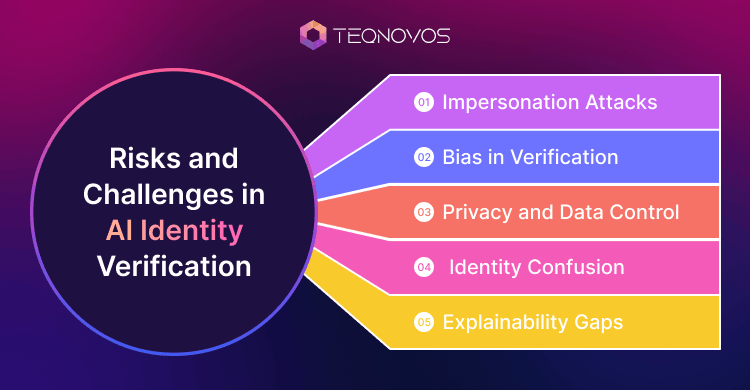
1. Impersonation Attacks
Attackers use generative tools to create synthetic faces and voice clones. These fake assets look realistic enough to challenge basic checks. Older liveness methods may fail when they do not study deeper signals.
Automated attacks also increase the risk. Fraudsters use scripts to test onboarding systems at scale. These attacks may combine device changes and repeated signup attempts.
- Detects synthetic face patterns
- Flags forged document signals
- Identifies repeated signup attempts
- Reduces large scale attack risk
2. Bias in Verification
AI systems struggle when they train on narrow or incomplete data. This affects users with different face types, skin tones, age groups, or document formats. The result can be the wrong rejection of genuine users.
These failures can create serious access issues. A real user may lose access to finance, healthcare, or public services. Businesses should test systems across wider user groups before launch.
- Supports fairer identity checks
- Reduces wrong user rejections
- Improves accuracy across regions
- Protects access for genuine users
3. Privacy and Data Control
Identity checks use highly sensitive information. This can include face images, personal documents, and account signals. Storing all of this in one place increases breach risk.
Businesses need strong controls for collection and deletion. They also need clear policies that match changing privacy rules across different markets.
- Protects biometric user data
- Limits access to sensitive records
- Supports safer data storage
- Improves privacy governance
4. Identity Confusion
AI agents are becoming more active across digital systems. This makes it difficult to know who is taking the measure. A request may come from a real person. It may also come from an automated tool acting behind the scenes.
Identity controls must evolve with this shift. Businesses need stronger ways to confirm real user presence and detect machine behavior during sensitive actions.
- Confirms live user presence
- Flags automated activity signals
- Supports stronger access checks
- Reduces account misuse risk
5. Explainability Gaps
Some AI models make judgments that are hard to describe. A user may fail verification without a clear reason. This can create support issues and damage trust.
Businesses need clear review trails. They should know why a profile was flagged. This helps support teams answer users and helps risk teams improve future decisions.
- Creates clearer rejection records
- Supports human review workflows
- Reduces user confusion
- Builds trust in verification
Strong AI fraud detection can reduce many of these risks. The system still needs secure design and human oversight. This makes identity verification more reliable for businesses and users.
How Can Businesses Choose the Right AI Identity Verification Solution
Choosing the right AI identity verification solution needs more than a feature checklist. Businesses need to look at accuracy and long term control. The system should verify genuine users fast. It should also stop risky users before they enter the platform.
1. Accuracy and Fraud Control
A strong solution detects fake documents, synthetic faces, deepfake attempts, and repeated signup patterns. It also reduces wrong rejections for real users. This helps businesses protect access without hurting user trust.
2. Privacy and Compliance Support
Identity data is highly sensitive. The solution should protect documents and user records with secure storage and strict access control. It should also support audit records and review trails for regulated businesses.
3. Integration and Speed
The solution should connect smoothly with existing apps and user dashboards. A slow or complex setup can delay product growth. A simple integration helps enterprises launch swiftly and enhance onboarding.
4. Scalability and Support
A growing platform needs a system that can handle more users and more risk rules. Businesses should also check vendor support reporting options and future upgrade flexibility.
The best solution gives businesses a balance of fairness and control. It should protect users while keeping onboarding simple.
Prevent Fraud With AI-Powered Verification. Let's Have a Quick Call!
Schedule a CallAI Identity Verification Trends Shaping Secure Onboarding
The future of AI identity verification is more focused on faster reviews and smoother user access. Businesses will need systems that verify real users without slowing every onboarding journey.
- Passive Liveness Detection: Traditional liveness checks often ask users to blink or move their face. Newer systems are becoming more seamless. They examine small activities and camera signals without asking users to complete extra steps. This helps confirm real user presence with less friction.
- Chip Based Document Verification: Many identity documents now include encrypted chips. Verification systems can use smartphone chip readers to check this data. This gives businesses stronger proof that the document is real. It also reduces the risk of fake documents and deepfake attempts.
- Injection Attack Defense: Generative AI has made fake faces and synthetic videos more realistic. Future verification platforms will need stronger deepfake detection. They will also need to block virtual camera attacks where fraudsters inject fake video feeds during onboarding.
- Reusable Digital Identities: It will reduce repeated verification steps. A user may verify once and share trusted digital proof across approved platforms. This can lower onboarding drop offs and improve returning user access.
- Risk-Based Step-Up Authentication: Not every user needs the same level of review. Low risk users can move through a simple journey. High risk actions can trigger deeper document checks or manual review. This helps businesses balance security with user experience.
- Continuous Adaptive Authentication: Identity checks will not stop after signup. Systems will continue to review behavior and login patterns. This helps detect unusual activity after the user enters the platform.
- Know Your Agent: AI agents and bots are becoming more active in digital transactions. Future identity systems will need to verify software agents that act for users. This will help businesses know if an action came from a real person or an approved digital agent.
Bottom Line
AI identity verification has become a core trust layer for digital industries. It helps verify real users and supports faster onboarding. Companies that build secure identity flows can protect customers and prepare for safer digital growth.
Build safer onboarding with Teqnovos. Book a free strategy call to plan a secure identity verification system.