



















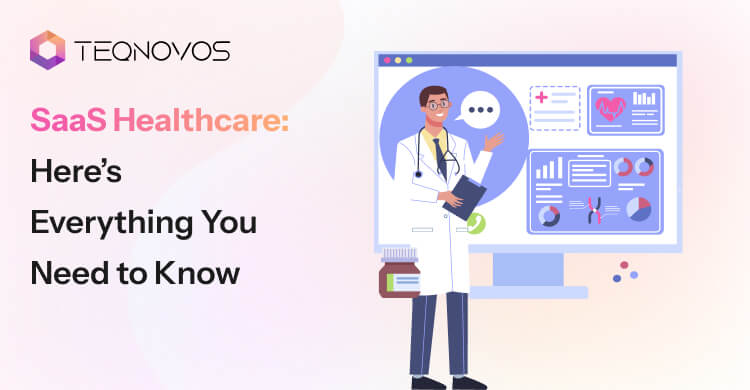
SaaS Healthcare: Here’s Everything You Need to Know
In the past decade, we have witnessed a drastic increase in the number of internet users. The widespread use of the internet has resulted in the emergence of several new technologies, including cloud computing.
Cloud computing refers to the delivery of IT infrastructure and services over the internet. There are different service models of cloud computing, and SaaS is one among them.
SaaS allows the delivery of software over the internet. Healthcare teams can access the platform through a secure browser while the software stays hosted on a central cloud server. Healthcare providers need faster and more connected digital systems. This has made cloud based healthcare platforms more important for modern medical businesses.
This blog explains how SaaS is changing healthcare. It also covers key benefits, trends, and the role of healthcare SaaS development in building scalable healthcare software.
Quick Answer
Custom healthcare app development services help medical businesses build secure cloud based platforms for patient care and workflow control. It gives healthcare teams easier access to data through one connected system. A strong platform needs secure access and scalable architecture. This SaaS healthcare software development guide explains the key areas businesses need to consider before building a product.
What Is SaaS Healthcare?
Healthcare SaaS development service helps medical businesses manage care operations through cloud based systems. It allows healthcare teams to access patient data, appointments, billing reports, and communication tools through a secure online platform.
This model reduces the need for local infrastructure. It also helps healthcare businesses to update features faster and support users across different locations.
The advent of cloud computing and SaaS development for healthcare made it possible for healthcare organizations to make the most of EMR (electronic medical record), EHR (electronic health record), and telehealth. Healthcare providers can use healthcare software without having to worry about setting up and managing an IT infrastructure.
Healthcare SaaS is in huge demand today, and there are thousands of applications available in the market. Healthcare providers have the flexibility to choose the most suitable applications according to their requirements.
The market growth clearly indicates the increasing demand for healthcare SaaS applications. Consequently, there is an excellent opportunity for every SaaS healthcare company to create innovative SaaS apps to meet the growing needs of healthcare providers.
Key Benefits of SaaS in Healthcare
SaaS gives healthcare businesses a flexible way to reduce software costs, improve access, protect patient data, and support connected care workflows.
1. Helps Save Money
The development and maintenance costs of healthcare software are huge. Building proprietary software costs a large upfront investment that only a few healthcare organizations can afford. With SaaS, there’s no need to pay for maintenance and upgrades because the vendor handles these tasks. The vendor manages updates and infrastructure. This helps healthcare businesses reduce long term software costs and avoid heavy system management.
2. Better Data Security
Healthcare applications deal with sensitive patient data. Since healthcare data moves across digital systems, strong protection is required at every access point. The SaaS applications for healthcare make use of various security measures to ensure the confidentiality and integrity of data. Additionally, these apps adhere to various standards and compliances, such as HIPAA, to prevent misuse of patient data. Strong platforms also support encryption and secure data backup.
3. Highly Scalable
Being cloud-based, SaaS applications can scale up or down effortlessly. A healthcare organization has the flexibility to scale a SaaS app depending on its business’s needs. A healthcare business can add more features and integrations as demand grows. Healthcare SaaS development services assist businesses in building platforms that support users and data as they expand.
4. Easy Access
Ease of access is probably one of the most important benefits of using SaaS-based healthcare applications. As SaaS apps are accessible over the internet, medical professionals and patients can access them from anywhere through supported devices and browsers.
5. Effective Collaboration
Collaboration among healthcare professionals is key to delivering better patient care. With SaaS applications, doctors, nurses, and medical staff effectively coordinate with each other. They can share patient data, lab results, and second opinions in real time. Fast collaboration helps medical teams respond better during urgent care situations.
6. Promotes Telemedicine
Telemedicine helps patients access care faster without visiting a clinic for every consultation. Patients can receive the best treatment without leaving their homes. Telemedicine allows doctors and patients to connect. SaaS apps facilitate telemedicine and let patients consult qualified doctors over a video call. SaaS development for healthcare helps businesses connect video consultations, patient records, appointment booking, and secure messaging in one platform.
Build Secure Healthcare SaaS. —Book a Quick Call!
Schedule a Call
Common Types of SaaS Healthcare Solutions for Modern Care Delivery
SaaS healthcare software can serve different healthcare needs based on the care model and business goal. Some platforms improve patient access. Others strengthen clinical workflows or healthcare management.
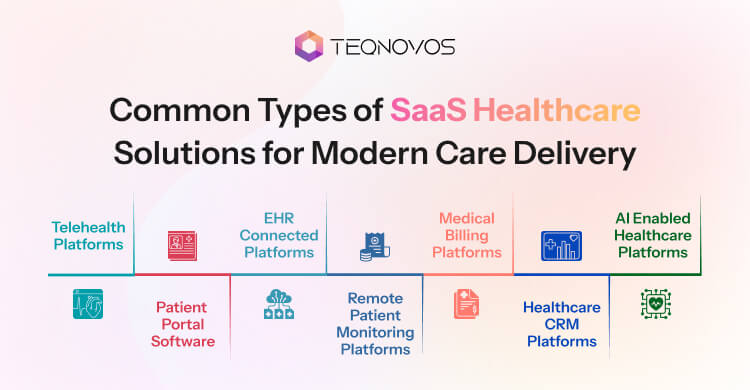
- Telehealth Platforms:
Connect patients and providers through secure online consultations and virtual care access. These platforms make remote care faster and more convenient for both sides.
- Patient Portal Software:
Give patients direct access to appointments and care updates. This improves engagement and reduces manual admin tasks for healthcare teams.
- EHR Connected Platforms:
Unify medical data across clinical systems. These platforms help doctors access patient history, update care records, and improve coordination across departments.
- Remote Patient Monitoring Platforms:
Track patient health beyond the clinic. These solutions collect updates through connected devices and help care teams monitor risk alerts and ongoing treatment progress.
- Medical Billing Platforms:
Simplify claims, payment tracking, and billing workflows. They help healthcare businesses reduce errors and manage payments with more accuracy.
- Healthcare CRM Platforms:
Strengthen patient relationships through better follow ups and communication tracking. They help care providers manage engagement with more structure.
- AI Enabled Healthcare Platforms:
Automate routine tasks and workflow decisions. These platforms help healthcare businesses reduce manual pressure and act on data faster.
Essential Features of SaaS Healthcare Platforms for Better Care Delivery
A strong healthcare SaaS platform needs features that support patient care and secure data access. Businesses with complex care models often need custom healthcare software development to shape these features around real patient journeys and internal workflows.
1. Patient Profiles
Centralize patient details, medical history, and care updates in one secure place. This helps doctors and staff access important data faster during care delivery.
2. Appointment Scheduling
Reduce manual booking work through digital appointment scheduling. Patients can book or reschedule visits while admin teams manage availability with better control.
3. Role Based Access
Protect sensitive healthcare data by giving each user the right access level. Healthcare staff and patients need different permissions across the platform.
4. Telehealth Support
Expand care access through online consultations and remote care. This feature helps healthcare businesses serve patients beyond physical locations.
5. Secure Messaging
Improve communication between patients and care teams through protected messaging. It keeps care conversations organised and easier to track.
6. Billing Dashboard
Simplify invoices and billing updates from one place. This helps healthcare teams reduce errors and manage financial workflows with more accuracy.
7. Reporting Tools
Turn platform data into useful insights. Reports help healthcare businesses track appointments, billing performance, and care outcomes.
8. Audit Logs
Record user actions and data access history. Audit logs support compliance checks and help teams spot unusual activity.
9. Integration Support
Connect the platform with EHR systems and other healthcare software. Strong integration planning is important in SaaS healthcare software development because healthcare teams often depend on many connected systems.
Compliance Requirements for SaaS Healthcare Platforms
Healthcare platforms deal with sensitive patient data. So compliance needs to guide the product from the first planning stage. Healthcare software needs strong privacy controls and clear data handling rules to protect users.
- HIPAA Planning:
Build compliance planning into the product roadmap before development starts. This helps the platform manage patient data access and reporting with better control.
- Data Encryption:
Protect patient records and clinical information through encryption. This reduces the risk of data exposure during storage and transfer.
- Access Control:
Give users access based on their role. Healthcare providers and patients need different permission levels across the platform.
- Audit Trails:
Track user actions and data access history. Audit trails help healthcare businesses monitor activity and support compliance reviews.
- Secure APIs:
Keep connected systems safe through secure API access. This matters when the platform connects with EHR systems or third party healthcare apps.
- Data Backup:
Store backups securely to protect business continuity. Strong backup planning helps teams recover important data if a system issue or data loss event happens.
- Consent Control:
Allow patients to manage consent for data use and record sharing. This adds more transparency to the patient experience.
- Breach Response Workflow:
Create a clear workflow for identifying and responding to data incidents. Fast action helps healthcare businesses reduce risk and manage compliance duties with more confidence.
Read our blog about data privacy and security in healthcare app development before planning compliance workflows.
Essential Integrations for Healthcare SaaS Platforms
Healthcare SaaS platforms need strong integrations because care teams use many systems every day. Connected systems help reduce duplicate work and support smoother care delivery across workflows.
1. EHR and EMR Systems
Connect patient history, including diagnosis and treatment notes with the main platform. This step is important in SaaS healthcare software development because doctors need complete patient data during care delivery.
- Connect patient history
- Share treatment records
- Sync prescriptions
- Improve care coordination
2. Pharmacy Systems
Link prescriptions and medication records with pharmacy systems. This helps care teams track medicine updates and reduce manual coordination.
- Link prescriptions
- Track refill requests
- Update medicine records
- Reduce manual follow ups
3. Lab Systems
Sync lab orders and patient updates in one place. This helps doctors review results faster and avoid delayed communication.
- Sync lab orders
- Share test results
- Store patient reports
- Speed up reviews
4. Insurance Systems
Connect eligibility claims status and policy details with the platform. Insurance app security solutions also matter here because claims and patient records need secure exchange between insurers and patients.
- Check patient eligibility
- Track claims status
- Share policy details
- Secure claims data
5. Payment Gateways
Support online payments and payment confirmations. This helps patients pay faster and gives admin teams better control over financial workflows.
- Collect online payments
- Track invoices
- Confirm transactions
- Improve billing control
6. Wearables
Collect patient health data from connected devices such as heart rate monitors and fitness devices. This helps care teams monitor health activity outside the clinic.
- Collect health data
- Track patient activity
- Monitor risk signals
- Support remote care
7. Telehealth APIs
Enable video consultations and remote care features. Businesses planning custom healthcare software development can use these integrations to create a smoother virtual care experience.
- Enable video calls
- Support secure chat
- Send reminders
- Connect virtual care tools
Launch Your Healthcare SaaS Platform. —Talk to Us!
Schedule a Call
How Much Does Healthcare SaaS Development Cost?
The cost of healthcare SaaS software depends on the platform and security level. A basic platform costs less because it has fewer workflows. A complex healthcare SaaS product needs stronger access control and data protection.
Businesses planning SaaS development for healthcare should also consider cloud hosting, maintenance, security updates, compliance reviews, and future upgrades.
| Healthcare SaaS Type | Estimated Cost |
| Basic Healthcare SaaS MVP | $30,000 to $80,000 |
| Patient Portal Platform | $40,000 to $120,000 |
| Telehealth SaaS Platform | $80,000 to $250,000 |
| EHR Connected SaaS Platform | $120,000 to $300,000 |
| AI Enabled Healthcare SaaS Platform | $150,000 to $500,000+ |
A clear product scope helps control the budget. Healthcare businesses can start with essential features first and add advanced tools as the platform grows.
How AI Enhances Healthcare SaaS Platforms with Smarter Workflows
AI brings faster decisions and responsive patient support into healthcare SaaS platforms. It helps teams cut manual steps and use data with more confidence across clinical admin and operational tasks.
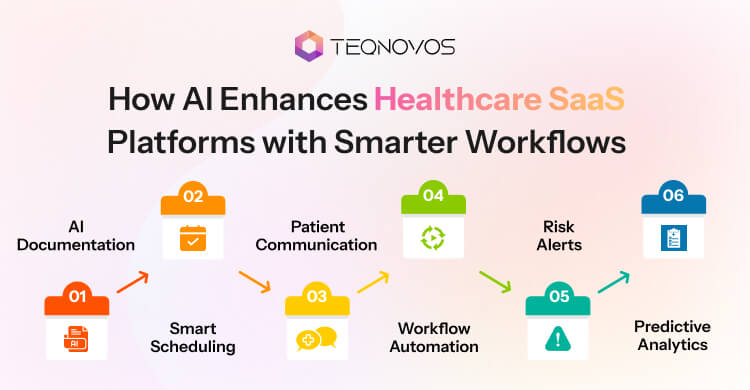
1. AI Documentation
Capture clinical notes and record updates through AI medical dictation software. This gives doctors more time for patient care and reduces documentation delays.
- Capture visit summaries
- Update records faster
- Reduce typing work
- Improve note accuracy
2. Smart Scheduling
Streamline appointment booking with smarter time slot suggestions and availability checks. This helps clinics reduce missed visits and manage staff time better.
- Suggest time slots
- Manage reminders
- Reduce no shows
- Balance staff workload
3. Patient Communication
Improve response speed through chat and voice tools that handle simple patient queries and reminders. This gives patients faster support while reducing admin pressure.
- Answer basic queries
- Share care updates
- Send reminders
- Guide simple tasks
4. Workflow Automation
Speed up routine approvals and follow up actions. AI workflow automation software development assists businesses in reducing repetitive work and improving process control.
- Route daily tasks
- Trigger follow ups
- Handle reports faster
- Reduce manual steps
5. Risk Alerts
Detect unusual patient patterns before they become serious issues. This helps care teams act sooner and monitor patient progress with better visibility.
- Spot risk signals
- Flag abnormal data
- Alert care teams
- Support faster action
6. Predictive Analytics
Turn patient activity service demand and care trends into useful planning insights. This helps healthcare businesses improve resource staffing and long term decisions.
- Forecast demand
- Review care trends
- Plan resources
- Guide decisions
SaaS Healthcare Application Development Process
Building a SaaS based healthcare application needs clear planning and continuous product support. A focused process helps healthcare businesses reduce risk and build a platform around real care workflows.
Step 1: Research and Validation
Study user needs and healthcare workflow challenges. This helps confirm if the product idea has real demand.
Step 2: Requirement Planning
Define the compliance needs, integrations, and data flow. Clear planning keeps the project aligned before development starts.
Step 3: MVP Development
Build an MVP with only the essential features. This helps test the idea faster and control early development costs.
Step 4: Design and Development
Design wireframes and core features with UI/UX services. This stage sets the foundation for SaaS development for healthcare.
Step 5: Feature Development
Develop the core features based on the approved scope. Hire healthcare app developers to build and scale these features with the right tech support.
Step 6: Testing and Deployment
Test the platform for performance and feature accuracy. After testing, the product can be deployed on the cloud for users.
Step 7: Maintenance and Updates
Monitor the platform after launch and improve it with updates and security fixes. This makes healthcare SaaS development an ongoing process.
Conclusion
SaaS healthcare has become a practical choice for healthcare businesses that need secure and cloud based systems. It helps healthcare businesses manage patient data and care workflows with better control.
A strong SaaS platform also supports easier access and secure integrations. This makes SaaS healthcare important for businesses that want to build reliable digital healthcare products. Choosing the right SaaS development company for healthcare can help businesses plan the right features and growth path.
Connect with Teqnovos for healthcare app developers. Our team supports compliance focused development and continuous product improvement. Book your free demo now!