
























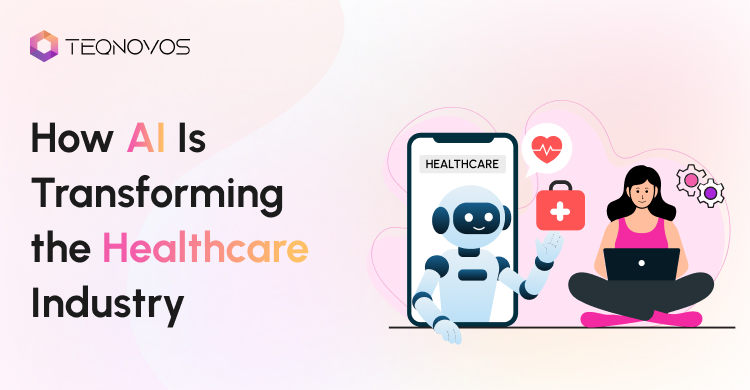
How AI Is Transforming the Healthcare Industry
Healthcare systems face rising patient demand. They also manage staff shortages and growing administrative work. These pressures are encouraging healthcare organizations to explore tools that can improve speed and reduce repetitive work.
AI in healthcare has moved beyond early testing. Healthcare is using AI aggressively, even in its professional work. Common uses included clinical documentation and medical research summaries. This growth shows how artificial intelligence in healthcare is becoming part of daily medical practice.
The technology can review large amounts of medical information. However, it cannot replace medical judgement or human empathy. Understanding how AI is transforming healthcare requires a balanced view. The technology offers clear opportunities. This guide explores its practical uses and future role.
How Smart Systems Work With Health Data
Healthcare organizations manage large volumes of patient information every day. AI technology in healthcare helps teams review this information faster. It can study patient records, test results, and medical images. It can also highlight details that may need attention.
- These systems work with data from medical records and diagnostic reports. Monitoring tools assist in collecting relevant health information. The quality of this information affects the quality of the result.
- Machine learning in healthcare can identify patterns across large datasets. It may help detect unusual results or possible health risks. Healthcare professionals still review the findings before taking action.
- The system can organize key patient details and bring useful insights together. This support can help medical teams make more informed decisions. It does not replace professional judgement.
- Intelligent healthcare systems work best when trained professionals remain involved. Human review helps confirm accuracy and reduce risk. It also keeps patient care at the center of every decision.
How Medical Information Becomes Useful Insight
Many readers ask how does AI works in healthcare? The process starts with health data and ends with a result that professionals can review. Each stage affects the accuracy and usefulness of the final insight.
Relevant Data Enters the System: The platform receives information from patient records and test reports. It also receives data from medical images and monitoring tools. This data must be complete and accurate. Poor input can lead to weak or misleading results.
The System Learns From Past Information: The technology studies large sets of historical health data. It looks at confirmed outcomes and previous cases. This helps the system understand which patterns may point to a risk or condition.
Patterns Are Identified: The system compares new medical information with patterns found during training. Healthcare data analytics helps reveal changes and possible risk factors that may be difficult to review manually.
Results Are Generated: The system may produce a risk score, alert, or suggested action. This shows how AI is used in healthcare to support faster analysis. The result should guide professional review rather than replace it.
Healthcare Professionals Review the Output: Doctors and clinical teams assess the result with the full patient context. They consider medical history and current treatment needs. This human review remains essential in AI in healthcare analytics.
Ready to Build an AI-Powered Healthcare Solution? Let's Build Together!
Schedule a CallWhere Intelligent Systems Create Value Across Healthcare
The applications of AI in healthcare advance across daily operations and medical research. These systems help teams review information faster and manage routine tasks with greater consistency. They also support earlier action when health risks appear.
1. Clinical Care
The role of AI in healthcare is most visible in diagnosis and treatment support. Intelligent systems can review test results of patient histories and medical images. They can highlight patterns that need professional attention. They can also help care teams monitor patients between visits.
2. Hospital Operations
Many use cases of AI in healthcare focus on work outside direct treatment. Hospitals can use these systems for scheduling and documentation. They can also use it for billing purposes and resource planning. This reduces repetitive work and gives staff time for patient needs.
3. Medical Research
Intelligent systems can review large amounts of research data. They can help researchers identify promising treatment paths and study disease patterns. This could result in improved trial planning. These tools can speed up analysis while experts remain responsible for final decisions.
4. Connected Care
Healthcare providers can also use intelligent systems in virtual consultations, remote monitoring, and personalized care plans. These tools can improve access and support continuous care beyond hospitals and clinics.
People often ask what are the applications of AI in healthcare?
Well, they include clinical support and medical imaging. It also includes patient monitoring, administration, and research. Each application serves a different purpose. The strongest results come when the technology solves a clear problem and works under professional supervision.
How Smarter Systems Support Faster Diagnosis
Healthcare professionals often review symptoms and patient test result records together. Intelligent systems can process this information quickly. They can also highlight patterns that may need closer attention.
1. Complete Patient Review
AI in medical diagnosis can compare laboratory results with medical history and reported symptoms. It can bring important details into one view. This helps clinical teams review each case with better context.
2. Early Risk Signals
AI in disease detection can flag unusual patterns linked to a developing condition. It can help teams identify cases that need urgent review. The result does not confirm a disease on its own.
3. Decision Support
The use of AI in medicine can reduce the time needed to review large amounts of information. It can also help professionals notice details that may be missed during busy clinical work.
4. Human Oversight
Qualified healthcare professionals must make the final diagnosis. They consider symptoms, medical history, and patient needs. Intelligent systems support their work. They do not replace clinical judgement.
How Intelligent Systems Improve Medical Image Review
Medical teams review large volumes of scans and tissue images every day. Intelligent systems can find patterns that need closer attention. They help specialists focus on complex cases while keeping human review central.
1. Scan Review
AI in medical imaging can examine images from radiology systems. It can highlight areas that may show fractures, tumors, and internal bleeding. Specialists review the findings before making a clinical decision.
- Flags unusual image patterns
- Supports faster scan review
- Prioritizes urgent cases
- Reduces missed details
2. Tissue Analysis
Pathology teams can use intelligent tools to review tissue samples. The system can identify unusual cell patterns and mark areas that need further study. This can reduce manual review time.
- Detects abnormal cell structures
- Organizes complex tissue images
- Highlights suspicious regions
- Supports consistent analysis
3. Eye Screening
Eye care teams can use image analysis to identify signs linked to retinal disease. The system can flag changes that may need specialist attention. This can support earlier screening in busy care settings.
- Reviews retinal images
- Detects early visual changes
- Supports faster screening
- Refers high risk cases
4. Clinical Support
Medical imaging AI works best as a support tool. It can improve review speed and consistency. It cannot replace specialist knowledge or patient context. These are practical AI in healthcare examples that show how technology can strengthen image review.
- Assists trained specialists
- Improves review consistency
- Supports better case priority
- Keeps human judgement central
How Patient Data Supports Better Treatment Decisions
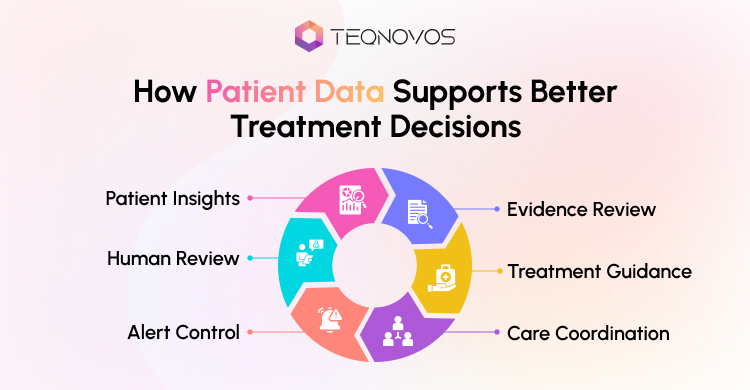
Healthcare professionals review patient treatment history and current symptoms before making a decision. Intelligent systems can organize this information and highlight details that may need attention. They support faster review while keeping professional judgement central.
1. Patient Insights
Clinical decision support tools can bring patient data into one clear view. They help professionals assess each case with better context.
- Reviews patient records
- Highlights health changes
- Connects test results
- Supports case assessment
2. Evidence Review
Intelligent systems can compare patient information with trusted medical guidance and past clinical findings. This helps teams review relevant evidence without searching through large volumes of data.
- Finds relevant guidance
- Reviews past outcomes
- Organizes clinical evidence
- Supports informed decisions
3. Treatment Guidance
AI in clinical decision support can suggest possible care options for professional review. The system does not select treatment on its own.
- Supports care planning
- Compares treatment options
- Identifies possible risks
- Improves decision consistency
4. Care Coordination
Intelligent systems can help different care teams access the same patient information. This supports clearer communication across departments.
- Shares key patient details
- Reduces missing information
- Supports team communication
- Improves care continuity
5. Alert Control
Too many system alerts can distract healthcare teams. Useful tools should show relevant warnings and explain why each alert matters.
- Reduces unnecessary alerts
- Prioritizes urgent warnings
- Limits repeated notices
- Supports focused work
6. Human Review
AI for healthcare professionals should support decisions rather than make them alone. Medical teams must review every recommendation with the full patient context.
- Keeps professionals accountable
- Confirms system suggestions
- Considers patient needs
- Protects clinical judgement
How Predictive Insights Help Teams Act Before Risks Grow
Healthcare teams often need to identify risks before a condition becomes serious. Predictive analytics in healthcare reviews past and current patient data to identify patterns linked to future outcomes. These insights help teams plan earlier action while keeping professional judgement central.
1. Readmission Risk
Predictive systems can identify patients who may return after discharge. They review treatment history, recovery progress, and existing health conditions. Care teams can then plan extra follow up support.
2. Disease Progression
Intelligent systems can track changes in symptoms and test results over time. This helps healthcare professionals identify signs that a condition may be getting worse.
3. Patient Deterioration
AI in patient care can help teams spot warning signs before a patient reaches a critical stage. The system may flag unusual changes in vital signs or test results for immediate review.
4. Resource Demand
Predictive insights can also help hospitals prepare for future patient demand. Teams can estimate staffing pressure and equipment use. This improves planning during busy periods.
The impact of AI on healthcare becomes useful when it supports earlier action. Reliable data and professional review remain essential for every prediction.
How Connected Care Supports Personalized Treatment at Home
Intelligent systems can help healthcare teams understand how each patient responds to treatment. They can review health history and ongoing risks. This supports care plans that match individual needs. It also helps teams track health changes outside hospitals.
1. Treatment Planning
AI in personalized medicine can help teams compare patient history with treatment outcomes. It can support more suitable care choices based on individual health needs. Professionals still review each recommendation before changing a treatment plan.
- Reviews patient health history
- Compares treatment responses
- Supports individual care plans
- Tracks treatment progress
2. Wearable Insights
Wearable devices can collect health information throughout the day. They may track heart rate and sleep patterns. Intelligent systems can review this information and alert care teams when important changes appear.
- Tracks daily health activity
- Identifies unusual changes
- Supports continuous observation
- Improves follow up planning
3. Home Monitoring
AI in remote patient monitoring helps care teams track patients outside clinical settings. Connected devices can send regular health updates for professional review. This gives teams more visibility between appointments.
- Monitors health from home
- Sends timely care alerts
- Supports earlier intervention
- Reduces unnecessary visits
4. Medication Support
Intelligent systems can help teams review medication use and possible missed doses. They can also flag changes that may need professional attention. This support can improve safety for patients who manage several medicines.
- Tracks medication routines
- Flags missed doses
- Supports dosage review
- Improves treatment safety
5. Recovery Tracking
Care teams can use connected data to follow patient progress after treatment or surgery. The system can compare daily changes with the expected recovery path. It can also highlight signs that may require earlier review.
- Measures recovery progress
- Tracks daily changes
- Flags delayed improvement
- Supports timely follow ups
6. Chronic Care
Patients with long term conditions often need regular support. AI powered healthcare systems can track symptoms, medication patterns, and recovery progress. They can help teams adjust care before small changes become serious concerns.
- Tracks ongoing symptoms
- Supports medication review
- Identifies growing health risks
- Improves care continuity
Connected systems can also support safer care for older adults. AI powered aged care solutions can help families and care teams monitor health changes and daily activity with greater consistency.
Build Secure AI Healthcare Applications With Confidence. Let's Build Smarter Healthcare!
Schedule a CallHow Virtual Care Expands Access to Healthcare
Intelligent systems can support this process by organizing patient details and guiding routine communication. With virtual care, teams can connect with patients easily. AI in telemedicine can also help teams manage growing virtual care demand without reducing human involvement.
1. Symptom Review
Intelligent systems can collect patient symptoms before a virtual consultation. They can organize the information and highlight details that may need urgent attention. This helps professionals prepare before speaking with the patient.
2. Visit Priority
Healthcare teams can use intelligent systems to review appointment requests. The system can identify cases that may need faster attention. It can also direct routine concerns to the right service.
3. Patient Follow Up
Virtual care platforms can send reminders and collect recovery updates after an appointment. They can also help teams track treatment progress between consultations. This supports more consistent communication.
4. Remote Support
AI in hospitals can connect with virtual care systems to support patients after discharge. Care teams can review updates and respond when health changes appear. This helps extend care beyond the hospital setting.
5. Care Access
Virtual care can support patients who live far from healthcare facilities. It can also benefit people who face travel or mobility limitations. The importance of AI in healthcare becomes clearer when technology helps more patients reach timely care.
6. Human Connection
Intelligent systems support virtual care, but they cannot replace professional judgement or patient trust. Healthcare professionals must review the information and guide every important care decision.
How Smarter Workflows Reduce Administrative Pressure
Healthcare teams spend many hours on routine tasks. Intelligent systems can reduce this burden and improve workflow accuracy. AI in healthcare administration helps teams manage daily operations while keeping staff focused on patient needs.
| Administrative Area | How Intelligent Systems Help | Practical Value |
| Appointment Scheduling | The system matches patient needs with available time slots. It can also manage reminders and cancellations. | Teams reduce booking delays and improve schedule use. |
| Claims Processing | The system reviews claim details and checks missing information before submission. | Billing teams reduce avoidable errors and payment delays. |
| Medical Coding | The system reviews clinical notes and suggests suitable codes for staff approval. | Coding teams work faster and maintain greater consistency. |
| Clinical Documentation | Generative AI in healthcare can prepare draft notes and summarize visit details. Professionals review every draft before saving it. | Care teams spend less time on manual documentation. |
| Patient Communication | The system can send routine updates, appointment instructions, and follow up messages. | Patients receive timely information without adding pressure on staff. |
| Record Management | AI in electronic health records can organize patient information and highlight missing details. | Healthcare teams can access useful information with less manual searching. |
These tools deliver the most value when they connect with existing systems. A planned healthcare SaaS development approach can support secure access and smoother workflows for future growth.
How Intelligent Systems Support Faster Medical Research
AI in drug discovery helps experimenters review volumes of scientific data and identify promising compounds. It can support molecule screening and clinical trial matching. This leads to deep research analysis. This makes AI in healthcare research useful for reducing early research time and improving how teams compare possible drug candidates.
These AI innovations in healthcare support experts throughout the research process. They do not approve medicines or confirm treatment safety. Researchers and clinical teams still lead testing and regulatory review.
How Advanced Systems Improve Care and Operations
The main value comes from faster analysis for better workflow support. The technology can improve patient experiences while helping healthcare organizations use their time and resources more effectively.
1. Faster Decisions
Reviews a large amount of health data quickly to help make better and faster decisions. Thus, the staff can focus on other activities without spending hours on manual research.
- Reduces review time
- Highlights urgent findings
- Supports timely action
- Improves clinical response
2. Earlier Intervention
The major benefits of AI in healthcare include earlier risk identification. Intelligent systems can detect changes before a condition becomes more serious.
- Identifies warning signs
- Supports preventive care
- Prioritizes high risk cases
- Reduces delayed treatment
3. Personalized Care
Intelligent systems can help teams understand individual health needs. They support treatment plans based on patient history and progress.
- Supports tailored care plans
- Tracks treatment response
- Improves follow up care
- Strengthens patient engagement
4. Lower Workload
The advantages of AI in healthcare also extend to daily operations. Automation can reduce repetitive administrative work for clinical and support teams.
- Reduces manual documentation
- Supports faster scheduling
- Improves coding accuracy
- Limits repetitive tasks
5. Better Planning
Healthcare organizations can use intelligent insights to plan staffing, equipment, and bed use. This supports smoother operations during busy periods.
- Improves resource allocation
- Forecasts service demand
- Supports staff planning
- Reduces operational delays
6. Care Continuity
Intelligent systems can connect patient information across visits and care settings. This helps teams maintain a clearer view of patient progress.
- Improves information access
- Supports coordinated care
- Reduces missing details
- Strengthens long term support
So why is AI important in healthcare? It helps organizations improve consistency and care quality. Its value grows when professionals remain involved, and patient safety guides every use.
Risks Healthcare Leaders Must Address
The challenges of AI in healthcare can affect patient safety and daily operations. Healthcare organizations need clear controls before these systems support clinical or administrative work. Each risk needs regular review and human oversight.
1. Data Bias
Intelligent systems learn from existing health data. Incomplete or unbalanced data can produce unfair results for certain patient groups. Healthcare teams must test system performance across different populations before wider use.
2. Incorrect Outputs
An intelligent system can produce an inaccurate result even when the response appears confident. This can affect diagnosis, support, treatment planning, and patient communication. Qualified professionals must review every important output before taking action.
3. Privacy Risks
Healthcare systems process exposed patient information. Weak data controls can expose medical records or allow unauthorized access. A clear approach to healthcare data privacy and security can help organizations protect patient information throughout the system.
4. Security Threats
Advanced AI healthcare tools can become an easy target for cyberattacks. They may attempt to steal the data and manipulate the system to delay care. Having strong access controls and regular security testing can reduce these risks.
5. Limited Explainability
Some systems provide a result without showing how they reached it. This makes it difficult for professionals to assess the recommendation. Healthcare organizations should choose tools that provide clear evidence and useful reasoning.
6. System Integration
New tools may not work well with existing healthcare platforms. Poor integration can create duplicate records and delayed workflows. Organizations should test data exchange and system compatibility before launch.
7. Overreliance Risks
Teams may trust automated results without reviewing the full patient context. This can weaken professional judgement and increase clinical risk. Intelligent systems should support decisions rather than control them.
8. Legal Responsibility
Technology cannot accept clinical or legal responsibility for patient outcomes. Healthcare professionals and organizations remain accountable for every final decision. Clear policies must define who reviews each result and who approves each action.
Why Human Oversight Still Matters in This System?
Can AI replace doctors?
No. AI in medicine can process data, identify patterns, and suggest possible actions. Doctors still provide judgment and take accountability for decisions. AI for healthcare professionals works best as a support tool. It should improve decisions without removing human responsibility.
How Healthcare Organizations Can Adopt Intelligent Systems Safely
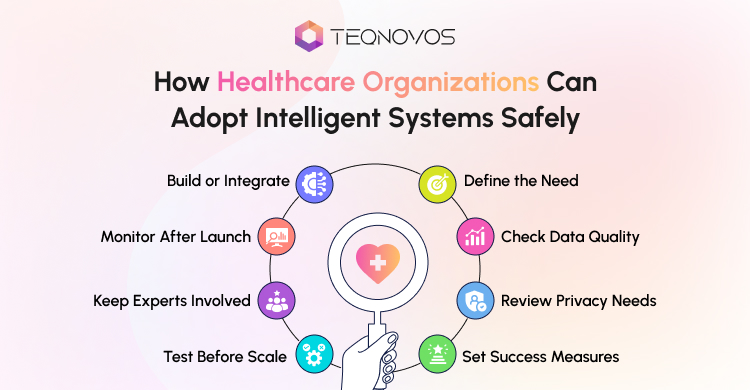
The use of AI in the healthcare industry needs more than a new software tool. Healthcare organizations need a clear plan that protects patients and delivers measurable value.
1. Define the Need
The organization should begin with one clear problem. It may need better patient monitoring or stronger clinical support. A focused goal helps prevent unnecessary technology spending.
2. Check Data Quality
Reliable systems need accurate and complete health data. Teams should review outdated information and inconsistent formats before training or connecting the system.
3. Review Privacy Needs
Patient information needs strong protection at every stage. The organization should control data access and sharing. Security testing should happen before the system reaches real users.
4. Set Success Measures
Every project needs measurable goals. These may include faster task completion or better patient follow up. Clear measures help teams judge whether the system delivers real value.
5. Test Before Scale
The organization should test the system in a controlled setting. A small pilot can reveal workflow issues, inaccurate results, and staff concerns before wider use.
6. Keep Experts Involved
Healthcare professionals should help shape the system and review its outputs. Their involvement keeps the technology aligned with real clinical needs and patient safety.
7. Monitor After Launch
Performance can change as data and workflows change. Teams should review accuracy, user feedback, and safety concerns after launch. Regular monitoring keeps the system reliable.
8. Build or Integrate
An existing tool may suit a common task such as scheduling or documentation. A custom solution may work better when the organization has unique workflows or data needs. Custom healthcare app development can support deeper integration and stronger control over features and future growth.
What Comes Next for Intelligent Healthcare
The future of AI in healthcare will focus on safer and more connected systems. New tools may combine medical images, patient records, and live monitoring data in one view. They may also support better clinical documentation and more personalized care. It will depend on how well organizations balance innovation with patient safety and human oversight.
Conclusion
AI in healthcare creates value when it supports professionals and improves daily workflows. Reliable data and human oversight help protect patients and improve system performance.
Teqnovos helps healthcare organizations build secure and practical digital solutions. Businesses can hire healthcare app developers to create systems to support clinical needs and growth.