























Guide on Cloud Computing in Healthcare: Benefits, Security Challenges, and Risks
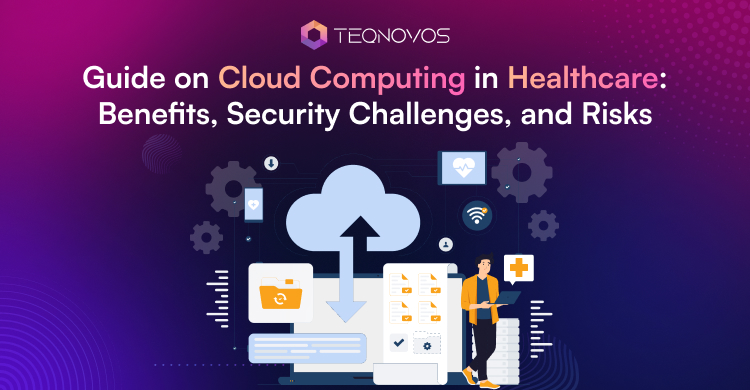
Healthcare organizations manage large volumes of patient data every day. They need secure systems that can store information. They also need faster access to data for better care delivery. Traditional healthcare infrastructure can create challenges as digital healthcare services continue to expand. Managing growing data needs and maintaining system performance requires a more flexible approach. Cloud computing in healthcare industry provides organizations with a secure way. They can store and process healthcare data through cloud platforms. It helps teams improve collaboration and build scalable digital healthcare solutions. However, cloud adoption requires careful planning. Healthcare businesses need to evaluate their technology needs. They also need to understand security requirements before moving sensitive data to the cloud. This guide explains what is cloud computing in healthcare and how organizations use this technology to improve healthcare operations. It covers the key benefits and practical strategies to support secure cloud adoption.
Key Takeaways
- Cloud computing helps healthcare organizations manage patient data and applications.
- It also helps manage digital healthcare systems more efficiently.
- Healthcare businesses use cloud solutions to support patient care and connected platforms.
- Strong security planning helps protect sensitive patient information and supports safer cloud adoption.
- Selecting the right cloud model depends on healthcare needs and business goals.
What Is Cloud Computing in Healthcare?
It uses cloud platforms to store and manage data. Cloud computing in healthcare also assists in processing and accessing data through the internet. It allows healthcare organizations to reduce dependency on physical servers. Cloud systems support secure data management and scalable healthcare operations. They support better collaboration between healthcare teams by providing access to shared digital environments.
Understanding Cloud Technology in Healthcare
Healthcare organizations generate large amounts of data through patient records. Medical devices. And digital applications. Cloud technology provides a secure environment to manage this information. It helps healthcare teams access data faster and support modern healthcare workflows. Cloud based systems provide more flexibility by allowing healthcare organizations to use remote infrastructure. Businesses can adjust resources as their requirements change. They can also integrate modern healthcare applications without depending only on local infrastructure.
Build a Secure Cloud Healthcare Solution With Teqnovos. Scale Your Healthcare Platform With Confidence!
Schedule a CallWhy Is Cloud Computing Important in Healthcare?
Healthcare is becoming more digital with the growth of electronic records and virtual care services. Organizations need reliable infrastructure to manage this change. The importance of cloud computing in healthcare continues to grow as businesses look for flexible and secure ways to manage healthcare data. Cloud computing in healthcare industry supports this transformation by helping build flexible and secure environments.
Managing Growing Healthcare Data
Healthcare systems generate large volumes of patient information. Cloud platforms help organizations handle increasing data requirements without depending only on traditional infrastructure.
Supporting Digital Healthcare Transformation
Cloud technology enables healthcare businesses to adopt modern solutions. It supports connected healthcare platforms and improved collaboration between healthcare teams.
Applications of Cloud Computing in Healthcare
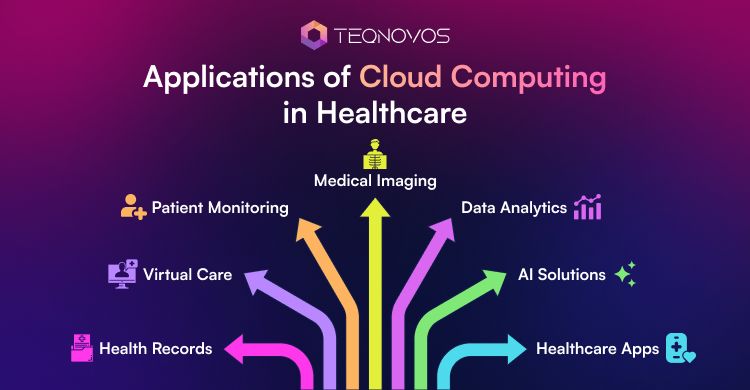 Healthcare organizations use cloud technology to improve data management. Support digital healthcare services. And build connected care systems. The applications of cloud computing in healthcare help businesses manage growing data needs. Improve collaboration. And create efficient healthcare workflows.
1. Health Records
Cloud platforms help healthcare providers store and access electronic health records. They allow authorized teams to view patient information when needed. This improves coordination and supports better healthcare decisions.
- Secure storage of digital patient records
- Faster access for authorized healthcare teams
- Improved coordination between providers
- Better management of healthcare information
2. Virtual Care
Cloud based telehealth platforms help healthcare providers offer remote consultations and digital care services. These solutions improve patient access. It also supports communication between healthcare professionals and patients.
- Remote consultations through digital platforms
- Better access to healthcare services
- Secure patient communication channels
- Improved virtual care workflows
3. Patient Monitoring
Cloud solutions support remote patient monitoring software by collecting health data from connected devices. Healthcare teams can review patient updates and respond faster when attention is required.
- Real time health data collection
- Continuous monitoring through connected devices
- Better support for chronic care management
- Faster response to patient health changes
4. Medical Imaging
Cloud platforms help healthcare organizations store and manage large medical imaging files. They allow healthcare professionals to access and share diagnostic information more efficiently.
- Secure storage of medical images
- Faster access to diagnostic records
- Improved collaboration between specialists
- Reduced dependency on local storage systems
5. Data Analytics
Cloud based analytics solutions help healthcare organizations process large volumes of healthcare data. They support better insights and improve operational and clinical decision making.
- Healthcare data analysis at scale
- Improved operational insights
- Support for predictive healthcare models
- Better informed clinical decisions
6. AI Solutions
Cloud infrastructure supports AI healthcare solutions by providing scalable computing resources. AI software development services help develop smarter healthcare applications and improve workflows.
- AI based healthcare data processing
- Automated workflow improvements
- Support for intelligent healthcare systems
- Better resource management
7. Healthcare Apps
Cloud infrastructure helps businesses develop scalable healthcare applications. These platforms support patient portals, healthcare management systems, and digital solutions. Businesses work with experienced healthcare app development services to build secure apps.
- Faster healthcare application development
- Scalable application infrastructure
- Secure data integration capabilities
- Better user experiences
Types of Cloud Computing in Healthcare
Healthcare organizations can choose different cloud models based on their data needs. Security requirements. And operational goals. Understanding the types of cloud computing in healthcare helps businesses select the right approach for managing healthcare applications and sensitive information. Many healthcare businesses use healthcare SaaS development models to deliver applications through secure cloud environments without managing complex infrastructure.
| Cloud Model | How It Works | Healthcare Use Case |
| Public Cloud | Uses shared cloud infrastructure managed by third party providers. | Supports healthcare applications. Data analytics. And scalable digital services. |
| Private Cloud | Provides a dedicated cloud environment for a single organization. | Helps manage sensitive healthcare data with greater control. |
| Hybrid Cloud | Combines public and private cloud environments. | Supports organizations that need flexibility with secure data management. |
| Multi Cloud | Uses multiple cloud providers for different business requirements. | Helps large healthcare organizations improve reliability and avoid dependency on one provider. |
Public Cloud
These solutions provide flexible infrastructure that healthcare organizations can scale based on demand. The platform is useful for applications that require high availability and efficient resource management.
- Supports scalable healthcare applications
- Reduces infrastructure maintenance needs
- Provides flexible resource allocation
- Helps manage growing digital services
Private Cloud
Private cloud environments provide dedicated infrastructure for healthcare organizations. They offer greater control over data management. This makes them suitable for businesses handling sensitive patient information.
- Greater control over healthcare data
- Improved customization options
- Stronger privacy management
- Supports specific compliance requirements
Hybrid Cloud
Hybrid cloud combines public and private cloud environments. It allows healthcare organizations to store sensitive information in private systems while using public cloud resources for scalable operations.
- Balances security and flexibility
- Supports complex healthcare workflows
- Enables better resource management
- Allows gradual cloud adoption
Multi Cloud
Multi cloud strategies involve using multiple cloud providers for different healthcare requirements. Organizations use this approach to improve flexibility and reliability.
- Reduces dependency on one provider
- Supports different business needs
- Improves system availability
- Provides more technology options
Benefits of Cloud Computing in Healthcare
Healthcare organizations need technology that supports better care delivery. Manages growing data needs. And improves daily operations. The benefits of cloud computing in healthcare help businesses build flexible systems. Improve collaboration. And support modern healthcare services.
1. Flexible Growth
Cloud platforms allow healthcare organizations to adjust resources based on changing requirements. They help businesses manage increasing data volumes and support new applications. It also assists in improving scalability without depending on traditional infrastructure.
2. Data Access
Cloud solutions help authorized healthcare teams access important information faster. They improve data availability and help providers make informed decisions with updated information. The importance of cloud computing in healthcare is increasing as organizations look for reliable technology solutions.
3. Cost Control
Cloud technology helps healthcare organizations optimize technology investments. Businesses can reduce hardware dependency and manage resources efficiently. It lowers the effort required for infrastructure maintenance.
4. Better Care
Cloud platforms support connected healthcare services by improving access to patient information. They help healthcare providers coordinate care and deliver faster services. Thus, delivering better patient experiences. Businesses exploring connected care models can also understand how healthcare monitoring systems using IoT help collect and manage patient data through connected technologies.
5. Strong Security
Cloud providers offer security features that help healthcare organizations protect sensitive information. With proper configuration, cloud environments can support secure data management practices.
6. Easy Integration
Cloud platforms can connect with healthcare applications, medical devices, and digital systems. This helps organizations create connected technology environments.
7. Disaster Recovery
Cloud based backup and recovery solutions help healthcare organizations maintain access to critical information during unexpected disruptions.
8. Faster Innovation
Cloud infrastructure helps healthcare businesses develop and launch new digital solutions faster. It provides flexible environments for testing and improving healthcare applications.
Security Challenges in Healthcare Cloud Computing
Healthcare organizations manage sensitive patient information through digital systems. This makes security a major concern during cloud adoption. Understanding the security challenges in healthcare cloud computing helps businesses create better protection strategies. It also helps maintain trust with patients and healthcare teams. Understanding the risks of cloud computing in healthcare helps organizations identify potential security gaps.
1. Data Privacy
Healthcare data includes patient records and personal health information. Unauthorized access or poor security practices can increase the risk of data exposure.
2. Compliance Needs
Healthcare organizations need to follow data protection and regulatory requirements when using cloud platforms. Proper planning helps businesses manage responsibilities related to healthcare information security.
3. Access Control
Managing user access is important for protecting healthcare cloud environments. Organizations need proper authentication methods and permission controls to ensure only authorized users access sensitive information.
4. Vendor Risks
Healthcare organizations often depend on cloud service providers for infrastructure and security capabilities. Selecting the right provider is important to maintain reliability and protect healthcare data.
How Healthcare Organizations Can Mitigate Cloud Security Risks
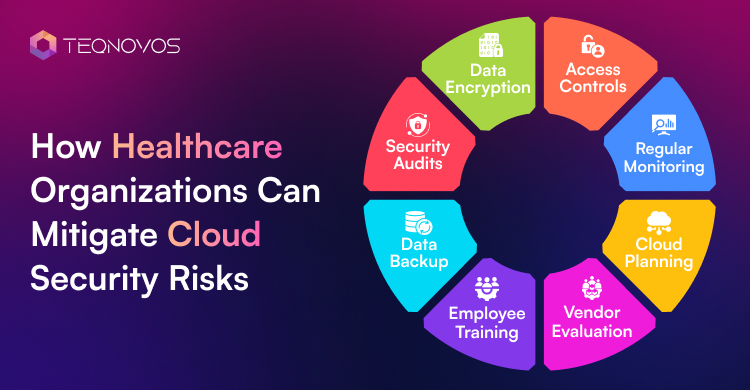 Businesses need a proactive approach to protect sensitive information stored on cloud platforms. The security of cloud computing in healthcare depends on strong security practices. Proper planning. And continuous monitoring can help reduce risks and improve cloud reliability. Understanding the risks of cloud computing in healthcare allows organizations to prepare stronger security strategies.
1. Data Encryption
Encryption is an effective way to secure health-care information through encoding the data. This can protect against any kind of unauthorized access to the information stored and transmitted.
- Protects sensitive healthcare information
- Secures data during transmission
- Reduces data exposure risks
- Supports stronger privacy practices
2. Access Controls
Strong access controls help healthcare organizations manage who can view or use sensitive information. Proper permissions ensure that users only access required data.
- Supports role based access management
- Enables multi factor authentication
- Monitors user activities
- Reduces unauthorized access risks
3. Regular Monitoring
Detect unusual activities and security concerns early. Continuous monitoring help businesses improve visibility across cloud environments.
- Tracks system activities
- Identifies suspicious behavior
- Supports faster threat detection
- Improves security awareness
4. Security Audits
Regular security audits help identify weaknesses in cloud environments. Healthcare organizations can review systems and improve security practices.
- Identifies potential vulnerabilities
- Supports compliance reviews
- Improves security monitoring
- Helps manage technology risks
5. Data Backup
Cloud based backup strategies help healthcare organizations protect important information during system failures or unexpected events.
- Prevents permanent data loss
- Supports disaster recovery planning
- Improves business continuity
- Enables faster data restoration
6. Employee Training
Healthcare employees play an important role in maintaining cloud security. Regular training helps teams understand security practices and avoid common mistakes.
- Improves security awareness
- Reduces human related risks
- Encourages safe data handling
- Supports organizational security culture
7. Vendor Evaluation
Healthcare organizations should carefully evaluate cloud providers before adoption. Reviewing security capabilities and reliability helps reduce third party risks.
- Assesses provider security standards
- Reviews compliance capabilities
- Improves vendor selection decisions
- Reduces dependency risks
8. Cloud Planning
Selecting the appropriate cloud architecture can help healthcare companies meet their security and business needs. It all depends on the sensitivity of data and other operations.
- Evaluates healthcare workflow requirements
- Selects suitable cloud models
- Supports secure data management
- Improves long term cloud performance
Common Mistakes Healthcare Organizations Make During Cloud Adoption
Cloud adoption can improve healthcare operations. However, poor planning can cause technical and security issues. The healthcare industry requires a proper plan before deploying its systems in the cloud environment. This ensures that businesses can avoid making common mistakes.
1. Poor Planning
Moving healthcare systems to the cloud without proper planning can create workflow issues. Organizations need to understand their data needs and business goals before adoption.
2. Ignoring Security
Security remains a priority throughout cloud adoption. Healthcare organizations need to protect sensitive patient information with security controls and risk management practices.
3. Wrong Cloud Model
Selecting an unsuitable cloud model can affect performance and operational efficiency. Organizations need to choose a model based on their specific healthcare requirements.
4. Integration Issues
Poor integration planning can create disconnected healthcare systems. Cloud platforms need to work smoothly with existing applications and healthcare workflows.
5. Limited Monitoring
Cloud adoption does not end after implementation. Continuous monitoring helps healthcare organizations identify issues and maintain security.
Ready to Modernize Healthcare With Cloud Technology? Build Your Cloud Healthcare Solution!
Schedule a CallHow Cloud Computing Will Shape the Future of Healthcare Innovation
Cloud technology will continue to shape how healthcare organizations manage data. Deliver services. And improve patient experiences. The future of cloud computing in healthcare industry focuses on smarter healthcare systems that support better outcomes.
1. AI Integration
AI combined with cloud platforms helps healthcare organizations process complex data and generate useful insights. It supports automation and improved decision making.
- Supports predictive healthcare models
- Improves clinical data analysis
- Enables intelligent automation
- Helps optimize healthcare workflows
2. Connected Devices
Cloud platforms support connected healthcare devices that collect and share health information. These systems help organizations build continuous care models beyond traditional healthcare settings.
- Supports IoT enabled healthcare devices
- Enables remote health tracking
- Improves device data management
- Helps create connected care ecosystems
3. Predictive Analytics
Cloud based analytics help healthcare organizations identify patterns within healthcare data. This allows providers to understand trends and support proactive care strategies.
- Helps identify healthcare trends
- Supports preventive care approaches
- Improves resource planning
- Enables data driven decisions
4. Personalized Care
Cloud platforms allow healthcare organizations to use patient data more effectively. This supports personalized care approaches based on individual health requirements and treatment needs.
- Supports patient focused services
- Improves care planning
- Enables better health insights
- Enhances patient engagement
5. Digital Healthcare Platforms
Healthcare businesses are building more digital platforms for patients and providers. Cloud infrastructure helps these platforms remain scalable and accessible.
- Supports healthcare application growth
- Enables secure digital services
- Improves platform scalability
- Helps deliver better user experiences
6. Automation
Cloud based automation helps healthcare organizations reduce manual tasks and improve operational efficiency. This allow teams to focus on higher value activities.
- Reduces repetitive administrative work
- Improves workflow efficiency
- Supports faster service delivery
- Helps optimize healthcare operations
Conclusion
Cloud computing in healthcare industry helps organizations build scalable and efficient digital systems. It supports better data management and improved operational workflows. However, successful cloud adoption requires proper planning. Healthcare businesses need the right cloud model and reliable technology strategies to protect sensitive information. A well planned cloud approach helps healthcare organizations improve daily operations and support better patient experiences. Teqnovos helps healthcare businesses develop secure and scalable healthcare solutions that support modern care delivery. Connect with us to build reliable digital healthcare platforms for future growth.