
















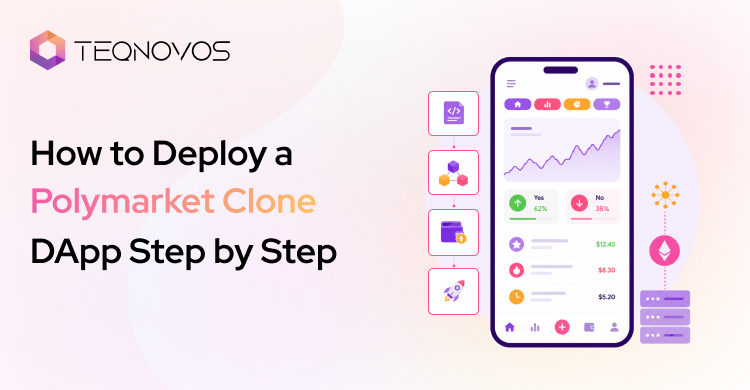
How to Deploy a Polymarket Clone DApp Step by Step
“DApp” means “Decentralized Application.” It runs on blockchain networks and gives users more transparency, control, and trust. That is why many founders now search for how to deploy Polymarket clone dApp solutions that can launch faster and scale with demand.
Prediction market dApp development is growing because it not only supports secure trading but also clear settlement and wider user participation. It also helps businesses create new revenue models in a fast-moving blockchain space.
In this blog, readers will explore the key steps, features, and deployment considerations needed to launch a strong prediction market platform.
What Is a Polymarket Clone DApp
A Polymarket clone DApp is not a direct copy of the original platform. It is a product built with similar core functions and a different brand design and business model. It follows the same idea of letting users trade on the outcome of real-world events.
Prediction markets work by turning future events into tradable questions. Users trade positions based on what they believe will happen. If an outcome becomes more likely, the price moves up. If market confidence falls, the price goes down.
A decentralized app for a prediction market uses blockchain technology to manage trade settlements and user activity with more transparency and trust. This model helps businesses launch a platform that feels familiar to users while still offering custom features and a unique market experience. Businesses that want a tailored platform can work with a polymarket clone development company to build custom market flows, wallet features, and settlement logic.
Why Businesses Are Investing in Prediction Market dApp Development
Businesses are showing strong interest in prediction market dapp development because it creates value beyond simple event trading. These platforms help brands launch new digital products and capture user attention in fast-moving markets.
They also support use cases across sports, politics, finance, crypto, entertainment, and even internal business forecasting. A prediction market can help users trade on outcomes while helping businesses collect market signals and create new revenue channels.
Real Time Forecasting
Prediction markets show what users believe will happen next. This gives businesses live market sentiment instead of delayed reports or static opinions.
Data Driven Decisions
These platforms turn user activity into useful insight. Businesses can study trading behavior and outcome trends to improve planning and product decisions.
Transparent Ecosystem
Blockchain-based systems make trades and settlements easier to verify. This builds more trust for users who want fairness and visibility in every transaction.
Revenue Opportunities
Businesses can earn through trading fees, listing fees, premium features, and market creation models. They can also explore how prediction market platforms make money before finalising fees, market creation models and premium features.
Key Features Needed to Deploy a Polymarket Clone DApp
Strong platforms need more than a simple trading screen. To deploy a prediction market dApp, a complete flow for market creation, trading settlement, and control is required. And this is what makes prediction market dApp development practical for real business use.
1. Event-Based Market Creation
The platform should let admins or approved users launch markets around real-world events. Each market needs a clear question, a fixed end time, and defined outcomes so users can trade with confidence.
2. Binary and Multi-Outcome Market Support
A strong decentralized app for prediction markets should support yes or no markets and multi-outcome markets. This gives businesses more flexibility across multiple industries such as sports, politics, crypto, finance, and entertainment.
3. Real-Time Odds and Price Movement
Users should see price shifts as trading activity changes. This keeps the market active and shows crowd belief in real time.
4. Order Book and Trade Matching
A serious platform should support order book visibility with bid and ask data. It should also match trades smoothly so price discovery feels accurate and fast.
5. Wallet Integration and Secure Transactions
The platform should support secure wallet connections for deposits, trading settlement, and withdrawals. This is essential for smooth prediction market dapp development and long-term user trust.
6. Smart Contract-Based Settlement
Smart contracts should manage market logic settlement and payout distribution. This reduces manual work and keeps the outcome process verifiable on the chain.
7. Transparent Resolution Rules
Each market should include clear resolution logic and trusted source rules. This helps users understand how the final outcome will be decided.
8. Winning Position Redemption
After a market resolves, users should be able to redeem winning positions without delay. This is a core part of the real product flow in how to deploy the polymarket clone dApp.
9. Liquidity Management
Low liquidity can weaken user confidence and reduce trading activity. The platform should support market-making logic, reward models, or other liquidity tools to keep markets usable.
10. Market Rules Trading Volume and Historical Data
Users should be able to review market rules, volume, and past price movement before they trade. This improves decision-making and adds more trust to the platform experience.
11. Admin Control and Risk Monitoring
Operators need a backend to manage market review activity, configure fees, monitor liquidity, and handle disputes or settlements. This gives businesses stronger control in a decentralized environment.
Technology Stack for Prediction Market dApp Development
The right stack shapes speed, security, and platform performance. In prediction market dApp development each layer supports a different part of the user journey and business logic. The goal is not to use more tools. The goal is to use the right tools for smooth trading and reliable settlement.
Blockchain Layer
The blockchain layer stores market activity and supports transparent transactions. The reason why they are widely used is the robust ecosystem and flexibility of deployment. A trusted blockchain development company can help choose the right network smart contract structure and deployment approach for a prediction market platform.
Smart Contracts
Smart contracts handle market creation, trading logic, settlement, and payouts. Solidity is widely used for this layer because it is built for Ethereum based blockchain development.
Frontend
The frontend is responsible for how users interface with a project. Frameworks such as React and Next.js could be used to develop quick interfaces to support trading dashboard functionality.
Backend
The backend manages platform operations that support the user experience. Node.js is often used to handle APIs, admin tools, user activity, and market related services.
Wallet and APIs
Wallet tools connect users to the platform for login, trading, and fund management. Web3 tools and APIs help the platform interact with blockchain networks, smart contracts, and live market data.
Step-by-Step Process to Deploy Prediction Market dApp
A clear process helps businesses move faster with fewer mistakes. Implementing the right approach not only improves security but also user experience. This section gives a practical view of how to deploy polymarket clone dApp solutions with stronger planning and execution.
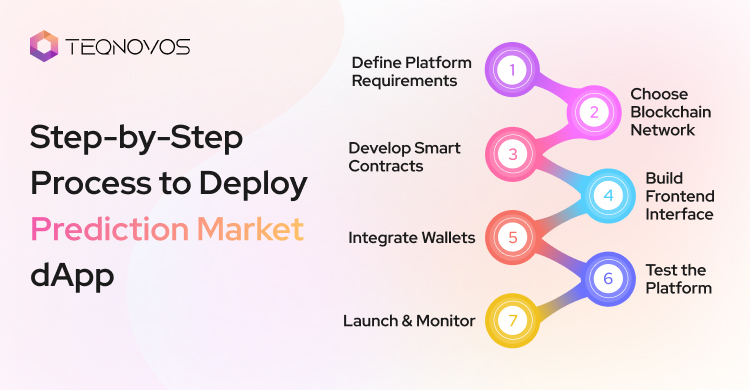
Step 1: Define Platform Requirements
Start with the business model. Decide how the platform will earn through different revenue models like trading fees, listing fees, or custom market access. Then define the target audience. Some platforms focus on crypto users while others target sports traders, finance communities, or other niche event-based markets.
Step 2: Choose Blockchain Network
Pick a blockchain that fits perfectly with the product goals. Ethereum offers a strong ecosystem of support and trust. Polygon not only helps in reducing gas fees but also supports faster transactions. Gas fees are the costs users pay to complete on chain actions. With a scalable architecture, the platform can handle more users and trades without slowing down.
Step 3: Develop Smart Contracts
Smart contracts control the core logic of the platform. They handle market creation, trade execution, settlement payout rules, and outcome resolution. This layer must be written carefully because it directly affects trust accuracy and fund security.
Step 4: Build Frontend Interface
The frontend should make the platform easy to use for both new and experienced users. It should include market pages, trading screens, and wallet prompts. A simple interface helps users act faster and reduces friction during trading.
Step 5: Integrate Wallets
Wallet integration connects users to the platform where they can log in, deposit, and trade. It should support secure authentication and smooth transaction approval. This step is important because wallet flow affects both trust and conversion.
Step 6: Test the Platform
Testing should cover verifying core functions like smart contracts, frontend functions and admin controls. Bugs, issues related to security, and poor user experience must be fixed before launch. A well tested platform reduces failure risks after launch.
Step 7: Launch and Monitor
The work doesn’t stop after deployment. The team should continuously monitor trading activities and user behavior. Ongoing tracking not only helps in improving retention but also enables teams to fix issues early.
Cost Factors in Polymarket Clone DApp Development
The cost of a Polymarket clone DApp depends on the scope of the platform and the level of quality expected at launch. A simple version costs less because it includes only basic trading and settlement flows. A more advanced platform costs more because it adds deeper features, stronger security, and better scalability.
Development Complexity
The number of features has a direct impact on cost. A basic product with limited market types and a simple wallet flow needs less work. A larger platform with complex features like live data streams, admin controls and detailed analytics needs more time and higher investment.
Blockchain Choice
The selected blockchain also affects cost. Networks with higher gas fees can increase both development decisions and user transaction expenses. Teams often balance ecosystem strength with transaction cost to choose the right network.
Security Audits
Security audits are not optional for this type of platform. They help in detecting flaws in smart contracts while also reducing the risk of loss and data misuse. This increases the overall budget but is necessary for user trust and platform credibility.
Maintenance
The cost does not stop after launching the project. There is a need to maintain the app through bug fixes and feature updates. Such maintenance is critical in ensuring that the application remains functional and safe to use.
Challenges in Deploying a Decentralized App for Prediction Market
It may sound easy, but businesses exploring how to deploy polymarket clone DApp platforms must handle several issues to achieve long-term sustainability. Companies that know about it in advance can create strategies that will help them avoid losses.
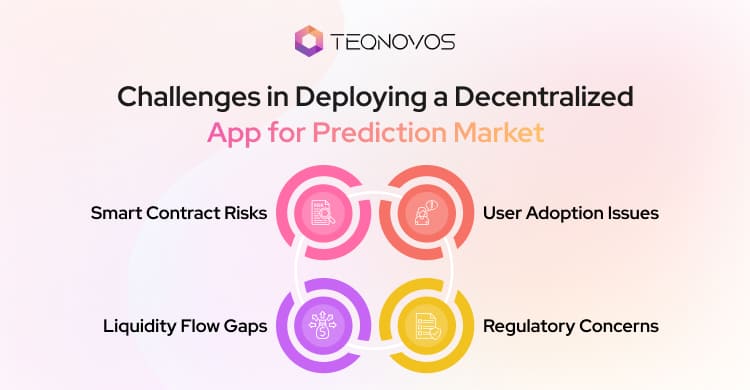
Smart Contract Risks
Smart contracts determine market dynamics, settlements, and payments. However, any bugs in the software can lead to transaction failure, money loss, and incorrect results. This is why careful development testing and auditing matter from the start.
Regulatory Concerns
Prediction markets can face legal and compliance issues depending on the region and market type. Rules may vary for event trading, financial activity, or user participation. Businesses need to review legal requirements before launch.
Liquidity Issues
Low liquidity can make markets feel inactive and less reliable. If users do not see enough activity, they may avoid placing trades. Strong liquidity planning is important for a healthy trading environment.
User Adoption
No matter how solid a platform might be, it could fail when there is confusion within the user experience process. The issues may arise from wallet creation, transaction process, and market comprehension. Therefore, implementing a clear and simple user interface is essential.
Best Practices for Successful Deployment
A successful launch depends on more than code. It depends on product quality, user trust, and strong planning. Businesses that follow the right steps can reduce risk and improve long-term platform performance.
Focus on UX
User experience should stay simple from the first click to the final trade. Clear market pages, smooth wallet flow and easy navigation help users act with confidence. A clean interface also improves retention.
Ensure Security Audits
Security audits should happen before launch and after major updates. They help find weaknesses in smart contracts and reduce the risk of platform failure. This step protects both users and the business’s reputation.
Build Strong Liquidity
Liquidity gives the market life. Users are more likely to trade when they see active markets and fair pricing. Strong liquidity planning can improve trust and create better trading activity from the start.
Follow Compliance
Legal compliance issues need to be included at the planning stage itself. Legal requirements should be considered according to the regions and markets. This helps avoid future issues and supports stable growth.
Conclusion
Building a Polymarket clone DApp takes more than an idea. It needs the right features, the right blockchain setup, and secure smart contracts. A smooth wallet integration and careful testing before launch are also essential for a successful product launch.
Each step plays a direct role in platform trust and long-term growth. Businesses that plan well and deploy a prediction market dApp with clarity can enter the prediction market space with more confidence. Now is the right time to turn the concept into a scalable product.