























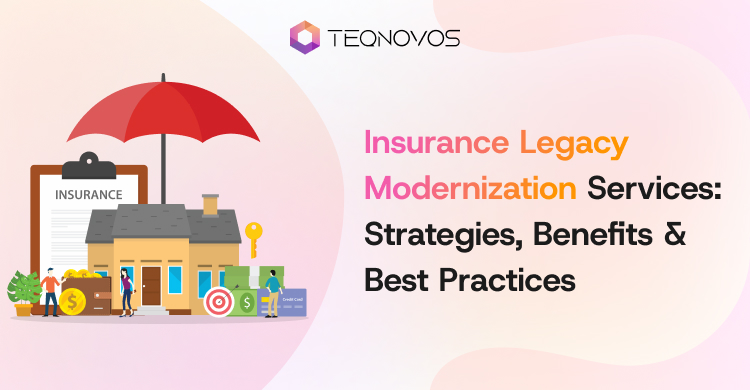
Insurance Legacy Modernization Services: Strategies, Benefits, and Best Practices
Insurance legacy modernization allows insurers to systematically update their existing IT infrastructure without having to immediately replace all of their platforms. Insurance companies have many old systems that continue to support policy administration, claims processing, underwriting, and customer management. They can be reliable but still very hard to integrate and maintain. A rushed replacement can lead to data loss and non-compliance issues. An incremental strategy gives insurers the opportunity to upgrade their apps based on business requirements.
It also safeguards important policies and operational consistency. This guide discusses the key benefits, services, and best practices that shape a well-designed modernization program.
What Is Insurance Legacy Modernization?
Insurance legacy modernization improves older applications and platforms that manage important insurance operations. These systems may handle policy administration, claims, underwriting, customer records, or regulatory reporting.
A system becomes legacy when teams struggle to update it. Connect it with new tools, scale it for new workloads, or maintain it with available technical skills. Some insurance legacy systems still perform critical work well. Yet rigid architecture can slow product changes and increase operational risk.
Legacy modernization in insurance can include code improvements, cloud migration, data restructuring, or secure integrations. An API allows different software systems to exchange information.
Modernization does not always require full replacement. A stable platform may remain active while teams improve selected functions. A clear legacy modernization strategy shows which systems should stay, which need improvement, and which should retire.
When Should Insurers Modernize Legacy Systems?
Insurers should modernize when older platforms slow business change or increase operational risk. The decision should depend on system impact rather than age alone.
Warning Signs
Insurance legacy systems may need modernization when teams face:
- Slow product launches or policy updates
- Frequent system failures or downtime
- Manual data transfers between platforms
- Limited integration with modern tools
- Rising maintenance costs
- Weak reporting and data visibility
- Dependence on scarce legacy skills
- Security gaps caused by outdated technology
These issues can delay claims processing. They can restrict underwriting changes. They can also create poor experiences for customers and agents.
Priority Factors
A structured insurance legacy system modernization assessment should review:
- Business value
- Technical condition
- Data quality
- Integration dependencies
- Compliance exposure
- Failure frequency
- Change requirements
- Replacement risk
Systems with repeated failures should receive early attention. Platforms that store sensitive policy or claims data may also need priority. Stable platforms can remain active when they still meet business needs. Teams can modernize connected applications first. This approach directs investment toward systems with the greatest operational impact.
Insurance Legacy Modernization Strategies
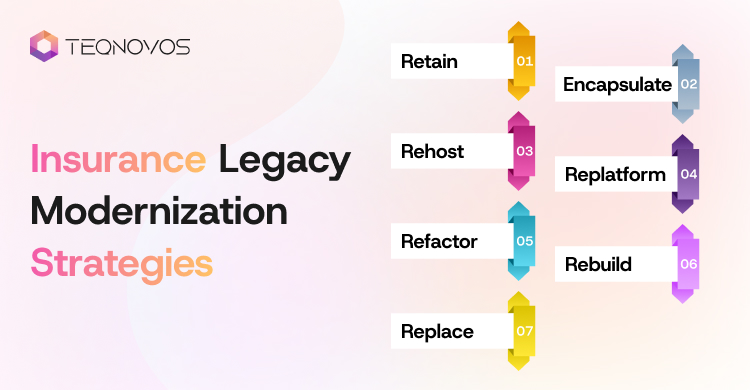
Insurers should select a modernization approach for each application. One strategy will not suit every platform. The decision depends on business value, system condition, and integration needs. Available budget and long term goals also matter. Industry frameworks commonly use approaches such as retain, rehost, replatform, refactor, replace, and retire.
| Strategy | What It Means | Best Fit | Main Consideration |
| Retain | Keep the existing system without major changes | Stable platforms that still meet business needs | Teams must continue maintenance and monitoring |
| Encapsulate | Connect legacy functions through an API | Reliable systems that need modern integrations | Existing technical limits remain inside the platform |
| Rehost | Move the application to new infrastructure with minimal code changes | Systems that need faster infrastructure migration | The move does not remove most technical debt |
| Replatform | Move the system and make selected platform improvements | Applications with infrastructure or scaling limits | Some outdated code may remain |
| Refactor | Improve the code and architecture without changing core functions | Strategic systems that need better flexibility | Testing needs increase as code changes expand |
| Rebuild | Develop a new application around validated business requirements | Systems that block growth or major process changes | Teams must preserve critical insurance rules |
| Replace | Adopt a new commercial or custom platform | Systems with limited value or severe technical limits | Data migration and workflow change require careful control |
A clear insurance application modernization assessment should compare risk, cost, business importance, and expected value before the team selects an approach.
What Do Insurance Legacy Modernization Services Include?
Legacy modernization services in insurance cover the work needed to assess, improve, migrate, and manage older platforms. The scope should match business goals and system risks.
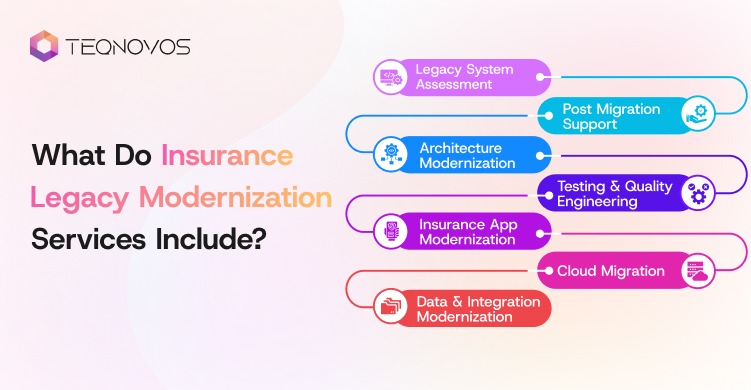
1. Legacy System Assessment
Teams review applications, infrastructure, data flows, dependencies, security gaps, and business rules. The assessment shows which systems need immediate attention.
2. Architecture Modernization
Specialists redesign rigid systems into modular structures. This can improve scalability and make future updates easier.
3. Insurance Application Modernization
Insurance application modernization updates outdated code interfaces and workflows. Teams may refactor selected functions or rebuild applications that no longer meet business needs.
4. Data and Integration Modernization
Teams clean, migrate, and validate policy claims, billing, and customer data. They also replace fragile connections with secure APIs.
5. Cloud Migration
Suitable workloads move to public, private, or hybrid cloud environments. The choice depends on security, performance, compliance, and cost needs.
6. Testing and Quality Engineering
Testing checks business rules, data accuracy, performance, security, and complete insurance workflows before release.
7. Post-Migration Support
Teams monitor the modern platform, fix operational issues, and plan future improvements. Insurers can connect these services with broader insurance software development services when modernization also involves new policy, claims, billing, or underwriting capabilities.
A Phased Insurance Modernization Roadmap
Current guidance favors phased delivery that aligns modernization with business priorities, audit controls, and operational continuity.
A phased roadmap keeps modernization tied to clear business outcomes. It gives teams time to test each change before expansion.
1. Define Business Goals
Leaders should identify the problems the program must solve. Goals may include faster product changes, better claims workflows, or stronger data access.
2. Map the Current Environment
Teams should document applications, data flows, integrations, and users. Business rules, security controls, and system dependencies should also be considered. This view reveals hidden risks before development begins.
3. Prioritize Systems
Each platform should receive a strategy based on business value and technical condition. Teams can retain stable systems while they modernize applications that create greater risk.
4. Establish Baseline Measures
The insurer should record release speed, failure rates, manual work, and operating costs. These measures create a basis for later evaluation.
5. Start With a Controlled Pilot
A small workflow can test the architecture and delivery process. The pilot should offer business value without depending on too many systems.
6. Build and Validate
Teams should develop components and connect them with existing platforms. Testing must cover data accuracy, insurance rules, security, and user journeys.
7. Migrate in Phases
Teams should move data and workflows through planned releases. Old and new systems may run together during validation. Clear rollback steps should remain available before each cutover.
8. Monitor and Improve
After launch, the insurer should track technical health and business outcomes. The team can correct issues and plan the next phase.
This approach makes legacy modernization in insurance easier to control. It turns insurance legacy system modernization into a continuous improvement program instead of one risky replacement project.
Ready to Modernize Your Insurance Systems? Upgrade Legacy Platforms With a Low-Risk Approach!
Schedule a CallProtecting Business Rules, Data and Operations
Modernization can fail when teams lose critical business logic or migrate inaccurate data. Insurers should protect rules records and daily operations throughout the transition.
Preserve Business Rules
Insurance platforms may contain rules for:
- Policy pricing
- Underwriting decisions
- Claims calculations
- Coverage changes
- Regulatory reporting
Some rules may exist only in old code or staff knowledge. Teams should document these rules before changing any system. They should also create tests that confirm the modern platform produces the correct results.
Protect Insurance Data
Teams should assign an owner to each data set. They should map where the data comes from and how it moves across platforms. Data cleaning should remove duplicate or incomplete records before migration.
Key controls should include:
- Clear data ownership
- Documented data lineage
- Repeatable migration testing
- Secure access controls
- Complete audit trails
- Backup and rollback plans
Maintain Business Continuity
Old and new platforms may need to run together during validation. Teams should compare policy claims, billing, and customer records across both systems. Business users should test key workflows before final cutover.
Insurers should not retire insurance legacy systems until they confirm data accuracy and operational continuity.
Key Benefits of Insurance Legacy Modernization and How to Measure Success
Insurance modernization should create measurable improvements across technology and business operations. Teams should define expected results before work begins. This makes it easier to prove value and adjust the program when progress slows.
Key Benefits
Insurance legacy modernization can deliver practical benefits:
- Faster product and policy updates
- Better integration between policy claims billing and customer platforms
- Less manual work across data entry, reviews, and approvals
- Clearer access to policy claims and customer information
- More consistent experiences for employees, agents, and customers
- Stronger release control through modern testing and deployment
- Easier scaling when transaction volumes change
- Better access to analytics automation and digital tools
These benefits depend on the selected strategy and the condition of the current environment. Teams should avoid treating every expected benefit as guaranteed.
How to Measure Success
Legacy modernization in insurance should use baseline measures that show conditions before work starts. Useful measures include:
- Release lead time
- System failure rate
- Manual processing effort
- Claims processing time
- Data reconciliation errors
- Integration response time
- Cost per policy transaction
- User adoption
- Production incident frequency
Insurers should review these measures after each phase. A successful program should show progress against defined goals rather than broad claims about innovation. This approach keeps investment decisions tied to operational results.
Best Practices for Insurance Modernization
Insurance modernization can create new problems when teams treat it as a technical replacement project. Strong programs connect each technology decision with business needs and operational controls.
1. Avoid Replacing Everything at Once
A complete replacement can increase disruption when several critical systems change at once. Teams should divide the work into controlled phases. Each phase should have a clear scope and rollback plan. This approach makes insurance legacy system modernization easier to test and govern.
2. Keep Business Teams Involved
Technology teams may understand the code, but business teams understand policy rules and daily workflows. Claims leaders, underwriters, and operations teams should review requirements throughout delivery. Their input can expose missing rules before they affect production.
3. Test Complete Insurance Workflows
Testing isolated features is not enough. Insurance application modernization should validate complete journeys such as quote to policy and claim submission to settlement. Teams should test integrations and peak workloads and exception cases. They should also confirm that users can complete their work without new manual steps.
4. Control Scope and Ownership
Programs often slow down when teams add too many goals during delivery. Leaders should approve changes against the original business case. They should also define who owns the modern platform after launch. Clear ownership covers security and releases, vendor management, and ongoing improvements.
The most effective insurance legacy modernization strategies reduce risk through phased delivery, business involvement, and measurable controls. They do not remove every legacy component without a clear reason. This keeps modernization focused on useful change instead of technology replacement alone.
The Role of Artificial Intelligence in Insurance Modernization
How AI Supports Modernization
Artificial Intelligence (AI) can improve insurance application modernization by reducing the effort needed to understand complex legacy platforms. AI tools can scan old code and map system dependencies. They can also identify hidden business logic and create technical documentation.
AI can support testing as well. It can suggest test cases and compare results across old and modern platforms. Teams can also use AI to classify migration data and detect unusual records. AI software development services can support this work when the project needs controlled code analysis or automated validation.
Where Human Control Is Essential
AI should not make final modernization decisions. Developers must review generated code and test every change. Insurance specialists must validate policy rules and claims logic.
Teams must also protect sensitive data through strict access controls and approved environments. AI works best as a support tool. It strengthens expert judgment but does not replace it.
Upgrade Your Insurance Technology Stack. Modernize Legacy Systems With Teqnovos!
Schedule a CallHow to Choose the Right Insurance Modernization Service Provider
Review Insurance Experience
The right provider should understand policy administration, claims, underwriting, and billing workflows. Insurance knowledge reduces the risk of missed rules and poor system decisions. Teams should also review experience with legacy platforms and modern architecture. Current guidance places strong value on product fit, vendor risk, and long term delivery capability.
Assess Technical and Delivery Skills
Providers offering legacy modernization services in insurance should demonstrate skills in data migration and cloud adoption, system integration, and quality engineering. They should explain how they will protect data, test business rules, and maintain operations during migration. Experienced InsurTech developers can add value when the program requires both insurance knowledge and modern engineering skills.
Check Governance and Long-Term Support
The provider should define project ownership, reporting, and approval steps before work begins. Insurers should also confirm code ownership, data ownership, and documentation standards. Knowledge transfer should remain part of the delivery plan. Post launch support should cover monitoring, issue resolution, and future improvements. The strongest partner offers a clear roadmap instead of promoting one platform for every system.
Final Insurance Modernization Checklist
Before starting insurance legacy modernization, insurers should confirm the following:
- Define clear business goals and expected outcomes
- Map all applications data flows and system dependencies
- Document important policy rules and claims logic
- Check data quality before migration begins
- Select the right strategy for each system
- Define security and compliance controls
- Test complete insurance workflows
- Prepare rollback plans for major releases
- Record baseline measures before development starts
- Assign clear ownership after launch
- Plan ongoing monitoring and future improvements
This checklist keeps business and technology teams aligned. It also reduces risk before implementation begins.
Conclusion
Insurance modernization works best when insurers follow a phased plan. This approach protects business rules and data while reducing operational disruption. Teams should track system stability, processing speed, and user adoption after each phase.
The right legacy modernization services in insurance can guide assessment, migration, and testing. A skilled partner can also create a practical roadmap that supports current needs and future growth.