









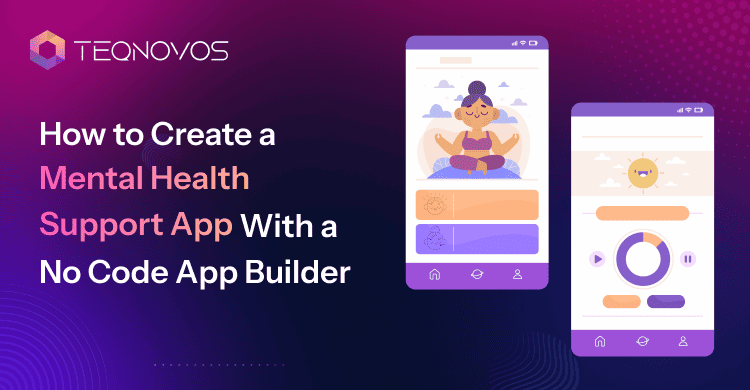
How to Create a Mental Health Support App With a No Code App Builder
Digital wellness support is now a serious need for many users. People want easier access to mood tracking, self care tools, and private support. This demand has pushed many businesses to create a mental health app that offers support in a simple and secure way.
A no code app builder can help businesses launch faster. It reduces the need for long coding cycles. Not only this, but it also helps teams test ideas before they invest in a larger platform. This makes it especially useful for startups and wellness brands.
Still, a mental health support app needs careful planning. It handles sensitive user needs and may also collect private health-related data. So the build needs safe workflows, clear user consent, and strong privacy controls.
Teqnovos helps businesses plan and launch digital health products through no code app development. Its team can support app structure, user flows, secure features, and future growth.
What Is a Mental Health Support App?
A mental health support app is a digital product that helps users manage their emotional wellness. It can offer mood tracking and provide self-care guides. It could also offer reminders and access to various resources. This helps them make the use of daily wellness support more convenient.
For businesses wanting to develop a mental health application, they must first know their target user. Some users may need stress support. Others may need habit tracking or simple wellness guidance. A clear user need helps shape the right features.
A strong mental health support app does not replace professional care. It supports users with helpful tools and safer access to wellness resources. This makes mental health app development more sensitive than a normal lifestyle app. The product needs privacy clear content and simple navigation.
A mental health app builder can help teams create the first version faster. It can support forms, dashboard content screens, and user flows. This helps businesses test the idea before moving into larger healthcare mobile app development.
Why Businesses Want to Create a Mental Health App
Businesses want to create a mental health app because users need support that fits into daily life. Many people do not want long steps before they access help. A simple app can give them mood tools, reminders, and private wellness support in one place.
A mental health support app can also help clinics and wellness brands. They help organizations serve their users more effectively. It will help increase user engagement by facilitating guided journeys and check-ins. It also helps organizations exchange useful information without any manual reminders.
The demand for healthcare mobile app development is also growing because users expect faster digital access. Mental wellness is part of that shift. Businesses can use apps to offer support beyond office visits and scheduled sessions.
A clear product plan matters before teams build a mental health app. The app needs safe features, simple flows, and useful content. This helps users trust the platform and return to it again.
Create a mental health app faster with Teqnovos and launch a safer digital support platform with no code.
Schedule a CallWhy Use a No Code App Builder for Mental Health App Development?
A no-code application builder enables companies to speed up their process of creating digital products. They provide firms with all the necessary elements needed to develop interfaces, layouts, and user experiences. This makes the first version easier to plan and test.
For mental health app development, speed matters. The organization will have to determine user needs before investing in building an extensive platform. The no code app builder allows organizations to first release an initial basic version, and then improve upon it based on feedback from actual users.
This approach also supports cost control. Full custom apps can take more time and budget. No code app development can reduce early build effort while still giving users useful features.
A mental health app builder works well for mood tracking, content libraries, and appointment requests. They can also set reminders and get basic progress reports. These features help teams build a mental health app with less technical pressure.
Still, the app needs expert planning. Businesses can review trusted no code app development service providers before they select a builder. Mental wellness apps handle sensitive user needs. Teqnovos can help businesses choose the right setup and keep the product ready for future growth.
Best No Code Platforms for Mental Health Apps
The right no code app builder depends on the app type. A simple wellness app may need form, content screens, and reminders. A more advanced mental health app may need user roles, dashboards, secure workflows, and mobile app support.
| Platform | Best For | Good Fit |
| Bubble | Complex web apps with custom workflows | Therapist portals, admin dashboards, and user management |
| Glide | Simple mobile-friendly apps | Mood trackers, wellness logs, and resource libraries |
| Softr | Client portals and membership apps | Support communities, content hubs, and private user areas |
| FlutterFlow | Mobile first apps with stronger design control | Mental health apps for Android and iOS users |
A mental health app builder can help businesses launch faster. But the platform must match the product goal. Basic apps can start with no code. Apps with clinical data, telehealth workflows, or advanced security may need custom support later.
Businesses planning a no code healthcare app need to review privacy, scalability, and integration needs before choosing a platform. This avoids rebuilds when the app grows.
Core Features Every Mental Health Support App Needs
A mental health support app needs simple features that users can trust every day. Each feature needs a clear purpose. The app should be able to lead users, while not burdening them with its complexity. Businesses that are planning to create a mental health app should design all such features first.
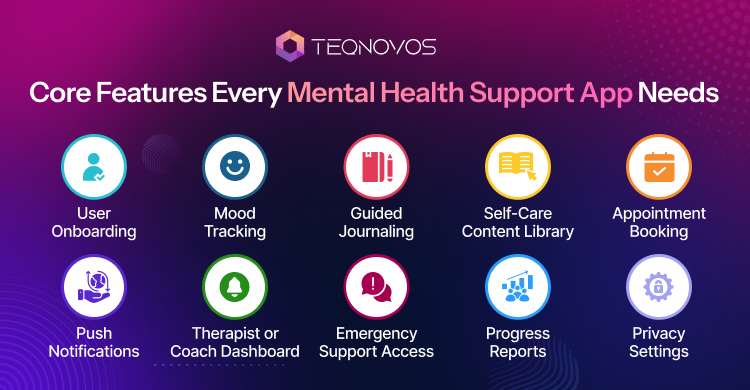
User Onboarding
User onboarding helps new users start with ease. It can collect basic preferences, goals, and support needs. A simple onboarding flow also helps the app show more useful content.
Mood Tracking
Mood tracking helps users record how they feel each day. It can use simple check-in notes and patterns. This feature gives users a better view of emotional changes over time.
Guided Journaling
Guided journaling gives users a safe space to write thoughts. It can include prompts for stress, sleep, and daily reflection. This can make the mental health support app feel more personal.
Self-Care Content Library
A content library can include breathing exercises, wellness guides, and short lessons. The content needs expert review before launch. Clear content builds trust and improves user engagement.
Appointment Booking
Appointment booking enables users to make requests for appointments with counselors or wellness specialists. It may include timeslots, user information, and appointment details. This type of module is ideal for clinics, wellness organizations, and employee assistance programs.
Push Notifications
Push notifications can remind users to complete mood checks, read content, or attend sessions. The message needs to feel supportive. It must not feel forced or stressful.
Therapist or Coach Dashboard
A therapist or coach dashboard helps support teams view user activity where consent allows it. It can show mood entries, session requests, and engagement data. A mental health app builder can support basic dashboard workflows.
Emergency Support Access
Emergency support access gives users quick routes to crisis resources. This feature needs careful planning and clear wording. The app must not present itself as a replacement for emergency care.
Progress Reports
Progress reports help users view their activity and wellness patterns. Simple charts and summaries can make progress easier to understand. This feature also supports better long term engagement.
Privacy Settings
Privacy settings help users control what they share. They can manage profile details, reminders, and data access choices. This feature matters more in a no code healthcare app because health related data needs safer handling.
A no code app builder can support many of these features for the first version. For advanced flows and deeper security needs, businesses may need expert healthcare mobile app development support.
Mental Health MVP Framework
A mental health app does not need every feature in the first version. The first version must focus on user safety, trust, and daily value. A simple framework can help businesses decide what to build first.
Use the Track Reflect Support Escalate framework for the minimum viable product. A minimum viable product means the first usable version of an app.
Track
Start with features that help users track mood habits, sleep stress, and daily patterns. These features give users a clear view of their emotional health over time.
Reflect
Add journaling prompts, progress notes, and self check-in screens. These features help users understand their thoughts and actions in a private space.
Support
Offer guided exercises, reminders, educational resources, and wellness tips. These features can help users build healthier routines without making medical claims.
Escalate
Add crisis support links, emergency contact options, and clear guidance for high risk situations. The app must tell users when they need professional help. It must not present itself as a replacement for therapy or clinical care.
This framework keeps the first version focused. It also helps businesses build a safer mental health support app before adding advanced features like therapist dashboards, telehealth, or AI based insights.
Step-by-Step Process to Create a Mental Health App Using No Code
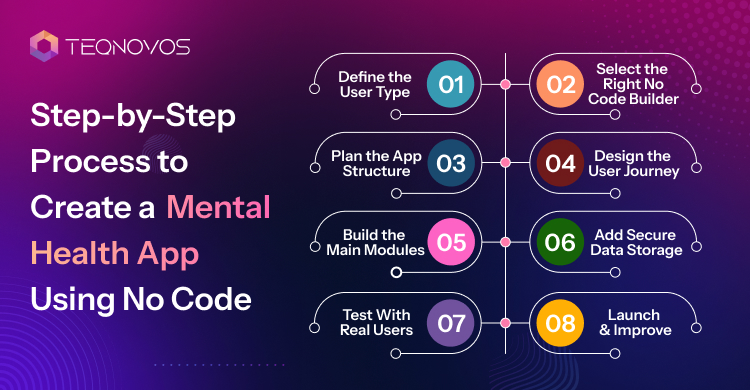
A clear process helps businesses create a mental health app with fewer mistakes. It also keeps the product focused on real user needs. A no code app builder can make the build faster, but the planning still needs care.
Define the User Type
The first step is to understand the main user. The app may support individual employees, students, or therapists. It can also help coaches or wellness teams. Each user type needs a different journey.
A business that wants to build a mental health app needs to define the user goal first. This helps the team plan features that users will actually use.
Select the Right No Code App Builder
The right no code app builder needs to support secure forms, user profiles, content screens, dashboards, and integrations. It also needs flexible workflows. A mental wellness product may grow over time, so the platform needs room to scale.
A simple mental health app builder can work well for the first version. It can help teams test the idea before they move toward advanced development.
Plan the App Structure
The app structure needs to stay simple. Users need easy access to mood tracking, self care content, and profile settings. Admin teams also need a clean dashboard to manage content and reports.
This stage helps teams create a mental health app with better flow. It also reduces confusion during the build.
Design the User Journey
The user journey needs to feel calm and clear. A user may sign up, choose a wellness goal, or set reminders. Each step needs to feel natural. Good design also supports trust. Users return when the app feels easy, safe, and helpful.
Build the Main Modules
The main modules can include mood tracking, journaling, or reminders. Other key modules include appointment requests and basic reports. A no code healthcare app can support these modules when the scope stays clear.
This is where no code app development helps most. Teams can build core workflows faster and improve them after user testing.
Add Secure User Data Storage
A mental wellness product may collect private details. The app needs secure login, role-based access, and protected data storage. These controls help users feel safer. Advanced privacy needs may require expert review before launch.
Test With Real Users
Testing helps teams find unclear steps, weak content, and broken flows. Real feedback can show where users stop using the app. It can also show which features need more value. This stage gives businesses better insight before public launch.
Launch and Improve
The first launch does not need every advanced feature. It needs a stable user journey and useful support tools. After launch, the team can review feedback activity data and support requests.
Businesses can use this learning to improve the mental health support app over time. Teams that need to build support can also hire no code developers to plan workflows and improve the product.
How Much Does Mental Health App Development Cost?
Mental health app development cost depends on the app type, feature scope, and future scale. A simple app needs fewer screens and basic workflows. A larger app needs secure data handling, integrations, and stronger testing.
Businesses that want to create a mental health app can start with a smaller version first. This helps control the early budget. It also helps the team test the idea before adding advanced features.
Basic No Code Mental Health App
A basic no code healthcare app works well for early launch. It can include user onboarding, mood tracking, reminders, and simple admin control.
This option fits startups, wellness brands, and clinics that want to test a mental health support app before they invest in full development.
Mid-Level Mental Health Support App
A mid level app needs more user focused features. It can include appointment booking, progress reports, and coach dashboards.
This type of app needs better planning. The team must focus on safe user flows, clear consent, and secure access. A no code app builder can support many of these workflows when the feature scope stays clear.
Advanced Mental Health App
An advanced app may include therapist portals, payment flows, and analytics. This can also include secure chat and healthcare system connections. This type of product may need more than a no code app builder.
A business may need custom healthcare app development when the product needs deeper security with complex workflows. It may also need expert healthcare mobile app development support for better performance and stronger control.
Main Factors That Affect Cost
The final cost depends on several build factors.
- Number of app screens
- User roles and dashboards
- Mood tracking and journaling features
- Appointment booking flow
- Content management setup
- Data privacy controls
- Third party integrations
- Testing and launch support
A clear feature list gives the best cost estimate. It helps the team decide what to build first and what to add later.
Build a mental health support app with Teqnovos and turn your wellness idea into a secure, user-friendly product.
Schedule a CallNo Code App Builder vs Custom Healthcare App Development
A no code app builder works well when a business wants to launch fast and test the idea first. It helps teams create screens, dashboards, and content areas without a full coding cycle.
Custom healthcare app development works better when the product needs deeper control. It supports complex security rules, an advanced user roles system, and long term scale.
When a No Code App Builder Makes Sense
A no code app builder is useful for a first version of a wellness product. It can support basic user flows and common mental wellness features. It also helps teams test what users need before they invest more.
This option works well for:
- Mood tracking apps
- Guided journaling apps
- Self-care content apps
- Internal wellness apps
- Basic appointment request apps
- Early-stage mental health platforms
A business can build a mental health app faster with this approach. It also reduces early technical pressure.
When Custom Development Makes More Sense
Custom healthcare app development becomes important when the app needs advanced logic. It also matters when the app handles larger user data flows or complex healthcare use cases.
This option works well for:
- Secure therapist portals
- Patient record connections
- Advanced analytics
- Role-based dashboards
- AI-assisted support tools
- Large-scale healthcare platforms
A business may start with no code and move into custom development later. This gives the team room to test early and scale with stronger control.
Which Option Is Better?
The best choice depends on the app’s goal. A no code healthcare app can support a simple launch. A custom build can support complex workflows and deeper security.
Businesses that want to create a mental health app can start with no code when the idea needs validation. They can choose custom development when the product needs scale, privacy depth, and advanced performance.
Teqnovos helps teams choose the right path. Its team supports planning no code setup, secure workflows, and healthcare mobile app development for future growth.
Privacy and Safety Rules for a Mental Health Support App
A mental health support app handles sensitive user details. It may store mood entries, journal notes, and personal goals. This makes privacy more important than normal app planning. Businesses that create a mental health app need safety rules from the first planning stage.
Clear User Consent
User consent means the app asks users before it collects or uses personal data. The consent screen needs simple wording. Users need to know what the app collects and how the app uses it.
Secure Login
Secure login helps protect user accounts. The app can use password rules, email checks, and one time codes. This creates a safer entry point for the user.
Role-Based Access
Role-based access means each user type gets limited access. A user can view personal details. A coach can view assigned user data only when consent allows it. An admin can manage content and settings.
Protected Data Storage
A no code healthcare app needs secure storage for user data. The app builder must support access control, backup settings, and safe data handling. Extra care matters when the app stores health-related details.
Safe Content Review
Wellness content needs expert review before launch. The app must not give unsafe claims or replace professional care. Clear disclaimers can help users understand the app’s role.
Crisis Support Pathway
A mental wellness app needs a clear path for urgent help. The app can show emergency contacts, crisis lines, or local support resources. This feature needs careful wording and fast access.
Privacy Policy and Terms
A privacy policy explains data use in clear terms. App terms explain user rights, service limits, and support scope. These pages help build trust and reduce confusion.
Strong privacy planning can improve trust and user retention. It also supports safer mental health app development. Businesses can review data privacy and security in healthcare app development before they move into full custom healthcare app development.
Privacy, Safety, and Compliance Checklist
A mental health support app handles sensitive user information. So privacy and safety need planning before development starts. This is important for mood logs, journal entries, chat history, appointment details, and therapist notes.
Businesses must check which rules apply in their target market. In the United States, apps may need to consider HIPAA. It protects certain health information. In Europe, apps may need to consider GDPR. It protects personal data and gives users more control over their information.
A mental health app may also handle PHI. PHI means protected health information. This can include health details that can identify a user. The app must collect only the data it needs. It must also explain how that data will be used.
Key privacy and safety checks include:
- Clear user consent before collecting sensitive data
- Strong password and login protection
- Role-based access for users, admins, and care teams
- Data encryption for stored and shared information
- Storage for mood logs and any therapist notes
- An audit log to track significant activities on the system
- A convenient means of controlling and deleting their data
- A clear privacy policy and terms of use
- Emergency resources in case of risky circumstances
- Disclaimer stating the application does not replace professional care
Strong privacy planning can improve trust and user retention. It also supports safer mental health app development. Businesses can review data privacy and security in healthcare app development before they move into full custom healthcare app development.
Moreover, a no code app builder can support basic privacy features. But a complex mental health support app may need custom support. This becomes even more important when the app stores the clinical information. Before release, a company needs a legal audit to make sure if HIPAA, GDPR, or other regional health-related legislation applies.
When Should Businesses Get Expert Help to Create a Mental Health App?
A no code app builder can make the first version easier to launch. Still, a mental wellness product needs careful planning. It may handle private user data support requests, mood entries, and personal goals. This makes expert review useful before launch.
For any business that needs to create a mental health application, assistance is required to design the user flow, the logic behind the features, and to test the application. Professional consultation can even aid in selecting the best platform before development begins.
When Expert Support Makes Sense
Expert help becomes useful when the app needs secure user accounts, role based access, and admin dashboards. It also matters when the product includes therapist workflows, appointment requests, or progress tracking.
A business may also need support when it plans to move beyond a simple no code healthcare app. Some features may need custom healthcare app development for stronger control and better scale.
What an Expert Team Can Help With
An expert team can help with app planning, feature mapping, and secure workflow setup. It can also help decide which features belong in the first version and which features can come later.
This keeps the mental health support app practical while helping businesses avoid building too many features too early.
Why This Matters
A mental wellness app needs trust. Users need simple access to safe content and clear privacy choices. Better planning helps businesses build a mental health app that feels useful from the first launch.
Teqnovos supports businesses with no code app development and future healthcare mobile app development when the product needs more advanced features.
Common Mistakes to Avoid When Building a Mental Health App
A mental health app needs careful planning because it deals with sensitive user needs. Even small mistakes can affect trust and user safety. Businesses can minimize risks through better planning from the initial stage of creating the prototype.
Common mistakes include:
- Building too many features in the first version
- Skipping privacy and compliance planning
- Collecting more user data than needed
- Using a generic user experience for sensitive mental health journeys
- Ignoring crisis support links and emergency guidance
- Choosing a no-code platform without checking scalability
- Launching without testing real user journeys
- Treating the app as a replacement for professional care
- Not planning content review for wellness resources
- Delaying security testing until the end
The safer approach is to start with a focused minimum viable product. A minimum viable product is the first usable version of an app. It must support the core user need before adding advanced features. This keeps the product easier to test, scale, and improve over time.
Expert Insight From Teqnovos
Building a mental health app needs more than screens and features. The product must protect user data. It must support safe user journeys and clear privacy controls. At Teqnovos, we recommend starting with a focused first version. Businesses can test mood tracking, journaling prompts, and other support first. They can integrate the advanced features after figuring out their scalability and privacy compliance requirements.