






















Real Estate App Development Cost in USA: Full 2026 Guide
Real estate businesses now rely on digital platforms to move faster and serve users with more control. Buyers want quick property searches and clear details before they speak with an agent. Agents and brokers need better lead tracking and smoother communication. Property managers use apps to handle listings, tenants’ documents, and payments in one place. This is also why every growing real estate business needs a mobile application to improve access, communication, and service speed.
Investors also depend on real-time data to compare opportunities and make smarter decisions.
This growing shift makes real estate app development cost in the USA an important topic for companies planning a new platform with the right features, budget, and growth path. Working with a trusted real estate app development company also helps businesses plan features, technology, and cost with better clarity.
This blog covers the main cost factors, feature choices, development stages, and planning tips that help businesses estimate the right budget for a real estate app.
Real Estate App Development Cost in the USA
Real estate app development cost in the USA depends on the app type, feature depth, and backend complexity. A simple MVP app costs less because it focuses only on core features, while a mid-level app needs stronger workflows such as advanced filters, chat map search, and CRM integration. An enterprise app costs more because it supports large data volume, AI features, MLS integration, and scalable cloud infrastructure.
Current market guides place real estate app costs between $25K and $300K+ based on scope and complexity. Some guides also place full real estate platforms between $50K and $300K when advanced features and maintenance are included.
App Type |
Estimated Cost |
Best For |
Common Features |
| MVP Real Estate App | $25K to $75K | Startups and small agencies | Listings search profiles inquiry forms saved properties and basic admin panel |
| Mid-Level Real Estate App | $75K to $150K | Growing brokers and property firms | Map search filters, chat CRM sync, agent dashboard notifications, and analytics |
| Enterprise Real Estate App | $150K to $300K+ | Large agencies, marketplaces, and SaaS platforms | AI recommendations, MLS integration, virtual tours, payments, multi-tenant access, and advanced security |
These ranges help businesses set a practical starting budget before planning the full product scope. However, the final cost may change due to platform complexity and integration needs.
Cost Breakdown by App Type
The real estate App development cost for the USA market changes with the app model and business goal. A simple listing app needs fewer workflows. A marketplace needs more user roles and stronger backend logic. A SaaS platform needs scalable infrastructure and recurring billing features. The right estimate depends on the product scope and the level of customization.
App Type |
Estimated Cost |
Best For |
| Property Listing App | $25K to $80K | Agencies and brokers |
| Marketplace App | $70K to $200K | Multi-vendor property platforms |
| Rental App | $40K to $120K | Rental firms and property owners |
| Brokerage App | $50K to $150K | Real estate brokerages |
| Property Management App | $60K to $180K | Managers and leasing teams |
| Real Estate SaaS PlatformReal Estate SaaS Platform | $100K to $300K+ | SaaS businesses and enterprise firms |
-
Property Listing App
A property listing app helps buyers search homes and connect with agents faster. It usually includes property pages, search filters, map view, and inquiry forms. The real estate mobile App development cost for this model stays lower when the first version focuses on core discovery and lead capture.
-
Marketplace App
A real estate marketplace connects buyers, sellers, agents, and property owners on one platform. It needs multiple user roles, listing approvals, and advanced search chat reviews. This model costs more because each user group needs a separate workflow and dashboard.
-
Rental App
A rental app supports tenants, landlords, and property managers. It can include rental listings, tenant profiles, and lease uploads. Other key features might include payment tracking, maintenance requests, and notifications. The cost depends on how many rental workflows the business wants to automate in the first release.
-
Brokerage App
A brokerage app helps agents manage leads, listings, clients, and follow ups in one place. It may include agent dashboards, client notes, deal tracking calendar tools, and customer relationship management integration. The custom real estate App development cost increases when the app needs tailored workflows for internal teams.
-
Property Management App
A property management app handles daily operations for leasing teams and property owners. It supports tenant records, rent tracking, maintenance tickets, document storage, and reporting. This type needs strong admin control because users manage financial data and property documents inside one system.
-
Real Estate SaaS Platform
A real estate SaaS platform serves multiple businesses through one cloud based system. It needs subscription plans, user roles, and tenant-level access. The SaaS based platform development cost is higher because the platform must support growth and long-term product updates. A business that wants subscription-based access can explore SaaS real estate software to manage users, listings, payments, and daily workflows from one cloud-based system.
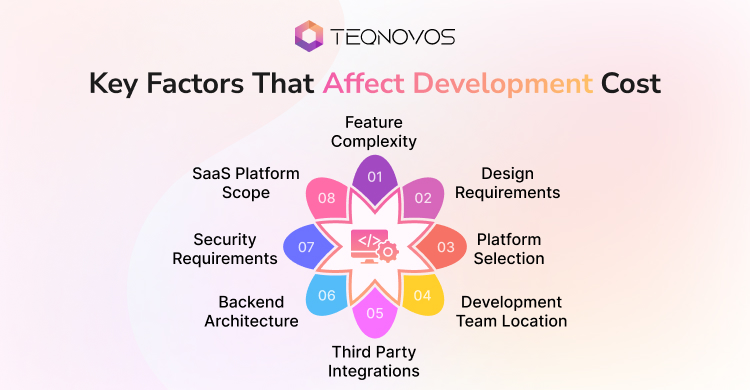
Key Factors That Affect Development Cost
Several factors shape the real estate App development cost in the USA. A basic app with listings search and lead forms needs a smaller budget. A complex platform with AI tools and complex dashboards costs more. Businesses should plan features early to avoid rework. They can review these real estate application development mistakes to avoid before finalizing the scope.
-
Feature Complexity
Features have the biggest impact on cost. Basic apps include basic features such as profiles, listings filters, saved searches, and inquiry forms. Advanced apps include complex features such as AI recommendations, virtual tour, and analytics. Moreover, the more features the app contains, the more testing and backend support it requires.
-
Design Needs
A simple design costs less than a custom user experience. Real estate users need clear property pages, fast search, and smooth navigation. Cost rises when the app supports buyers, agents, brokers, and investors.
-
Platform Choice
Cost depends on whether the business needs iOS, Android, web, or all platforms. A single platform costs less at the start. A full web and mobile ecosystem needs more design development and testing. Teams should also understand common real estate mobile app development challenges before they finalize platform features and user workflows.
-
Team Location
Development rates change by region. A USA-based team usually costs more than offshore development services or a hybrid delivery model. Many companies choose blended teams to balance quality, speed, and budget. Businesses that want better control over cost, delivery, and domain expertise can also hire real estate app developers for a flexible development model.
-
Third Party Integrations
Integrations increase cost when the app connects with MLS CRM payments, maps, analytics, or eSignature tools. Each integration needs setup testing and security checks. Stable data flow is important for accurate listings and quick updates.
-
Backend Architecture
Backend architecture controls data, users, and performance. A simple backend works for an MVP. A scalable backend is needed for high-traffic user roles and real-time updates. Real estate SaaS platform development cost is higher because SaaS products need multi-tenant access, billing logic, and admin control.
-
Security Requirements
Security matters because real estate apps handle user data, document payments, and communication records. Strong login controls, secure storage, and role-based access can increase cost. These features protect the platform and build user trust.
-
SaaS Platform Scope
A SaaS based real estate platform needs account management, billing plans, tenant dashboards, reporting, and cloud scaling. That is why SaaS based platform development cost depends on feature depth and infrastructure needs.
Must-Have Features in a Real Estate App
The features inside a real estate app directly affect user experience and development cost. A strong platform should make property search simple for buyers and lead management easier for agents. A clear feature roadmap also helps businesses build a real estate app that supports buyers, agents, and property managers without adding unnecessary cost.
It should also help brokers and property managers control listing documents and communication from one place. For a deeper feature-level view, businesses can also explore this guide on key features to consider in real estate app development before finalizing the first version of the app.
-
User Profiles
User profiles help buyers, agents, brokers, and property managers access the platform with the right controls. Each profile can store contact details, saved properties search history, and account preferences. This creates a more personal experience for every user.
-
Property Listings
Property listings are the core of any real estate app. Each listing should include images, price, and location details. Clear listing pages help users make faster decisions with clear property type and features.
-
Map Search
Map search helps users explore properties by area. Buyers can view nearby homes, schools, offices, transport points, and local facilities. This feature improves property discovery and makes location-based search easier.
-
Search Filters
Search filters help users find the right property faster. Common filters include price range, property type, and location details. Additional searches might include bedrooms, bathrooms, and amenities details. Better filters reduce friction and improve lead quality.
-
Saved Searches
Saved searches allow users to return to preferred property options later. The app can also send alerts when similar listings become available. This keeps users engaged and supports repeat visits.
-
Inquiry Forms
Inquiry forms help users contact agents or property owners directly from a listing page. Forms can collect name, phone number, email message and property interest. This feature turns app traffic into qualified leads.
-
Agent Dashboard
An agent dashboard helps real estate teams manage leads, listings, messages, and follow-ups. Agents can track inquiries and respond faster. This improves sales coordination and customer communication.
-
Admin Panel
The admin panel gives business teams control over user listings, approval reports, and platform settings. It helps manage content and monitor activity across the app. A strong admin panel also reduces manual backend work.
Hidden Real Estate App Development Costs to Consider
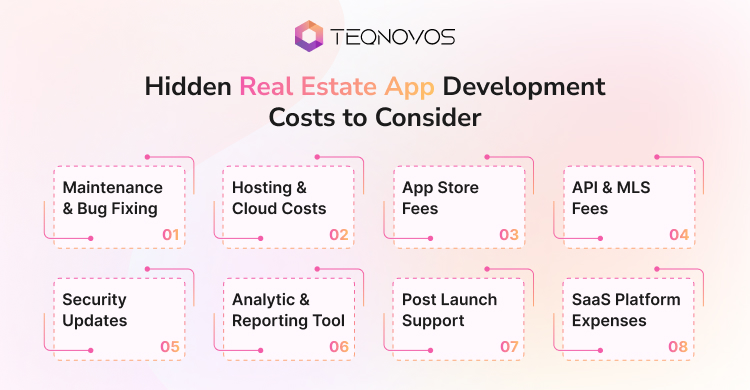
The visible development budget is only one part of the total real estate App development cost in the USA. Businesses also need to plan for recurring tools, support updates, and platform fees after launch. These costs may look small at first, but they can affect the long-term budget.
-
Maintenance and Bug Fixing
Maintenance is a recurring cost for every real estate app. The team needs to fix bugs, update features, and keep the app stable after launch. Regular maintenance also helps the app perform well as users’ listings and data increase.
-
Hosting and Cloud Costs
Hosting costs depend on traffic data, storage, and backend usage. A basic app may need a simple cloud setup. A larger platform may need scalable servers, database management, backup systems, and performance monitoring.
-
App Store Fees
Mobile apps also need app store accounts and updates. Businesses may need to pay platform fees for the Apple App Store and Google Play. These fees are small compared to development, but they should still be included in the real estate mobile App development cost.
-
API and MLS Fees
Real estate apps often connect with maps, payment tools, CRM systems, and MLS data. Some tools charge monthly fees or usage-based costs. MLS access can also increase the budget based on data provider rules and integration needs.
-
Security Updates
Security updates protect user profiles, property documents, payments, and communication records. The app needs regular checks to prevent data risks and unauthorized access. Strong security is even more important for apps with document uploads and financial activity.
-
Analytics and Reporting Tools
Analytics tools help businesses track user behavior, lead sources, property views, and conversion paths. These tools support better product decisions after launch. Some platforms offer free plans, while advanced reporting may require paid subscriptions.
-
Post Launch Support
Post-launch support covers user feedback feature improvements, technical monitoring, and performance fixes. This cost helps businesses keep the app useful after the first release. For SaaS products, this support is more important because users expect continuous updates and smooth access.
-
SaaS Platform Expenses
The real estate SaaS platform development cost includes more recurring expenses than a standard app. Businesses need to plan for tenant management, subscription billing, cloud scaling, security monitoring, and customer support tools. These costs help the platform grow without performance issues.
Conclusion
Real Estate App Development Cost for the USA Market depends on the product type, feature depth, and integration needs. A simple listing app needs a smaller budget, while a marketplace SaaS platform or Zillow-like product needs more planning and a stronger backend. Businesses planning a large property marketplace can also explore how to create an app like Zillow.
A clear roadmap helps businesses control costs and launch with the features users need most. With the right planning, a real estate app can not only improve property discovery but also lead to management and business growth.