















How Much Does AI Powered SaaS Product Development Cost: Detailed Breakdown?
AI powered SaaS product development has become a strong choice for businesses that want smarter workflows and faster growth. Companies now use AI to automate tasks and create better user experiences. This shift has also made cost planning more important.
The AI SaaS product development cost depends on many factors. These include product type, feature depth, and AI model complexity. A simple web based product may cost less. Whereas a full platform with advanced automation and custom workflows may need a higher budget.
A SaaS development company in the USA can help businesses plan secure cloud architecture, subscription systems, and scalable product workflows before development begins.
Most of the AI SaaS products at Teqnovos cost between $25K and $60K. Healthcare AI SaaS usually costs $25K to $50K, whereas a real estate AI SaaS usually costs between $20K to $45K.
This guide breaks down the full cost in a simple way. It covers app software, web app pricing, and industry costs. Development stages, hidden costs, and cost saving methods are also covered.
How Much Does AI-Powered SaaS Product Development Cost?
The AI SaaS development cost usually ranges from $25K to $60K at Teqnovos. The final price depends on many other key factors. An entry-level version of an AI SaaS application can be priced starting from about $25K. An advanced one with workflow customization and automation features may cost up to $60K. Moreover, the price of creating an AI SaaS application depends on the level of security needed for it.
Healthcare AI SaaS development costs typically range between $25K and $50K. Moreover, real estate AI SaaS development costs typically range between $20K and $45K. Other industries cost between $25K-$60K, depending on requirements.
Cost to Build AI SaaS App vs Software vs Web App
The cost to build AI SaaS app depends on mobile features and backend logic. Apps often need push alerts and smooth payments. This can increase the cost when the product needs both Android and iOS support.
The cost to build AI SaaS software depends on business rules, automation reports, and role based access. It usually needs stronger backend planning because teams use it for daily operations and data heavy workflows.
The cost to build AI SaaS web app can be more flexible. A web app runs through the browser and supports faster updates. It is often a good choice for startups that want to launch faster and control early development costs.
Industry-Wise AI SaaS Product Development Cost
AI SaaS platform development cost changes by industry. Each industry has different workflows, security needs, and data requirements.
| Industry | Estimated Cost | What It Can Include |
| Healthcare AI SaaS | $25K to $50K | Patient workflows, appointment tools, admin dashboards, and reports |
| Real Estate AI SaaS | $20K to $45K | Property search, rental workflows, AI recommendations, and dashboards |
| Fintech AI SaaS | $35K to $60K | Risk scoring, account dashboards, and transaction insights |
| Logistics AI SaaS | $30K to $55K | Route planning, demand forecasting, and reports |
| Education AI SaaS | $25K to $50K | Student dashboards, course tracking, and analytics |
| Retail AI SaaS | $25K to $50K | Product recommendations, inventory insights, and sales dashboards |
Healthcare AI SaaS development cost can increase when the product needs stronger data security and clinical workflows. They may include AI medical dictation software, patient workflows, and clinical reports. Real estate AI SaaS development costs can stay lower when the product focuses on property search, tenant management, and basic AI recommendations. Real estate products may also include property management software development and AI recommendations, which may add to the overall cost.
Most other industries fall between $25K and $60K at Teqnovos. The final cost depends on the feature depth, AI logic integrations, and long-term product goals.
Plan Your AI SaaS Product Development Cost Before You Build —Get Your Free Cost Estimate
Schedule a CallPercentage-Based AI SaaS Development Cost Breakdown
A clear cost split helps businesses see where the budget goes. It also makes the SaaS product development cost easier to plan.
| Stage | Cost Share | What It Covers |
| Analysis | Free | Product idea scope, users’ goals, and feature planning |
| User experience and user interface design | 5% | Screens user flow wireframes and design direction |
| Frontend | 20% | User dashboard pages, forms, panels, and visible product screens |
| Backend | 30% | Data logic user roles, workflows, security, and system control |
| Integrations | 20% | Payment tools, customer systems, analytics tools, and third party APIs |
| Testing | 10% | Bug checks, speed checks, feature testing, and quality review |
| Deployment and maintenance | 15% | Launch setup updates, support fixes, and performance care |
Why Backend Takes the Largest Share
Backend development carries the highest cost share because AI SaaS products need strong logic. They also need secure data flow, user roles automation, and stable workflows. This stage builds the core system that keeps the platform reliable.
How Teqnovos Reduces Early Design Cost
Teqnovos keeps analysis free. The team studies the product idea, user feature scope, and business goal before development starts.
User experience and user interface design can stay lean through no code builders. This helps speed up early screens, dashboards, and workflow validation. It also helps reduce cost without weakening the product.
Why Integrations Need Careful Planning
Integrations take a major share because AI SaaS products often connect with payment tools, customer systems, analytics platforms, and external APIs. Each connection needs proper setup, testing, and security checks.
Why Testing and Maintenance Matter
Testing helps find issues before launch. Deployment and maintenance keep the product stable after release. These stages support updates, speed improvements, and long term product growth.
Key Factors That Affect AI SaaS Product Development Cost
The AI SaaS development cost changes with product scope. A simple tool costs less. A full platform with advanced AI workflows needs more planning and development time.
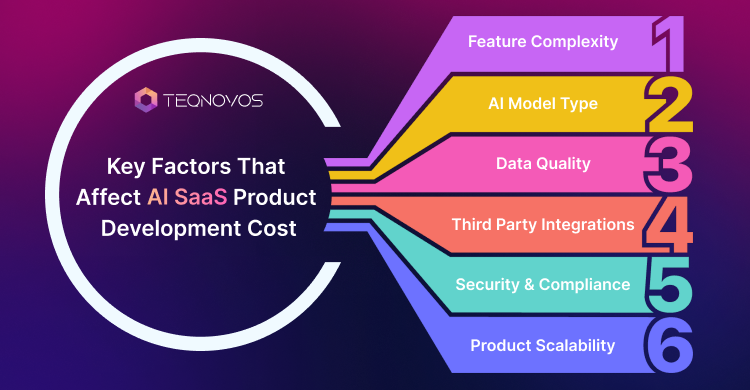
Feature Complexity
More features increase the budget. Dashboards, user accounts, subscriptions, and admin controls all add development effort. The cost also rises when each user role needs a different workflow.
AI Model Type
The AI model has a direct impact on cost. A simple chatbot costs less than predictive analytics or large language model development. A product with smart search data analysis or recommendations needs deeper technical work.
Data Quality
Clean data helps the team build faster. Unstructured data needs more cleaning and setup. This can increase the AI SaaS product development cost because the system needs accurate data to give useful results.
Third Party Integrations
Most AI SaaS platforms connect with external tools. These can include payment systems, CRM tools, and analytics platforms. Each integration needs setup testing and security checks.
Security and Compliance
Security plays a major role and affects the final budget. Healthcare fintech and enterprise products need stronger access control, audit logs, and secure workflows. These steps help protect users and reduce business risk.
Product Scalability
A small MVP can start with a lean setup. A scalable AI SaaS platform development plan needs a stronger architecture. It should support more users, more data, and future feature growth.
How No Code Builders Help Reduce AI SaaS MVP Cost
No code builders can reduce early development costs when the product needs a faster launch. The team can use no code app development for dashboard portals, admin panels, and simple workflows.
This approach helps businesses test the idea before spending on a full build. It also helps teams collect user feedback faster. The product can start with a lean version and grow with real market needs.
No code also reduces design and setup time. It can support basic screens, user flows, and workflow testing. This helps keep the first version practical and cost friendly.
Once the product gains traction, the team can continue the project with custom AI SaaS development. This helps improve scalability, security, backend logic, and advanced AI features.
AI SaaS Features That Increase Development Cost
AI powered SaaS product development cost can increase when the platform needs advanced features. Each feature adds more logic, data handling, testing, and security work.
Smart Chatbots
Smart chatbots can raise the budget when they need user history, custom replies, and workflow actions. A generative AI development company can also support ChatGPT integration and AI powered product features.
Predictive Analytics
Predictive analytics needs strong data planning. The system must study patterns and turn data into useful insights. This feature can increase the budget when the product needs real time reports or business forecasts.
Recommendation Engines
Recommendation engines help users find the right content, products, properties, or services. They need strong data mapping and user behavior tracking. The cost increases when the platform serves different user types.
Document Automation
Document automation can include file reading, data extraction, report creation, and approval flows. These features need careful testing because accuracy matters.
Voice Workflows
Voice based features can increase development cost when the product needs speech input, voice commands, or call based automation. These features also need strong testing for accuracy and user experience.
Dashboards and Reports
Admin dashboards, reports, and billing systems can also increase overall development cost. Other features that add to the cost are CRM integration, payment integration, and user analytics. The final price depends on how deeply each feature connects with the core platform.
Hidden Costs Businesses Should Plan For
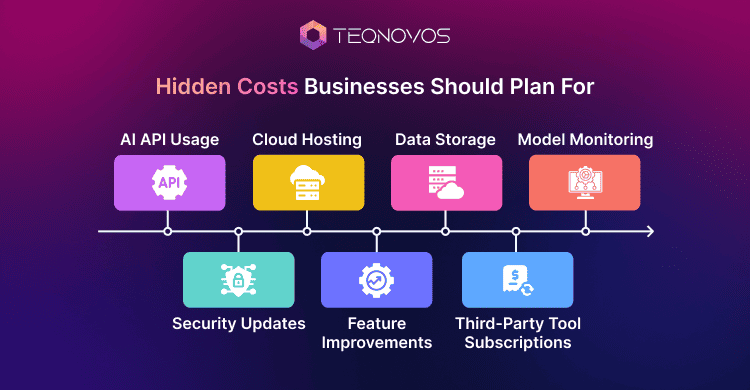
SaaS product development cost does not end with the first launch. Some costs appear after the product goes live. Businesses should plan for these costs early to avoid budget pressure later.
AI API Usage
Many AI SaaS products use external AI services for chat search, text generation, and data analysis. These tools often charge based on usage. The monthly cost can increase as more users start using the platform.
Cloud Hosting
AI SaaS platforms need stable hosting to run smoothly. Hosting cost depends on traffic data storage speed needs and server power. A small product may start with a lean setup. A growing platform may need stronger cloud support.
Data Storage
AI products often manage large amounts of user and business data. More data means higher storage needs. The cost can also increase when the platform stores files, reports, or user activity history.
Model Monitoring
AI features need regular checks after launch. The team must review accuracy, speed, and user response. This helps keep the product useful and reliable.
Security Updates
Security should continue after launch. The platform may need access control updates, bug fixes, and regular updates. This is more important for healthcare fintech and enterprise platforms.
Feature Improvements
Users often request new features after using the product. These updates help improve product value. They can also affect the long term AI SaaS development cost.
Third-Party Tool Subscriptions
Many SaaS products connect with payment tools, email services, and analytics platforms. These tools may have monthly or usage based charges. Businesses should include them in the budget from the start.
Reduce AI SaaS Product Development Cost With Smarter Planning —Start Your AI SaaS Project!
Schedule a Call
How Long Does It Take to Build an AI SaaS Product?
Timeline also affects the AI SaaS development cost. A focused MVP can take 8 to 12 weeks. A larger AI SaaS platform development project can take 3 to 6 months based on features and complexity.
A simple product moves faster when the scope stays clear. A complex product needs more time for AI logic backend workflows, integration testing, and launch support.
Estimated AI SaaS Development Timeline
- Discovery and planning: 1 to 2 weeks
- UX and UI design: 1 to 3 weeks
- MVP development: 6 to 10 weeks
- Full product development: 3 to 6 months
- Testing and launch: 2 to 4 weeks
A shorter timeline is possible when the first version includes only core features. This helps businesses launch faster and improve the product with real user feedback.
Final Cost Summary
AI SaaS product development cost usually depends on product scope, feature depth, and AI integrations. A lean product can start with a smaller budget. A larger platform needs more development and testing.
The cost to build AI SaaS software can become high when there is a requirement for automation and security. However, if the initial development is limited to essential functionalities, then the development cost of an AI SaaS application will be flexible.
A clear scope helps control the AI SaaS development cost. Businesses can start with an MVP, then improve the platform with real user feedback.
Having a defined scope enables businesses to limit the costs involved in creating an AI-based SaaS software. Companies can begin with an MVP and make improvements based on user feedback.