
- Hire a Developer
 Android Developers
 iOS Developers
 Angular Developers
 DevOps Developers
 Laravel Developers
 MEAN Stack Developers
 MERN Stack Developers
 NestJS Developers
 NodeJS Developers
 NextJS Developers
 NuxtJS Developers
 Python Developers
 ReactJS Developers
 VueJS Developers
 WordPress Developers
 Shopify Developers
 BigCommerce Developers
 Salesforce Developers
- AI Development
- Industries


Get in Touch
What Is Medical Device Software Development?
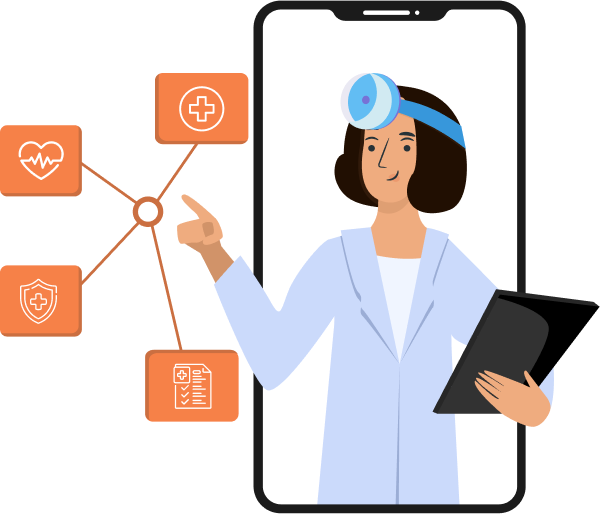
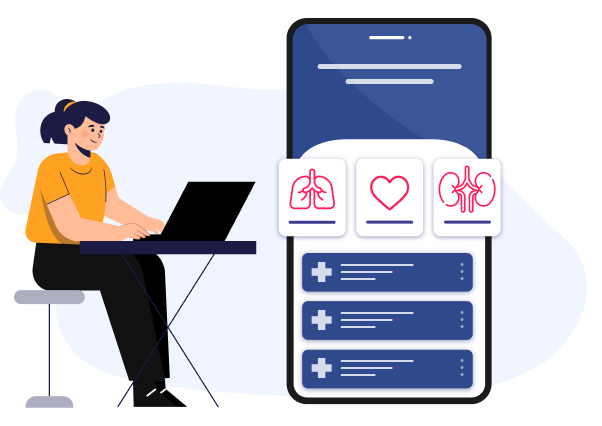
Medical device software development is the process of creating software that performs or supports a medical function. It can work as standalone software or operate as part of a physical medical device. Software as a Medical Device (SaMD) serves a medical purpose without being part of medical hardware. It may analyze clinical information or monitor patient conditions.
Software in a Medical Device (SiMD) works within physical medical equipment. It may control device functions or process information collected by connected components. Both types require structured requirements and risk management. They also need controlled testing because software performance can directly affect clinical use and patient safety. Businesses often work with a medical software development company to build solutions that support clinical workflows and connected healthcare operations.
Medical Device Software Development Process, Lifecycle, and Features
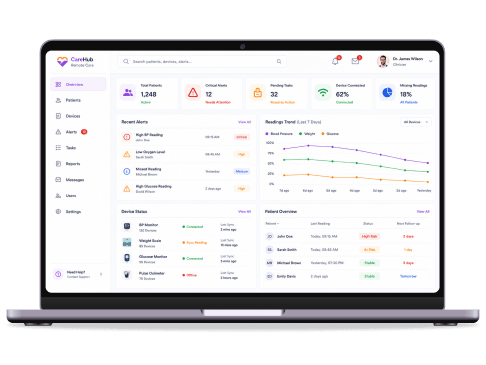

Remote Patient Monitoring Software
connected care solution concept for healthcare providers and healthtech startups that need a clearer way to capture patient readings outside clinical settings.
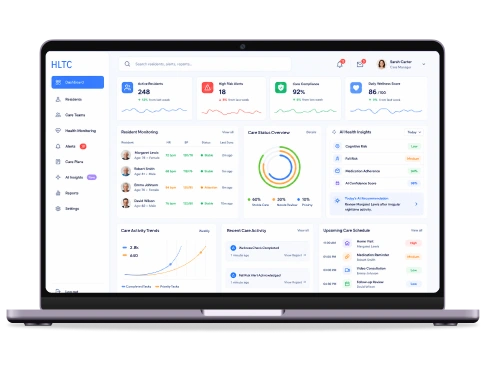

AI-Powered Elderly Care Monitoring Platform
Teqnovos built an AI powered elderly care monitoring platform that connected daily updates with alerts and caregiver actions. The platform helped care teams identify concerns earlier. It also improved follow ups and supported safer independent living for older adults.
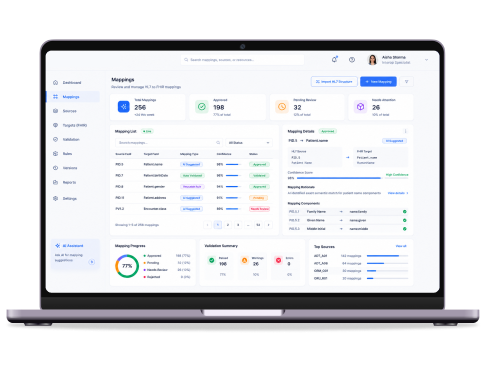

Smarter Healthcare Data Mapping With Generative AI
Healthcare organizations often manage clinical data across legacy EHRs, HL7 feeds, medical devices, and disconnected platforms. Manual mapping slows healthcare interoperability and creates data quality gaps.
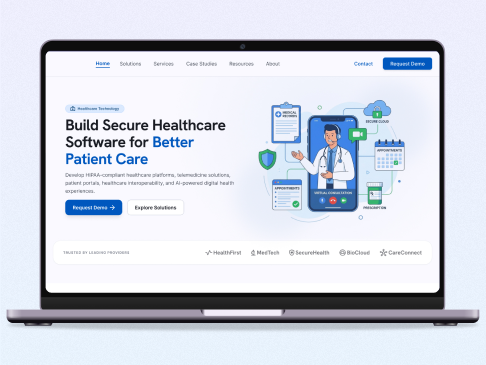

Connected Virtual Care Through EHR Integration
The platform connected every stage of the virtual care journey. Patients could schedule appointments and join video consultations through a simple process. Providers gained faster access to electronic health records and clearer follow up workflows. This reduced manual effort and supported a smoother care experience.
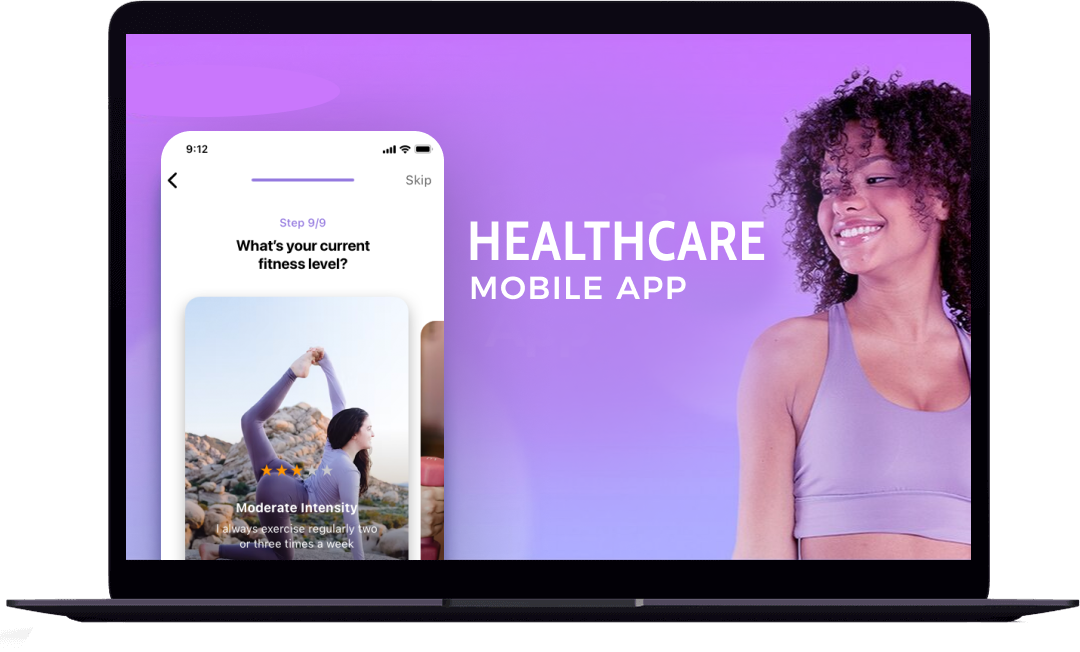

Healthcare App
Our web design and development team is remarkable when it comes to delivering business-oriented visuals. We first understood the project requirement and target audience to act accordingly for app development.
Common Medical Device Software Use Cases
Medical device software can serve different clinical and operational purposes. Some solutions control device functions. Others monitor patients or process medical data. The exact use case depends on the device’s purpose and the type of information the software needs to manage.
Device Operation Software
Device operation software controls or manages functions inside connected medical equipment. It can process sensor inputs and trigger device actions based on defined rules.
- Sensor data processing
- Device function control
- Error detection
- System status monitoring
Patient Monitoring Software
Patient monitoring software collects health data from connected devices. Businesses developing remote care solutions can also explore remote patient monitoring software for connected healthcare workflows.
- Vital sign tracking
- Remote data collection
- Clinical alerts
- Patient trend monitoring
Medical Data Analysis Software
Medical data analysis software processes clinical or device data to identify patterns and present useful findings. It can support medical review and ongoing product functions.
- Clinical data processing
- Pattern identification
- Data visualization
- Report generation

1

2

3

4

5

6

7

8
Build Safer Medical Software Solutions
Partner with Teqnovos to develop secure and reliable medical device software built for healthcare needs.
Standards That Shape the Software Lifecycle
Medical device software must follow structured quality and risk controls throughout development. The exact requirements depend on the product type and intended market. Several widely recognized standards guide how teams plan development and manage risk.

IEC 62304
IEC 62304 defines lifecycle processes for medical device software. It covers development and maintenance activities for standalone and embedded software. The current consolidated version is IEC 62304:2006 plus Amendment 1:2015.

ISO 14971
ISO 14971:2019 focuses on medical device risk management. It guides teams through hazard identification and risk evaluation. It also covers risk controls and ongoing risk monitoring across the device lifecycle.

ISO 13485
ISO 13485:2016 defines quality management system requirements for medical device organizations. It connects product development with controlled processes and documented quality practices.

FDA QMSR
The Food and Drug Administration (FDA) introduced the Quality Management System Regulation (QMSR) on February 2, 2026. It incorporates ISO 13485:2016 into the United States medical device quality framework.

Cybersecurity Guidance
The FDA issued updated medical device cybersecurity guidance in February 2026. It addresses cybersecurity design and labeling. It also outlines recommended documentation for devices that carry cybersecurity risks.
Why Partner With Teqnovos for Medical Device Software Development?
Teqnovos is a trusted healthcare software development company that builds secure and scalable healthcare solutions. The focus remains on secure development practices, reliable integrations, and scalable healthcare technology solutions.
Experience with healthcare-focused software solutions
Understanding of clinical workflows and user requirements
Focus on secure and reliable development practices
Support for connected healthcare platforms
Structured approach across software planning and development stages
Focus on requirements, testing, and quality processes
Support for continuous software improvements
Alignment with medical software development needs
Support for healthcare system integrations
Development of connected software solutions
Focus on reliable data exchange
Support for interoperability requirements
Solutions designed around specific business objectives
Flexible strategies for different healthcare needs
Support for scalable software architecture
Adaptable development processes for future growth
Ready to Develop Your Medical Device Software?
Turn your healthcare software idea into a scalable solution with a structured development approach.
How Traceability Connects Requirements to Test Evidence
Requirements traceability connects user needs with software requirements and risk controls. It helps teams maintain visibility throughout the medical device software development life cycle.

Connect User Needs With Requirements
Link clinical needs with software requirements to ensure every function has a clear purpose. Teams can track expectations and maintain product alignment.
- Define software requirements
- Link needs to functions
- Maintain requirement records
- Support clear development goals

Link Risks With Software Functions
Connect identified risks with specific controls and software behavior. This approach helps teams understand how each feature addresses potential safety concerns.
- Identify software risks
- Map risk controls
- Review safety requirements
- Maintain risk visibility

Track Development and Testing Evidence
Maintain records that show how requirements move through development and validation. Teams can confirm that software functions meet defined expectations.
- Connect requirements with test cases
- Review verification results
- Maintain testing records
- Support validation activities

Manage Changes Through Traceability
Track software updates and their impact across requirements, risks, and testing. Controlled changes help teams maintain reliability after modifications.
- Review change impact
- Update affected records
- Repeat required testing
- Maintain lifecycle documentation
Can Agile Work in Medical Device Software Development?
Agile can work in regulated medical environments when teams maintain proper controls. Agile medical device software development combines iterative delivery with documentation, testing, and risk management practices.
Agile With Compliance
Maintain regulatory controls while using Agile methods. Teams must keep requirements, risk records, and development documentation updated throughout each sprint.
- Maintain lifecycle documentation
- Track requirements changes
- Review risk impact
- Follow quality processes
Sprint-Based Development
Break software development into smaller iterations while keeping product goals clear. Teams can improve functionality gradually without losing development visibility.
- Plan sprint activities
- Prioritize software requirements
- Review completed work
- Improve development workflows
Continuous Testing
Test software throughout development instead of waiting until the final stage. Continuous testing helps identify issues earlier and supports reliable releases.
- Perform regular testing
- Review software behavior
- Identify defects early
- Maintain test records
Controlled Changes
Manage software updates carefully to protect product reliability. Teams must review changes and assess their impact before implementation.
- Evaluate change impact
- Update affected records
- Perform required testing
- Maintain traceability
Verification and Validation in Medical Device Software Development
Verification and validation confirm that medical device software meets defined requirements and user expectations. These activities help teams identify issues and maintain reliable software performance.

Verification Testing
Check that software functions meet predefined requirements. Teams review development outputs and confirm that each component performs as expected.
- Test software functionality
- Review requirement compliance
- Perform integration checks
- Maintain verification records

Validation Testing
Confirm that the software meets its intended purpose in real-world use conditions. Teams evaluate whether the product supports user needs effectively.
- Test real use scenarios
- Review user expectations
- Confirm intended functionality
- Evaluate software performance

Testing Activities
Perform different testing methods to assess software quality and reliability. Teams evaluate performance, security, and usability before deployment.
- Conduct functional testing
- Perform security testing
- Review system performance
- Check user experience

Documentation Evidence
Maintain detailed records that show testing results and development decisions. Documentation supports traceability and quality reviews throughout the lifecycle.
- Store test results
- Maintain validation records
- Track requirement links
- Support release approval
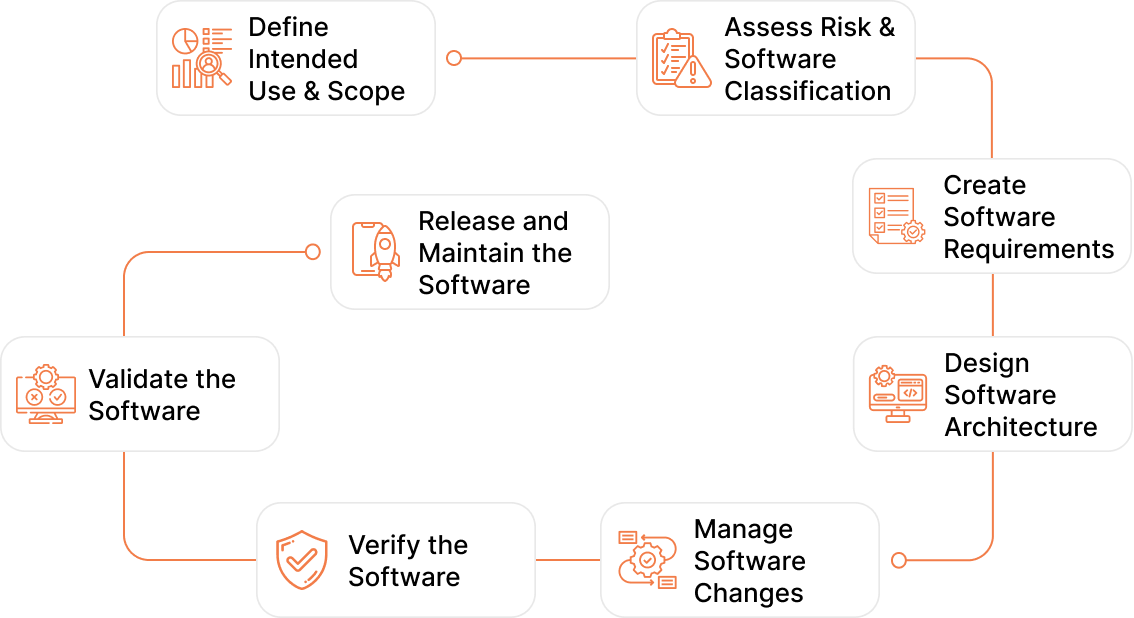
Define Intended Use and Scope
Identify the software purpose, users, and operating environment before development begins. Clear scope helps teams define requirements and development priorities.
Assess Risk and Software Classification
Evaluate potential risks and determine software safety needs. Teams use this assessment to plan controls, documentation, and testing activities.
Create Software Requirements
Define functional, technical, and safety requirements for the software. Clear requirements help teams maintain accuracy, traceability, and consistent development outcomes.
Design Software Architecture
Plan the software structure, components, and data flow. A strong architecture supports scalability, security, device communication, and reliable system performance.
Develop and Manage Software Changes
Build software using controlled development practices. Teams manage versions, review changes, and maintain records to protect software quality throughout development.
Verify the Software
Test software functions against defined requirements. Teams review code behavior, integrations, and system performance to confirm that development goals are achieved.
Validate the Software
Confirm that the software meets user needs and its intended purpose. Validation ensures the final product performs correctly in its expected healthcare environment.
Release and Maintain the Software
Prepare the software for deployment and manage future updates. Teams monitor performance, address issues, and control changes after release.
Cybersecurity in Medical Device Software Development
Medical device software handles sensitive health information and connects with multiple systems. Strong cybersecurity practices help protect patient data and maintain reliable software performance throughout the product lifecycle.

Security by Design
Security risks can increase when protection is added late
Poor design choices can affect software reliability
Secure development practices improve system protection
Security planning supports lifecycle requirements

Data Protection
Sensitive health data requires strong protection measures
Unsecured transfers can expose medical information
Encryption helps protect stored and shared data
Data handling practices must remain consistent

Access Control
Weak permissions can expose patient information
User roles must define access levels
Authentication helps verify authorized users
Activity records support security monitoring

Vulnerability Management
Third-party components can introduce vulnerabilities
Security issues require timely assessment
Software updates must consider potential risks
Teams should monitor system security continuously
What makes Teqnovos different
Scalable Digital Solutions To Power Business Growth
Business success is our benchmark. At Teqnovos, we design and develop custom mobile applications that solve real operational challenges. Our solutions enhance customer experiences and support long-term scalability. By aligning technology with your workflows and market needs, we ensure every solution delivers lasting value.
About Teqnovos
Teqnovos’ team provides custom mobile app solutions to gain a competitive advantage in a growing market. Digital readiness helps businesses build loyalty and scale sustainably. Businesses are moving toward digital experiences that support convenience and speed. Mobile app development plays a key role in meeting these expectations. A well-planned app helps improve customer engagement and repeat purchases. It also gives businesses better control over branding, operations, and data. Book a free consultation with us to become a powerful growth channel in the market.

Frequently Asked Questions
Medical device software development is the process of creating software for medical purposes. The software can control devices. It can monitor patients and manage healthcare data. The development process focuses on safety and reliability. Teams build software with proper requirements. They also follow testing and quality practices.
The medical device software development life cycle is a structured process for building and maintaining medical software. It includes planning, requirements, and design. It also includes development, testing, and maintenance stages. Each stage helps teams maintain software quality and manage risks.
Yes. Agile medical device software development can be used when teams follow controlled development practices. Agile allows teams to build software in smaller stages. Teams still maintain documentation. They also manage testing and risk controls throughout development.
Medical device software development follows different quality and safety standards. IEC 62304 guides software lifecycle activities. ISO 14971 supports risk management practices. ISO 13485 focuses on quality management processes for medical device organizations.
Medical device software is tested through verification and validation activities. Verification checks if the software meets defined requirements. Validation confirms that the software works for its intended purpose. Teams also perform functional testing. They review security and system performance before release.
The cost depends on the software scope and product requirements. Complex features can increase development efforts. Device integrations can require additional engineering work. Testing needs and long term maintenance also affect the overall cost.
Businesses should evaluate the experience of different medical device software development companies before selecting a partner. They should review development processes. They should check security practices. They should also consider testing methods and future support capabilities.
Software as a Medical Device (SaMD) works as standalone medical software. Embedded medical device software operates inside a physical device. It controls or supports specific device functions.
Cybersecurity protects medical software from security threats. Strong security practices protect patient information. They also reduce risks related to unauthorized access and software vulnerabilities.
The required features depend on the purpose of the software. Common capabilities include patient data management. Device connectivity is also important. Secure access and reporting features support reliable software use.
The timeline depends on the software requirements and project complexity. Simple solutions may need less development time. Connected medical systems require more planning. Testing and validation activities can also affect the timeline.
Yes. Existing software can be improved with new features and security updates. Teams review each change before implementation. They check the impact on software performance. They also update testing and documentation when required.
Medical data analysis software helps process healthcare information and identify useful patterns. It can support data review and reporting activities. It helps teams understand collected medical information and improve software functionality.
Businesses should select a partner with healthcare software experience. They should review the partner’s development approach. They should also check lifecycle knowledge, security practices, testing methods, and support capabilities.