























AI-Powered DevOps: The Future of Smarter Software Development
Every second matters in the digital marketplace. Users expect applications to run smoothly and load instantly without any interruptions. Delivering what the user demands is not an option but a strategy to be at the top. It is what helps businesses persist in today’s digital landscape. This is where DevOps enters the stage.
DevOps is a modern tool that mixes software development and IT operations. It blends both approaches as one process. It focuses on collaborating, automating processes, and continuous delivery. This process speeds up the release cycle of apps and ensures reliable software.
However, AI is shaping the old ways. The traditional method used to handle repetition, but AI is taking a step further. It predicts issues before they even happen. It brings automation with intelligence. So, teams could make smarter decisions based on data-driven insights.
In this blog, we will explore how AI-powered DevOps is changing software development. You will learn what DevOps is, the role of DevOps engineers, and the services they provide. We will also cover essential tools, cloud best practices, and the benefits of DevOps. We will discuss how AI is setting the stage for the future.
What Is DevOps and How Does It Work
DevOps is an approach that combines software development and IT operations. It focuses on one simple principle, breaking barriers for smooth collaboration between teams. A culture with shared responsibility. Instead of working alone on the project, developers and the operations team collaborate throughout the project lifecycle. This results in rapid delivery and fewer errors in the code.
The DevOps lifecycle follows a loop: plan → code → develop → test → release → deploy → operate → monitor. Each stage connects with the others and forms a cycle of constant development.
Automation drives the process while tools manage the tedious tasks. A mutual approach ensures solving errors quickly and updating software faster. This is what DevOps in practice looks like. A streamlined workflow, shorter time to release, and trustworthy software.
DevOps Services Transforming Software Development
DevOps development services help businesses increase the speed of software development. They combine automation, infrastructure management, and cloud integration into a single process. Below are some key DevOps development services:
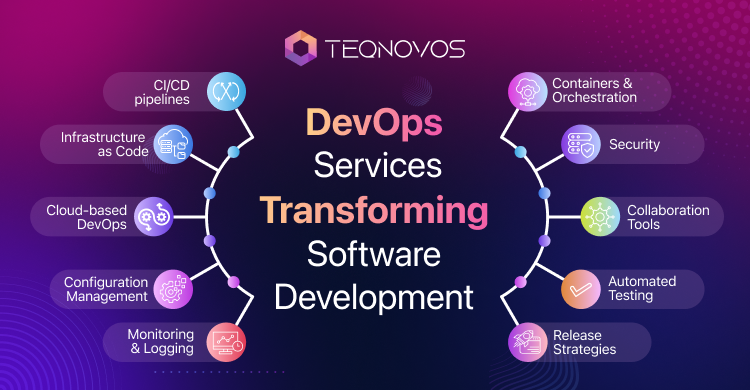
CI/CD pipelines
The standard method required to drive the code manually and wait for it to go live. But now pipelines can handle the build, test, and release apps on their own. This keeps delivery quick and cuts down on mistakes.
Infrastructure as Code (IaC)
Manually setting up servers and ecosystems used to take a lot of time. With the launch of IaC, teams write up the scripts to do the job. This makes the process repeatable and easy to adjust when things scale up or down.
Cloud-based DevOps
Businesses are now running DevOps on different cloud platforms such as Google Cloud. This gives the flexibility and a global reach. Thus, they gain the ability to roll out updates without worrying about the downtime.
Configuration Management
Teams use tools like Puppet to maintain reliability during updates of apps. Various configuration management tools keep the systems consistent across different ecosystems.
Monitoring and Logging
Track and monitor the system health in real time. Dashboard and logging tools offer the ability to spot issues quickly. It can fix them before affecting any users. It is practically a red alert system for apps.
Containers and Orchestration
Docker makes applications portable, while Kubernetes helps manage them at scale. Together, they simplify deployment across multiple environments.
Security in the pipeline
Security isn’t a step at the end anymore. By building checks into the development cycle, risks are flagged early. This makes compliance easy to manage.
Collaboration Tools
DevOps is also about culture. Different collaboration and connection tools help teams to stay active on the same goal.
Automated Testing
Test cases run in the background whenever code changes. The developers could focus more on product features and keep up the quality standards.
Release Strategies
Blue-green and canary deployments help roll out new versions without major disruption. Users often don’t even notice when an update happens.
The role of DevOps in app development:
- Speeds up delivery cycles.
- Supports business scalability.
- Minimizes risks and failures.
- Shifts focus from repetitive tasks to innovation.
DevOps development services transform app development into a smarter and more reliable process.
Supercharge Your Software with AI-Powered DevOps. – Book A Demo!
Schedule a CallDevOps Methodology and the Tools Behind It
DevOps relies on a mix of established platforms and new AI-driven solutions. They assist in streamlining the software lifecycle. Each tool plays a distinct role in keeping workflows smooth and predictable.
Core tools used in DevOps include:
Jenkins: It integrates various stages of the pipeline into one single flow.
Docker: Developers could create a portable application environment with Docker. This ecosystem can work in any part of the world.
Kubernetes: Balance the app workload with Kubernetes while managing containers at scale.
Ansible: Need help with the routine setup? Ansible gets you updates with simple scripts.
Terraform: defines infrastructure through code for consistency.
AI-powered tools add intelligence to this foundation:
- Predictive monitoring: Continuous monitoring helps warn teams. Gain insights into performance drops before they turn into failures.
- Automated scaling: Match the system capacity with real-time demand.
- Anomaly detection: Spots irregular patterns that could signal security or stability risks.
The goal of a DevOps methodology is simple. It shortens release cycles while protecting quality. Using these tools effectively helps teams keep the project moving forward.
Cloud DevOps Best Practices
Businesses get flexibility by running DevOps in the cloud. The cloud DevOps best practices combine automation, consistency, and smart use of AI. But success depends on following the right strategies.
Key Practices Include:
- Infrastructure as Code: Write code to determine and oversee servers, networks, and assets. IaC makes infrastructure repeatable, reduces errors, and scales systems up or down.
- Automated deployments, testing, and monitoring: Push updates to production with confidence. Automation speeds up delivery. It ensures every build is tested. It keeps a track of the application with real-time monitoring.
- Cloud + AI capabilities: Advanced platforms use AI to take DevOps a step ahead:
- Predictive scaling adds resources before traffic spikes.
- Cost optimization shuts down unused instances to save money.
- Self-healing systems fix or restart failing components automatically.
By adopting these practices, teams gain speed and stability without sacrificing control. Developers can focus on building features. Operations ensure that apps stay secure and trustworthy for users. Cloud DevOps best practices help businesses deliver better user experiences.
Key Advantages and Benefits of DevOps for Businesses
The various advantages of DevOps are driving its adoption among industries. It bridges the huge gap between development and operation teams. Thus, enabling teams to deliver faster and collaborate better. Businesses opting for this approach view improvements in software development.
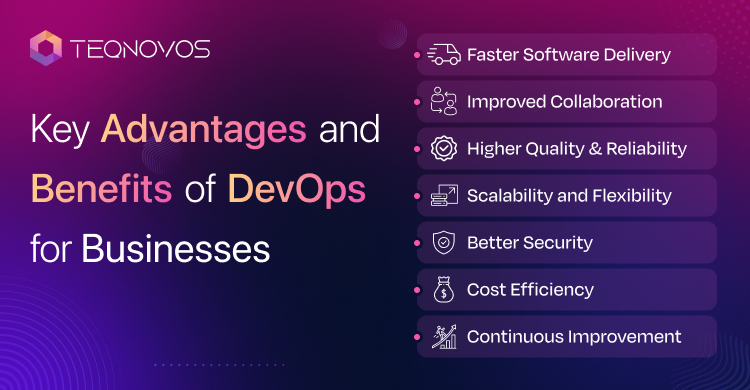
Below Are Some Of The Key Advantages Of DevOps:
- Faster Software Delivery
One of the main benefits of DevOps is speed. Teams can release updates and features more often. Continuous integration and constant delivery pipelines automate the process, reducing delays.
- Improved Collaboration
DevOps breaks down barriers between teams. Developers and operations join forces to work on similar goals. This culture shift improves communication and liability.
- Higher Quality and Reliability
Automation and continuous testing reduce errors. Leverage DevOps for faster fixes during production and lower bug rates in the code. Stability increases, which boosts customer trust.
- Scalability and Flexibility
DevOps practices allow businesses to scale infrastructure. Cloud integration supports changing demands. This scalability is one of the practical benefits of DevOps for growing organizations.
- Better Security
Safe practices during the development cycle. Automated compliance checks and monitoring keep systems safe. This approach is often called DevSecOps.
- Cost Efficiency
Automation in processes reduces manual work and downtime. This results in faster launch and lower costs related to errors. Businesses save resources while improving the performance of software.
- Continuous Improvement
Teams keep track of operations, learn from outcomes, and enhance the process. This long cycle of improvement helps with the long-term success of the app.
Have Questions About DevOps? – Talk to Our Specialists Today.
Schedule a CallAI’s Role in the Future of DevOps
AI is becoming an essential part of the evolution of DevOps. The future of AI-powered DevOps is about moving beyond automation into smart decision-making. It could enhance DevOps in three major ways:
1. Anomaly Detection
AI tools can examine large volumes of data and spot strange patterns. This allows teams to detect issues early and act before they affect the users.
2. Smarter Automation
Taking automation one step ahead. AI learns from past projects and indicates fixes based on that. It automates responses and reduces manual work. This improves the speed of delivery and makes apps more dependable.
3. Predictive Analytics
AI predicts problems before they occur. It analyzes trends in performance, security, and usage. This gives teams the insight to prepare and prevent downtime.
The shift toward AIOps
The introduction of AI is making the industry move to AIOps. This approach brings together DevOps and modern tools to make things run smoothly. It focuses on keeping an eye on systems in real time, fixing issues, and scaling when needed. This shift improves both competence and stability.
Conclusion
Businesses reshape the way of managing and creating software with AI-driven DevOps. It uses automation and smart decision-making to stay ahead. Thus, allowing teams to predict issues, adapt faster, and focus on being innovative.
AI amplifies the different advantages of DevOps. By adopting this approach, companies are paving the way for success in today’s digital world.
Are you looking for a way to take your business to the next level? Connect with Teqnovos today and find out how.