



















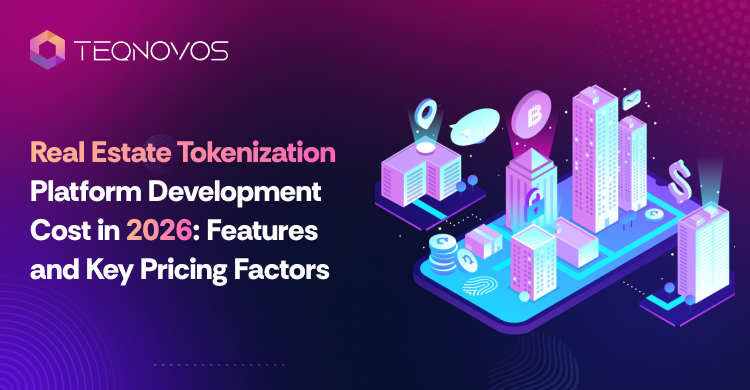
Real Estate Tokenization Platform Development Cost in 2026: Features and Key Pricing Factors
Digital property investment is gaining strong interest in 2026. More investors now explore fractional ownership and blockchain based asset management. This shift creates new opportunities for real estate firms, fintech startups, and investment businesses. Pricing matters before development starts. Businesses want to understand the real estate tokenization platform development cost so they can plan features and launch timelines.
The final cost depends on the type of real estate tokenization platform a business wants to build. A simple platform with investor onboarding and token listings costs less than an advanced platform with smart contracts, wallet integration, and compliance workflows.
Strong planning helps businesses avoid extra spending and build a platform that supports real investment operations. Blockchain real estate tokenization works best when cost, usability, and compliance stay aligned from the start. Businesses planning real estate tokenization platform development can use a structured roadmap to align platform scope, features, and blockchain architecture before estimating the final cost.
What Is a Real Estate Tokenization Platform?
A real estate tokenization platform converts property ownership rights or investment shares into blockchain based tokens. These tokens can represent fractional ownership income rights or investment participation in a property. This helps divide a high-value asset into smaller digital units for investors.
A tokenized real estate platform can support investors’ onboarding, property listings, and token creation. They can also record payment tracking and transaction history, all from one system.
In blockchain real estate tokenization, smart contracts help record token rules and support actions like ownership transfer, investor checks, and income distribution. The platform can also connect with wallets, payment systems, and reporting dashboards. The main goal is to make real estate investment more accessible, structured, and transparent while keeping ownership data easier to track.
Average Real Estate Tokenization Platform Development Cost in 2026
The average real estate tokenization platform development cost in 2026 can range from $40k to $500k+. The final price depends on platform complexity, smart contracts, and blockchain infrastructure. Competitor estimates also vary widely. Some show lower-cost white-label options, while advanced enterprise builds can go beyond $500k.
Platform Type |
Estimated Cost Range |
| Basic MVP platform | $40k to $80k |
| Mid-level platform | $80k to $180k |
| Advanced custom platform | $180k to $350k+ |
| Enterprise-grade platform | $350k to $500k+ |
A basic platform usually includes investor onboarding, property listings, and simple dashboards. A mid-level platform may include wallet integration, investor verification, and payment workflows. The real estate tokenization platform cost also changes based on the blockchain network and audit needs.
Build a real estate tokenization platform that supports investor properties, token payments, and compliance with confidence.
Schedule a CallReal Estate Tokenization Platform Cost by Development Type
The real estate tokenization platform cost changes based on the development approach. Businesses can choose a white-label platform, a custom platform, or an enterprise grade platform. Each option has a different cost range because each one needs a different level of control, security, and flexibility.
White Label Platform
White label real estate tokenization platform development can reduce both launch time and cost. The base product is already built. The team only needs to adjust branding features, user flows, and basic integrations. This model works well for a Minimum Viable Product or MVP pilot launch and faster market entry. Moreover, it is useful for businesses that want to test investor demand before building a fully custom system.
Custom Platform
Custom real estate tokenization platform development costs more because the platform is built around specific business needs. It can include tailored investor workflows, advanced dashboards, and custom token logic. This approach gives real estate firms and fintech startups more control over the user experience and platform structure. It also supports unique investment models that standard platforms may not handle well.
Enterprise Platform
Enterprise platforms require a higher budget because they need stronger architecture and deeper operational control. These platforms may support multiple properties, institutional investors, and advanced reporting. They also need stronger security, smart contract audits, and scalable infrastructure. The cost to build a real estate tokenization platform at this level is higher because the system must support large transactions and complex compliance needs.
Key Features That Affect Real Estate Tokenization Platform Development Cost
The real estate tokenization platform development cost depends heavily on the modules a business wants to include. A simple platform needs fewer modules. A full tokenized real estate platform needs deeper workflows and stronger controls.
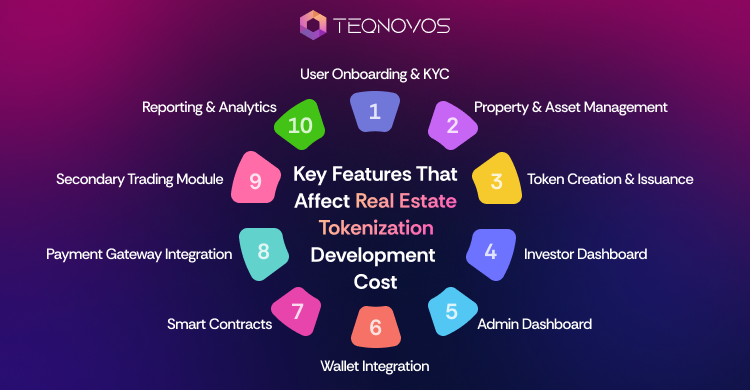
User Onboarding and KYC Flow
KYC flow helps verify investor identity before platform access. This feature increases cost when it needs document checks, risk screening, and approval workflows.
Property Listing and Asset Management
This module helps admins add property details, valuation data, and ownership records. More property data means more backend logic and dashboard work.
Token Creation and Issuance
Token creation converts property shares or income rights into digital tokens. Custom token rules increase the cost because they need smart contract planning and testing.
Investor Dashboard
The investor dashboard shows holdings, transactions, income records and investment performance. A clear dashboard improves user trust and adds more design and data work.
Admin Dashboard
The admin dashboard helps teams manage users, properties, and tokens. They can also handle payments and compliance actions. Advanced admin controls increase the scope of real estate tokenization platform development.
Wallet Integration
Wallet integration allows users to hold and transfer tokens. It can increase cost based on wallet type, blockchain network, and security requirements.
Smart Contracts
Smart contracts are blockchain programs that run token rules automatically. They need careful development audits and testing because they handle asset-related transactions.
Payment Gateway Integration
Payment gateways help users invest and receive payments through secure channels. Multiple currencies and payment methods can raise the development effort.
Secondary Trading Module
A secondary trading module allows users to buy or sell tokens after issuance. This feature adds complexity due to order-matching pricing rules and compliance checks.
Reporting and Analytics
Reporting tools help admins track investors’ property performance, income distribution, and transactions. Advanced analytics can increase dashboard and data processing costs.
Compliance and Document Management
Compliance management supports investor checks, audit trails, and approval workflows. Document management helps store property records and legal documents securely.
Dividend or Rental Income Distribution
This module supports income sharing based on token ownership. It affects the real estate tokenization platform cost because it needs accurate calculations, payment workflows, and transaction records.
Blockchain and Smart Contract Factors That Influence Pricing
Blockchain choice has a direct impact on the real estate tokenization platform development cost. Ethereum may offer strong ecosystem support, but it can involve higher transaction costs. Polygon and BNB Chain can support faster and lower-cost transactions. Hyperledger and private blockchain setups may fit enterprise use cases that need more control, privacy, and permission based access.
Smart contracts also affect pricing in blockchain real estate tokenization. They can manage token issuance, ownership transfer, and compliance rules. Simple smart contracts cost less. Complex contracts need deeper logic testing, audits, and security checks. This makes real estate tokenization development more expensive when the platform needs custom rules for multiple asset types and automated investor workflows. This makes real estate tokenization development more expensive when the platform needs custom rules for multiple asset types, automated investor workflows, and custom real estate dApp development for decentralized ownership actions.
Compliance and Security Costs in Real Estate Tokenization Development
Compliance and security can strongly increase the cost of real estate tokenization development. A tokenized real estate platform may need investor verification, ownership rules, or KYC flows. It may also need audit trails, secure data handling, and clear approval workflows.
Security adds another cost layer. The platform may need smart contract audits, security testing, and advanced encryption. These checks help protect investor data, asset records, and payment activity. Strong planning helps reduce risk before launch.
Development Timeline and Its Impact on Cost
The timeline for real estate tokenization development depends on platform scope, feature depth, and blockchain setup. A simple app with basic features might take a while to launch, while a complex app with more custom workflows and smart contract integrations might take longer.
Estimated Timeline by Platform Type
Platform Type |
Estimated Timeline |
| White label setup | 4 to 8 weeks |
| MVP platform | 3 to 5 months |
| Mid-level platform | 5 to 8 months |
| Enterprise platform | 8 to 12+ months |
White Label Setup
White label real estate tokenization platform development takes less time because the base product is already built. The team mainly adjusts branding, core features, and selected integrations. This works well for pilot launches and faster market entry.
MVP and Mid-Level Platform
An MVP takes more time because it needs investor onboarding, property listing token creation, and admin control. A mid level platform adds compliance workflows, reporting tools, and stronger smart contract logic.
Enterprise Platform
Enterprise platforms take the longest. They need multi property support, role based access, and advanced analytics. They should also support strong security and flexible compliance rules. The cost to build a real estate tokenization platform rises with the timeline because longer projects need more time for development and maintenance planning.
Hidden Costs Businesses Should Consider
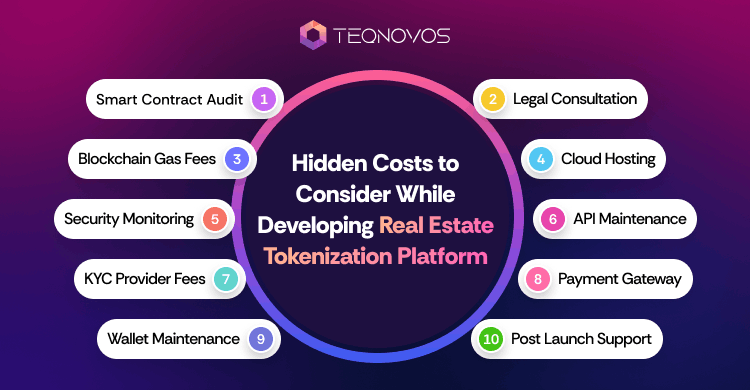
The real estate tokenization platform development cost does not end with design and development. Businesses also need to plan hidden and ongoing expenses. These costs can affect the full budget after launch. They matter more in blockchain real estate tokenization because the platform handles investor data, asset records, and other financial activity.
Key Hidden Costs
Smart Contract Audit
Audits help check token logic, ownership rules, and income distribution flows before launch.
Legal Consultation
Legal review helps align the platform with investor rules, ownership terms, and jurisdiction needs.
Blockchain Gas Fees
Gas fees apply when users mint tokens, transfer ownership, or complete on chain transactions.
Cloud Hosting
Hosting costs grow as users’ property transactions and platform data increase.
Security Monitoring
Ongoing monitoring helps detect suspicious activity and protect investor accounts.
API Maintenance
Application Programming Interface or API maintenance keeps third-party tools stable and connected.
KYC Provider Fees
KYC checks may add recurring costs for investor verification.
Payment Gateway Charges
Payment providers may charge transaction fees, settlement fees, and refund handling fees.
Wallet Maintenance
Wallet systems need updates, security checks, and user support.
Post Launch Support
A tokenized real estate platform needs bug fixes, compliance updates, performance checks, and feature improvements after release.
Turn real estate assets into secure digital investment opportunities with a scalable tokenization platform.
Schedule a CallHow to Reduce Real Estate Tokenization Platform Cost Without Losing Quality
The real estate tokenization platform cost can stay under control when businesses build with a clear roadmap. Cost reduction should not mean weak security or poor compliance. It should mean smarter planning and better feature selection.
Start With an MVP
A Minimum Viable Product or MVP helps businesses launch with core features first. It can include core features such as investor onboarding, property listing, and token creation. Other basic features include wallet setup and admin control.
Choose Essential Features First
Businesses should avoid adding too many modules at launch. Secondary trading, advanced reports, and complex investor tools can come later. This keeps real estate tokenization development focused and cost-efficient.
Use Scalable Architecture
A scalable system supports future growth without major rebuilds. This helps the platform handle more users’ property tokens and transactions over time. Businesses can also hire real estate app developers to plan scalable architecture, investor workflows, and secure property dashboards.
Select the Right Blockchain Network
The blockchain network affects transaction cost, speed, security, and maintenance. Businesses should choose a network that fits their asset model and user volume.
Plan Compliance Early
Early compliance planning helps reduce rework. Investor checks ownership rules, audit trails, and legal flows should guide the platform structure from the start.
Use APIs Where Possible
APIs can reduce custom work. They help connect payment gateways, KYC tools, wallet systems, and analytics faster.
Consider White Label for Validation
A white-label setup can help test the market before full real estate tokenization platform development. This works well for pilot launches and early investor validation.
Final Cost Summary
There is no fixed price for a tokenization build. The final real estate tokenization platform development cost depends on the scope, features, and blockchain network compliance needs. Platform model integrations and security depth should also be considered. A simple launch with core investor onboarding and token listing costs less than a platform with smart contracts, wallet flows, and advanced compliance controls.
A tokenized real estate platform should match the business goal first. The right platform type helps balance cost, security, and long-term growth.