



























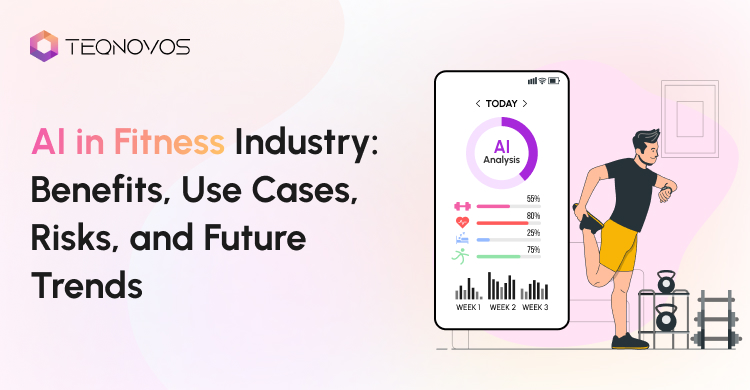
AI in Fitness Industry: Benefits, Use Cases, Risks, and Future Trends
Fitness businesses compete on smarter guidance and better digital experiences. Users want workout support that fits their goals and changes with their progress while still keeping safety and control at the center. AI in fitness helps apps and online fitness brands improve workout planning and track progress with more context.
This helps trainers to gain better client insights. The real value of AI comes when businesses use it with clear goals and strong safety rules. A fitness product needs accurate data, privacy control, and human review where advice may affect health.
What Is AI in Fitness?
The term generally means using software that can read user data and guide better workout decisions. The ML system learns patterns from data and improves recommendations as more user behavior becomes available. In a fitness app, this can include wearable data and feedback after each session. The product can then suggest training changes that match the user better than a fixed plan.
AI also supports online coaching platforms by showing progress patterns and highlighting users who may need extra guidance. It can help a trainer review client activity faster and plan better next steps without replacing human judgment. AI software development services help businesses to add AI features. Thus, they can learn how AI can fit into a digital product with the right data flow and user experience.
How AI Is Transforming the Online Fitness Business
AI is changing the online fitness business by making coaching more personal and easier to manage at scale. Fitness brands can use user goals, activity history, workout feedback, and progress data to guide better decisions across their digital products. This is how AI is transforming the online fitness business while keeping trainers and coaches part of the experience.
1. Smarter Coaching
An online coaching platform can use AI to recommend workout content based on user level, routine history, and training goals. This allows coaches to guide more users with better context while still keeping human judgment in the process.
2. Clear Progress
AI can show trainers which users are falling behind, which users need routine changes, and which users may need more direct support. This gives coaches a clearer view of client progress without asking them to review every detail manually.
3. Better Engagement
Fitness brands can use AI for timely reminders and content suggestions that match user behavior. This keeps training relevant and creates a structured experience for trainers who manage many clients through one product.
Teqnovos has worked on a fitness and healthcare app solution that connects fitness routines, nutrition plans, and trainer workflows in one digital system.
Key Benefits for Fitness Apps and Platforms
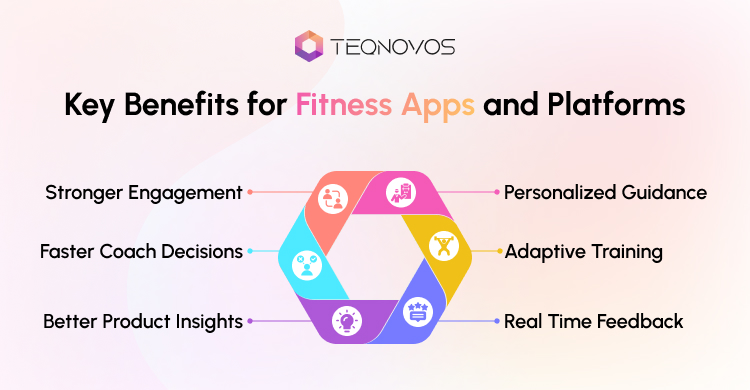
AI features give fitness businesses a stronger way to guide users through data based coaching and structured digital experiences. The real value comes through better personalization, stronger engagement, and clear decisions for trainers and product teams.
1. Personalized Guidance
Personalized workout plans can make training feel more relevant for each user. The app can use goals, activity history, fitness level, and session feedback to suggest routines that match real progress.
- Match workouts with user goals and current fitness level
- Adjust exercise suggestions based on past activity
- Improve user experience with more relevant training content
- Reduce the gap between generic plans and personal coaching
2. Adaptive Training
Adaptive training plans allow fitness products to respond when user progress changes. The app can lower intensity after missed sessions or suggest a harder routine when the user improves over time.
- Change workout difficulty based on progress
- Guide users after skipped sessions or low activity
- Use feedback to improve the next routine
- Keep training flexible without making users restart
3. Real Time Feedback
Real time feedback makes workouts more useful while the user is still active. An AI powered fitness app can review movement data or performance inputs and guide users with timely suggestions.
- Give users workout feedback during active sessions
- Improve form awareness through movement based insights
- Adjust rest time, pace, or intensity when needed
- Make digital training feel more responsive and guided
4. Stronger Engagement
AI can make the fitness experience feel more personal and timely. The product can use user behavior progress history and activity patterns to send better reminders and content suggestions.
- Send reminders based on activity patterns
- Suggest content that matches user goals
- Keep users connected through progress based updates
- Make the app experience feel more relevant over time
5. Faster Coach Decisions
AI can help trainers review client progress with better context. This is useful for an online coaching platform where trainers manage many users and need clear insight before changing workout plans.
- Show which users need trainer attention
- Summarize progress without long manual review
- Highlight skipped sessions, low activity, or slow progress
- Help trainers make faster coaching decisions
6. Better Product Insights
Fitness businesses can use AI to understand how users interact with workout content and coaching features. Businesses planning this type of product can use custom mobile app development services to connect AI features with a clean app experience.
- Track patterns that show user interest
- Find where users drop out of routines
- Improve reminders and content suggestions
- Build product updates around real user activity
Build Smarter Fitness Products With AI. Start Your AI Fitness Project Today!
Schedule a CallCommon Use Cases of AI in the Fitness Industry
Wellness businesses can use AI in fitness industry products for better guidance and stronger user support. The best use cases focus on real problems such as workout planning, progress tracking, movement feedback, and habit support.
1. AI Fitness Coach
An AI fitness coach can guide users through daily routines and progress updates. It can suggest exercise changes based on user goals, activity history, and feedback after each session. This creates a more personal app experience while trainers still guide users when deeper support is needed.
- Suggest workouts based on user goals and progress
- Adjust routines after missed sessions or low activity
- Give users clearer direction during their fitness journey
- Support trainers with faster client progress insights
2. AI in Workout Planning
AI in workout planning can adjust exercise intensity, rest time, and routine structure based on user progress. A beginner may need slower changes, while an advanced user may need harder routines over time. This makes the training plan more useful than a fixed workout schedule.
- Match workout intensity with user fitness level
- Change rest time based on performance and recovery
- Recommend easier or harder routines as progress changes
- Keep training plans flexible without starting from zero
3. AI Yoga Training
AI yoga training can use computer vision to review body movement through images or video. This can help users notice posture issues and improve movement awareness during yoga sessions.
- Review posture through movement-based visual input
- Help users understand alignment during yoga sessions
- Flag possible form issues with pose-based feedback
- Improve practice consistency with guided movement support
4. Wearable-Based Insights
Wearable devices can track heart rate, sleep, steps, calories, and recovery signals. AI can study this data and suggest better training decisions based on the user’s condition. A fitness product with wearable app development can connect device data with smarter fitness recommendations and recovery guidance.
- Track recovery signals through connected devices
- Use heart rate and sleep data for better routine planning
- Suggest workout changes based on daily readiness
- Connect wearable insights with fitness app recommendations
5. Nutrition and Habit Support
AI can guide users with general nutrition patterns, hydration reminders, and habit tracking. It can suggest better routines based on goals and daily behavior. This feature needs clear limits because nutrition advice can affect health and may need expert review for users with medical needs.
- Suggest habit reminders based on daily user behavior
- Guide hydration tracking and routine consistency
- Support general nutrition patterns without replacing experts
- Add safety limits for users with specific health needs
How AI Integration in Fitness App Products Works
A fitness business needs a clear plan before adding AI integration in fitness app products. The process starts with one useful problem, such as workout guidance, progress tracking, or better trainer support. This keeps the product focused and avoids adding AI where simple rules can work better.
- Define the AI Use Case: The team first decides what the AI feature must improve. It may guide workouts, adjust plans, summarize progress, or support trainers with client insights. A clear use case keeps the feature practical and easier to test.
- Prepare the Right Data: An AI feature needs reliable data before it can guide users well. This may include user goals, workout history, fitness level feedback, wearable inputs, and activity patterns. Poor data can lead to weak suggestions and lower trust.
- Build Recommendation Logic: The product then needs rules for how AI will suggest workouts and routine changes. An AI workout app can use this logic to recommend exercise intensity, rest time, and training flow based on progress and user feedback.
- Test Safety Controls: Fitness advice can affect user health, so the app needs safety limits before launch. The product should avoid risky recommendations and show clear guidance when users need a trainer or medical support.
- Improve Through Feedback: The app should collect user feedback after workouts and use it to improve future suggestions. Product teams can connect AI features with mobile apps. This way, the mobile experience stays simple, useful, and easy to follow.
Risks Fitness Businesses Must Plan Before Using AI
AI can make fitness products smarter, but it can also create risk when the product uses weak data or gives advice without clear limits. Fitness businesses need to plan these risks before launch because workout guidance can affect user trust and long term product value.
- Inaccurate Advice: AI recommendations can become unsafe when the app does not understand the user injury history or training limits. A routine that works for one user may create strain for another user. Fitness apps need clear safety rules so the product avoids unsafe recommendations and directs users to expert support when needed.
- Weak Data: AI depends on the quality of user data. Poor workout logs and inaccurate wearable inputs can lead to weak suggestions. A fitness product needs clean data flow and regular feedback so the system can improve recommendations with better context.
- Privacy Control: Fitness apps often collect activity data and device inputs. This makes health data privacy a core product risk. Businesses need clear data handling consent flows and secure storage before they use AI for recommendations.
- Poor Form Detection: AI based movement feedback can fail when lighting or body position affects visual input. Computer vision can guide form awareness, but it cannot guarantee perfect movement correction in every setting.
- Human Review: AI can guide users, but it cannot replace expert judgment in every fitness situation. Human oversight matters when advice involves medical limits or high intensity training. A strong fitness product keeps trainers in control and uses AI as a support layer rather than the final authority.
AI Fitness Coach vs Human Trainer
A fitness product does not need to choose one over the other. An AI fitness coach can manage routine guidance and progress signals, while a human trainer can handle judgment and personal motivation. The best approach combines both so users get faster support without losing expert oversight.
| Comparison Area | AI Fitness Coach | Human Trainer |
| Daily guidance | Suggests routines based on activity and goals | Adjusts guidance through personal understanding |
| Progress tracking | Reviews workout history and user patterns | Interprets progress with real coaching context |
| Motivation | Sends reminders and progress updates | Builds accountability through human connection |
| Safety | Follows preset safety rules and app limits | Reviews injuries and physical limits |
| Personal support | Works well for repeatable workout guidance | Supports confidence mindset and advanced goals |
| Best use | Routine support and scalable coaching tasks | Complex decisions and personal training needs |
This model works well for an online coaching platform because trainers can review client activity faster and focus on users who need direct help.
How Smarter Fitness Products Will Shape Digital Coaching Experiences
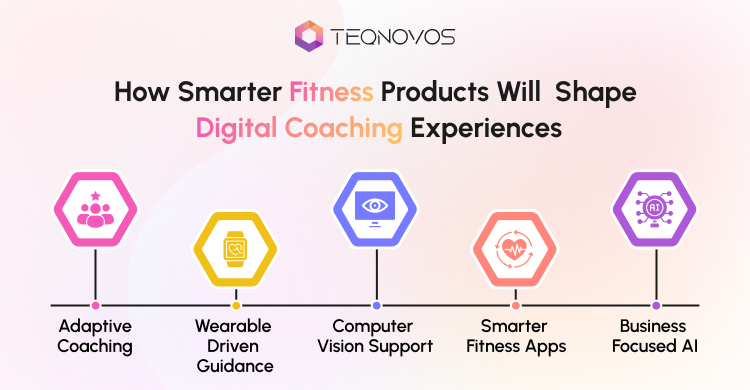
The next phase of fitness technology will focus on smarter guidance and stronger user trust. The most useful AI trends in fitness industry products will not depend on adding AI everywhere. They will depend on using AI where it improves workout decisions and coaching support.
1. Adaptive Coaching
Adaptive training plans will become more important as users expect fitness apps to respond to real progress. A fixed plan may work at the start, but users need better changes when their energy recovery or goals shift over time.
- Adjust routines based on user progress
- Change intensity after missed sessions
- Use feedback to guide the next workout
- Keep training more flexible for each user
2. Wearable Driven Guidance
Wearable data will play a bigger role in digital fitness because users already track their day to day activities and recovery. The strongest fitness products will turn that information into clear workout decisions instead of showing numbers without direction.
- Read heart rate and recovery signals
- Connect sleep patterns with training load
- Guide users with readiness based suggestions
- Turn device data into practical fitness actions
3. Computer Vision Support
Computer vision will continue to shape form, feedback, and movement analysis. It can support posture checks and exercise guidance, but it still needs strong safety limits.
- Review movement through camera based input
- Support form awareness during workouts
- Improve feedback for yoga and bodyweight training
- Keep human review for high risk movement issues
4. Smarter Fitness Apps
An AI powered fitness app will move beyond basic tracking and simple reminders. It can guide routines, explain progress, and help trainers understand user behavior with better context.
- Connect workout goals and progress data
- Give users clearer training direction
- Help trainers review client activity faster
- Improve the app experience through behavior based insights
5. Business-Focused AI
The strongest AI trends in fitness industry products will focus on trust and usefulness. Fitness businesses will need clear safety rules and human oversight as AI features become common.
- Use AI only where it improves guidance
- Protect user data with clear consent flows
- Keep trainers involved in sensitive decisions
- Build features around real user needs
How Will AI Shape the Future of Fitness
AI will make fitness more personal for users with data guided and connected to human coaching. It will not remove the need for human overview or privacy control. This answers the most asked question, that how will AI most likely influence fitness in the future.
Personal Guidance:
AI will make fitness apps better at reading activity patterns and session feedback. This will allow apps to guide users with routines that feel more relevant to their real progress.
Stronger Human and AI Coaching:
The future will likely use a hybrid coaching model. AI can manage routine tracking reminders and progress summaries while trainers handle judgment, motivation, safety, and personal support.
Safer Data-Led Fitness Products:
Future fitness products will need clear privacy rules and stronger safety limits. AI can guide better decisions, but fitness businesses must protect user data and avoid advice that goes beyond safe training support.
How Fitness Businesses Can Start With AI Safely
A safe plan for AI integration in fitness app products starts with one clear feature instead of a large AI rollout. Fitness businesses need to know what the feature will improve and how it will protect users before development begins.
Step 1: Choose One Use Case
The first AI feature should solve a clear user problem. It may improve workout suggestions, progress summaries, trainer alerts, or routine changes.
- Focus on one problem first
- Avoid adding AI for every feature
- Choose a use case that users can understand
- Keep the first version simple and measurable
Step 2: Check Data Quality
AI needs reliable data before it can guide users well. A fitness product should review workout history, user goals, activity levels, wearable inputs, and session feedback before using AI for recommendations.
- Use clean and useful user data
- Remove confusing or incomplete inputs
- Ask users for feedback after workouts
- Improve recommendations through better context
Step 3: Set Safety Rules
An AI workout app needs limits because workout advice can affect user health. The product should avoid risky suggestions and guide users to trainer support when the app cannot make a safe decision.
- Avoid unsafe intensity changes
- Add warnings for high risk routines
- Keep trainer review for sensitive cases
- Make safety rules visible inside the product
Step 4: Test With Real Users
Real user testing shows how people follow AI guidance inside the app. Fitness businesses can use early feedback to improve wording, routine logic, and safety flows before launch.
- Test the feature with real user journeys
- Review where users feel confused
- Improve guidance before full release
- Track feedback after each session
Step 5: Keep Human Review
AI works best when trainers stay involved in decisions that need judgment. Businesses building secure wellness products can hire healthcare app developers to plan safer data flows and user focused app experiences.
- Use AI for routine support
- Keep experts involved in risky advice
- Protect user data through clear controls
- Build trust through transparent guidance
Build a Safer AI-Powered Fitness Experience. Launch Your AI Fitness App With Us!
Schedule a CallConclusion
AI in wellness is beneficial when it improves fitness guidance and coaching decisions. Businesses can use AI to create smarter workout flows and better online coaching experiences. The best results come when the product starts with a clear user problem and uses accurate data privacy controls.
AI should not replace expert judgment where health, movement, or injury risk matters. It should support trainers and help users make better progress with clearer direction. Fitness brands planning AI carefully can build products that feel personal and reliable for long-term users.
Connect with Teqnovos and get started with your fitness app integrated with AI today. Schedule your free call with us.