
























AI in Real Estate Tokenization: Smarter Valuation Compliance and Investor Workflows
Real estate tokenization is moving from an early blockchain idea to a serious investment model. Market research shows that the global real estate tokenization market may grow from USD 3.5 billion in 2024 to USD 19.4 billion by 2033. This growth shows one clear shift. Property businesses now need smarter systems that can value assets faster. They also need stronger compliance and better investor access.
AI helps platforms read property data review documents, detect risk, and support faster decisions. This is why AI in real estate tokenization is becoming important for modern property investment. It can improve valuation accuracy and reduce manual review work. For companies planning real estate tokenization platform development, this creates a stronger path toward secure and scalable growth.
A real estate tokenization platform can turn property ownership into digital tokens. AI in asset tokenization can make that process more trusted. It helps businesses manage asset data, investor checks, and reporting in one connected system. For companies planning real estate tokenization platform development, this creates a stronger path toward secure and scalable growth.
What Is AI in Real Estate Tokenization?
AI in real estate tokenization means using artificial intelligence to make digital property ownership more accurate and secure. It helps property businesses review asset records and investor details at a better speed.
Real estate tokenization turns property value into digital tokens. These tokens can represent ownership rights or investment shares. A tokenized real estate platform can then manage investors’ transaction records and reports through one connected system.
AI improves this model by adding smarter checks at each step. It can review property documents and flag missing details. It can compare market data and support better valuation.
This makes real estate asset tokenization more practical for businesses that need trust and scale. It also supports companies planning real estate tokenization platform development. The goal is not to replace experts. The goal is to give teams better data and cleaner workflows.
A real estate tokenization platform works best when it partners with a blockchain development company. This creates a stronger base for digital property ownership and investor confidence.
How AI Improves Property Valuation in Real Estate Tokenization
Accurate valuation is one of the most important parts of real estate tokenization. Investors need clear asset data before they trust a property-backed token. Property owners also need fair pricing before they offer digital shares. AI in real estate tokenization helps both sides work with stronger data and faster insights.
Traditional valuation can take time. It often depends on manual checks and delayed market reports. AI can review sales history, rental income, and nearby property activity. It can also compare the asset with similar properties in the same market.
A real estate tokenization platform can use these insights before token creation. It can also track value changes after the asset goes live. Rent market demand, repairs, and local growth can affect property performance over time.
This makes real estate asset tokenization more transparent. Human experts still make the final decision. Yet AI gives them cleaner data before approval. It helps investors review assets with more confidence. It also supports businesses that need a smarter real estate tokenization platform development for long-term growth.
Build smarter with Teqnovos and launch AI in real estate tokenization for secure property investment workflows.
Schedule a CallHow AI Strengthens Compliance and Risk Checks in Real Estate Tokenization
Compliance is a critical part of real estate tokenization. Property businesses need to verify investors before they allow access to digital assets. They also need to check the document ownership records and transaction activity. AI in real estate tokenization helps teams manage these checks with better speed and accuracy.
AI can support both processes by reviewing identity documents and flagging unusual behavior. This helps compliance teams reduce manual errors and move faster. A real estate tokenization platform can also use AI to review property records. It can detect missing files, ownership gaps, and unusual transaction patterns. These checks make real estate asset tokenization safer for investors and platform owners.
This is also important for businesses planning real estate tokenization platform development. A stronger compliance system builds trust before the investment starts.
How AI Improves Investor Workflows in a Real Estate Tokenization Platform
Investor experience matters in real estate tokenization. Investors want simple access, clear asset details, and fast updates. They also want to understand risk before they invest. AI in real estate tokenization helps platforms create a smoother journey at each step.
A real estate tokenization platform can use AI to guide investors’ onboarding. It can review submitted details, check missing fields, and support faster approval. It can also show investors the right property data based on their interest, risk level, and investment goals.
AI can also improve portfolio tracking. Investors can view asset value, rental performance, and payout updates in one place. This makes a tokenized real estate platform more useful after the first investment. It also helps investors stay informed without depending on manual support.
This creates stronger trust in asset tokenization and digital property ownership. Better workflows help investors make informed decisions. They also help businesses reduce support load and improve platform engagement. This is why smarter real estate tokenization platform development should include AI driven investor tools.
Why Businesses Need an AI-Driven Real Estate Tokenization Platform Development
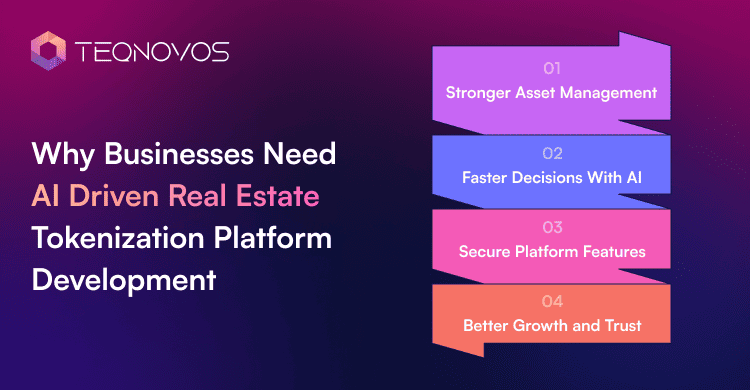
AI-driven real estate tokenization platform development helps businesses move beyond basic digital ownership. It brings valuation, compliance, and reporting into one connected system. This gives property businesses more control over assets and investor activity. It also helps them build a safer and more scalable real estate tokenization platform. Businesses can also review real estate tokenization platform development cost before planning features, compliance depth, and launch scope.
Stronger Asset Management
Property businesses need more than a basic blockchain setup. They need a system that can manage asset data, investor access compliance rules, and reports in one place. This is where real estate tokenization platform development becomes important for long term growth.
Faster Decisions With AI
AI helps businesses review property documents, valuation data, and investor details with better speed. It can also reduce manual work across daily operations. This makes AI in asset tokenization useful for businesses that manage property backed digital assets.
Secure Platform Features
A strong real estate tokenization platform should include secure token creation, smart contract workflows, and investor dashboards. Smart contracts are digital rules that run when set conditions are met. These tools help businesses manage ownership records and investor activity with more control.
Better Growth and Trust
AI driven real estate tokenization platform development also supports scale. As more assets and investors join the platform, teams need cleaner workflows and faster checks. AI can support this growth through risk alerts and automated reports. This helps businesses build a safer and more trusted tokenized real estate platform.
How AI Works Across the Real Estate Tokenization Lifecycle
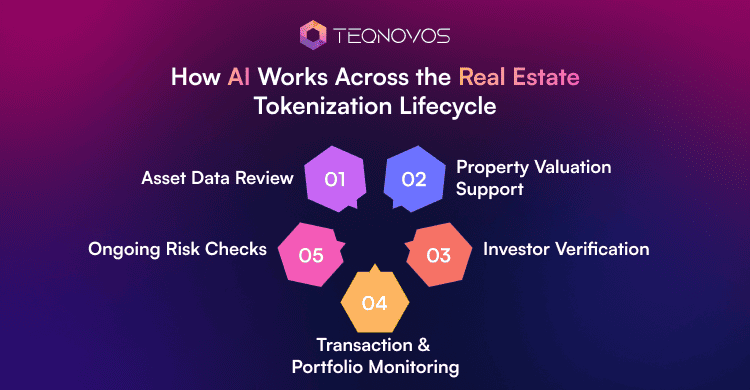
AI supports every major stage of real estate tokenization. It helps businesses review assets before token creation. It also improves investor checks, transaction monitoring, and ongoing reporting. This makes AI in real estate tokenization useful across the full platform journey.
Asset Data Review
A real estate tokenization platform can use AI to review property documents and rental history. It can detect missing files, unclear details, and data gaps. This helps teams prepare cleaner asset records before the token launch.
Property Valuation Support
AI can study market trends, location demand, and nearby property activity. It can also compare the asset with similar properties. This supports better pricing and helps make real estate asset tokenization more transparent for investors.
Investor Verification
AI can support investors’ onboarding by checking submitted details and flagging risk signals. It can help compliance teams review investor data with better speed. This improves trust and reduces manual delays.
Transaction and Portfolio Monitoring
After tokens go live, AI can track investor activity, asset value, and risk changes. A tokenized real estate platform can use these updates to improve reporting. This keeps investors informed after the first investment.
Ongoing Risk Checks
AI can continue to monitor the platform after launch. It can flag unusual activity, weak data patterns, and performance changes. This helps businesses improve decision making and support safer real estate tokenization platform development.
Challenges of Using AI in Real Estate Tokenization
AI can make real estate tokenization faster and smarter. Yet businesses still need strong controls. AI works best when it uses clean data, expert review, and clear compliance rules. This makes AI in real estate tokenization useful but not fully automatic.
Data Quality Issues
AI depends on accurate property data. Poor records, missing documents, and outdated market details can affect valuation and risk checks. A real estate tokenization platform should always verify asset data before using AI results.
Compliance Complexity
Property investment rules can change by region. AI can support identity checks, transaction review, and risk alerts. Still, legal teams should review final decisions. This keeps real estate asset tokenization safer and more compliant.
Human Review Still Matters
AI should support experts. It should not replace them. Valuation teams, legal teams, and platform managers should review important decisions before tokens go live. This creates more trust in asset tokenization.
Audit Trail Requirements
A platform should record every important action. Audit records show what data was reviewed and which decisions were made. This helps businesses handle compliance checks with more confidence.
Responsible AI Use
Businesses planning real estate tokenization platform development should use AI with clear rules. They should monitor outputs and review risk signals often. This helps build a safer and more trusted tokenized real estate platform.
Partner with Teqnovos for AI-powered real estate tokenization platform development with secure blockchain workflows.
Schedule a CallHow to Choose the Best Real Estate Tokenization Platform
Choosing the best real estate tokenization platform starts with clear business goals. A property business should know what assets it wants to tokenize. It should also know how investors will join the platform and how transactions will move. A strong platform should support secure ownership records, simple investor access, and trusted reporting.
Check Core Platform Features
A reliable real estate tokenization platform should include token creation, investor onboarding, and asset listing. They also involve smart contract workflows and admin controls. Smart contracts are digital rules that run when set conditions are met. These features help businesses manage property backed tokens with more control.
Review Compliance and Security
Security should stay at the center of asset tokenization. The platform should support identity checks and document review. They help with transaction monitoring and audit records. These tools help businesses protect investors and reduce operational risk. They also make real estate asset tokenization more trusted.
Look for AI Driven Intelligence
The best real estate tokenization platform should not only store data. It should help teams make better decisions. AI can support valuation review and risk scoring. They also help with investor checks and reporting. This helps businesses build a smarter and more useful platform.
Choose a Scalable System
A platform should grow as more properties and investors join. It should support future feature updates and new asset types. This makes the platform ready for long-term growth and stronger investor engagement. Businesses planning advanced digital property tools can also explore custom real estate dApp development for blockchain based property workflows.
Conclusion
AI in real estate tokenization is changing how property businesses manage digital ownership. It helps teams improve valuation checks and simplify investor workflows. This gives investors clearer asset insights and gives businesses better control over platform operations.
A strong real estate tokenization platform needs more than token creation. It needs smart data review, secure investor access, and scalable workflows. AI makes these areas easier to manage as the platform grows.