



























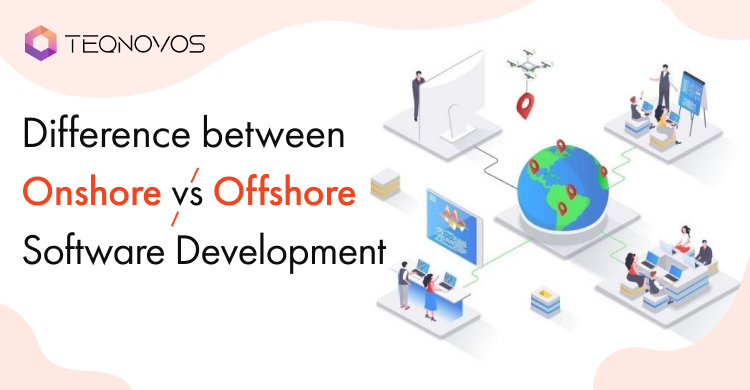
Difference between Onshore vs Offshore Software Development Services: Advantages and disadvantages
Businesses may have a strong software idea while their internal team already has a full workload. The team may also lack a specific skill that the project needs. Software development outsourcing gives the business access to external technical talent without adding permanent roles first.
The choice often comes down to onshore vs offshore software development. These models can support new products and existing systems. The main differences involve location, cost, talent access, working hours, legal context, and collaboration.
This guide explains how both models work. It also looks at their main benefits and limitations. The goal is to help businesses compare each option based on real project needs.
What Is the Onshore Model?
Onshore software development means working with a software provider located in the same country as the client. This model often makes live communication easier. It can also make local contracts and in person meetings simpler.
The same country does not always mean the same time zone or work culture. Large countries may cover several time zones. Teams can also follow very different development processes. Good project management still matters.
This model often fits projects that need frequent live discussions. It can also help when local market knowledge or local legal context matters.
What Is Offshore Software Development?
Offshore involves using a software development firm located outside the home country. A company in the United States could use a development firm located in India or any other foreign market.
Firms engage in offshore software development services whenever there is a need for increased technical capacity. It can also be used where skills are hard to locate in one particular market.
The time difference can impact live meetings. They can also support longer development coverage when teams plan work well. Location alone does not decide quality.
Choose the Right Software Development Model —Talk to Our Experts Today!
Schedule a CallOnshore and Offshore Development at a Glance
The main differences in onshore vs offshore software development become clearer when the models are compared across common project factors.
|
Factor |
Onshore Model |
Offshore Model |
| Talent access | Mainly domestic talent | Wider global talent pool |
| Development cost | Often higher in high cost markets | Often lower in lower cost markets |
| Time overlap | Usually easier to arrange | Depends on the countries involved |
| Live collaboration | Often simpler | Needs planned overlap |
| Scaling | Depends on local talent supply | Can provide broader team access |
| Legal context | Local jurisdiction can simplify some matters | Cross border terms can need more review |
| Security | Depends on provider controls | Depends on provider controls and legal context |
| Best fit | Work that needs close local coordination | Work that needs scale or wider talent access |
Neither model is automatically better. The right choice depends on how the project will be managed.
Advantages of Choosing Onshore Software Development Services
Onshore software development services can make collaboration easier when businesses need close coordination with the development team. They also support faster communication and stronger alignment with local business requirements.
1. Law Collection
A local provider may already understand common laws and business practices in the same market. This can make contract discussions easier. It can also reduce confusion around local requirements.
Local presence does not guarantee compliance. The project still needs clear controls for privacy. access. documentation. testing. and security.
2. Greater adaptability
Onshore software development can make live collaboration easier when both teams work similar hours. Product owners can arrange planning sessions and reviews with less scheduling friction.
This can help when a project needs frequent decisions. It can also support close work between business teams and developers.
3. Instantaneous Co-operation
A local provider may be easier to meet when a project needs workshops or planning sessions. Travel often takes less time than an international visit.
Many projects now run fully online. In person access still has value when teams need detailed discovery work or complex stakeholder discussions.
4. Communication
A local team may already understand familiar business terms and customer expectations. This can reduce the time needed to explain market details.
Strong communication still depends on clear requirements. It also depends on reliable project management. Geography cannot replace either one.
Disadvantages of Choosing Onshore Software Development Services
Onshore software development services can bring higher costs and a smaller talent pool in some markets. Scaling the team can also take longer when local technical skills are in high demand.
1. Small Talent Pool
A domestic search limits hiring to one national market. This can make rare technical skills harder to find when local demand is high. Global hiring opens access to more specialists. This matters when a project needs skills in artificial intelligence, cloud engineering, cybersecurity, or a less common technology stack.
2. Limited Ability to Scale
Local talent supply can affect how quickly a team grows. Companies may face longer hiring cycles when several employers compete for the same skills. A dedicated development team can give a business another way to add capacity when internal hiring cannot move at the same pace.
3. Increased Cost
Domestic developer rates can be higher in markets with higher salaries and operating costs. This can make the onshore model expensive for a large team or a long project. A fair cost comparison looks beyond hourly rates. It can also include onboarding. management time. tools. rework. staff continuity. and long term support.
4. Backdoors Offshoring
An onshore contract does not always mean every developer works in the same country. Some providers use subcontractors or external delivery teams. Businesses can reduce uncertainty by confirming who will work on the project. It can also confirm where development will happen and who can access systems or data.
Benefits of Selecting Offshore Software Development Services
Offshore software development services can give businesses access to a wider talent pool and more flexible team options. They can also support cost control and faster scaling for growing software projects.
1. Financial Savings
Regional differences in salaries and operating costs can make offshore software development services more affordable than local development in some markets. The actual savings depend on the region and required expertise.
Cost still needs to be considered with quality and project management. Poor planning can create delays and increase the final development cost.
2. Great Scalability
An offshore development company can give businesses access to a larger development pool. This makes it easier to increase team capacity when project requirements grow.
Businesses can also adjust the team as development needs change. This gives projects more flexibility without depending only on local hiring.
3. Availability of the Newest Technology
Offshore teams often work across different industries and technology stacks. This exposure can help businesses find developers with experience in artificial intelligence and cloud platforms. It can also provide access to specialists in modern development frameworks.
Technology expertise still varies between providers. Businesses can review technical experience and previous project work before selecting a team.
4. Rapid Handoff
Different time zones can support planned work handoffs between teams. Development or testing can continue after the internal team finishes its working day. This model works best when tasks and responsibilities are documented clearly.
Clear documentation also helps distributed teams manage handoffs across different working hours. These offshore development best practices cover communication and delivery methods used across remote teams.
5. Availability of Best in Class
An offshore software development company can provide access to specialists across development and testing. Businesses can select professionals based on the skills needed for a particular project.
A wider talent market can also make it easier to find experience in less common technologies. The quality still depends on the engineering standards and review process used by the provider.
6. Quicker Completion of Projects
A larger talent pool can help businesses build the required team without waiting through long local hiring cycles. This can support faster project progress when the right skills are available from the beginning.
Delivery speed also depends on planning and technical complexity. Clear requirements and regular reviews help teams avoid unnecessary delays.
7. Improved Focus on Core Business Activities
External development can reduce the delivery workload handled by internal teams. Staff can then spend more time on product direction and customer needs. They can also focus on other business priorities.
This is one of the practical benefits of software development outsourcing. Clear ownership between the internal team and the external team helps the arrangement work effectively.
Common Challenges of Working With Offshore Software Teams
Offshore development can offer strong business benefits, but it also brings a few challenges. Communication gaps and time zone differences can affect project flow when teams do not have clear processes in place.
1. Communication Difficulties
Different working hours can slow decisions when teams rely too much on live communication. Language differences can also matter when requirements are complex. Good documentation reduces this risk. Defined response times and regular project reviews can also keep teams aligned.
An offshore development company with mature communication practices can work well across regions. Process quality matters more than distance alone.
2. Threats to Security
External development gives another organization access to code and project information. This creates security considerations in both local and global outsourcing.
Cross border work can raise questions about data location and subcontractor access. Businesses can review access controls and development environments before work begins. It gives development teams a structured way to include security practices across the software development life cycle.
3. Issues with Quality
Quality can vary between providers in any country. Weak requirements and poor testing can create defects regardless of location.
Businesses can review engineering standards before selecting an offshore software development company. Code reviews and automated testing can provide useful evidence of development quality.
Code reviews and automated testing can provide useful evidence of development quality. The JobTable web application case study also shows how codebase structure and architecture can affect development efficiency.
4. Differences in Time Zones
Large time differences can make urgent discussions harder. A small overlap window can also slow decisions when several stakeholders need to join the same call.
The same time difference can support longer development coverage when teams work well without constant live meetings.
How AI Is Changing Outsourced Development
Artificial intelligence plays a larger role in development work. Coding assistants can support tasks such as code completion and documentation. They can also help with testing and code review. This affects onshore vs offshore outsourcing because provider evaluation includes AI use.
Businesses may need to know which tools enter the workflow. It may also need clarity on what data those tools can access. Generated code still needs human review. Security and licensing also need attention.
AI also affects how distributed development teams plan work and manage routine tasks. The growing use of AI powered offshore teams gives businesses another factor to evaluate when comparing external development models.
Security Risks in Onshore and Offshore Software Development
- Access Control: Businesses need clear controls over who can access code and project data.
- Secure Development Practices: Strong engineering processes help reduce security risks across local and international projects.
- Data Protection: Onshore vs offshore outsourcing can involve sensitive data. Contracts can define how that data is accessed and handled.
- Intellectual Property Protection: Clear ownership terms help protect source code and other project assets.
- Third Party Tool Reviews: Security checks also matter when development teams use external tools or platforms.
- AI Tool Governance: Artificial intelligence tools may process code or project information. Their use needs clear security rules during onshore vs offshore software development.
Security controls also need to work inside real development workflows. An application security framework can show how access control and audit logging work across a software platform.
Build Your Software With the Right Development Team —Connect With Teqnovos Today!
Schedule a CallHow to Choose Between Onshore and Offshore Development
The decision around onshore vs offshore software development works best when it starts with project needs rather than assumptions about location.
A business comparing an offshore development company with a local provider can start with these factors:
- Project complexity
- Available budget
- Required technical skills
- Need for live collaboration
- Time zone overlap
- Data sensitivity
- Legal requirements
- Intellectual property needs
- Team scalability
- Security practices
- AI tool policies
- Total cost of ownership
Offshore software development can fit projects that need wider talent access or flexible scaling. Local development can fit work that needs frequent real time coordination. The wider software development outsourcing strategy matters. Some businesses use one external team for the full product.
Projects can also differ in how much work moves outside the internal team. Offshore software development services can cover web development and mobile development.
Which Outsourcing Model Fits Better?
Onshore vs offshore outsourcing is not a choice between a good model and a bad model. Each approach solves a different set of problems.
An onshore team can work well when close local coordination has high value. An offshore team can work well when the project needs broader talent access or a more flexible cost structure. Businesses get clear answers when it compares the actual team and project fit.
Conclusion
There is no single model that fits every project. The right development model depends on the balance between cost and project complexity. Offshore software development services can provide access to global skills and flexible capacity. A local model can make live collaboration and local coordination easier.
The strongest choice comes from the needs of the project. Clear requirements and transparent delivery practices matter in either model.
Choose the right model with Teqnovos. Connect with us for expert advice. Get in touch with us.