




























How to Implement DPDP Compliance Across Digital Products
The Digital Personal Data Protection (DPDP) Act has changed how businesses handle personal data across digital products. Compliance now extends beyond policies and documents. It impacts application workflows, data processing methods, and user facing features.
DPDP compliance implementation requires teams to connect privacy requirements with product development. Businesses need to understand how personal data enters their systems and how product decisions affect its handling. They also need product workflows that align privacy requirements with user interactions.
A privacy-ready digital product needs defined data workflows and secure handling practices. This guide explains the implementation steps, technical considerations, and practical approach businesses can follow to align their applications with DPDP requirements.
What DPDP Compliance Means for Digital Products
Digital products collect and process personal data through multiple user and system interactions. DPDP compliance requires businesses to understand how these activities affect data handling across the product lifecycle.
A DPDP aligned product builds privacy into the core of the application. It helps businesses manage personal data with clear processes and technical controls.
- Clear consent management: Applications need simple consent flows. Users should know what data is collected and how it is used.
- Data visibility: Businesses need to understand where personal data enters their systems and how different services handle that information.
- User control mechanisms: Products need workflows that help users manage their personal information. These workflows can support requests related to access and updates.
- Responsible data access: Systems need role based access controls. These controls reduce unnecessary exposure of personal data across teams.
- Third party data handling: External integrations need proper review. Businesses need to understand how shared data is processed and protected.
A strong DPDP compliance framework defines ownership for data-related decisions. It also establishes internal guidelines for managing privacy requirements across product activities.
Prepare Your Digital Product for DPDP Compliance. Explore DPDP Implementation Services!
Schedule a CallBuilding a DPDP Compliance Framework for Digital Products
A DPDP compliance framework defines how businesses manage privacy responsibilities across different functions. It creates a governance structure for decision-making and accountability related to data practices.
A strong framework focuses on operational alignment. It connects business policies with product teams, technical teams, and internal review processes.
1. Defining Data Ownership
Businesses need clear ownership for privacy-related decisions. The framework identifies which teams are responsible for reviewing data practices and approving changes while maintaining compliance records.
Clear ownership prevents gaps where responsibilities remain undefined between business and technology functions.
2. Establishing Internal Processes
DPDP compliance requires repeatable processes instead of individual decisions. Businesses can define review methods for new features and operational updates.
These processes create consistency across teams and reduce dependency on manual decision making.
3. Maintaining Compliance Records
Documentation helps businesses track important decisions related to personal data handling. Records can include review outcomes and approval workflows with operational responsibilities.
This creates visibility when teams evaluate previous decisions or prepare for future changes.
4. Reviewing Product Changes
Digital products continue to evolve through new features and integrations. A framework creates a review process to evaluate how these changes affect existing privacy practices.
Teams can identify potential gaps before updates reach production environments.
5. Improving Compliance Operations
A DPDP framework is not a one time activity. Businesses need processes that adapt as operational requirements change. Regular reviews help maintain alignment between business practices and privacy expectations.
A well-defined DPDP compliance framework gives businesses a consistent way to manage privacy responsibilities. It creates accountability across teams and supports long-term compliance management.
Step-by-Step DPDP Act Implementation Process
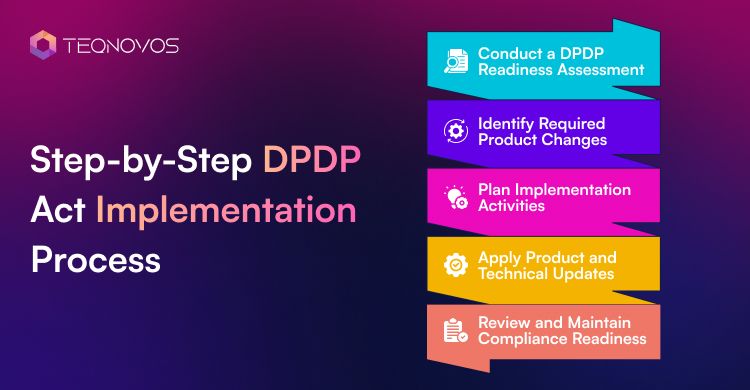
DPDP Act implementation requires a planned sequence that connects privacy requirements with product and operational changes. Businesses first need to review their current position before introducing new workflows or technical updates.
A practical implementation approach helps businesses evaluate priorities. It also helps them organize activities and prepare digital products for DPDP requirements.
1. Conduct a DPDP Readiness Assessment
The first step is reviewing existing data practices and product workflows. Businesses evaluate current activities to understand where changes may be required.
A DPDP readiness assessment gives teams visibility into improvement areas. It helps them prioritize actions based on product needs and operational requirements.
2. Identify Required Product Changes
Businesses then review how DPDP requirements affect existing product functionality. This includes user journeys and internal workflows.
The goal is to define required changes before development begins. Understanding the DPDP Act impact on software development helps teams identify where application logic and data handling controls need changes before coding begins. This reduces unexpected updates during later implementation stages.
3. Plan Implementation Activities
Businesses need a clear execution plan before introducing changes. The plan defines required activities and assigns responsibilities across teams. A structured DPDP Implementation Roadmap can sequence product updates, technical controls, and testing activities across different implementation stages.
It also establishes timelines and review stages. This keeps different functions aligned during implementation.
4. Apply Product and Technical Updates
After priorities are confirmed, development teams begin applying the required changes. These updates can affect application workflows and system components.
Each update requires proper testing before release. This helps teams confirm that changes work correctly within the product environment.
5. Review and Maintain Compliance Readiness
DPDP alignment requires periodic evaluation after implementation. Businesses can review new requirements and confirm that existing practices remain suitable.
Regular reviews help businesses identify new requirements. They can then update their approach as digital products evolve.
A well-planned DPDP Act implementation process helps businesses move from identifying requirements to applying practical changes across their digital products.
Technical Changes Required for DPDP Compliance
DPDP requirements can affect multiple technical layers of a digital product. Teams need to evaluate application components that process or store personal data.
The required changes depend on the existing product architecture and data workflows. A technical review helps businesses identify which systems require updates before making implementation decisions.
1. Application Workflow Updates
Digital products need clear user interactions for privacy-related activities. Application workflows should support actions related to personal information management.
Teams can review areas such as account settings, user profiles, and data request processes. These updates make privacy functions part of the product experience.
2. API Data Exchange Controls
APIs (Application Programming Interfaces) connect applications with internal systems and external services. These connections require review because they can transfer personal data between different environments.
Businesses need to evaluate API permissions and shared data fields. This helps teams control what information moves through connected services.
For detailed guidance on protecting personal data across APIs, databases, and cloud environments, businesses can refer to DPDP Security Safeguards.
3. Database Management Practices
Databases store application records and require defined management practices. Teams need to review how personal data is organized and maintained within storage systems.
This includes evaluating data structures, retention rules, and storage access. A clear database approach helps teams maintain accurate records and apply defined retention practices.
4. Access Permission Controls
Digital products often involve multiple internal users with different responsibilities. Access systems need technical rules that connect user roles with approved actions.
Role-based permissions limit access based on defined responsibilities. This reduces unnecessary exposure of personal data within internal systems.
5. Cloud Infrastructure Review
Cloud environments support application hosting, storage, and system operations. Businesses need to evaluate how their infrastructure manages personal data.
Teams can review storage configurations, monitoring practices, and infrastructure access settings. This helps maintain consistent data handling across hosted environments.
Technical alignment requires coordination between product and engineering teams. A focused review helps businesses update the right components without making unnecessary changes across the product.
Common DPDP Implementation Challenges
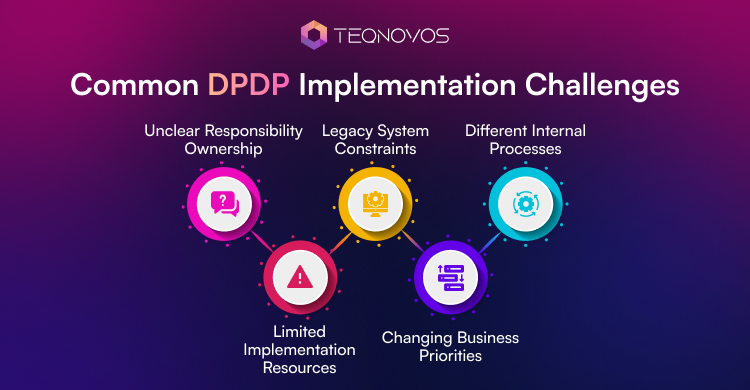
Businesses can face operational challenges when aligning digital products with DPDP requirements. These challenges often involve coordination issues, existing limitations, and competing business priorities.
1. Unclear Responsibility Ownership
DPDP-related activities often involve multiple stakeholders. Without defined ownership, teams may not know who approves changes, manages reviews, or maintains required records. Clear responsibility assignment helps avoid delays during implementation.
2. Legacy System Constraints
Older applications may include outdated processes that were built without current privacy expectations. Updating these systems can require additional planning. Businesses need to evaluate changes carefully before introducing new practices.
3. Different Internal Processes
Large organizations may have different teams following separate approaches for similar activities. This can create inconsistent practices across departments. Businesses need common processes to maintain a reliable approach.
4. Limited Implementation Resources
DPDP alignment may require time from product, engineering, and business teams. Limited availability can affect planning and execution timelines. Businesses need to prioritize activities based on their product requirements and operational needs.
5. Changing Business Priorities
Business goals can change during implementation. New priorities may affect planned activities and require teams to adjust their approach. A clear implementation plan helps businesses manage these changes without losing focus.
Addressing these challenges early helps businesses create a smoother path for DPDP compliance implementation. It allows teams to focus on planned improvements instead of resolving avoidable issues later.
How DPDP Readiness Assessment Identifies Compliance Gaps
A DPDP readiness assessment helps businesses evaluate how prepared their products and internal processes are for DPDP requirements. It creates a clear view of current preparation levels and highlights areas that may require further attention.
The assessment gives decision-makers better visibility into their readiness level. It helps them plan future activities based on identified observations.
1. Evaluating Compliance Preparedness
Businesses review their current approach to understand how closely it matches DPDP expectations. The assessment examines existing methods and identifies opportunities for improvement.
2. Reviewing Process Maturity
A readiness assessment evaluates how consistently businesses manage privacy-related activities. It helps identify where processes may need clearer documentation or defined ownership.
3. Identifying Risk Areas
The assessment highlights areas that may create challenges during DPDP alignment. These findings help businesses understand potential risks before starting broader implementation activities.
4. Creating Clear Assessment Findings
A readiness assessment provides documented observations about current gaps and improvement opportunities. These records give teams a reference point for future planning.
A DPDP Act compliance checklist can turn these findings into clear action items that teams can track during implementation.
5. Supporting Better Decisions
Businesses can use assessment results to determine their next steps. Clear evaluation outcomes allow teams to make informed decisions about future DPDP activities.
When Businesses Need DPDP Compliance Consulting
Businesses may consider DPDP compliance consulting when they need external expertise to make implementation decisions and align privacy requirements with business priorities.
Consulting becomes valuable when businesses need additional guidance to evaluate options and choose an approach that fits their product environment.
1. Limited Internal Expertise
Some businesses may have strong technical teams but limited experience with privacy requirements. External guidance can help them understand important considerations and define the right direction.
2. Complex Business Decisions
Businesses may need support when multiple approaches are available for addressing DPDP requirements. Consulting can help teams evaluate options based on product goals and operational needs.
3. Independent Compliance Review
An external perspective can help businesses assess their current approach. It provides additional input when teams need validation before moving forward with planned activities.
4. Product Modernization Projects
Businesses involved in product modernization may need guidance to ensure privacy considerations are included during major transformation projects.
5. Enterprise Readiness Requirements
Organizations serving enterprise customers may need stronger privacy processes and clearer documentation. External expertise can help businesses prepare for these expectations.
DPDP compliance consulting helps businesses make informed decisions during planning and implementation. It provides guidance when teams need additional expertise to manage privacy requirements effectively.
Align Your Digital Products With DPDP Requirements Through Practical Technical Guidance. Talk to Teqnovos!
Schedule a CallHow Teqnovos Supports DPDP Implementation Services
Businesses working on DPDP alignment often need technical guidance that fits their existing software environment. Teqnovos helps organizations connect privacy requirements with their product development goals.
The approach focuses on understanding business objectives, application needs, and technology requirements. This allows teams to make practical decisions while preparing their digital products for DPDP alignment.
Software Engineering Expertise
Teqnovos brings software development experience to DPDP-related initiatives. The team understands how product decisions affect application architecture, workflows, and long-term maintenance.
Product-Centered Guidance
Every digital product has different requirements based on its users, features, and technical setup. Teqnovos works with businesses to provide guidance that matches their product environment.
Support for Implementation Decisions
Businesses can use Teqnovos’ expertise when evaluating different approaches for DPDP alignment. The focus remains on helping teams choose suitable paths based on their technical and operational goals.
Businesses looking for dedicated support can explore DPDP implementation services to understand how Teqnovos can assist with their requirements.
Conclusion
DPDP compliance implementation requires businesses to connect privacy requirements with digital product decisions. A successful approach depends on clear planning, suitable technical changes, and alignment between business and technology teams.
Businesses that prepare their applications with privacy considerations can make DPDP requirements easier to manage. The focus should remain on building clear processes that fit the product environment and business goals.
A practical implementation strategy allows organizations to address DPDP requirements without treating compliance as a separate activity. It becomes part of how digital products are planned, developed, and improved.