













Ultimate Guide to Food Delivery App Development Services, Features, and Process
Fast digital ordering has changed how people choose food brands. Customers now expect simple menus. They want quick payments and live updates from order placement to doorstep delivery. This demand has pushed restaurants, cloud kitchens, and startups to invest in food delivery app development. A well built platform also needs the right technical foundation. Businesses often work with a mobile app development company to plan user flows, backend systems, and long term scalability.
A well built app not only helps businesses manage orders but also enables delivery partners’ payments and repeat engagement from one connected platform. It also gives teams better control over menu updates, pricing offers, and delivery performance.
This ultimate guide on food delivery app development explains how businesses can plan and launch a scalable food delivery platform. It also covers the role of food delivery app development services in building customer apps and admin panels that support long-term growth.
What Is Food Delivery App Development?
Food delivery app development is the process of building a platform that connects customers, restaurants, delivery partners, and admins. It helps customers place orders online and helps restaurants manage menus and accept orders. It also enables delivery partners to update pickup and delivery status. Business owners can easily control the overall process through an admin dashboard.
A strong platform includes a customer app, restaurant panel delivery app, and admin dashboard. Food delivery mobile app development helps businesses create a smooth ordering experience on smartphones. It not only reduces manual errors but also improves order tracking and gives restaurants, startups, and cloud kitchens a stronger digital sales channel.
Why Businesses Invest in Food Delivery App Development Services
Businesses invest in food delivery app development services to make ordering faster and easier for customers. A well-built app helps restaurants accept orders without phone calls or manual tracking. It also gives startups and cloud kitchens a direct way to reach more customers and manage delivery from one place.
Better Customer Convenience
Customers want quick access to menu prices, offers, payments, and delivery updates. A food delivery app makes the full ordering journey simple and helps users place repeat orders with less effort.
Faster Order Management
Restaurants can receive, accept, and process orders from a single panel. This reduces manual errors and helps teams manage busy hours with better speed and control.
Wider Restaurant Reach
A delivery app helps restaurants reach customers beyond their local foot traffic. It also gives cloud kitchens and food startups a better way to grow in new service areas.
Stronger Delivery Control
Businesses that need live tracking, order alerts, and quick delivery updates can also explore support from an on demand app development company. This improves visibility for customers and internal teams.
Improved Customer Retention
Apps help businesses bring customers back through loyalty points, offers, and easy reorder options. This supports repeat sales and long-term revenue growth.
Build a food delivery app that simplifies orders, payments, tracking, and delivery operations.
Schedule a CallTypes of Food Delivery Apps Businesses Can Build
Every food business needs a different app model. The right choice depends on the target users’ delivery setup, revenue goals, and service area. Food delivery app development helps businesses build platforms around their exact ordering and delivery needs.
Restaurant-Owned Food Delivery App
A restaurant-owned food delivery app works best for restaurants that get orders directly from their customers. This not only helps avoid third-party dependency but also helps in managing the customers via their own application. Restaurants that want direct ordering and customer control can work with a restaurant app development company to build branded ordering apps.
Marketplace Food Delivery App
Marketplace application is ideal for startup businesses that want to bring together their customers with a number of different restaurants. It gives customers more food choices and helps restaurant partners get more online orders.
Cloud Kitchen Delivery App
A cloud kitchen delivery app works best for delivery-first food brands. These businesses do not depend on dine-in traffic. They need fast order handling and menu control. Custom food delivery app development helps cloud kitchens build flexible systems for multiple brands and delivery zones.
Grocery and Food Delivery App
A grocery and food delivery app works best for businesses that want a wider delivery model. It allows customers to order meals or daily essentials through one platform. This model helps businesses increase order value and serve more customer needs with one digital system.
Must-Have Food Delivery App Features
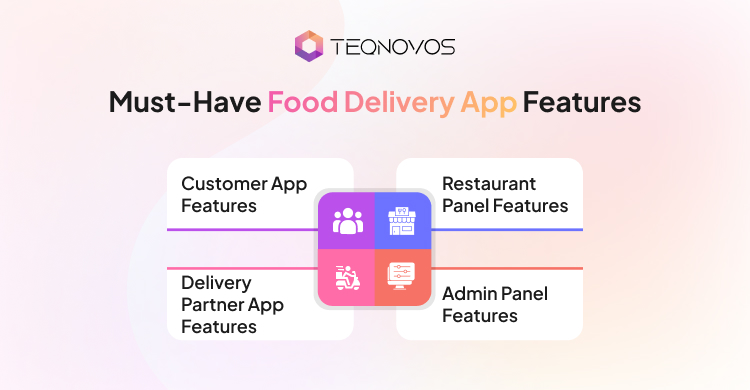
Food delivery app features have a major role to play in making sure that the platform functions well for the users and managers alike. An app designed with the correct approach not only makes ordering easy but also helps restaurant owners meet demand in a timely manner.
Customer App Features
The customer app should make food ordering fast and simple. Users should be able to create an account and view menus in real time. Real-time order tracking helps users know where their food is. Online payments make the process faster, while ratings and reviews help customers share feedback and help restaurants improve service quality.
Key features include:
- User registration
- Restaurant search
- Menu browsing
- Cart and checkout
- Real-time order tracking
- Online payments
- Ratings and reviews
Restaurant Panel Features
The restaurant panel helps food businesses manage daily orders from one place. Restaurants can update menus, accept orders, and manage offers without depending on manual calls. Strong food delivery app development services should make this panel easy for restaurant teams to use during busy hours.
Key features include:
- Menu management
- Order acceptance
- Pricing control
- Offer management
- Sales reports
Delivery Partner App Features
The delivery partner app should help drivers complete orders with speed and clarity. Drivers need instant order alerts, route navigation, and delivery status updates. An earnings dashboard also helps them track completed orders and payouts. These features improve delivery control and reduce confusion between restaurant drivers and customers.
Key features include:
- Order alerts
- Route navigation
- Delivery status updates
- Earnings dashboard
Admin Panel Features
The admin panel gives platform owners full control over the business. Admins can manage users, restaurant drivers’ commissions reports, and platform activity. This helps teams track performance and solve issues faster.
Key features include:
- User management
- Restaurant management
- Driver management
- Commission control
- Reports and analytics
How to Build a Food Delivery App: Complete Development Process
Businesses need a clear plan before they build a food delivery platform. The right process helps reduce development gaps and improve the final user experience. It also gives teams better control over cost, features, and launch goals. This is why a clear food delivery app development process matters from the first planning stage. Businesses searching for how to build food delivery app development services should start by aligning the app model, core features, and launch plan.
1. Validate the Business Model
The first step is to decide how the food delivery app will work. A restaurant owned app works well for direct orders, while a marketplace app connects users with many restaurants, and a cloud kitchen app supports delivery first food brands. This step helps define revenue channels, service areas, and user needs.
2. Define User Roles
Every food delivery platform has different users. The main roles include customers, restaurants, delivery partners, and admins. Customers place orders and track delivery. Restaurants manage menus and accept orders. Delivery partners handle pickup and drop-off tasks. Admins manage users’ payments and reports.
3. Plan Food Delivery App Features
Feature planning should start with core needs first. Basic features include signup, restaurant search, and menu browsing. Advanced features can include loyalty programs, smart delivery assignment, and AI based recommendations. This helps teams build a useful first version and add more features later.
4. Design the User Experience
A simple user flow improves app engagement. Customers should be able to easily browse menus and choose items. The app should allow easy payment flow and add to cart options without any confusion. Restaurants should be able to easily accept orders. Drivers should be able to see clear pickup and delivery details. The design should make every step smooth from search to checkout to final delivery.
5. Choose the Tech Stack
The tech stack supports speed, security, and future growth. Businesses need a mobile framework for customer and driver apps. They also need a strong backend to manage orders, menus, and payments. Cloud hosting supports scale, payment gateways handle online transactions, and map integration supports live tracking and route navigation.
6. Develop the App Panels
This stage turns the planned flows into working panels for each user type. The team builds ordering screens, restaurant controls, and the admin dashboard. Each panel should connect smoothly with payment maps and backend operations. This helps the platform run as one complete system instead of separate tools.
7. Test the App
Testing helps remove errors before launch. Teams should test app speed, order flow, and payment flow. Security checks are also important because the app handles customer data and payment details. Strong testing improves performance and reduces launch risks.
8. Launch and Improve
After testing, the app can go live on app stores and web platforms. Teams should regularly track user feedback, order issues, and payment errors. Regular updates help improve features and support more users. However, this is the final stage of how to build a food delivery app that can grow with business demand.
Food Delivery App Development Cost
The food delivery app development cost changes with the app model and feature scope. A basic restaurant app costs less than a full marketplace platform with customer, restaurant driver, and admin panels.
Key Cost Factors
1. Number of App Panels
More panels increase the cost. A complete platform usually needs a customer app, restaurant panel, delivery partner app, and admin dashboard.
2. Feature Complexity
Basic features cost less. Advanced features like AI recommendations, loyalty programs, smart delivery assignment, and subscriptions increase the budget.
3. UI and UX Design
A clean and smooth design improves user experience. Custom screens, animations, and advanced flows can increase design effort.
4. Payment Integration
Online payments need a secure gateway setup. Refunds, wallet support coupons, and split payments can add more development work.
5. Map and Tracking Features
Live tracking, route navigation, and delivery updates affect the total cost.
6. Admin Dashboard Depth
A simple dashboard handles users’ orders and reports. A deeper dashboard may include commissions, vendor control, and support tools.
7. Development Team Location
Cost also depends on where the development team is based. Team experience and project scope also shape the final estimate.
8. Maintenance Needs
Post-launch updates, bug fixes, feature improvements, and server support should be planned from the start.
Food Delivery App Development Services Businesses Need
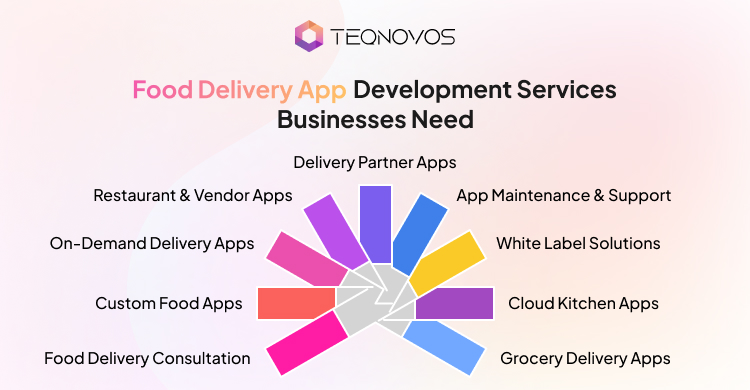
Food delivery app development services cover more than app design. They help businesses build and launch a complete delivery platform. The right service mix depends on the business model, target users, and growth plan.
Food Delivery App Consultation
Food delivery app consultation helps businesses define the right product direction before development starts. The team studies the business model, target audience, and service area features. This helps restaurant startups and cloud kitchens avoid unclear scope and wasted budget.
Custom Food Delivery App Development
Custom food delivery app development helps businesses build a platform around their own workflow. The app can support unique menu logic, delivery zones, payment rules, and admin controls. This works well for brands that need more flexibility than a ready-made solution.
On-Demand Food Delivery App Development
On demand food delivery app development helps businesses serve customers who want fast ordering and real-time delivery updates. The platform supports live tracking, order alerts, and quick payment flow. This model works well for restaurant marketplaces and delivery first startups.
Restaurant and Vendor App Development
Restaurant and vendor app development helps food partners manage orders, menus, and offers from one panel. It gives vendors better control during busy hours and helps platform owners keep restaurant operations clear and organized.
Delivery Partner App Development
Delivery partner app development helps drivers manage pickup and drop-off tasks with less confusion. The app can show order alerts, delivery status, and earnings. This improves delivery speed and gives businesses better control over fulfillment.
Food Delivery App Maintenance and Support
Maintenance and support keep the app secure and stable after launch. The team handles bug fixes and feature improvements. This helps the platform stay reliable as users’ orders and restaurant partners grow.
White Label Food Delivery App Development
White-label development allows companies to have a faster launch with the availability of an already developed platform that can be easily customized with their brand’s name. It works well for startups that want quicker market entry. The platform can still include key modules like ordering, tracking payments, and vendor control.
Cloud Kitchen App Development
Cloud kitchen app development supports delivery-first food brands with online order management and multi brand control. It helps teams manage menu orders, performance data, and all other key things from one system. This model fits businesses that do not depend on dine-in traffic.
Grocery and Food Delivery App Development
Grocery and food delivery app development helps businesses serve wider customer needs from one platform. Users can order meals and other daily essentials from one platform. This model can increase order value and open more delivery revenue streams.
Create a scalable food delivery platform for restaurants, and growing delivery brands.
Schedule a CallHow to Choose the Right Food Delivery App Development Company
Choosing the right company can shape the success of the full platform. Businesses should look for teams that offer strong food delivery app development services with real delivery app experience and clear product planning.
Check Delivery App Experience
Review whether the company has built customer apps, restaurant panels, and admin dashboards. This shows they understand how food delivery operations work.
Review UI and UX Quality
The app should feel simple for every user. Customers should order fast. Restaurants should manage orders easily. Drivers should complete deliveries without confusion.
Ask About Scalable Architecture
A food delivery app should support more users, order restaurants and locations over time. The company should plan the backend for future growth.
Review Support and Maintenance
Post-launch support matters after the app goes live. The company should offer bug fixes, updates, performance checks, and security improvements.
Ask About Custom Features
Every food business has different needs. Custom food delivery app development helps businesses build features around their own delivery model and user flow.
Final Thoughts
Food delivery app development helps restaurants and cloud kitchens manage orders and delivery from one connected system. A well-planned app improves customer convenience and supports business growth. This guide on food delivery app development services shows that the right model features, cost plan, and development process matter before launch. Teqnovos can help build secure and scalable food delivery platforms.