
























Healthcare IoT Connectivity: Benefits, Technologies, and Key Considerations
Healthcare organizations now rely on connected devices to collect health data and move it across digital systems. These devices may track vital signs and monitor patients at home. They may also connect clinical equipment with healthcare platforms. Reliable healthcare IoT connectivity makes this data exchange possible.
The benefits of healthcare IoT connectivity go beyond simple device communication. Strong connectivity can improve access to timely patient data. It can keep remote monitoring systems active. It can also reduce gaps between connected devices and healthcare software.
The value depends on the network behind each device. Different IoT connectivity technologies offer different levels of range, speed, and mobility. A wearable sensor may need a low power connection. A mobile medical device may need wider network coverage. Hospital equipment may depend on a stable local network.
This makes IoT connectivity in healthcare an important technology decision. This guide explains how IoT connectivity for healthcare works. It examines major connectivity options and the factors that can shape a reliable connected healthcare environment.
What Is Healthcare IoT Connectivity?
Healthcare IoT connectivity allows medical devices and sensors to exchange data with healthcare systems. It links connected devices with networks, gateways, cloud platforms, and clinical applications. Internet of Medical Things (IoMT) consists of connected medical devices that gather and exchange data. Connectivity for healthcare devices can be made possible using Wi-Fi or other low power technology.
The right option depends on the range, power use, and reliability. Strong IoT connectivity in healthcare also requires secure data exchange and compatibility with existing healthcare systems.
Key Benefits of Healthcare IoT Connectivity
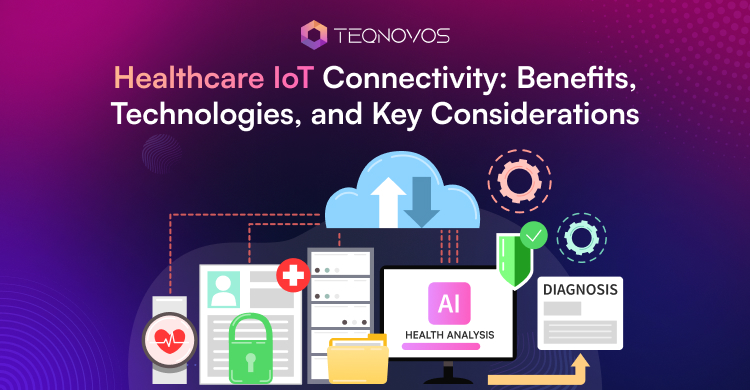
The benefits of healthcare IoT connectivity become apparent when these connected devices exchange information without frequent interruptions. Consistent connections can enhance patient monitoring. It can also bring about care in settings other than the hospital setting.
1. Continuous Patient Monitoring
Connected sensors can send patient readings to healthcare platforms throughout the day. This gives care teams greater visibility into changes in patient conditions. It also makes remote patient monitoring more practical.
2. Wider Access to Connected Care
IoT connectivity for healthcare can link patients with care systems outside traditional clinical settings. Home monitoring devices can transmit health information remotely. Mobile medical equipment can also stay connected across different care environments.
3. Better Medical Asset Visibility
Connected technologies can track equipment across healthcare facilities. Teams can locate important devices more easily. This can improve equipment availability and reduce time spent searching for medical assets.
4. Stronger Clinical Data Flow
Reliable healthcare IoT connectivity allows device data to move into healthcare applications and clinical systems. This creates a more connected flow of information between medical devices and digital care platforms.
5. More Efficient Healthcare Operations
Connected devices can automate routine data collection. Healthcare teams can spend less time recording device readings manually. This can make daily monitoring workflows more efficient.
6. Better Device Management
Healthcare teams can monitor the status of connected devices through centralized systems. They can identify connection problems and device availability issues more quickly.
7. Support for Scalable Connected Care
Healthcare organizations may add more sensors and connected devices as digital care programs grow. Well planned IoT connectivity in healthcare can support this expansion without requiring a separate connectivity model for every new device.
Build Smarter Healthcare Solutions With IoT Connectivity. Start Your Healthcare IoT Project!
Schedule a CallMajor IoT Connectivity Technologies Used in Healthcare
Different IoT connectivity technologies serve different healthcare needs.
1. Wi Fi
Wi Fi works well for connected devices inside hospitals and clinics. It can handle higher data volumes and connect devices through existing network infrastructure. Signal coverage and network congestion still need careful planning.
2. Bluetooth Low Energy
Bluetooth Low Energy (BLE) uses limited power for short range communication. It suits wearable sensors and medical asset tags. Its low power use can extend battery life for smaller connected devices.
3. Cellular Connectivity
Cellular options such as 5G, LTE-M, and Narrowband Internet of Things (NB IoT) can serve devices across wider areas. They fit remote monitoring and mobile healthcare use cases where local Wi Fi may not remain available.
4. LoRaWAN
Long Range Wide Area Network (LoRaWAN) connects low power devices across longer distances. It works best when devices send small amounts of data. Healthcare teams may consider it for asset tracking and remote monitoring in areas with limited local network coverage.
How to Choose the Right IoT Connectivity for Healthcare Devices
Choosing IoT connectivity for healthcare devices requires more than comparing network speed. Healthcare teams need to match each device with its operating environment and data needs. The following factors can guide the decision.
1. Coverage and Range
Hospitals may rely on local wireless networks. Home monitoring may need wider cellular coverage. Mobile devices need connections that can remain available across locations.
2. Power Consumption
Battery-operated sensors and wearables require low-power connectivity. Bluetooth Low Energy and NB IoT may be a fit for devices that send small data volumes or need extended battery life.
3. Data Volume and Speed
Medical imaging and data intensive devices need higher bandwidth. Simple sensors may only send small readings at set intervals. The connection must match the volume and frequency of data.
4. Device Mobility
Fixed hospital equipment has different needs than devices used in ambulances or patients’ homes. IoT connectivity in healthcare must account for how often a device moves between networks.
5. Reliability
Clinical systems need stable communication. Healthcare teams should consider signal interference, coverage gaps, and offline behavior before selecting a connectivity option.
Where Healthcare Organizations Use IoT Connectivity
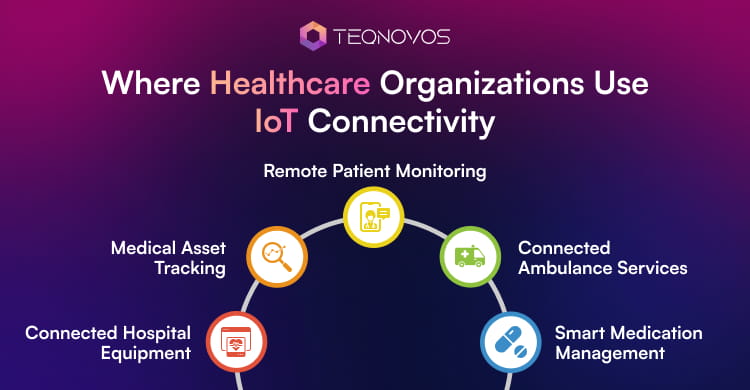
The healthcare industry employs connected devices across its clinical and operational spaces. The requirements for each application vary in terms of range, mobility, and connectivity.
1. Remote Patient Monitoring
Wearable devices and home sensors can track health readings outside clinical settings. Reliable connectivity sends approved data to monitoring platforms and keeps care teams informed between visits. Teqnovos has built remote patient monitoring solutions that support connected care workflows through its remote patient monitoring software case study.
2. Connected Hospital Equipment
Patient monitors and diagnostic equipment can exchange data with hospital systems. Strong connectivity can reduce isolated device data and create a more connected clinical environment.
3. Medical Asset Tracking
Connected tags can be used by hospitals to track beds and medical equipment. Real time location system can increase visibility in large health institutions.
4. Connected Ambulance Services
Ambulances can use connected monitoring equipment while patients travel to care facilities. Mobile networks can transmit health information when local hospital networks are unavailable.
5. Smart Medication Management
Connected medication devices can record usage and send relevant information to healthcare platforms. These systems can support medication monitoring across home and clinical care settings.
How Healthcare IoT Connectivity Supports System Integration
IoT connectivity for healthcare becomes more valuable when connected devices can exchange data with healthcare applications and existing systems. Healthcare organizations need reliable platforms that can manage device communication, data exchange, and user interactions. Teqnovos provides IoT application development services to build connected applications that integrate devices, cloud platforms, and digital healthcare workflows.
1. EHR Integration
Electronic Health Record (EHR) systems store patient information in digital form. Connected devices can send approved readings into these systems through secure integrations. This can reduce isolated device data and improve access to current patient information.
2. FHIR-Based Data Exchange
The Fast Healthcare Interoperability Resources is a protocol that enables the exchange of data within healthcare systems.
3. API Connectivity
APIs allow healthcare applications to exchange data with external systems. A connected device platform can use APIs to send information to monitoring tools, patient portals, or clinical applications.
4. Centralized Healthcare Platforms
IoT connectivity for healthcare can bring data from multiple devices into one healthcare platform. This can give care teams a more consistent view of connected device information across digital workflows.
Organizations planning connected healthcare platforms can also consider how healthcare app development services handle device integration and clinical data exchange.
Security and Compliance Considerations for Healthcare IoT Connectivity
Connected healthcare systems need strong privacy practices to protect sensitive information. Organizations can follow best practices for healthcare data privacy and security when designing connected healthcare solutions.
Device Authentication
Every connected device needs a trusted identity before it joins the network. Strong authentication can reduce unauthorized device access and limit unknown connections.
Data Encryption
Healthcare facilities require that data transmitted and stored be kept secure. Encryption will make the data difficult to read and misinterpret.
Network Segmentation
Network segmentation separates connected medical devices from other systems. This can limit the impact of a compromised device and reduce movement across the wider healthcare network. NHS England highlights connected devices as potential entry points when security controls are weak.
Continuous Device Monitoring
Healthcare teams need visibility into device activity and connection status. Central monitoring can identify unusual behavior and connectivity issues faster. NHS England also recommends ongoing device monitoring for larger IoT environments.
GDPR Compliant Connectivity
The General Data Protection Regulation (GDPR) is applicable to personal data processed within the European Union. GDPR compliant healthcare IoT connectivity is more than just having a secure connection. Healthcare organizations also need access control. Data minimization. Secure processing. And suitable privacy safeguards for connected health data.
Create Secure and Connected Healthcare Experiences With IoT. Build Your Healthcare IoT Solution!
Schedule a CallCommon Challenges in Healthcare IoT Connectivity
Reliable healthcare IoT connectivity can become harder as device numbers grow. Healthcare environments also create technical conditions that can affect network performance and device communication. Healthcare organizations can review common IoT implementation challenges before deploying connected solutions at scale.
1. Coverage Gaps
Walls and large clinical spaces can weaken wireless signals. Poor coverage can interrupt data transmission and reduce device availability.
2. Wireless Interference
Wi Fi and Bluetooth devices can operate within shared frequency ranges. Heavy wireless activity may affect connection quality in busy healthcare environments.
3. Device Compatibility
Healthcare organizations often use devices from different manufacturers. Each device may use different protocols or connectivity requirements. This can make integration more complex.
4. Network Capacity
A growing number of connected devices can increase network traffic. Healthcare teams need enough bandwidth and infrastructure to maintain reliable IoT connectivity for healthcare at scale.
5. Device Management
Connected devices need regular configuration and software updates. Teams also need clear processes for deployment and decommissioning. Central device management can make these tasks easier.
Best Practices for Reliable Healthcare IoT Connectivity
A reliable connected healthcare environment needs careful planning before devices go live. Healthcare teams need to assess the network and device requirements before scaling the system.
1. Assess Existing Infrastructure
Teams need to review current network capacity and coverage. They also need to check if existing infrastructure can handle additional device traffic.
2. Match Connectivity With the Use Case
The connection method needs to fit the device. Moreover, range and power use matter. Data volume and mobility also affect the choice.
3. Test Before Large-Scale Deployment
A controlled pilot can reveal coverage gaps and compatibility problems. It can also show how devices perform under real network conditions.
4. Plan for Connectivity Failure
Devices may lose access to the network. Critical systems need clear fallback behavior and secure local data storage when temporary outages occur.
5. Monitor Connected Devices
Teams need visibility into device status and network performance. Central monitoring can identify faults and connection issues before they affect wider operations.
6. Manage the Device Lifecycle
Reliable healthcare IoT connectivity also depends on ongoing maintenance. Teams need processes for device configuration and software updates. They also need secure decommissioning when devices reach the end of their use.
Future Role of IoT Connectivity in Healthcare
The role of IoT connectivity in healthcare will continue to expand as healthcare systems adopt more connected devices. Future solutions will focus on faster data exchange. Better device coordination. And more reliable digital care experiences.
1. Growth of Remote Healthcare
Connected devices will continue supporting remote monitoring programs. Patients can use wearable devices and home monitoring tools while healthcare teams receive important health information through connected platforms.
2. Integration With Artificial Intelligence
AI can analyze data collected through connected healthcare devices. When combined with reliable connectivity, AI in healthcare systems can identify patterns and support faster insights from large volumes of health information.
3. More Connected Medical Ecosystems
Future healthcare environments will include more connected devices working together. Better interoperability will allow medical equipment, healthcare applications, and data platforms to exchange information more efficiently.
Conclusion
Healthcare IoT connectivity has become a key part of modern digital healthcare systems. It allows medical devices and healthcare platforms to exchange data more effectively. The right connectivity approach depends on device requirements. Healthcare teams need to consider the range, reliability, and system compatibility before deployment.
With the rise of connected healthcare, companies with secure and scalable IoT infrastructure can deliver better digital health experiences. Connectivity will continue to be key in remote monitoring, connected devices, and healthcare innovations moving forward.