























How IoT Healthcare Managed Services Improve Connected Healthcare Operations
Healthcare organizations are adopting connected technologies to improve patient monitoring and operational efficiency. The growing use of IoT applications in healthcare is creating more connected and data driven care environments. Smart medical devices and remote monitoring systems now generate valuable healthcare data that supports better decision making.
However, these systems require continuous monitoring and maintenance. They are also required to have security management and technical support to operate effectively.
IoT healthcare managed services help healthcare organizations manage connected systems through ongoing monitoring and platform management. These services allow healthcare teams to focus on patient care while technology teams handle the complexity of managing connected healthcare infrastructure.
What Are IoT Healthcare Managed Services?
IoT healthcare managed services refer to ongoing technology management services that help healthcare organizations operate and maintain connected healthcare systems. These services cover device monitoring and platform management. They manage data handling and technical support after IoT solutions are deployed.
Handling these systems requires more than initial implementation. Organizations need continuous oversight to maintain performance and security.
Unlike standard IoT development services that focus on building and launching solutions. Managed services focus on long term operation and improvement. The goal is to keep connected healthcare systems available and aligned with changing healthcare requirements.
Why Healthcare Organizations Need Managed IoT Services
Healthcare institutions have increased their use of connected devices for better monitoring and service delivery. But management of such an IoT ecosystem becomes difficult when connected devices and healthcare operate together.
Connected medical devices generate continuous data that needs proper monitoring and management. Without dedicated support, healthcare teams may face device connectivity issues. They might face delayed troubleshooting and difficulty maintaining system performance.
IoT healthcare managed services provide ongoing operational support that helps organizations maintain reliable connected healthcare environments.
Healthcare organizations usually need managed IoT services because of the following challenges:
Complex Data Management Requirements
Data in large amounts is gathered by healthcare IoT solutions. It requires proper management to guarantee precision and security.
Healthcare IoT managed services can control the flow of information between the interconnected devices and healthcare apps.
Need for Continuous System Monitoring
Reliability of technological functioning is important for healthcare processes. Technical failure or connectivity problem may disrupt important processes.
Healthcare IoT monitoring allows teams to identify potential problems early and take corrective action before they affect operations.
Limited Internal Technical Resources
While many healthcare organizations have their clinical teams, they might lack the skills to manage a more sophisticated IoT environment.
A managed service provider comes into play with its technical knowledge for platform management and ongoing improvements.
Increasing Security Responsibilities
Connected healthcare systems require strong protection because they handle sensitive patient information. Security management needs continuous attention rather than a one-time setup.
A structured managed service approach helps organizations maintain stronger control over connected healthcare infrastructure while supporting operational reliability.
Core Services Included in IoT Healthcare Managed Services
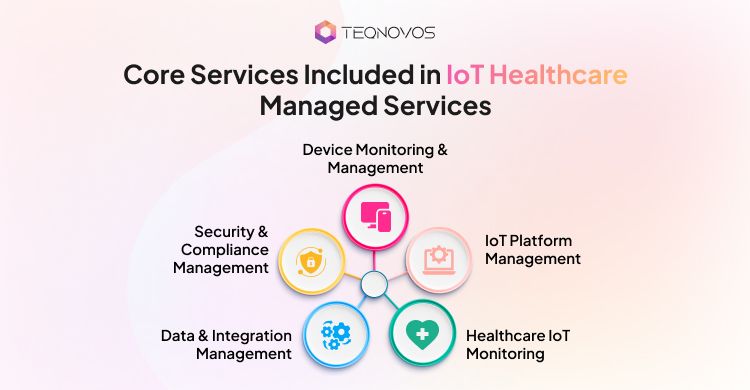
Healthcare IoT environments require continuous management after deployment. Connected devices and data systems need regular monitoring to maintain reliability and performance.
IoT healthcare managed services cover different operational activities that help healthcare organizations manage their connected technology environment. These services focus on keeping devices active and maintaining platforms. They are also improving data flow and protecting healthcare systems.
Device Monitoring and Management
Connected healthcare devices need continuous tracking to maintain accurate performance. Device failures or connectivity issues can affect healthcare workflows and data availability.
Managed services help monitor device health and maintain reliable communication between connected systems.
Key activities include:
- Tracking device status and performance
- Monitoring device connectivity
- Managing device configurations
- Supporting device updates and maintenance
- Identifying device-related issues early
IoT Platform Management
Healthcare IoT platforms act as a central system for collecting and managing data from connected devices. These platforms require regular maintenance to support smooth operations.
IoT healthcare platform management helps maintain platform reliability and ensures connected systems continue working efficiently.
Key activities include:
- Monitoring platform performance
- Managing system updates
- Maintaining data flow between systems
- Supporting platform optimization
- Resolving technical issues
Healthcare IoT Monitoring
Continuous monitoring is important for maintaining visibility across connected healthcare environments. Healthcare teams need clear insights into device activity and possible technical problems.
A healthcare monitoring system using IoT can help organizations track connected devices and maintain better visibility across healthcare operations.
Key activities include:
- Monitoring connected device activity
- Tracking system performance
- Identifying unusual system behavior
- Supporting proactive maintenance
- Improving operational visibility
Data Management and Integration Support
Healthcare IoT solutions generate data from multiple connected sources. This data needs proper management to ensure smooth communication between devices and healthcare applications. Businesses developing connected healthcare platforms often require specialized IoT app development services to build applications that connect devices.
Managed services support data movement and system integration to maintain reliable workflows. Healthcare organizations managing multiple digital systems also require strong interoperability. Healthcare interoperability solutions help different platforms exchange information and support connected healthcare workflows.
Key activities include:
- Managing data flow across connected systems
- Supporting healthcare application integrations
- Maintaining API connections
- Improving data accessibility
- Supporting connected healthcare workflows
Security and Compliance Management
Healthcare IoT systems handle sensitive healthcare information. Continuous security management is important to protect connected devices and patient data.
Managed service providers support security practices that help organizations maintain safer IoT environments.
Key activities include:
- Monitoring security risks
- Managing user access controls
- Supporting device authentication
- Protecting healthcare data
- Maintaining compliance-focused processes
Ready to Simplify Healthcare IoT Management? Let's Connect!
Schedule a CallRole of IoT Healthcare Managed Services in Remote Patient Monitoring
Remote patient monitoring enables tracking of patient health data from locations that fall outside the usual clinical setting. Devices that can be connected to one another provide the capability for capturing and transmitting health data.
However, managing these connected systems requires continuous monitoring and technical support. Remote patient monitoring software solutions depend on reliable device performance and accurate information flow.
IoT healthcare managed services provide the operational support needed to maintain remote monitoring environments. They help healthcare organizations manage connected devices and maintain reliable communication between patients and care teams.
Maintaining Reliable Device Connectivity
Remote monitoring depends on connected devices that collect and transmit patient information. Any connectivity issue can affect data availability and delay healthcare responses.
Managed services help maintain stable connections between devices and healthcare platforms.
Key activities include:
- Monitoring device connectivity
- Identifying connection issues
- Supporting device performance
- Maintaining reliable data transmission
Supporting Continuous Health Data Monitoring
Remote patient monitoring systems generate continuous streams of healthcare data. Care teams need reliable access to this information to support timely decisions.
Healthcare IoT monitoring helps track system activity and ensures that connected devices continue functioning properly.
Key activities include:
- Monitoring incoming device data
- Tracking system performance
- Identifying unusual activity
- Supporting consistent data availability
Improving Healthcare Team Visibility
Healthcare providers need clear visibility into patient monitoring systems. Managed services help maintain the technology infrastructure behind connected care workflows.
This allows healthcare teams to focus on patient care while technical teams manage system performance.
Key improvements include:
- Better access to monitoring information
- Improved system reliability
- Smoother healthcare workflows
- Reduced technical workload
Supporting Scalable Remote Care Operations
As healthcare organizations expand remote care programs. Managing more devices and users becomes complex. A managed service approach allows organizations to improve their connected healthcare capabilities without increasing operational challenges.
Key improvements include:
- Easier management of growing device networks
- Better platform performance
- Support for expanding healthcare programs
- More reliable connected healthcare solutions
Security Challenges in Managing Healthcare IoT Systems
Healthcare IoT systems connect medical devices. healthcare platforms. and data management systems to improve care delivery. However, these connected environments also create security challenges that require continuous attention.
Unlike traditional healthcare systems. IoT environments include multiple connected endpoints that collect and exchange sensitive information. Weak security practices can increase risks related to unauthorized access and system disruption. IoT healthcare managed services support ongoing security management by monitoring connected systems.
Protecting Sensitive Healthcare Data
Connected healthcare devices collect and transfer patient related information. This data requires strong protection throughout its lifecycle.
Managed services help maintain safer data environments by supporting security practices across devices and connected applications.
Key security activities include:
- Protecting healthcare data transfers
- Monitoring access to connected systems
- Supporting secure data storage practices
- Reducing the risks of unauthorized data access
Managing Connected Device Vulnerabilities
Healthcare IoT environments often include multiple devices from different manufacturers. Continuous monitoring helps identify device related vulnerabilities and maintain stronger system protection.
Key security activities include:
- Monitoring device activity
- Managing device access permissions
- Supporting firmware and software updates
- Identifying unusual device behavior
Maintaining Access Control and Authentication
Connected healthcare systems require proper access management to ensure only authorized users and devices can access sensitive information.
Managed services support access control practices that improve system security.
Key security activities include:
- Managing user permissions
- Supporting device authentication
- Monitoring access activities
- Reducing unauthorized system access
Supporting Healthcare Compliance Requirements
Healthcare organizations need to follow strict data protection and privacy requirements. Security management must continue after system deployment to maintain compliance readiness.
Managed service providers support security practices that align with healthcare technology requirements.
Key considerations include:
- Patient data privacy
- Secure system management
- Regular security monitoring
- Compliance-focused processes
Building a Proactive Security Approach
Healthcare IoT security requires continuous monitoring instead of one time protection measures. A proactive approach helps organizations identify issues earlier and maintain reliable connected healthcare environments.
Key benefits include:
- Faster identification of security concerns
- Better system visibility
- Improved risk management
- Stronger protection of connected healthcare solutions
How to Choose the Right IoT Healthcare Managed Services Provider
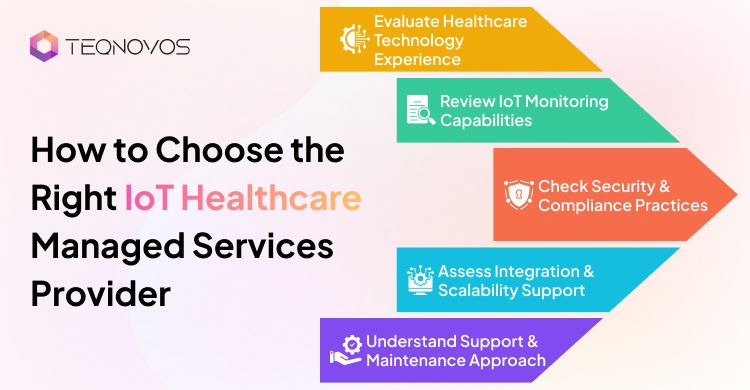
Selecting the right technology partner is an important decision for healthcare organizations managing connected systems. A suitable provider should understand healthcare workflows and long term technology goals. Organizations should also evaluate experience in healthcare software development services because IoT platforms often require secure applications and scalable healthcare technology solutions.
The right IoT healthcare managed services provider does more than monitor devices. They should support the complete connected healthcare environment through reliable management and continuous improvement.
Healthcare organizations should evaluate providers based on their capabilities and experience with healthcare technology environments.
Evaluate Healthcare Technology Experience
Healthcare IoT environments have specific requirements related to patient data and system reliability. A provider should understand these requirements before managing connected healthcare systems.
Important factors include:
- Experience with healthcare technology projects
- Understanding of healthcare workflows
- Knowledge of connected medical devices
- Ability to manage healthcare-focused integrations
Review IoT Monitoring Capabilities
Continuous monitoring is a core part of managed IoT services. Providers should offer tools and processes that help track system performance and identify issues early.
Important factors include:
- Device monitoring capabilities
- Platform performance tracking
- Alert management processes
- Issue detection and response workflows
Check Security and Compliance Practices
Healthcare organizations handle sensitive information that requires strong protection. A HIPAA compliant telehealth platform demonstrates the importance of secure healthcare technology design.
Important factors include:
- Data protection approach
- Access management practices
- Device security processes
- Compliance-focused operations
Assess Integration and Scalability Support
Healthcare organizations often use multiple digital systems. The selected provider should support integrations and help organizations expand their connected healthcare environment over time.
Important factors include:
- API support
- Integration capabilities
- Platform scalability
- Support for growing device networks
Understand Support and Maintenance Approach
IoT environments require ongoing technical support. Healthcare organizations should understand how providers handle maintenance and issue resolution.
Important factors include:
- Support availability
- Maintenance processes
- Response approach
- Continuous improvement strategy
Turn Connected Devices Into Better Healthcare Outcomes. Build Your Healthcare IoT Solution With Us!
Schedule a CallConclusion
Connected healthcare systems require more than advanced devices. They need continuous management to maintain performance and reliability.
IoT healthcare managed services help healthcare organizations manage connected devices and maintain efficient healthcare workflows. With proper platform management and technical support, organizations can create stronger connected healthcare environments.
Teqnovos helps businesses build and manage healthcare technology solutions that align with modern digital healthcare needs. The team supports organizations with reliable software development, IoT solutions, and connected healthcare platforms designed for future growth.