




















Top 10 Android App Development Tools in 2024
Android applications have become an essential part of modern business growth. They help companies reach more users and support direct communication through mobile experiences. As demand grows, businesses need smarter tools and reliable Android app development services.
The rise of AI has changed how Android apps are designed and launched. Modern AI Android app development tools help developers write cleaner code, reduce manual work, and improve app performance. These tools also support design workflows and intelligent app features.
Android remains a strong mobile platform because it offers flexibility and open development support. Businesses can use the right mix of AI tools and frameworks to create secure Android applications.
This guide covers the most useful tools, builders, and frameworks for Android app development. It also explains how each option supports faster delivery and smarter mobile products.
Best Tools to Build Smarter Android Apps
The best AI Android development tools include Gemini in Android Studio, GitHub Copilot, ChatGPT, Cursor, Tabnine, and Firebase. These tools help developers write cleaner code and speed up delivery.
Teams can also use AI app builders for Android, such as Bubble, Lovable, FlutterFlow, Builder.io, and Replit, for faster prototypes. These tools help Android app developers build MVPs and simplify mobile workflows. Thus, turning ideas into working products with less manual effort.
For scalable apps, developers still rely on Android app development frameworks such as Kotlin, Jetpack Compose, Flutter, React Native, and Firebase. The right choice depends on app complexity and launch timeline.
What Are Mobile App Development Tools?
Mobile app development tools are platforms or software solutions that help developers plan and launch mobile apps. They reduce manual work and support faster app delivery with better workflow control.
These tools can support different parts of app development, such as:
- Code writing and editing
- App design and prototyping
- Backend setup and data sync
- Testing and debugging
- Analytics and performance tracking
- App release and maintenance
Modern Android app tools also help teams manage device compatibility and backend connections. They give developers a more structured way to build reliable Android apps.
Many teams use AI tools for Android app development to write code faster and build smarter features. These tools support developers during the process. They do not replace technical planning or custom development.
Top AI Android App Development Tools, Builders, and Frameworks
The right tool depends on the app type and technical complexity. Some tools help developers write code faster. The best AI tools for app development are useful when they support the right stage of the product lifecycle. Businesses can use AI software development services to add AI features for custom automation.
AI Coding Assistants
1. Gemini in Android Studio
Gemini in Android Studio helps Android developers write code and improve productivity inside the development workflow. It supports natural language prompts and gives developers guidance during coding, debugging, and learning. This makes it one of the most relevant AI tools for Android app development.
2. GitHub Copilot
GitHub Copilot helps developers write code faster with AI based suggestions. It can support repetitive coding tasks and feature logic test cases. Android developers can use it to reduce manual work and improve development speed.
3. ChatGPT
ChatGPT helps developers create code snippets, review errors, and improve documentation. It is useful during debugging and feature explanation. It works best when developers review the output before adding it to a live codebase.
4. Cursor
Cursor is an AI powered code editor that helps developers understand large codebases and make faster changes. It can support app refactoring and feature updates. It is useful for teams working on active Android projects with complex files and workflows.
AI App Builders
1. Bubble
Bubble is a no code platform that helps teams create digital products without writing full code. It is useful for early stage apps and MVP validation. Businesses can use it when they want to test an idea before investing in full native development.
2. Lovable
Lovable helps users turn prompts into working app interfaces and software flows. It is useful for quick prototypes and early development concepts. It can help founders and teams move from idea to first version faster.
3. FlutterFlow
FlutterFlow helps teams build mobile app interfaces faster with visual development support. It can create Flutter based apps and support faster MVP development. It is useful for teams that want more control than a basic no code builder.
4. Builder.io
Builder.io helps teams create and manage digital experiences with visual editing and AI support. It is useful for teams that want faster design updates and better collaboration between design and development.
These AI app builders for Android are helpful for prototypes and faster product validation. Complex apps still need scalable architecture and proper testing.
Android Frameworks
1. Kotlin
Kotlin is widely used for native Android development. It supports cleaner code and strong Android Studio support. Developers use it to build stable and high performance Android apps.
2. Jetpack Compose
Jetpack Compose helps developers build native Android interfaces with less code. It supports modern UI development and faster interface updates. It is one of the most important Android app development frameworks for modern native apps.
3. React Native
React Native helps developers build apps for Android and iOS with shared code. It is useful when businesses want faster cross platform delivery. It works well for products that need a consistent experience across mobile platforms.
4. Flutter
Flutter helps teams build cross platform apps with one codebase. It supports fast UI development and flexible design. It is a good option for startups and businesses that want Android and iOS apps with faster delivery.
Backend Testing and Performance Tools
1. Firebase
Firebase supports backend features such as authentication and database storage. It also has capabilities for crash reporting, analytics, and push notifications. Android app development services help teams reduce backend setup time and launch app features faster.
2. Genymotion
Genymotion helps developers test Android apps across virtual devices. It supports faster testing across different screen sizes and device conditions. This makes it useful for improving app quality before launch.
These Android development tools work best when teams choose them based on product needs. A simple MVP may need an AI builder.
Also, read our blog on how to hire the right Android app developers with the right tech stack for your app.
Android Development Tools Comparison Guide
Choosing the right tool depends on the app’s goal and technical needs. Some tools support coding. Some help with design and prototypes. Others support testing backend setup and cross platform development. This comparison makes it easier to choose the right option from the best AI tools for app development.
| Tool | Category | Best For | Key Benefit |
| Gemini in Android Studio | AI coding assistant | Native Android development | Helps with coding, debugging, and Android workflow support |
| GitHub Copilot | AI coding assistant | Code generation | Speeds up repetitive coding tasks |
| ChatGPT | AI coding assistant | Planning and debugging | Helps with logic code review and documentation |
| Cursor | AI code editor | Existing codebases | Helps developers understand and update complex projects |
| Bubble | AI app builder | MVPs and simple workflows | Supports faster product validation |
| Lovable | AI app builder | Prompt based app creation | Turns ideas into early app interfaces and flows |
| FlutterFlow | Visual app builder | Cross platform MVPs | Builds Flutter based mobile interfaces faster |
| Builder.io | Visual development tool | Digital product experiences | Supports design updates and reusable components |
| Kotlin | Android framework | Native Android apps | Supports stable, scalable Android development |
| Jetpack Compose | Android UI framework | Modern app interfaces | Helps create native UI with less code |
| React Native | Cross platform framework | Android and iOS apps | Allows shared code across platforms |
| Flutter | Cross platform framework | Fast mobile app delivery | Supports smooth UI and one codebase |
| Firebase | Backend tool | App backend and analytics | Supports authentication, storage, crash reporting, and notifications |
| Genymotion | Testing tool | Android app testing | Helps test apps on virtual devices |
This table shows that AI app development tools are not limited to code generation. They also support design and faster product delivery. Businesses can use AI app builders for Android for early validation. They can use Android app development frameworks for scalable and long term mobile products.
Why Choosing the Right Tools Matters
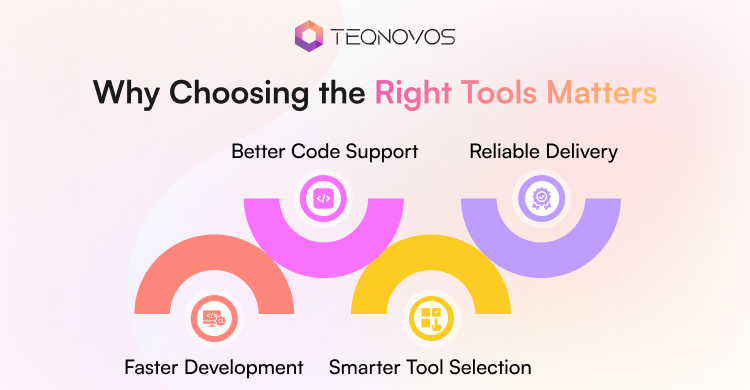
Faster Development
Choosing the right tools helps teams build Android apps faster with fewer delays and better quality control. The right setup supports coding and release management in one smoother workflow.
Better Code Support
Modern AI tools for Android app development reduce repetitive work. They help developers write code faster and improve app features before launch. This gives teams more time to focus on user experience and business goals.
Smarter Tool Selection
The right toolkit also helps businesses choose between no code builders, low code platforms, coding assistants, and native frameworks. This matters because every app has different needs. A simple MVP may need a faster builder. A complex product may need expert development and scalable backend support.
Reliable Delivery
Businesses that need reliable Android app development services can use these tools to speed up delivery without losing control over quality. The best results come when tools support the development team instead of replacing proper planning and technical review.
Key Benefits
- Faster app planning and development
- Better code quality and testing support
- Easier backend and API integration
- Stronger performance and scalability
- Better control over launch timelines
How to Choose the Right Framework
The best framework depends on the app’s goal and feature needs. A native Android product may need Kotlin and Jetpack Compose. A cross platform app may work better with Flutter or React Native. A data driven app may also need Firebase for backend support.
Businesses that need expert support can work with a team that offers Android app development services and understands which framework fits the product roadmap. This helps avoid rework performance issues and poor scalability later.
Build your mobile app with Teqnovos. —Book a free demo today!
Schedule a CallConclusion
Android app development is becoming more complex as users expect faster and smarter mobile experiences. Businesses need the right mix of AI tools, builders, frameworks testing tools, and backend support to create apps that perform well after launch.
The best tools help teams reduce manual work and manage app delivery with better control. Android app tools also help developers handle design and updates with more confidence.
Still, tools alone cannot build a strong product. Complex apps need clear planning and expert execution. Businesses that need scalable mobile products can use reliable Android app development services to choose the right tools and build apps that support growth.