
- Hire a Developer
 Android Developers
  iOS Developers
  Angular Developers
  DevOps Developers
  Laravel Developers
  MEAN Stack Developers
  MERN Stack Developers
  NestJS Developers
  NodeJS Developers
  NextJS Developers
  NuxtJS Developers
  Python Developers
  ReactJS Developers
  VueJS Developers
  WordPress Developers
  Shopify Developers
  BigCommerce Developers
  Salesforce Developers
 - AI Development
- Industries










Get in Touch

Why Healthcare Teams Need a Better Record System
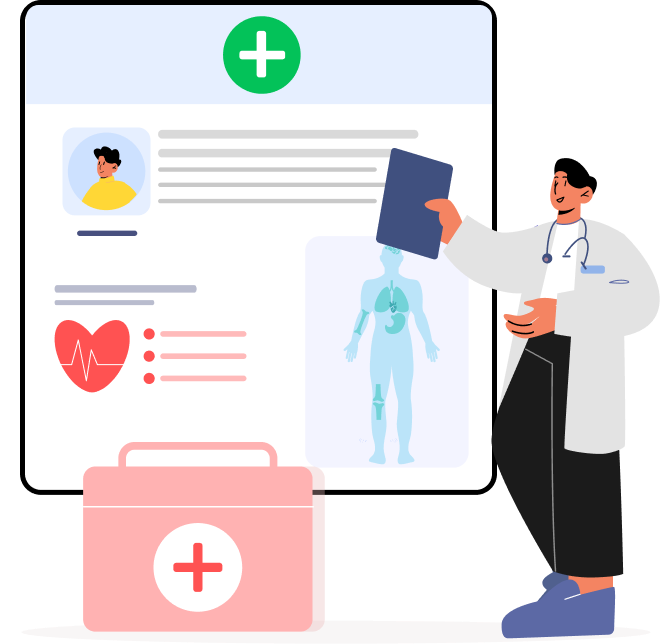
Healthcare teams work with records spread across departments, platforms, and locations. This fragmented setup can slow access to patient information and increase repeated data entry. It can also make referrals, reporting, and care coordination harder to manage. A connected EHR gives authorized users one reliable place to review and update patient details. It can improve visibility across workflows and reduce gaps caused by isolated systems.
The benefits of EHR software include clearer documentation, stronger coordination, faster information access, and better control over sensitive health data. Healthcare organizations also gain a stronger foundation for growth and future integrations when they replace disconnected processes with one structured record system. Healthcare organizations with complex record needs can explore EHR and EMR software development services to understand how tailored systems support clinical and administrative workflows.
Proven Healthcare Success Stories Built on Secure Digital Innovation
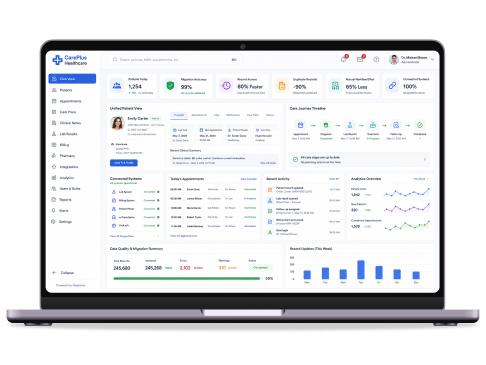

Electronic Medical Record Modernization
Teqnovos modernized a legacy Electronic Medical Record system to improve patient data access and streamline clinical workflows. The solution replaced disconnected processes with structured patient records and a unified patient view. The modernized platform helped clinical teams retrieve records faster and reduce manual work.
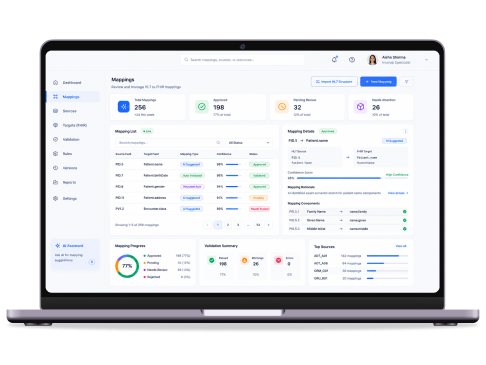

Smarter Healthcare Data Mapping With Generative AI
Healthcare organizations often manage clinical data across legacy EHRs, HL7 feeds, medical devices, and disconnected platforms. Manual mapping slows healthcare interoperability and creates data quality gaps.
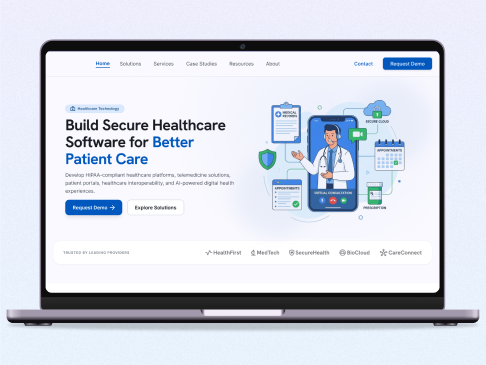
Connected Virtual Care Through EHR Integration
The platform connected every stage of the virtual care journey. Patients could schedule appointments and join video consultations through a simple process. Providers gained faster access to electronic health records and clearer follow up workflows. This reduced manual effort and supported a smoother care experience.
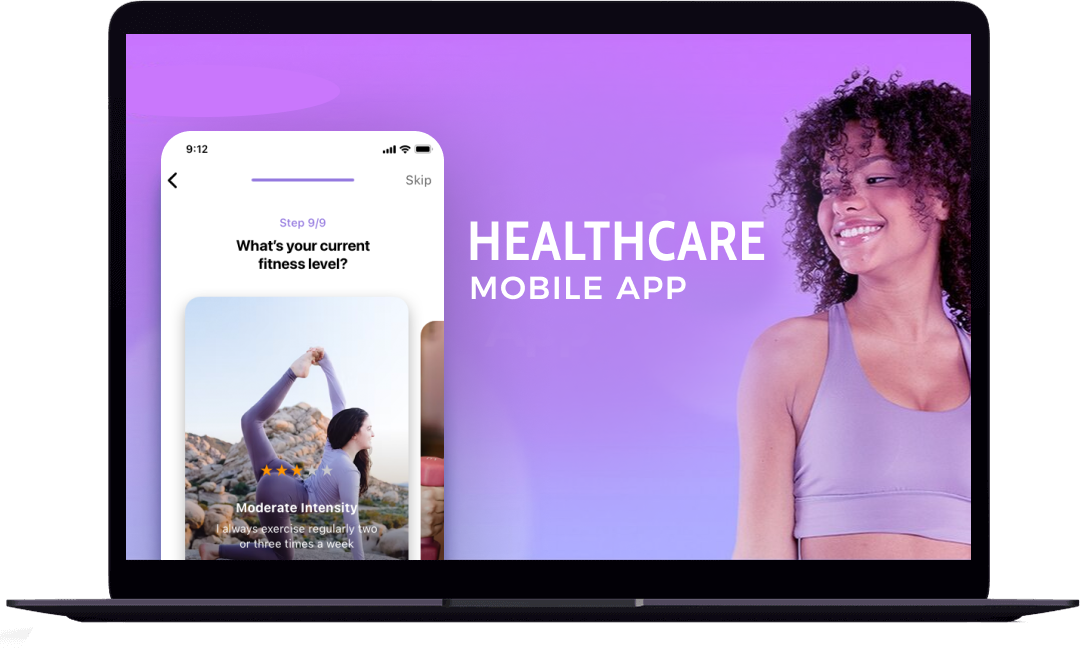

Healthcare App
Our web design and development team is remarkable when it comes to delivering business-oriented visuals. We first understood the project requirement and target audience to act accordingly for app development.
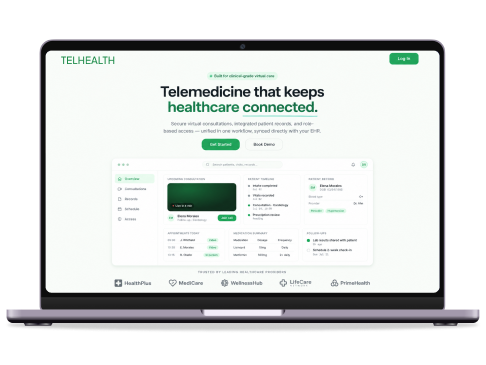

HIPAA-Compliant Telehealth Platform with EHR Integration
Teqnovos designed a secure virtual care experience that connected appointment scheduling, video consultations, and electronic health record access in one workflow. Telehealth EHR integration gave providers the patient context needed before each visit and a clearer path for documentation and follow-up after it. The HIPAA-compliant telehealth platform reduced workflow switches and supported safer handling of sensitive health data.
How Better Record Systems Improve Healthcare Operations
A connected EHR can improve clinical work and administrative control across the organization. The benefits of EHR software become clearer when each function solves a specific workflow problem and supports better decisions.
Faster Access
Authorized users can review current patient details through one connected system. This reduces time spent searching across separate files and platforms.
- View medical history quickly
- Check allergies and medications
- Review recent test results
- Reduce delays during care
Clear Documentation
Structured templates guide care teams through complete and consistent record updates. This creates a reliable patient history across every visit and department.
- Standardize clinical notes
- Reduce missing information
- Maintain complete patient records
- Improve documentation quality
Care Coordination
Shared records give approved teams access to the same patient information. This makes treatment updates and referrals easier to manage across care settings.
- Track treatment decisions
- Manage referrals clearly
- Share care updates
- Reduce repeated assessments
Patient Access
Patient portals give people secure access to selected health information and routine care services. This keeps patients informed and reduces basic support requests.
- View visit summaries
- Request appointments
- Send secure messages
- Access approved results
Operational Visibility
Central records give administrators a clearer view of daily activity and workforce needs. This allows teams to identify delays and manage resources with control.
- Monitor appointment flow
- Review user activity
- Track pending tasks
- Manage access permissions
Reliable Reporting
Structured data allows healthcare leaders to create reports without collecting information manually. This supports compliance reviews and operational planning.
- Review clinical activity
- Track operational patterns
- Prepare compliance reports
- Identify workflow gaps

1

2

3

4

5

6

7

8
Build Smarter EHR with the Right Features
Create an EHR that connects users’ data and clinical tasks. Teqnovos helps businesses turn feature priorities into a practical system plan.
Architecture and Data Exchange for Connected Care
A strong system architecture controls how patient data moves across users and connected platforms. Healthcare teams must plan hosting connections and recovery rules before launch. Clear decisions reduce integration gaps and protect daily clinical workflows.


Hosting Model
Cloud platforms support controlled access across approved locations. Teams planning this delivery model should also understand how healthcare SaaS development handles hosting scalability and connected care workflows.

API Connections
An API allows two systems to exchange approved information. A practical telehealth EHR integration can connect virtual visits with appointments, patient records, and follow up workflows. Each connection needs clear data rules and access controls.

Data Standards
FHIR defines a modern structure for exchanging healthcare data. On the other hand, HL7 includes standards used by many clinical systems. These standards support EHR interoperability across platforms. Businesses can review healthcare interoperability challenges before planning workflows.

Interface Monitoring
Connected systems need constant monitoring after launch. Teams should track delayed messages, rejected records, and failed updates. Clear alerts allow technical teams to act before an issue disrupts care.

Failure Planning
Every connection needs a recovery process. Teams should define how users access critical information when an interface stops working. Strong EHR integration planning also includes retry rules, error logs ownership, and escalation steps.
Why Healthcare Teams Can Choose Teqnovos for EHR Planning
Teqnovos brings the planning principles covered in this EHR software development guide into a structured project approach. Our healthcare app development services focus on clear decisions before technical work starts. This keeps the system aligned with clinical needs and operational priorities.
Teqnovos studies the business goal before defining modules or technical requirements.
The team identifies the users who should approve clinical and administrative workflows.
Each system decision connects with a clear operational need or patient data requirement.
Stakeholders receive a defined roadmap that shows priorities and project responsibilities.
The team separates first release needs from functions that can wait until later.
Clear requirements reduce unnecessary features and limit avoidable testing work.
Approved changes enter a controlled process before they affect the project scope.
Budget decisions stay connected with modules, integrations, migration, and launch needs.
Clinical users review important workflows before the system reaches production.
Migration checks confirm that patient records remain complete and easy to locate.
Testing covers user access, system connections, performance, and realistic care tasks.
Launch approval follows defined acceptance criteria instead of a fixed delivery date.
Teqnovos helps teams assign responsibility for security access and system changes.
Launch plans define support roles, escalation steps, and rollback responsibilities.
Post launch reviews track adoption, integration issues, and data quality concerns.
Hire healthcare app developers for future improvements and ongoing maintenance.

Unique Workflows
Specialty teams often follow care processes that standard platforms cannot support well. A tailored system can reflect these workflows without adding any unnecessary steps.

Complex Integrations
Healthcare teams can use EMR/EHR Integration Services to connect labs, billing systems, and telehealth platforms through secured data flows and clear role based access rules.

Multiple Locations
Expanding care teams require shared records across many sites. A tailored system keeps permissions, reporting workflows, and user access consistent at every location every day.

Greater Control
Some organizations need more control over data structure system updates and future modules. Custom planning can also reduce dependence on a single vendor over future changes.

Scalable Growth
A tailored platform can support more users, services, and care locations over time. Teams can add new functions without replacing the complete system. This protects prior work.

Readiness Check
A custom platform may not suit organizations with simple workflows or weak ownership. A ready made product offers faster deployment when the required functions already exist.
A custom EHR system suits healthcare organizations that need stronger control over workflows, data, and future growth. The right choice depends on operational complexity, internal readiness, and long-term goals.
Turn Complex Workflows Into One Clear System
Connect records users and locations through a tailored EHR platform. Teqnovos can help define the right scope before development begins.
Protecting Patient Data Through Layered Security Controls
Strong EHR security depends on more than one technical measure. Healthcare teams need clear policies and reliable controls across users’ devices, integrations, and vendors. Each layer should reduce exposure and keep sensitive information available for approved care activities.

Risk Assessment
A risk assessment identifies weak points before they affect patient data or daily operations. Teams can use HIPAA compliant solutions when planning access controls. They also record each risk and define the control needed to reduce it.
- Review data access risks
- Check connected system exposure
- Assess vendor related risks
- Record required control improvements

Access Management
Role based access control limits information based on job duties. Each user receives only the permissions needed for assigned tasks. Healthcare teams review access regularly and remove rights that no longer match current responsibilities.
- Assign permissions by role
- Remove outdated user access
- Review access on schedule
- Approve sensitive access changes

Identity Protection
Multifactor authentication requires more than one identity check before access is granted. This reduces the risk created by stolen passwords and hacked systems. It also adds stronger protection for remote users and high risk accounts.
- Protect privileged user accounts
- Reduce stolen password risks
- Secure remote system access
- Require stronger login checks

Data Protection
Encryption protects patient data while stored and during transfer. Healthcare teams must plan secure patient data privacy and security across tools. This ensures that protected information stays safe across approved data pathways each day.
- Encrypt stored patient records
- Secure data during transfer
- Manage encryption keys safely
- Review connected data pathways

Activity Monitoring
Audit logs record user access and key system changes. Teams should review unusual activity and investigate actions that fall outside normal workflows. Clear monitoring rules can expose risk early and support faster response decisions.
- Track patient record access
- Review permission updates
- Monitor unusual login activity
- Investigate unexpected record changes

Recovery Planning
Backup and incident plans reduce disruption after system failure or a security event. Teams define responsibilities and test recovery steps before an emergency occurs. A clear plan keeps essential information available during disruption.
- Test backup restoration
- Define response responsibilities
- Prepare downtime procedures
- Review third party access
How Healthcare Teams Can Migrate Data and Prepare for a Safe Launch
Data migration operates as a separate workstream within the EHR implementation process. Healthcare teams must decide which records will move. They must also define how users will verify accuracy before the new system goes live.
Source Review
Essential planning starts with a complete review of every system that stores patient information. The team identifies record formats and missing fields. It should also define which historical records must remain available after launch.
- List every source system
- Review available data formats
- Identify incomplete record fields
- Define legacy record access
Data Cleaning
Accurate migration depends on clean and reliable source data. The team corrects incomplete details and removes duplicate entries before transfer. This work reduces errors and prevents weak data from entering the new platform.
- Remove duplicate patient records
- Correct incomplete data fields
- Standardize names and formats
- Flag outdated information
Field Mapping
Precise field mapping defines where each data element will appear in the new system. Clinical users review labels and formats. They also confirm that important information remains easy to find during care.
- Match source and target fields
- Confirm required data formats
- Review clinical field labels
- Approve mapping rules
Trial Migration
Controlled testing moves a selected data sample into a secure environment. The team can compare original records with transferred records. Our electronic medical record modernization project shows how legacy data can move into a system.
- Select a test data sample
- Run the trial transfer
- Compare source and target records
- Record migration errors
Clinical Validation
Thorough clinical validation confirms that patient information remains complete and usable. Clinicians review migrated records and complete realistic tasks. Their approval proves that critical information supports daily care workflows.
- Review complete patient histories
- Check medications and allergies
- Test common clinical tasks
- Approve migrated information
Launch Controls
Secure launch planning defines how the organization will move from the old system to the new platform. The team should prepare cutover and rollback steps. Final approval should follow successful testing and record reconciliation.
- Confirm the final cutover date
- Prepare a rollback plan
- Assign launch responsibilities
- Approve production readiness
Key Factors That Shape the Total EHR Project Budget
The EHR software cost depends on scope and technical complexity. Healthcare teams should review planning expenses and build needs. They should also consider implementation work and long term ownership before setting the final budget.

Planning Costs
Strategic discovery defines the project scope before design begins. It connects business goals with clinical priorities, technical requirements, delivery limits and budget expectations. Clear planning also reduces avoidable changes, delays, and project costs during later delivery stages.
- Workflow discovery
- Requirement planning
- Compliance review
- Architecture planning

Build Costs
Focused design raises the budget as modules, user roles, integrations, and security controls expand. Greater complexity increases development effort and testing cycles. It can also require more technical reviews, bug fixes, and performance checks before the platform is ready for release safely.
- Number of system modules
- User roles and permissions
- External system integrations
- Reporting and dashboard needs

Implementation Costs
Careful rollout prepares the platform for daily use through structured data migration, user training workflow testing, launch support, early issue resolution, and system monitoring. It also confirms that users understand core tasks and that technical teams can respond quickly after deployment.
- Patient data migration
- System and workflow testing
- Staff training sessions
- Launch and cutover support

Ownership Costs
The final budget should include expenses that continue after deployment. This EHR software development guide treats these costs as part of the total cost of ownership. Healthcare managed IT solutions and consulting services can help organizations manage these responsibilities after launch.
- Cloud hosting and storage
- Performance and security monitoring
- Maintenance and issue resolution
- Integration and compliance updates
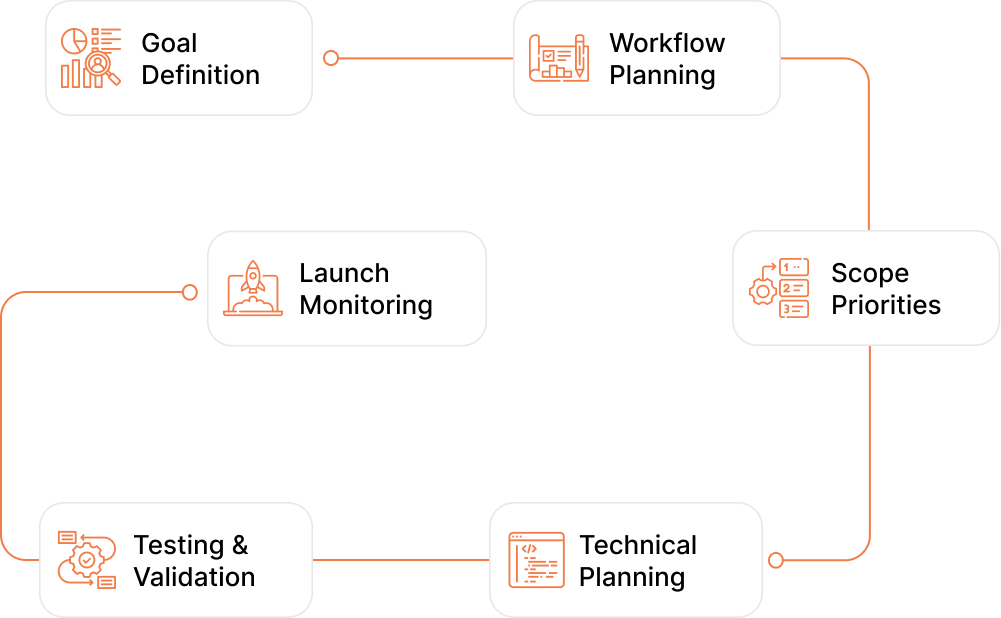
Goal Definition
The team identifies the main business problem and expected outcome. Clear goals guide feature choices and prevent unnecessary work during later stages.
Workflow Planning
Clinical leaders and administrators map current tasks and identify delays. The team then designs improved workflows that match real care and operational needs.
Scope Priorities
The first release focuses on essential records, user roles, and required connections. Advanced modules can move into later phases after the core platform becomes stable.
Technical Planning
The team defines architecture and security controls and data migration needs. Strong EHR integration planning also sets rules for connected systems and failed data exchanges.
Testing & Validation
Developers test workflows and system performance and access controls. Clinical users complete realistic tasks and approve the platform before the final launch decision.
Launch Monitoring
The team prepares cutover steps and support roles and rollback plans. After launch, it tracks adoption, system issues, and data quality through controlled reviews.
Common EHR Project Risks and Practical Ways to Reduce Them
EHR projects can fail when teams rush planning or ignore clinical input. Weak data controls and unclear ownership can also create delays after launch. Healthcare organizations need to identify major risks early and assign clear actions to reduce them before they affect delivery.

Scope Gaps
Define clear system goals before design work begins.
Prioritize essential workflows for the first release.
Record every approved change before adding new work.
Assign one owner to control scope decisions.

Data Quality
Review patient records before migration begins.
Remove duplicate entries and correct missing details.
Match source fields with the new system carefully.
Ask clinical users to validate transferred records.

Access Risks
Apply role based permissions for every user group.
Review access rights after role or staff changes.
Use strong identity checks for sensitive accounts.
Strengthen EHR security through regular audit reviews.

Launch Readiness
Test critical workflows with realistic patient scenarios.
Train each user group before the launch date.
Prepare rollback steps for serious system issues.
Confirm support ownership for early launch problems
What makes Teqnovos different
Scalable Digital Solutions To Power Business Growth
Business success is our benchmark. At Teqnovos, we design and develop custom mobile applications that solve real operational challenges. Our solutions enhance customer experiences and support long-term scalability. By aligning technology with your workflows and market needs, we ensure every solution delivers lasting value.
About Teqnovos
Teqnovos’ team provides custom mobile app solutions to gain a competitive advantage in a growing market. Digital readiness helps businesses build loyalty and scale sustainably. Businesses are moving toward digital experiences that support convenience and speed. Mobile app development plays a key role in meeting these expectations. A well-planned app helps improve customer engagement and repeat purchases. It also gives businesses better control over branding, operations, and data. Book a free consultation with us to become a powerful growth channel in the market.

Frequently Asked Questions
The final EHR software cost depends on the approved scope and number of user roles. Integrations and data migration also affect the budget. Security controls and testing needs can increase the required effort. A discovery phase gives the team a more reliable estimate before technical work begins.
The timeline depends on system complexity and integration needs. A focused first release usually requires less time than a multisite platform. Teams researching how to build an EHR system should also account for workflow planning and testing. Migration and clinical approval can extend the delivery schedule.
The MVP should focus on essential EHR software features. These may include patient records and clinical notes. Access controls and audit logs also remain important. The final scope reflects actual care workflows instead of a generic feature list.
A custom EHR system may suit organizations with unique workflows or complex data needs. It can also support specialty functions and greater control over future changes. Ready made software may offer a better option when the required functions already exist.
Reliable EHR interoperability requires agreed data standards and secure system connections. Fast Healthcare Interoperability Resources (FHIR) can support structured healthcare data exchange. Teams must also define data direction and access rules. Monitoring should detect failed or delayed transfers.