



























How to Build a Real Estate App: Complete Development Guide
Many businesses search for how to build a real estate app development because they want a clear path before starting a property technology project. Some teams also choose to hire real estate app developers when they need expert support for planning features, designing backend systems, and integrations.
A real estate app needs more than property listings and images. It must help users search faster and compare options with ease. The app should support map-based browsing and secure user accounts. A well-designed app enables users to manage leads and property data without confusion. Strong planning helps businesses avoid weak features and poor user flow.
This guide explains the key stages of real estate app development in a simple and practical way. It covers app types, features, development steps, and everything you need to know before building a real estate app.
Why Businesses Are Looking for How to Build a Real Estate App Development
Real estate buyers now expect fast digital access before they contact an agent. They want to search properties, compare prices, view locations, and send inquiries without delay. This shift has made real estate app development a strong need for agencies, brokers, property startups, and rental businesses.
A real estate app helps businesses bring listing leads, agents, and users into one platform. It also gives users a smoother way to explore properties through filters, maps, images, and saved searches. This improves the buying and rental journey.
Modern property businesses also need better control over data. Manual lead tracking can slow down sales teams. Scattered property updates can confuse users. A well-built app solves these problems through connected dashboards, alerts, and real-time listing updates.
Types of Real Estate Apps You Can Build
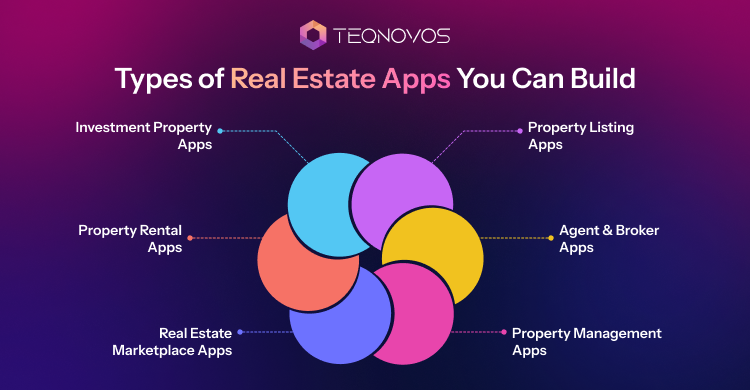
Real estate apps support different business goals. Some platforms help users search homes faster. Some support rentals and tenant communication. Others help agents manage leads or help investors review property value. A clear app model helps shape features during real estate mobile app development and keeps the product focused from the start.
1. Property Listing Apps
Property listing apps help users find homes, offices, land, and apartments in one place. These apps make property search faster and easier to manage. Strong real estate app development also helps businesses present accurate listings with clear property details.
Key Features:
- Smart property search by location, budget, size, and property type
- Map view for nearby property discovery
- Saved listings for easy comparison
- Verified property details for better trust
2. Rental Apps
Rental apps connect tenants, landlords, and rental managers through one platform. These apps not only reduce manual work but also help users manage rental requests with better clarity. They are a useful model for businesses planning mobile app development for real estate with a rental-focused audience.
Key Features:
- Rental unit search with clear pricing and terms
- Tenant inquiry and application management
- Document upload for lease and verification needs
- Rent reminders and payment tracking
3. Agent and Broker Apps
Agent and broker apps enable real estate professionals to manage clients, properties, and follow-ups more efficiently. These apps improve daily communication and lead handling. Skilled real estate app developers usually build these platforms with dashboards, reminders, and client activity tracking.
Key Features:
- Lead tracking from one dashboard
- Lead assignment for broker teams
- Follow-up reminders for active prospects
- In-app chat for faster client response
4. Property Management Apps
Property management apps support landlords, managers, and real estate operators. These apps help teams manage tenants, maintenance rent, and property records. Strong real estate application development keeps these workflows secure and easy to access.
Key Features:
- Maintenance request management
- Secure tenant record access
- Rent collection tracking
- Admin dashboard for daily operations
5. Real Estate Marketplace Apps
Real estate marketplace apps connect buyers, sellers, and agents through one connected system. These platforms need strong search tools and user management because they serve multiple user roles. Many businesses choose real estate app development services for marketplace apps because the model needs complex features and scalable backend systems.
Key Features:
- Property listing upload for sellers and agents
- Advanced search for buyers and renters
- Reviews and verified profiles
- Lead tracking for property inquiries
6. Investment Property Apps
Investment property apps help users study property value, rental income, and market trends. These apps support better decisions for buyers and investors. Careful real estate mobile application development helps turn market data into useful dashboards and reports.
Key Features:
- Property value comparison by location
- Rental yield calculator
- Portfolio tracking dashboard
- Market insight reports
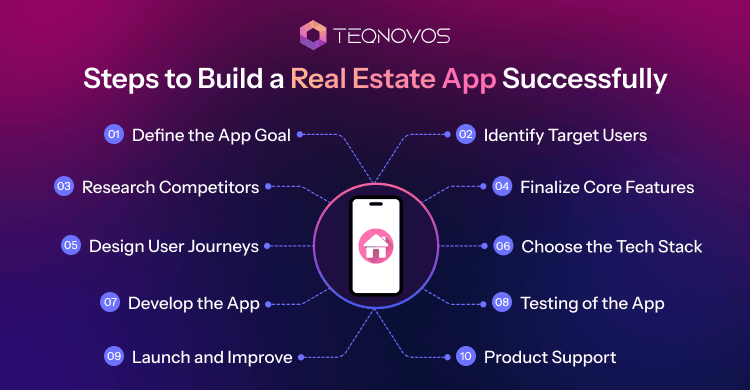
Steps to Build a Real Estate App Successfully
The steps to build a real estate app start with clear planning. A strong plan helps businesses understand the product goal before design or coding begins. It also keeps real estate app development focused on user needs and long-term growth.
1. Define the App Goal
Every app needs a clear purpose. The goal may be property search, rental management, agent communication, or investment tracking. A defined goal helps the team choose the right features and avoid unnecessary functions.
2. Identify the Target Users
A real estate app can serve buyers, renters, and agents. Other target users include brokers, landlords, or investors. Each user group has different needs. Buyers may need search filters and maps. Agents may need lead tracking. Landlords may need tenant records and rent updates.
3. Research Competitors
Competitor research helps identify what users already expect. It also shows gaps in existing property apps. Businesses can study search tools, listing layouts, and map features. They should also inquiry flows and user reviews before planning their own platform.
4. Finalize Core Features
Core features should match the app type and user journey. Common features include property search, map view, and saved listings. Other important ones include agent profiles, chat alerts, and an admin dashboard. Feature planning gives real estate mobile app development a clear direction.
5. Design User Journeys
User journeys show how people move through the app. A buyer may search a location, view a listing, and contact an agent. A smooth journey reduces confusion and helps users take action faster.
6. Choose the Right Tech Stack
The tech stack affects speed, security, and scalability. Therefore, it’s important to choose the right backend systems, databases, and third-party integrations. Strong real estate application development depends on stable technology choices.
7. Develop the App
Development includes the mobile interface, backend admin panel APIs, and database structure. Experienced real estate app developers build each part around the planned features and user roles. Clean development also helps the platform grow after launch.
8. Test the App
Testing helps find issues before users face them. The team should test search accuracy, map performance, and loading speed. Account security forms and device compatibility should also be verified before launch. A tested app gives users a better experience from the first release.
9. Launch and Improve
The launch phase starts after final checks and store approval. After launch, the team should monitor user behaviour and app performance. Regular updates help improve the product and support future growth in real estate mobile application development.
Read this guide on real estate application development mistakes to avoid before planning the build. It explains common issues that can affect app performance, user experience, and long-term scalability.
Need a real estate app? Build a smarter real estate app with expert developers who understand property workflows.
Schedule a CallCore Features Every Real Estate App Should Include
Features define how users search properties and take action. A real estate app should keep discovery simple and support each user role with clear tools. The feature set may change by app type, but a few core functions remain important.
Important features to include:
Property search and filters: Help users find listings by location, price, and type.
Map-based search: Let users explore nearby properties and compare areas faster.
Property detail pages: Show images, price, and features. Other important details include location and contact options in one place.
Saved listings: Allow users to save properties and review them later.
Agent profiles: Help users check agent details before making an inquiry.
Inquiry forms or chat: Make communication faster between users and property teams.
Booking requests: Allow users to request visits or schedule property viewings.
Admin dashboard: Help teams manage listings, users, lead approvals, and reports.
Lead tracking: Keep property inquiries organised for faster follow-up.
Alerts and notifications: Update users about saved listings’ price changes and new matches.
For a deeper breakdown, read this guide on key features to consider in real estate app development.
Role of Real Estate App Developers in the Process
Real estate app developers turn the product plan into a working digital platform. They study user needs first, and then plan flows for bookings and dashboards. A clear flow helps users move through the app without confusion.
A skilled real estate app developer enables businesses to build features around real property use cases. They build features such as search filters, map views, and saved listings. Other key features, including chat tools, lead tracking, and admin controls, must work together. Each feature is designed to support the app’s goal and improve user action.
Partnering with a reliable real estate app development company not only improves speed and security but also search accuracy and device performance. This reduces errors and helps the app deliver a smoother experience for users and property teams.
Planning to launch a property platform for buyers, renters, or agents? Turn your real estate app idea into a scalable digital platform with Teqnovos.
Schedule a CallCost Factors in Real Estate App Development
The cost of real estate app development depends on the app model and the level of functionality required. A simple listing app may need fewer features. A marketplace rental platform or property management app may need more user roles, workflows, and integrations. Each added layer can increase development time.
Main cost factors include:
App type: Listing rental marketplace and management apps need different feature sets.
Feature complexity: Search filters, maps, chat booking tools, and dashboards affect the scope.
Design needs: Custom UI and smooth user journeys need more planning and design work.
Platform choice: Android, iOS, web, or cross-platform builds can change the cost.
Backend scope: Large listing databases, user roles, alerts, and lead systems need stronger backend logic.
Admin panel: Listing control, user management, approvals, reports, and lead tracking add more work.
Third-party integrations: Maps, CRM, payment gateways, and property data tools need extra setup.
Testing: Performance security device compatibility and search accuracy testing improve app quality.
Maintenance: Updates bug fixes, new features, and server monitoring support long-term growth.
A real estate app development company usually studies these factors before giving an estimate. Careful planning helps businesses control costs and avoid unnecessary features during real estate application development.
Common Challenges in Real Estate Mobile Application Development
Real estate mobile application development needs clean data, fast search, and secure access. Even small issues can affect user trust and reduce inquiries.
Poor Listing Data
Outdated prices, missing images, or wrong availability can confuse users. A clear listing review process helps keep property data accurate.
Slow Search Results
Users expect quick results when they filter by location, price, or property type. Strong backend logic supports faster mobile app development for real estate.
Weak Map Performance
Map search can slow down when many properties load at once. Clean location data and smart loading improve browsing.
Low Quality Images
Blurry images can reduce trust. A real estate app should support clear photos, fast loading, and smooth galleries.
Unclear Inquiry Flow
Users should contact agents or book visits without confusion. Simple forms, chat options, and clear buttons improve lead quality.
CRM Integration Issues
Poor customer relationship management integration can create missed leads or duplicate records. A skilled real estate app developer can plan a cleaner data flow.
Security Risks
Real estate apps handle contact details, documents, and sometimes payments. Secure login access control and protected storage are essential.
Scalability Problems
Apps may slow down as the number of listings, users, and locations grows. Scalable architecture helps support future growth and stronger real estate app development services.
For more details, read this guide on challenges and opportunities in mobile app development.
How to Choose a Real Estate App Development Company
Choosing the right real estate app development company helps businesses reduce project risks. The team should understand the property workflows user needs and technical requirements. A strong partner should also explain the process clearly before development starts.
Industry Experience
Check if the company has worked on real estate apps before. Prior experience helps the team understand listings maps, lead flows, and property search needs.
Real Estate App Portfolio
Review past projects to understand design quality and feature depth. A relevant portfolio shows how the team handles mobile app development for real estate across different app types.
Technical Architecture Skills
The company should know how to build scalable backend systems. Strong architecture helps the app manage users’ listings, searches, integrations, and future growth.
UI and UX Process
A good design process keeps the app simple for buyers, renters, agents, and admins. Clear navigation property pages and inquiry flows improve user experience.
Testing Process
Ask how the team tests performance, security maps, search accuracy, and device compatibility. Proper testing helps prevent launch issues.
Post Launch Support
Real estate apps need updates after launch. Support may include bug fixes, feature improvements, server monitoring, and compatibility updates.
Communication Quality
Clear communication keeps the project aligned. A reliable team should share timelines and progress updates.
Businesses should compare real estate app development services based on experience and long-term support rather than just comparing price.
Conclusion
Understanding how to build a real estate app development helps businesses plan with more clarity before investing in a property app. A strong app needs clear goals and secure architecture. The app should provide smooth user journeys and launch after proper testing. The development doesn’t end after production; it also needs regular updates after launch. With the right planning, businesses can build a real estate platform that supports user teams as well as long-term growth.