
- Hire a Developer
 Android Developers
  iOS Developers
  Angular Developers
  DevOps Developers
  Laravel Developers
  MEAN Stack Developers
  MERN Stack Developers
  NestJS Developers
  NodeJS Developers
  NextJS Developers
  NuxtJS Developers
  Python Developers
  ReactJS Developers
  VueJS Developers
  WordPress Developers
  Shopify Developers
  BigCommerce Developers
  Salesforce Developers
 - AI Development
- Industries











Get in Touch
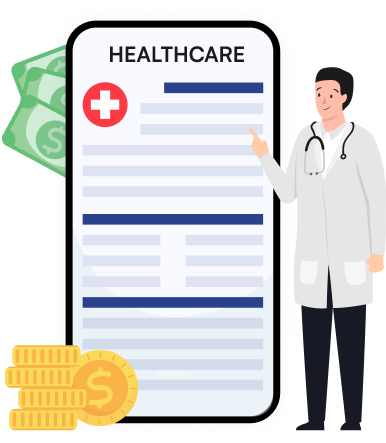
Why Healthcare Payment Workflows Need Connected Systems
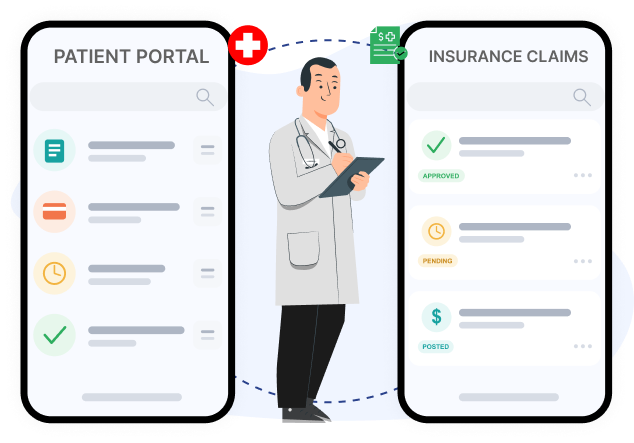
Healthcare payment workflows involve more than collecting money from patients. Providers must connect billing records with insurance claims and finance systems. A delay in one part can affect the revenue flow. Claims may remain unpaid. Patient balances may stay incorrect and payment records may fail to match billing data.
A connected platform gives each system a clear role. Healthcare payment processing software can move transaction data between patient portals and financial systems. It can also support payment posting and reconciliation after funds arrive. A well planned healthcare payment system development strategy reduces disconnected workflows and improves visibility across payment activity. It also makes it easier for teams to track exceptions and resolve payment issues.
Different Types of Healthcare Payment Systems and Their Role
Healthcare organizations use different payment systems based on who pays and how funds move through the care process. Some systems focus on patient collections, and others manage insurer payments. More advanced platforms connect both sides through one financial workflow.
Patient Payment Systems
A patient payment system handles bills, copays, deductibles, and direct payments. It gives patients a clear way to review balances and pay while providers track collections in one clear place.
- Patient balance tracking
- Copay and deductible payments
- Online payment collection
- Payment plan management
Payer and Reimbursement Systems
Payer systems manage claims and payment adjustments using reliable healthcare payment processing. Connected insurance billing and claims workflows can keep payment records tied to financial activity.
- Claim payment tracking
- Provider reimbursement records
- Payment adjustment handling
- Remittance data management
Integrated Healthcare Financial Platforms
Integrated platforms connect patient payments, payer reimbursements, and provider finance workflows. Healthcare payment platform development brings these records into one coordinated system.
- Patient payment integration
- Payer reimbursement tracking
- Payment posting workflows
- Financial reconciliation records

1

2

3

4

5
6

7

8
Build Payment Workflows Around Real Healthcare Operations
Create connected payment experiences that fit billing claims and patient collections. Build secure workflows that keep financial activity clear across every stage.
Architecture and Key Integrations for Healthcare Payment Platforms
Healthcare payment architecture must connect patient activity with billing and finance systems. The right integrations keep payment data consistent across platforms and reduce disconnected financial workflows. This also creates a stronger foundation for healthcare app development services.


Patient and Provider Interfaces
Give patients and care teams clear access to payment activity. Portals and billing dashboards can surface balances, transactions, account details, and payment actions through focused views each day.

Payment Processing Layer
Platforms that manage several transaction routes may need a structured payment processing architecture for reconciliation. Healthcare payment gateway integration can keep transaction status visible and reduce failed payment issues.

EHR and EMR Integration
Connect billing activity with clinical and administrative records. Healthcare payment software development can keep charges, balances, and payment updates aligned across connected care systems.

Payer and Clearinghouse Integration
Link claims eligibility checks, remittance data, and payer responses with payment workflows. Healthcare payment processing software can make reimbursement activity easier to track across teams.

Financial and Accounting Integration
Keep payment posting and ledger activity connected with finance systems. Accurate data exchange can reduce mismatched records and improve visibility across financial operations. Similar financial workflow systems can connect invoices within one process.

Healthcare Data Standards
Use consistent data exchange rules across healthcare and payment systems. Standardized connections can improve interoperability and reduce errors as financial information moves between platforms.
Why Choose Teqnovos for Healthcare Payment Software?
Teqnovos develops healthcare software around real operational needs. The team focuses on secure architecture, clear integrations, and reliable financial workflows. Its approach to healthcare payment software development keeps patient and payer processes connected.
Builds healthcare platforms around real patient and administrative workflows
Plans secure software architecture for sensitive healthcare and financial information
Develops scalable systems that can adapt as healthcare operations expand
Designs practical interfaces for billing teams and administrators
Structures patient billing workflows around balances, receipts, and account activity
Builds payment posting processes that connect received funds with correct billing records
Teqnovos has also worked on a healthcare platform with integrated payment workflows that connected operational management with payment handling.
Creates reconciliation processes that help teams identify mismatched or missing payment records
Connects EHR systems with billing charges, balances, and payment updates
Integrates payment gateways for authorization, settlement, refunds, and transaction tracking
Links payer systems with claims remittance eligibility and reimbursement workflows
Connects finance platforms with payment posting, reconciliation, and accounting activity
Uses modular architecture that makes future feature expansion easier to manage
Plans system performance around growing transaction volumes and connected healthcare workflows
Creates flexible integration structures that can support additional platforms over time
Focuses on maintainability through clear architecture and structured development practices
| System | Main Role | Key Functions | Best Use |
|---|---|---|---|
| Healthcare Payment System | Manages connected financial workflows | Billing payments, claims payment posting, and reconciliation | Organizations that need complete healthcare billing and payment software |
| Payment Gateway | Processes digital payment transactions | Authorization tokenization, settlement refunds, and transaction routing | Platforms that need secure online payment acceptance |
| Medical Billing Software | Manages healthcare billing records | Charge capture coding invoices balances and payment tracking | Providers that need structured billing operations |
| RCM Platform | Manages the complete revenue cycle | Eligibility claims denials collections remittance and reporting | Healthcare organizations managing end to end revenue operations |
Turn Complex Payment Processes Into One Reliable Healthcare Platform
Build secure payment workflows that connect patients, providers, and finance teams through a platform built for accurate healthcare financial workflows.
Why Healthcare Organizations Invest in Digital Payment Systems
Healthcare organizations need better control over collections and financial activity. Digital payment systems can reduce manual work and improve visibility while creating a clearer payment experience for patients.

Better Financial Visibility
Gain a clearer view of incoming payments, outstanding balances, and settlement activity. A digital healthcare payment system keeps financial records easier to review across connected teams.
- Track incoming payment activity
- Review outstanding patient balances
- Monitor settlement records
- Improve financial reporting visibility
Less Manual Payment Work
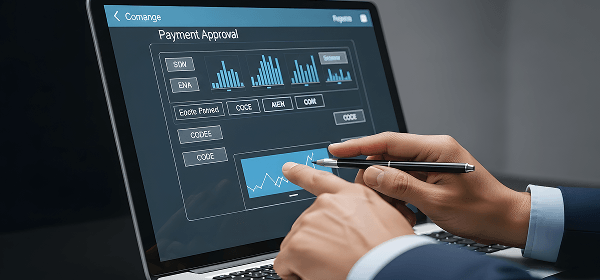
Reduce repetitive billing work by connecting payment posting updates and transaction records. Better healthcare payment processing gives teams more time to handle exceptions that need review.
- Automate payment posting tasks
- Reduce repeated data entry
- Connect transaction status updates
- Limit manual record matching

Clear Patient Financial Experience
Give patients a clearer view of what they owe and how they can pay. Simple billing details and payment options can reduce confusion and make the financial experience easier to manage each day.
- Show current patient balances
- Present available payment options
- Share payment confirmations
- Improve billing information clarity

Stronger Payment Reconciliation
Keep payment records aligned with billing and remittance data. Strong reconciliation helps finance teams identify mismatched amounts faster and resolve exceptions before they affect reporting.
- Match payments with billing records
- Identify reconciliation exceptions
- Track remittance information
- Resolve mismatched payment amounts
Security Requirements That Shape Healthcare Payment Systems
Healthcare payment platforms manage health information and financial data across connected workflows. Strong compliance planning keeps a digital healthcare payment system secure while reducing unnecessary exposure across every transaction. Teams can also review data privacy and security in healthcare during early planning.
HIPAA for Health Information
Protect health information across every payment workflow. The Health Insurance Portability and Accountability Act (HIPAA) guides how teams handle electronic patient health data securely today.
- Protect electronic health information
- Control access to patient data
- Maintain activity and audit records
- Secure data during storage and transfer
PCI DSS for Payment Card Data
Protect cardholder data during every payment transaction. The Payment Card Industry Data Security Standard (PCI DSS) guides how teams handle payment data and reduce exposure across workflows.
- Limit cardholder data exposure
- Protect payment transaction details
- Use secure payment infrastructure
- Monitor access to payment data
Secure Data Exchange
Keep financial and health data protected as it moves between systems. Encryption, tokenization, access controls, and audit trails reduce risk across connected payment workflows safely and clearly.
- Encrypt sensitive information
- Tokenize payment card details
- Restrict access by user role
- Maintain secure system interfaces
Data Segregation
Separate sensitive data based on its purpose and risk. Clinical records, billing information, and cardholder data need distinct controls so each system stores only what it truly requires each day.
- Separate clinical and payment records
- Minimize sensitive data storage
- Define clear data ownership
- Restrict unnecessary system access
Healthcare Payment Solutions for Different Business Needs
Healthcare organizations do not always need the same payment setup. The right model depends on existing systems and financial workflows. Teams can build a custom platform or extend current software based on operational needs.

Custom Payment Platform
Choose a custom platform when standard tools cannot match complex billing or payment workflows. Healthcare payment software development can shape the system around specific business needs today.
- Build organization specific payment workflows
- Connect billing and financial operations
- Add custom payment rules and controls
- Support patient lending software development for financing workflows
Existing Payment Processor Integration
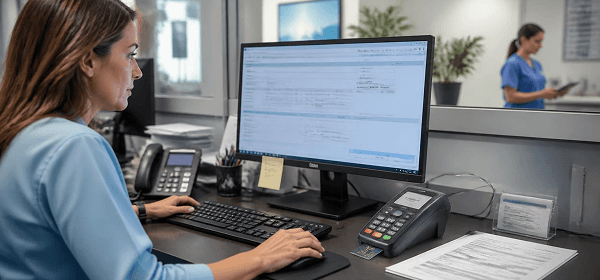
Connect an existing processor when the healthcare product already manages billing or patient data. Medical payment system development can then focus on workflows that still need customization.
- Add digital payment capabilities
- Connect existing billing platforms
- Reduce unnecessary platform rebuilding
- Maintain current financial workflows
Billing or Revenue Cycle Extension
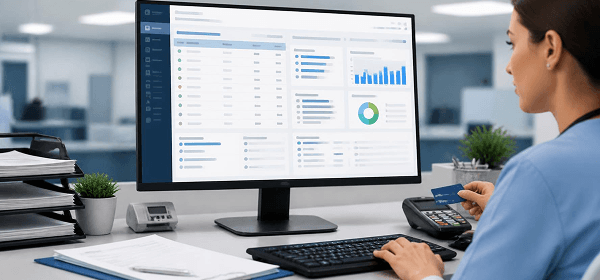
Extend an existing billing platform when the core revenue workflow already works. Medical billing software development can add payment features without replacing the current system today.
- Add payment posting capabilities
- Improve reconciliation workflows
- Extend billing system functionality
- Connect payment and revenue records

Modular Payment Extension
Add modular payment functions when the existing platform only needs selected upgrades. Teams can extend billing payments reporting or reconciliation without rebuilding the full system.
- Add only the required payment modules
- Extend existing healthcare software gradually
- Reduce unnecessary redevelopment effort
- Scale financial workflows over time
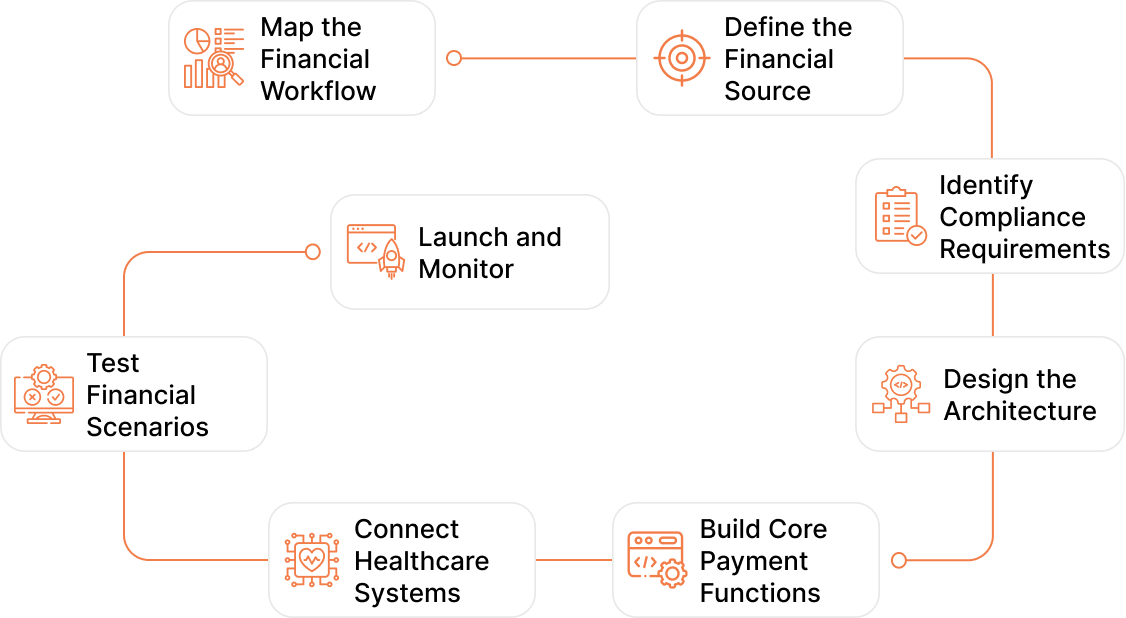
Map the Financial Workflow
Map every user and payment path before development begins. This gives teams a clear view of patient charges, insurer payments, refunds, and reconciliation needs across the full workflow.
Define the Financial Source
Choose one system to hold the official balance and payment status. This prevents conflicting records across EHR, billing, finance, and payment tools as transactions move between platforms.
Identify Compliance Requirements
Review how health data and card data move through the platform. This makes it easier to apply the right controls and reduce unnecessary data exposure during daily payment operations.
Design the Architecture
Design clear modules for billing payments, claims reporting, and integrations. Healthcare payment platform development works best when each module has a clear role and system boundary.
Build Core Payment Functions
Build the core functions around billing transactions, payment posting, refunds, and reporting. Healthcare payment system development works best when each function follows real workflows.
Connect Healthcare Systems
Connect EHR, payer, clearinghouse, gateway, and finance systems through secure interfaces. A health insurance app development approach keeps payer and claims data aligned across platforms.
Test Financial Scenarios
Test successful payments and the situations that can fail. Teams must check retries, refunds, mismatched records, timeouts, duplicate requests, and incomplete updates before a secure launch.
Launch and Monitor
Launch with monitoring for payment failures, reconciliation gaps, and system performance. Healthcare SaaS development can support growth as integrations and transaction volumes increase.
Common Payment System Mistakes and Risks to Avoid
Healthcare payment platforms handle sensitive financial activity across several connected systems. Weak planning during healthcare payment system development creates payment errors and operational delays. Strong healthcare payment processing software needs clear controls across every transaction stage.

Duplicate Payment Risk
Repeated requests can charge the same patient more than once
Missing retry controls can create duplicate transaction records
Weak transaction checks can make refund handling more difficult
Duplicate protection must cover gateway and internal system events

Payment Posting Failures
Successful payments may fail to update the correct patient account
Delayed posting can leave balances inaccurate across connected systems
Missing confirmations can create extra work for billing teams
Payment status must remain aligned across every financial platform

Reconciliation Gaps
Payment records may not match remittance or billing information
Unmatched transactions can delay accurate financial reporting
Missing adjustment records can create incorrect outstanding balances
Clear reconciliation rules can surface exceptions before they grow

Integration and Security Gaps
Gateway or payer downtime can interrupt critical payment workflows
Weak access controls can expose sensitive financial information
Conflicting balances can appear when systems use different records
Secure integrations must keep payment data consistent across platforms
What makes Teqnovos different
Scalable Digital Solutions To Power Business Growth
Business success is our benchmark. At Teqnovos, we design and develop custom mobile applications that solve real operational challenges. Our solutions enhance customer experiences and support long-term scalability. By aligning technology with your workflows and market needs, we ensure every solution delivers lasting value.
About Teqnovos
Teqnovos’ team provides custom mobile app solutions to gain a competitive advantage in a growing market. Digital readiness helps businesses build loyalty and scale sustainably. Businesses are moving toward digital experiences that support convenience and speed. Mobile app development plays a key role in meeting these expectations. A well-planned app helps improve customer engagement and repeat purchases. It also gives businesses better control over branding, operations, and data. Book a free consultation with us to become a powerful growth channel in the market.

Frequently Asked Questions
A healthcare payment system connects billing transactions, claims reimbursements, and patient collections within one financial workflow. It can link patient portals with billing tools and finance systems. The exact scope depends on how an organization manages patient responsibility and reconciliation.
A payment gateway mainly authorizes and routes digital transactions. A healthcare payment system manages a much wider financial process. It can include billing claims, payment posting, refunds, and reporting. Healthcare payment gateway integration usually becomes one component inside the wider platform rather than the complete solution.
The requirements depend on the data the software handles. HIPAA applies when protected healthcare information falls within its scope. PCI DSS applies when cardholder data enters the payment environment. Healthcare payment software development must identify each data type first so teams can apply the correct safeguards.
Healthcare payment processing software can connect with an existing EHR system when suitable integration options are available. The connection can exchange billing details and account information. Teams must define which system owns the official financial record before building the integration.
Reconciliation compares received payments with expected billing and remittance records. The process identifies missing payments, incorrect amounts, unmatched transactions, and adjustments. Strong healthcare payment processing can automate much of this matching while giving finance teams a clear way to review exceptions that still require attention.
Cost depends on platform scope, features, and compliance needs. Healthcare payment platform development usually becomes more complex when several EHR systems or clearinghouses need integration. Long term infrastructure support and maintenance also affect total ownership costs.
The right choice depends on workflow complexity and existing infrastructure. Custom medical payment system development makes sense when standard platforms cannot handle required financial processes. Existing processors may suit simpler payment needs. Many organizations use a hybrid model that combines custom healthcare workflows with established payment infrastructure.