





















IoT In Healthcare: Impact, Security, Challenges, and Risk Mitigation
IoT in healthcare is changing how care teams collect data and monitor patients. Connected medical devices can send health information to digital systems in near real time. This gives healthcare teams better visibility into patient conditions and device activity. It can also improve remote monitoring and support faster access to useful clinical data. The same connectivity creates new security concerns. Every connected device can increase the number of entry points that attackers may target. Weak device security can expose sensitive health data and disrupt important healthcare systems. The role of AI in healthcare administration can complement this connected ecosystem by using available data for workflow management and operational decision-making. Healthcare organizations need to balance connected care with strong cybersecurity controls. They also need clear processes for device monitoring and risk reduction throughout the device lifecycle.
What Is IoT in Healthcare and How Does It Work?
It uses connected devices to collect health data and share it with digital healthcare systems. These devices can include wearable sensors and patient monitors. It also includes smart medical equipment. IoT in Healthcare reduces the need for manual data collection and makes information easier to access.
How Does Healthcare IoT Work?
Before connected data reaches a healthcare team, it moves through several linked systems. Each stage plays a different role in collecting and delivering usable information. IoT app development can also connect these devices with mobile platforms and clinical systems for easier data access. The process usually follows five stages:
- Data Collection: A connected device collects information such as heart rate or temperature.
- Data Transmission: The device sends the information through a secure network.
- Data Processing: A software platform receives the data and processes it.
- System Integration: The information can move into an Electronic Health Record or another healthcare platform. Organizations may use EHR integration services when connected device data needs to flow securely into existing clinical systems.
- Clinical Access: Authorized care teams can review the information and use it during patient care.
Device → Network → Platform → Healthcare System → Care Team
IoT vs Internet of Medical Things
The Internet of Things is a broad term for connected devices that exchange data over networks. It applies to many industries. The Internet of Medical Things focuses specifically on connected medical devices and healthcare systems. These systems collect and exchange health-related data.
Impact of IoT in Healthcare on Patient Care and Operations
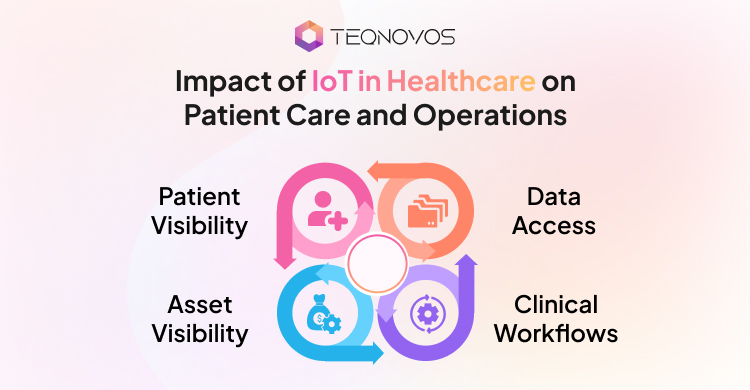
It changes how healthcare teams receive information and manage daily operations. Connected systems can create a more continuous flow of data across patient care and hospital environments. The impact of IoT in healthcare goes beyond connected devices. This can give teams better visibility without depending only on manual checks.
1. Patient Visibility
Connected devices can collect selected health data beyond scheduled clinical visits. A smart healthcare monitoring system using IoT can track patient readings over time and make recent information available to care teams. This gives healthcare professionals a broader view of patient activity outside traditional care settings.
- Tracks selected health signals
- Extends monitoring beyond clinics
- Creates continuous data records
- Gives teams wider patient visibility
2. Data Access
Connected data can also become useful across wider healthcare operations. The role of AI in healthcare administration can involve processing this information for workflow planning and resource management when suitable systems are in place.
- Sends data to digital systems
- Reduces manual data handling
- Improves access to recent information
- Keeps authorized teams informed
3. Asset Visibility
Hospitals often manage equipment across several departments. Connected tracking systems can show where devices are located and how they are being used.
- Tracks equipment locations
- Shows device availability
- Improves equipment visibility
- Reduces time spent locating assets
4. Clinical Workflows
Connected device data can become part of wider clinical workflows. Care teams can review this information alongside other patient records when making clinical assessments.
- Adds device data to workflows
- Gives teams more context
- Highlights changes for review
- Supports informed clinical assessment
IoT does not replace clinical judgement. Its value depends on reliable data, well-designed systems, and clear healthcare processes.
Ready to Build a Secure Healthcare IoT Solution? Talk to Our Healthcare IoT Experts!
Schedule a CallCommon Uses of Connected IoT in Healthcare
Connected IoT systems can serve different roles across healthcare environments. Some systems collect patient data at home. Others connect medical equipment inside hospitals. Each use case depends on reliable data and secure connectivity.
1. Remote Monitoring
Remote monitoring lets care teams collect selected health data outside clinical settings. An IoT healthcare monitoring system can connect patient devices with approved digital platforms. This gives healthcare teams a way to review relevant information without requiring every check to happen in person.
- Collects health data remotely
- Extends monitoring beyond hospitals
- Gives teams access to recent readings
- Supports ongoing patient observation
2. Medical Equipment
Connected medical equipment can exchange data with hospital systems. Devices such as infusion pumps and patient monitors may send operational or clinical information to approved platforms.
- Connects equipment with digital systems
- Shares device status information
- Reduces isolated device data
- Improves equipment oversight
3. Health Wearables
Wearable devices can collect selected health signals during daily activity. These devices may track data over longer periods than a single clinical visit. Healthcare organizations can use wearable app development services to connect wearable data with mobile apps and cloud platforms.
- Collects continuous health signals
- Extends data collection over time
- Supports remote patient observation
- Creates useful longitudinal data
4. Asset Tracking
Hospitals can also use connected technology to monitor equipment locations. Asset tracking systems can give operations teams clearer visibility into where important devices are being used.
- Tracks equipment locations
- Shows asset availability
- Reduces time spent searching
- Improves operational visibility
Challenges of IoT in Healthcare That Make Adoption Difficult
Healthcare organizations may work with older systems and complex data flows. These issues can slow adoption even before cybersecurity becomes the main concern. The challenges of IoT in healthcare often appear during integration and daily operation.
1. System Integration
Connected devices need to exchange data with existing healthcare systems. This becomes difficult when devices use different data formats or communication standards. FHIR is a standard for exchanging healthcare information between digital systems. It can improve data exchange, but integration still requires careful planning and testing. Healthcare teams also need to decide where device data will appear and how clinical systems will use it. Poor integration can create disconnected information instead of a useful workflow. A practical healthcare interoperability solution can show how data mapping and system integration work across connected healthcare environments.
2. Legacy Systems
Many healthcare organizations still depend on older software and infrastructure. These systems may not connect easily with modern devices or cloud platforms. Replacing them is not always practical. Teams may need additional integration layers or custom interfaces instead. This can increase implementation complexity and maintenance work. A deeper review of IoT implementation challenges can help teams understand these broader technical issues.
3. Network Reliability
Connected healthcare devices depend on reliable communication. Network interruptions can delay data transfer or prevent systems from receiving updated information. This matters more when a workflow depends on frequent device readings. Healthcare teams need to evaluate connectivity and system availability before placing connected devices into important care processes.
4. Vendor Fragmentation
Healthcare environments may contain devices from several manufacturers. Each vendor can use different software, management tools, and integration methods. This makes centralized device management harder. It can also create more work for technical teams that need to maintain several platforms.
5. Device Lifecycles
Medical equipment can remain in service for many years. Software platforms and network technologies often change much faster. This difference can create compatibility problems over time. Healthcare organizations need clear plans for upgrades and integration changes.
IoT Healthcare Security: Where Risk Enters the Connected Ecosystem
Risk can enter through devices and networks. Cloud platforms and user access can also cause some risks. IoT healthcare security requires protection across the full connected ecosystem. Healthcare teams need to understand each layer before they apply the right security controls.
1. Device Layer
- Connected devices can store sensitive patient or operational data.
- Firmware controls how a device operates. Outdated firmware can create security gaps.
- Weak passwords can make unauthorized device access easier.
- Local device storage needs protection when sensitive information remains on the device.
2. Network Layer
- Healthcare devices depend on wired or wireless networks to exchange data.
- Weak network controls can expose devices to unauthorized connections.
- Remote access can increase risk when vendors or staff connect from outside the hospital.
- Network segmentation can limit which systems a connected device can reach.
3. Application Layer
- Connected devices may send data to mobile apps or cloud platforms.
- An Application Programming Interface is a software connection that lets systems exchange data.
- Poorly secured APIs can expose sensitive information or accept unauthorized requests.
- Strong data privacy and security in healthcare practices can reduce application- and cloud-related risk.
4. Access Layer
- Staff accounts may have more permissions than their role requires.
- Vendors may need remote access for maintenance and technical support.
- Third party tools can create additional access points into connected systems.
- Healthcare organizations need regular permission reviews and clear access removal processes.
Top Security Risks in Connected Healthcare Systems
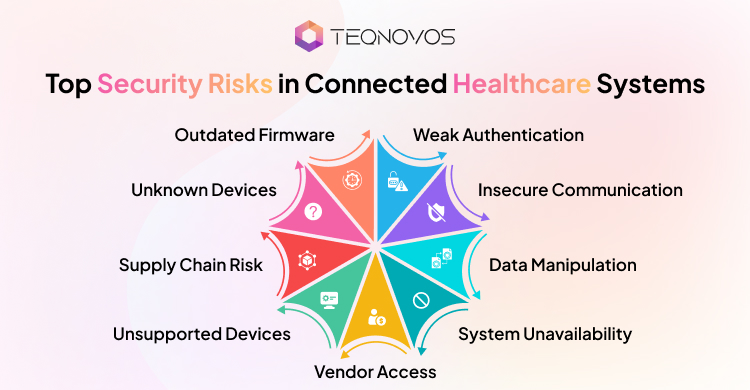
IoT healthcare cybersecurity becomes more complex as hospitals connect more devices to clinical systems and networks. Each connected device can create a new point of exposure. Healthcare teams need to identify the most serious risks before they decide which controls need priority.
1. Unknown Devices
Healthcare teams cannot protect devices they do not know exist. Unmanaged devices may stay connected without regular checks or clear ownership.
- Missing devices can escape security monitoring.
- Unknown software versions can hide vulnerabilities.
- Unclear ownership can delay security action.
- Asset discovery can improve device visibility.
2. Outdated Firmware
Firmware is software built into a hardware device. Older firmware may contain known weaknesses that remain exposed when updates are unavailable.
- Unsupported software may stop receiving patches.
- Older code can increase security exposure.
- Clinical use can make immediate replacement difficult.
- Compensating controls can reduce risk until replacement.
3. Weak Authentication
Poor access controls can make connected devices easier to compromise. Shared passwords and default credentials can create serious security gaps.
- Default passwords may remain active after deployment.
- Shared accounts reduce user accountability.
- Excessive permissions can increase exposure.
- Strong authentication can restrict unauthorized access.
4. Insecure Communication
Connected devices often exchange sensitive data across networks. Weak protection during transmission can expose this information.
- Unprotected traffic can reveal sensitive data.
- Weak protocols can increase interception risk.
- Poor certificate management can weaken trusted connections.
- Encryption can protect data during transmission.
5. Data Manipulation
Cybersecurity does not only involve data theft. Attackers may also change information that healthcare teams use during clinical work.
- Altered readings can reduce data reliability.
- Incorrect information can affect clinical workflows.
- Integrity controls can detect unauthorized changes.
- Validation processes can flag unusual data.
6. System Unavailability
A cyberattack can make a connected device or system unavailable. This can interrupt workflows that depend on timely access to equipment or information.
- Ransomware can disrupt connected systems.
- Network attacks can interrupt device communication.
- Device outages can delay important workflows.
- Recovery planning can reduce disruption.
7. Vendor Access
Medical device vendors may need remote access for maintenance and technical support. Poorly controlled access can create another entry point into healthcare systems.
- Vendor accounts can remain active longer than needed.
- Shared credentials can reduce accountability.
- Remote access can increase external exposure.
- Access reviews can reduce unnecessary permissions.
8. Unsupported Devices
Some medical devices remain in use after vendor support ends. These devices may no longer receive security fixes or software updates.
- End of support can leave known weaknesses unresolved.
- Replacement may take time due to clinical needs.
- Isolation can reduce network exposure.
- Replacement planning can prevent long-term risk.
9. Supply Chain Risk
Connected medical devices depend on software and hardware components from multiple suppliers. A weakness in one component can affect the wider device environment.
- Third-party components can introduce hidden vulnerabilities.
- Software dependencies may become outdated.
- Vendor updates may affect device security.
- Component visibility can improve risk assessment
What Happens When a Medical IoT Device Cannot Be Patched?
Some connected medical devices cannot receive a security patch immediately. The vendor may no longer support the software. The device may also perform a critical clinical function that makes downtime difficult. In these cases, healthcare teams need compensating controls.
Reduce Exposure:
Network segmentation can separate the affected device from other systems. This limits how far an attacker could move if the device becomes compromised.
Control Access:
Healthcare teams can limit who can interact with the device. Strong access controls reduce opportunities for unauthorized use.
Increase Monitoring:
Unpatched devices need closer observation. Security teams can watch network activity and device behavior for unusual changes.
Plan Replacement:
Compensating controls reduce risk, but they do not remove the underlying weakness. Healthcare organizations need a clear replacement plan when a device reaches the end of vendor support.
A Practical IoT Risk Mitigation in Healthcare Framework
Effective IoT risk mitigation in healthcare starts with visibility. Healthcare teams need to know what devices are connected and what each device can access. They also need clear processes for monitoring and maintenance and incident response. A structured framework can make this work easier to manage.
Step 1: Discover
Healthcare teams need a complete inventory of connected devices. Unknown devices can create security gaps that remain outside normal monitoring. Teams can record the device name, network connection, and current status.
Step 2: Classify
Each device needs a clear purpose and owner. Classification can also show what data the device collects and which systems it connects with. This makes later risk decisions more accurate.
Step 3: Assess
Teams can evaluate the risk connected to each device. Important factors include clinical importance, data sensitivity, and network exposure. A device that affects critical care may need stronger controls than a low risk operational sensor.
Step 4: Segment
Network segmentation separates devices into controlled network areas. It limits which systems each device can reach. This can reduce the impact of a compromised device and prevent unnecessary communication.
Step 5: Secure Access
Only approved users need access to connected medical devices. Strong authentication helps avoid access. The principle of least privilege allows assigning a particular user the minimum privileges needed for a defined role. A remote patient monitoring case study shows how role based access and encrypted data transfer can form part of a secure healthcare system.
Step 6: Monitor
Connected devices need continuous visibility after deployment. Security teams can monitor device behavior and network activity for unusual changes. Unexpected traffic or new connections may require further review.
Step 7: Patch or Compensate
Supported devices need regular software and firmware updates. Healthcare teams can test updates before applying them to critical equipment. A compensating control can reduce exposure when patching is not possible. Isolation and restricted access are common options.
Step 8: Prepare for Incidents
Healthcare teams need a clear response plan before a device becomes compromised. The plan can define who isolates the device, who contacts the vendor, and how clinical teams continue essential work.
Step 9: Review Vendor Support
Security management continues after deployment. Teams need to track vendor updates and product support dates. This reduces the risk of unsupported devices remaining in use without clear planning.
Step 10: Retire Securely
Devices also need a secure end of life process. Teams can remove network access and delete stored information before disposal or replacement. A clear retirement process also keeps the device inventory accurate.
Turn Healthcare IoT Into a Safer System. Build Your Healthcare IoT Solution!
Schedule a CallConclusion
IoT in healthcare can create real value when healthcare organizations manage it with clear technical and security controls. Connected healthcare can also work alongside other digital technologies. The role of AI in Healthcare Administration may add value when organizations use connected data to improve administrative workflows and operational visibility. Healthcare teams need to manage every stage of the device lifecycle. This includes deployment and secure retirement. Security planning also needs to protect patient data and clinical workflows. A strong connected healthcare strategy brings technology and security together. This allows organizations to use connected systems with greater control while reducing cybersecurity risk.