

















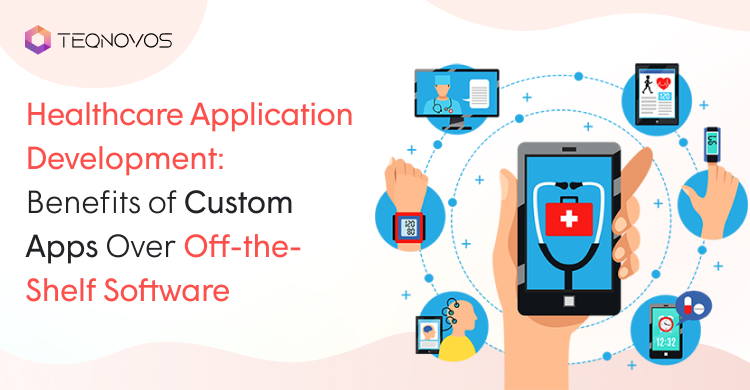
Healthcare Application Development: Benefits of Custom Apps Over Off-the-Shelf Software
Healthcare organizations use digital tools to manage patient information. They also use them to support clinical work and daily operations. Some teams rely on packaged platforms. On the other hand, some invest in software built around their own needs.
The choice between custom healthcare software vs off-the-shelf software depends on how well each option fits the organization. Cost, speed, and integration are essential.
Healthcare application development gives organizations control over product design and system behavior. Off-the-Shelf software can offer faster setup and proven features. The better fit depends on the workflow and the goals behind the product.
This guide explains the main differences in a practical way. It also shows where custom development can add more value and where a packaged product can work well.
Introduction to Healthcare Mobile Applications
Healthcare mobile apps support clinical work and administrative tasks. They can help teams manage patient information and appointments. They can also support remote care and communication.
Healthcare application development covers the planning and creation of digital products for healthcare use. These products can include patient portals and telehealth apps. They can also include remote monitoring tools and internal workflow systems.
Some organizations use existing platforms because the available features already fit their needs. Others choose custom healthcare app development when workflows are complex or when the product needs greater control.
This is the main question behind custom healthcare software vs off-the-shelf software. Businesses can hire dedicated healthcare app developers to start with their application.
What Are Custom Healthcare Apps?
Custom healthcare apps are built around the needs of a specific organization. The product team can define the features and user roles. It can also plan how the app connects with systems already in use.
This level of control makes custom software useful when standard products create too many workflow compromises. It also helps when a digital health product needs features that are not available in a packaged platform.
Healthcare app development can support patient apps and clinician portals. It can also support connected care platforms and specialized digital health products. The value comes from fit. A useful product reflects the way the organization works instead of forcing every process to change around the software.
Organizations often choose custom healthcare app development when standard products create too many workflow compromises.
Build Custom Healthcare Software —Talk to Our Healthcare Experts Today!
Schedule a Call
What is Off-the-Shelf Healthcare Software?
Off-the-shelf healthcare software is a ready-made product created for a wider group of users. These platforms often include standard features and common workflows. Many also support configuration and external integrations.
This approach can reduce initial development work when the product already fits the use case. It can also shorten implementation time.
The main limit is control. The vendor controls the core architecture and the product roadmap. The healthcare organization works within the available settings and integration options.
Custom Healthcare Software vs Off-the-Shelf Software
Healthcare teams compare custom software with ready-made platforms before choosing a solution. These options can support daily operations and patient services. The main difference lies in control and flexibility.
The table below compares the main differences between the two options.
|
Factor |
Custom Healthcare Software |
Off-the-Shelf Healthcare Software |
| Feature Control | Features can match specific workflows and business needs. | Features depend on what the vendor provides. |
| Deployment | Requires planning and development before launch. | Can often be implemented faster. |
| Integration | Gives teams greater control over system connections and data exchange. | Integration depends on available APIs and vendor support. |
| Scalability | Architecture can support planned growth and future changes. | Scaling depends on platform capacity and available options. |
| Security | Teams have direct control over security design and implementation. | Security depends on vendor controls and correct configuration. |
| Maintenance | Requires an ongoing maintenance and product development plan. | Core platform updates are usually managed by the vendor. |
| Product Roadmap | The organization controls future features and priorities. | The vendor controls the main product roadmap. |
| Customization | Offers greater freedom to adapt the product around specific workflows. | Customization depends on available settings and modules. |
Readers comparing options can also review the factors that affect healthcare software development cost before estimating the investment needed for a custom product.
Benefits of Custom Healthcare Apps Over Off-the-Shelf Software
Custom development can offer more value when healthcare teams need control over workflows and integrations. It can also help when the software plays an important role in the patient or clinical experience.
1. Features Built Around Real Workflows
Custom applications let teams define features around real user needs. A clinician dashboard can focus on the information that care teams review every day. A patient app can focus on the actions that matter during the care journey.
This approach reduces unused features. It also reduces the need to change important workflows only to fit a standard product. Modern medical app development often starts with workflow planning. This helps teams decide which features solve a real problem and which features add little value.
Healthcare app development also gives product teams control over how those features evolve over time.
2. More Control Over Scalability
Custom systems give organizations more control over architecture and future changes. Teams can plan infrastructure around expected growth. They can also build modules that support new services later.
Off-the-Shelf software can scale as well. Many cloud products support larger user volumes and added modules. The difference lies in who controls the path.
Organizations using healthcare mobile app development services can plan growth around their own roadmap. This matters when new care models or new user groups require changes that a commercial platform cannot support easily.
3. Integration Flexibility
Healthcare products often need to exchange data with Electronic Health Record systems. An Electronic Health Record is a digital record of patient health information used across care settings.
Fast Healthcare Interoperability Resources is known as FHIR. It is a standard that supports structured healthcare data exchange between compatible systems.
Strong healthcare software integration requires more than a basic connector. Teams need to review data mapping and authentication. They also need to understand system limits and workflow rules.
A practical EHR integration approach gives readers more context on how healthcare systems exchange information. This is one area where custom healthcare app development can create clear value. The development team can plan the integration around the systems used by the organization.
4. Direct Control Over Security
Security depends on how a product is designed and managed. A custom application is not automatically safer than a packaged product. Healthcare app security depends on access controls and authentication. It also depends on encryption and monitoring. Clear data handling rules matter as well.
HIPAA includes requirements that protect electronic health information for covered entities and business associates. The current HIPAA Security Rule remains in effect. Proposed cybersecurity updates have not replaced it.
Custom development gives teams control over how security measures fit the product. Packaged products can also provide strong controls. Their effectiveness depends on the vendor and the way the product is configured.
Teams working on app development for healthcare also need to understand which privacy rules apply to the product. Some consumer health apps may fall outside HIPAA and still face other privacy requirements.
Read our guide to healthcare app data privacy and security to get a deeper understanding of the same.
5. Room for Product Differentiation
Custom applications can support product experiences that are difficult to create with a standard platform. A healthcare organization may need a specific care workflow. It may also need a unique patient journey or a specialized data process.
Custom healthcare app development gives product teams freedom over how these parts work. The value comes from solving a real problem that the current software cannot solve well. This can matter when the digital product forms an important part of the service itself.
Create Healthcare Apps Built for Your Needs —Start Your Healthcare App Project Today!
Schedule a Call
When Custom Healthcare Software Makes More Sense
The decision becomes easier when the organization starts with the workflow. Custom software can fit teams with complex integrations or specialized processes. It can also fit digital health products that need more control over data and product design.
An off-the-shelf platform can make more sense when the workflow is standard, and the available product already meets the main needs. It can also work well when faster implementation matters more than deeper customization.
For teams comparing custom healthcare software vs off the shelf software, the most useful questions focus on fit.
- Can the platform support the current workflow?
- Can it connect with the systems already in use?
- Can it support future product changes?
- Does the organization need direct control over the roadmap?
- Can the vendor meet the required security and data needs?
These questions give teams a practical way to compare both options.
Current Considerations for Healthcare Application Development
Modern healthcare products often connect with EHR platforms and remote care systems. Some also use artificial intelligence. AI can support documentation and data review. It can also support clinical decision tools in some products. The exact requirements depend on what the feature does and how it affects patient care.
FDA released draft lifecycle guidance for artificial intelligence enabled device software functions. It also published final guidance on planned changes for certain AI medical devices. This makes early product planning important during medical app development. Teams need to understand the purpose of the feature and the type of data it uses.
The same planning matters for app development for healthcare that connects patient data across several systems. Interoperability and security work best when teams consider them during architecture planning. Healthcare mobile app development services can also support these decisions when an organization needs a product built around its own workflows and systems.
Teams can also review a practical healthcare interoperability case study to see how connected healthcare workflows can work across different systems.
To Sum It Up
The choice between custom and Off-the-Shelf software depends on product needs and operational fit. Custom systems offer more control over features and integrations. They also give organizations ownership over architecture and future changes.
Off-the-shelf healthcare software can still provide strong value when its workflows already match the organization. It can reduce initial development work and support faster implementation.
For organizations with specialized requirements, the value of healthcare application development comes from fit and control.
Take a step with Teqnovos towards your health app development. Get started with us today!