






















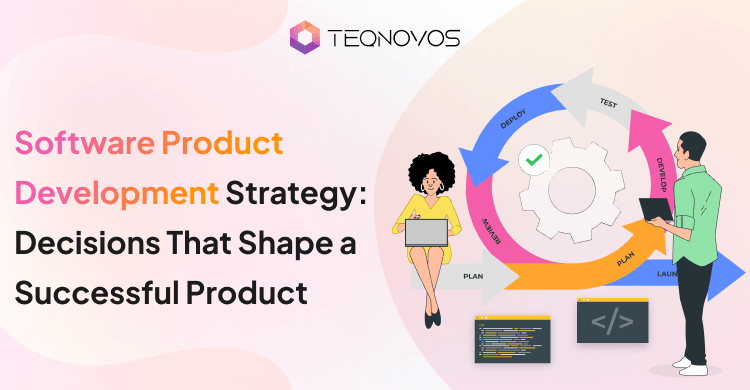
Software Product Development Strategy: Decisions That Shape a Successful Product in 2026
Many software products face problems before development even starts. Teams often begin coding without confirming user demand or business value. A clear software product development strategy tests the idea first. It defines the target user and product scope. It also connects technical decisions with measurable business goals.
Developing a new software product requires careful choices before major investment begins. Leaders need to decide who the product serves and which problem it solves. They also need to define core features and success metrics. This guide explains how real user feedback and market data can reduce risk and keep product development focused on actual customer needs.
What Is a Software Product Development Strategy?
A software product development strategy is a clear plan for turning a product idea into a useful and profitable solution. It explains what the product can achieve. It also defines who the product will serve and why users should choose it over other options.
A complete strategy includes the product vision and target market. It defines the value proposition. This means the main benefit offered to users. It also covers the business model and shows how the product will generate revenue. The strategy guides product scope and technical direction. It also sets success metrics such as user growth and feature adoption.
This strategy guides major product and investment decisions. It helps leaders choose the right features and technology. Teams should review the strategy when user feedback or market data changes. This keeps the product aligned with customer needs and business goals.
How Product Strategy Differs From the Development Process and Lifecycle
Teams often use these terms as if they are all the same. However, each one of these serves a different purpose. A software product development strategy explains why the product should exist and what the business wants to achieve. The other elements turn that direction into planned work and product management.
| Term | What It Defines | Main Purpose |
| Product vision | The future the product aims to create | Gives the team a shared long term direction |
| Product strategy | The target users and product value | Explains why the product should be built |
| Product roadmap | The planned order of product initiatives | Shows what the team plans to work on next |
| Development process | The steps used to design and build the product | Guides product delivery and quality control |
| Product lifecycle | The stages a product passes through over time | Manages the product from launch to retirement |
The software product development process covers discovery and design. It also includes development and testing following the launch of the platform. The process explains how the team will build and release the product.
The roadmap converts the strategy into clear priorities. It may include features and technical improvements. It can also include research and market goals. The lifecycle looks beyond the MVP. It covers product growth and maturity. It also includes decline or retirement when the product no longer creates enough value.
Key Checks Before Software Product Development Begins
Strong strategies for new software product development begin with validation. Validation confirms that the product solves a real problem. It also reduces the risk of investing in features that users do not need. Startups can use custom software development for startups to test the product idea and define a focused MVP release.
1. Problem Assumption
Teams confirm that the problem occurs often and creates a clear impact. They also review how users currently manage the issue. A weak problem rarely creates strong demand.
- Check how often the problem occurs
- Measure its impact on daily work
- Review current user solutions
- Confirm the level of urgency
2. User Assumption
Businesses identify the people who experience the problem. They also identify the person who approves the purchase. The user and buyer may have different needs.
- Define the main user group
- Identify the final buyer
- Review user expectations
- Compare user and buyer needs
3. Value Assumption
Teams test if the proposed product creates a clear improvement. The product may save time or reduce costs. It may also simplify a difficult task. Users need a strong reason to change their current solution.
- Define the main product benefit
- Test the value with users
- Compare it with current options
- Confirm the reason to switch
4. Business Assumption
Businesses review how the product can generate revenue. They assess pricing options and customer demand. They also consider sales costs and long term operating expenses.
- Select a suitable revenue model
- Test customer willingness to pay
- Estimate customer acquisition costs
- Review product expenses
5. Technical Assumption
Technical teams confirm that the product can work within practical limits. They review data access and system integrations. They also assess security needs and expected performance.
- Confirm access to required data
- Review integration requirements
- Assess security and compliance needs
- Test performance and scalability needs
Proven Software Product Development Strategies for Modern Businesses
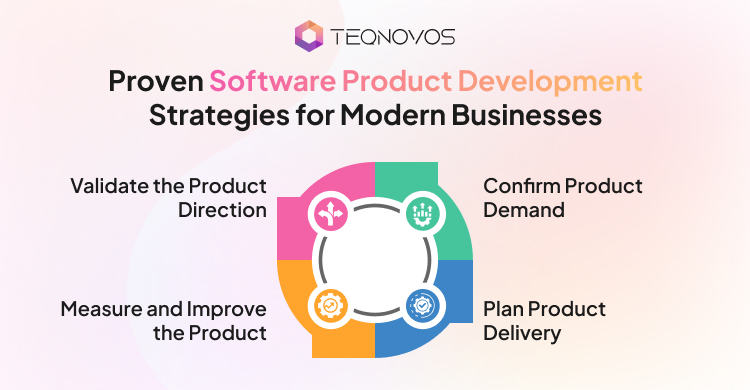
The best software product development strategies for 2026 connect customer needs with business goals and technical decisions. Each strategy reduces a different product risk. A clear software product development strategy also keeps product scope and delivery choices aligned with growth.
Phase 1: Validate the Product Direction
1. Define the User Problem
What it means
Product planning begins with a clear problem statement. Teams identify who faces the problem and how often it occurs. They also review how users manage the issue today.
Why it matters
A clear problem keeps development focused on real user needs. It also prevents teams from creating features based on assumptions.
What teams can do
- Define the affected user group
- Measure the impact of the problem
- Review current user solutions
- Connect every feature to the problem
2. Separate Users From Buyers
What it means
The product user may not control the purchase. An employee may use a platform while a manager approves the budget. Each person expects a different result.
Why it matters
Users often value speed and ease of use. Buyers focus on cost and security. They may also review compliance and business value.
What teams can do
- Identify the daily product user
- Identify the purchase decision maker
- Compare their needs and concerns
- Adjust product messaging for both groups
3. Create a Strong Value Proposition
What it means
A value proposition explains why users will choose the product over their current option. It describes the main improvement offered by the product.
Why it matters
Users need a clear reason to change their existing behavior. Generic claims rarely create interest or trust.
What teams can do
- Define the main product benefit
- Explain the result in simple language
- Compare the product with current options
- Test the message with target users
Phase 2: Confirm Product Demand
4. Use Real User Insights
What it means
Teams use customer interviews and prototype testing to guide product investment. Professional UI/UX design services can turn early ideas into prototypes that users can test. Search demand and pilot programmes can also reveal real user interest.
Why it matters
Real feedback shows which ideas deserve development. It also reveals features that users do not value.
What teams can do
- Interview target users
- Test early product designs
- Review sales and support questions
- Validate the highest risk assumption first
5. Set Clear Minimum Viable Product Boundaries
What it means
A minimum viable product or MVP is the smallest useful product version that tests the main business idea. It includes the core experience without every planned feature.
Why it matters
Clear boundaries protect the budget and launch timeline. They also make early feedback easier to understand.
What teams can do
- Define the main user journey
- Select only essential features
- List excluded features and integrations
- Set rules for new scope requests
Phase 3: Plan Product Delivery
6. Choose Between Building and Integrating
What it means
Not every product function needs custom development. Teams can build a feature or purchase an existing tool. They can also connect a third party service.
Why it matters
The right choice saves development time and protects the budget. It also keeps the team focused on features that create a competitive difference.
What teams can do
- Build features that create core value
- Buy tools for common business functions
- Use integrations for specialist capabilities
- Review cost and security before selection
7. Match Architecture With the Business Model
What it means
Technical architecture reflects how the product works and earns revenue. A subscription platform needs account controls. A usage based product needs reliable tracking and billing.
Why it matters
Architecture affects product performance and operating costs. It also shapes future updates and integrations.
What teams can do
- Define the revenue model early
- Map technical needs to pricing
- Review data and access requirements
- Avoid planning for unproven scale
8. Select the Right Team and Delivery Model
What it means
Product goals determine the right team structure. Businesses can use an internal team or a dedicated team. They can also use staff augmentation or full product outsourcing.
Why it matters
The delivery model affects speed and cost. It also affects control and access to specialist skills. Businesses that need scalable technical capacity can explore offshore software development services.
What teams can do
- Review available internal expertise
- Identify missing technical skills
- Compare delivery speed and costs
- Keep product ownership within the business
Phase 4: Measure and Improve the Product
9. Measure Product Outcomes
What it means
Completed features do not prove product success. Teams track how users interact with the product and the value they receive.
Why it matters
Product outcomes show which features create real results. They also guide future product investment.
What teams can do
- Measure user activation
- Track feature adoption
- Review customer retention
- Connect product activity with revenue
10. Plan for Work After Launch
What it means
Product development continues after release. Teams monitor performance and fix defects. They also review user feedback and support requests.
Why it matters
Post launch work keeps the product secure and reliable. It also reveals new customer needs and future growth opportunities.
What teams can do
- Monitor system performance
- Review user behavior
- Manage technical debt
- Plan future product improvements
These software product development strategies create a clear path from product planning to long term improvement. They keep teams focused on real customer needs and practical business goals.
Build a software product development roadmap that validates your idea and reduces development risks. Start Your Product Journey!
Schedule a CallHow AI Impacts Software Development Productivity in 2026
AI plays a wider role in software development. Teams use it to generate code and create tests. They also use it to prepare documentation and review technical work. Some businesses also add AI features to the final product. Each use requires clear goals and proper quality checks.
1. Development Uses
AI can speed up repetitive development tasks. It can draft code and suggest test cases. It can also summarize technical information. Teams still review every output before using it in a live product.
2. Output Quality
More generated code does not always mean better productivity. Weak output can increase debugging and review work. It can also create security risks and maintenance issues. Teams gain more value when AI reduces effort without lowering quality.
3. Key Metrics
Cycle time shows how quickly teams complete work. Review time measures the effort needed to check AI output. Defect rates reveal quality issues. Rework shows how often teams correct or rebuild generated code.
4. Process Strength
AI performs better within clear development workflows. Strong testing and code review practices reduce risk. Defined approval steps also protect product quality. AI can increase existing weaknesses when teams lack these controls.
5. Customer Value
Faster development only matters when the product remains useful and reliable. Businesses using AI software development services can connect AI adoption with clear customer outcomes. They can measure product quality and user value instead of code volume alone.
What Does Software Product Development Really Cost?
Software product development costs vary based on scope and technical complexity. Team location also affects the budget. Current market research places many custom software projects between $30,000 and $200,000. However, businesses planning an AI product can review this guide on AI SaaS product development cost.
| Product Type | General Cost Range |
| Basic MVP or internal tool | $30,000 to $60,000 |
| Mid complexity business platform | $60,000 to $150,000 |
| Complex custom software product | $150,000 to $300,000 |
| Enterprise or AI powered platform | $300,000 to $500,000 or more |
Common Strategic Mistakes That Weaken Software Products
Even strong software product development strategies can fail when teams make poor early decisions. These mistakes increase costs and delay releases. They can also weaken product value after launch.
1. Early Building
Teams sometimes begin development before confirming the customer problem. This creates features around assumptions instead of real demand. Customer interviews and prototype testing can reveal whether the idea deserves further investment.
2. Weak Scope
A minimum viable product is not a low quality final product. It is a focused version that tests the main product idea. Adding too many features increases cost and delays useful feedback.
3. Trend Choices
Popular technology does not always fit the product. Teams need to review business needs and technical limits first. Artificial intelligence also needs a clear customer purpose. Adding it only because it is popular creates more complexity.
4. Planning
Some teams design architecture for millions of users before proving demand. This raises development and infrastructure costs. Third party tools also require careful review. Usage limits and pricing changes can affect future growth.
5. Wrong Metrics
Release counts and completed tasks do not prove product success. Teams need product analytics that track activation and retention. They also need feature adoption and customer value data.
6. Endless Investment
Businesses sometimes continue funding a product after demand becomes weak. Falling usage and repeated sales objections can signal deeper problems. Leaders can review the strategy and revise the product before costs increase further.
Why Do Businesses Work With Product Development Partners?
A product development partner adds value when internal resources cannot meet product demands. The right partner brings technical expertise and delivery capacity without reducing business control.
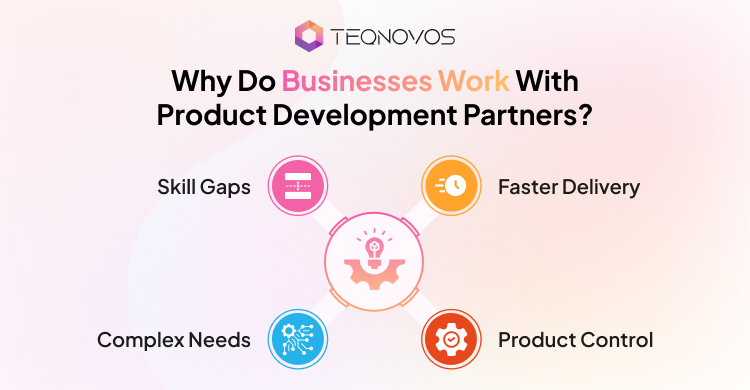
1. Skill Gaps
Businesses may lack specialists in architecture, security, AI, or system integration. A product development partner gives access to these skills without requiring full time internal hiring.
- Access specialist technical skills
- Fill urgent capability gaps
- Reduce long hiring cycles
- Strengthen technical decision making
2. Faster Delivery
Time to market matters when demand is growing. An experienced team can begin work faster and reduce delays linked to recruitment or onboarding. A dedicated software development team can also scale as product needs change.
- Start development sooner
- Add resources when needed
- Reduce delivery bottlenecks
- Maintain progress across key stages
3. Complex Needs
Some products require advanced security planning or complex integrations. Others need scalable architecture or artificial intelligence expertise. A specialist partner can manage these demands through clear delivery processes.
- Plan secure system architecture
- Manage complex integrations
- Handle advanced technical requirements
- Prepare the product for future growth
4. Product Control
The business still owns the product vision and major decisions. Internal leaders set priorities and approve scope changes. The partner manages delivery while the business retains strategic authority.
- Keep ownership of the product vision
- Approve scope and priority changes
- Retain control over key decisions
- Protect long term business goals
Validate your idea with a software product development roadmap built for success. Build With Confidence!
Schedule a CallConclusion
A strong product does not begin with a long feature list. It begins with a clear user problem and real market demand. Teams also need firm product boundaries and measurable goals. A focused software product development strategy connects these elements with technical planning and business growth.
Real user feedback and product data guide better decisions during development. They show which features deserve investment and which ideas need revision. Teams can then control scope and reduce avoidable costs. They can also improve the product after launch without losing its original purpose.
Work with Teqnovos to turn a clear product direction into a secure and scalable solution. Book your free consultation with us today!