



























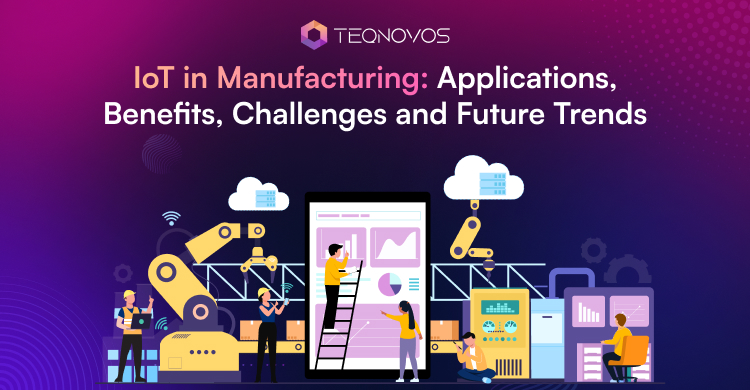
IoT in Manufacturing: Applications, Benefits, Challenges and Future Trends
The companies are leveraging the use of connectivity to make improvements in production visibility and quick decision making. IoT in Manufacturing involves connecting machines with software to extract information from the factory environment. The data is useful in knowing how the machines operate.
A smart factory uses connected systems to create more efficient and data driven operations. These systems combine analytics platforms and automation tools to improve how factories manage resources.
Modern manufacturers are investing in industrial connectivity because traditional processes often lack real time insights. Connected solutions allow businesses to monitor assets and build more flexible production environments.
This guide explains how IoT works in manufacturing. It covers key applications and future trends that companies need to consider before adopting connected solutions.
How Connected Manufacturing Systems Work
Manufacturing IoT systems connect machines and analytics tools to create a continuous flow of operational data. These systems collect information from production equipment and convert it into useful insights.
The process starts with sensors installed on machines and production assets. These sensors capture data such as equipment condition and operational performance. Edge devices then process important information closer to the equipment. This reduces delays and allows faster responses during production activities.
The collected data moves to cloud platforms where advanced analytics tools identify patterns and performance changes. Manufacturing teams can view this information through dashboards and use it to improve maintenance and resource management.
This connected approach forms the foundation of Industrial IoT in manufacturing. It allows factories to move beyond manual monitoring and build more responsive production environments.
Core Components Behind Connected Manufacturing Systems
Connected manufacturing systems combine hardware, software, and data platforms to create a connected factory environment. Each component plays a specific role in building effective IoT manufacturing solutions.
1. Smart Sensors and Devices
Sensors collect operational data directly from machines and production areas. They monitor factors such as equipment condition and energy usage. They also keep track of temperature and performance.
Key role:
- Captures real time machine data
- Tracks equipment health
- Supports condition monitoring
2. Connectivity Infrastructure
Connectivity allows devices and platforms to exchange data reliably. Industrial networks help maintain continuous communication across production environments.
Key role:
- Connects factory equipment
- Enables real time data transfer
- Supports large scale operations
3. Data Processing and Analytics Platforms
Data platforms process machine information and convert it into useful insights. Analytics tools help teams monitor performance and improve operational decisions. IoT app development helps companies create platforms that connect devices with users and operational systems.
Key role:
- Stores and analyzes production data
- Creates dashboards and reports
- Identifies performance patterns
4. Integration With Existing Factory Systems
IoT platforms become more valuable when connected with existing manufacturing and business systems. Integration with Manufacturing Execution System (MES) and Enterprise Resource Planning (ERP) platforms creates better data flow across operations.
Key role:
- Connects production and business systems
- Improves workflow visibility
- Supports scalable operations
A connected manufacturing system works through the combined use of devices and integrations. These components create the foundation for automation and smarter production processes.
Practical Ways Factories Use Connected Technologies
Manufacturers use connected technologies to improve production control, reduce operational issues, and create more data driven workflows. IoT applications in manufacturing allow factories to monitor equipment and improve processes through real information.
1. Predictive Maintenance for Equipment
Connected sensors monitor machine conditions and collect performance data continuously. This allows teams to identify unusual patterns before equipment failure occurs.
Key benefits:
- Tracks machine health in real time
- Helps plan maintenance activities
- Reduces unexpected production interruptions
2. Real Time Production Monitoring
IoT systems provide visibility into production activities across factory floors. Teams can monitor machine performance, production speed, and workflow progress through connected dashboards.
Key benefits:
- Improves production visibility
- Helps identify process delays
- Supports faster operational decisions
3. Automated Quality Inspection
Connected systems can improve quality control by collecting production data and monitoring product conditions. When combined with automation tools, these systems help identify defects and maintain consistent output quality.
Key benefits:
- Detects quality issues earlier
- Improves inspection accuracy
- Maintains consistent production standards
4. Inventory and Asset Tracking
Factories use connected devices to monitor the movement. They also keep track of the location of materials and equipment. This improves resource management and reduces time spent searching for assets.
Key benefits:
- Tracks inventory movement
- Improves asset visibility
- Supports better resource planning
5. Energy Management
Monitoring devices linked to one another provide insight into energy consumption by equipment and various manufacturing zones. This way, people can analyze consumption trends and find ways to use resources more efficiently.
Key benefits:
- Monitors energy consumption
- Identifies inefficient processes
- Supports better resource management
These applications show how manufacturing automation with IoT goes beyond machine connectivity. Connected systems help factories create more responsive operations. Teams can monitor performance and make informed decisions using data.
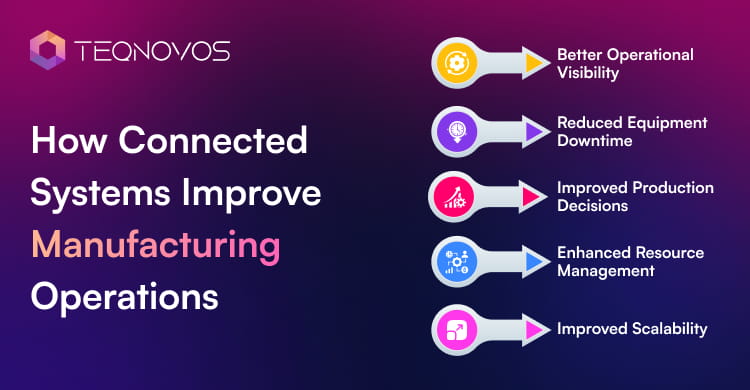
How Connected Systems Improve Manufacturing Operations
Businesses get increased control of the management process through the analysis of machine data. Using Smart manufacturing with IoT, businesses can switch from manual observation to more connected systems.
1. Better Operational Visibility
Connected systems provide a clear view of factory activities through real time dashboards and monitoring tools. Managers can track equipment performance and operational changes without relying only on manual checks.
2. Reduced Equipment Downtime
The IoT based monitoring system helps the manufacturers get insight into machine performance and identify any early warning signals. Maintenance planning can be done depending on the condition of the machinery.
3. Improved Production Decisions
The manufacturers produce massive amounts of operational data through interconnected systems. The analytics software enables the teams to analyze this data and make the right decisions regarding manufacturing.
4. Enhanced Resource Management
Connected solutions help factories monitor how they use resources such as energy and equipment. This visibility allows teams to identify inefficient processes and improve overall resource utilization.
5. Improved Scalability
A connected manufacturing system creates a flexible foundation for future growth. Businesses can expand monitoring capabilities and integrate additional equipment. They can even add new technologies without rebuilding their entire infrastructure.
Build Smarter Manufacturing Solutions With IoT. Transform Your Factory With Connected Technology!
Schedule a CallIoT vs IIoT: Understanding the Difference for Industrial Use
These terms can be confused by many as the same. However, they have their own applications and uses. IoT mainly deals with connectivity among devices within an individual or business environment. On the other hand, IIoT works in industrial environments.
| Aspect | IoT | Industrial Internet of Things (IIoT) |
| Primary Focus | Connects everyday devices to collect and share data | Connects industrial equipment and systems to improve operations |
| Common Applications | Smart homes, wearable devices, and consumer applications | Smart factories, machine monitoring, and industrial automation |
| Connected Devices | Personal devices and general purpose equipment | Manufacturing machines, sensors, and industrial systems |
| Main Purpose | Improves convenience and user experience | Improves production efficiency, safety, and operational control |
| Data Usage | Supports basic monitoring and user focused insights | Supports real time analysis and business decisions |
| Performance Requirements | Designed for regular connectivity needs | Requires high reliability, scalability, and continuous operation |
| Security Requirements | Focuses on device and user data protection | Requires advanced protection for critical industrial systems |
For manufacturers, Industrial IoT in manufacturing provides operational value. It connects production assets with analytics platforms and business systems. This allows factories to monitor equipment performance and build responsive production environments.
Important Factors to Consider Before Starting an IoT Project
Deploying connected technologies needs more than installing sensors and collecting data. Manufacturers need a clear strategy. They need to ensure the system solves real operational problems and delivers value. A strategic IoT implementation approach helps businesses create reliable and scalable solutions.
1. Define Business Goals First
Manufacturers identify the operational problems they want to solve before selecting any technology. Clear goals help teams choose the right use cases and measure the success of their connected systems.
Key considerations:
- Identify production challenges
- Select measurable improvement areas
- Prioritize use cases with clear business value
2. Review Existing Infrastructure
Many factories operate with a mix of modern and legacy equipment. Before deployment, businesses need to evaluate the existing machines. They need to check if they can connect with new IoT platforms.
Key considerations:
- Check machine connectivity options
- Review existing software systems
- Plan integration with current operations
3. Plan Data Management Strategy
Devices generate large volumes of operational data. Manufacturers need a clear approach for collecting and storing this information.
Key considerations:
- Define what data needs to be collected
- Select suitable storage and processing methods
- Establish data access and usage rules
4. Consider Security Requirements
Connected factory systems can create new security risks if not protected. Security needs to be included during the early stages of development. It should not be treated as a later step.
Key considerations:
- Protect connected devices and networks
- Control system access
- Monitor potential security issues
5. Build a Scalable Architecture
A manufacturing IoT system should support future growth. Businesses may need to connect more machines and add new features. They also need to integrate additional platforms as their requirements change. Custom software development can help create applications that match specific operational requirements.
Key considerations:
- Plan for future expansion
- Select flexible technologies
- Support integration with other manufacturing systems
IoT solutions for manufacturing, there must be a harmonious blend of technology and manufacturing considerations. Planning is key in ensuring that manufacturers do not run into common problems during implementation.
Common Challenges When Adopting IoT in Manufacturing
Implementing connected systems requires more than adding new devices to a factory. Manufacturers need to manage technical limitations and operational changes. Understanding these challenges helps businesses prepare better before starting an IoT project.
1. Connecting Legacy Equipment
Many manufacturing facilities still operate with older machines that lack built in connectivity features. Integrating these assets with modern IoT platforms can require additional hardware or custom integration approaches.
Impact:
Disconnected equipment can limit data visibility and reduce the effectiveness of connected solutions.
Recommended approach:
Manufacturers need to evaluate existing infrastructure. They also need to identify suitable connectivity options before deployment.
2. Protecting Connected Systems
IoT environments connect machines and software platforms. This creates more points that require protection against unauthorized access and security issues.
Impact:
Poor security practices can affect sensitive operational data and connected production systems.
Recommended approach:
Businesses need to include security planning during development. They need to provide proper access controls and monitoring practices.
3. Managing Large Volumes of Data
Connected machines continuously generate operational information. Without a proper data strategy, manufacturers may collect more data than they can effectively analyze.
Impact:
Unorganized data can make it difficult to identify useful insights and improve decision making.
Recommended approach:
Define the data to be used and how it will be processed further. Companies also need to tell teams how to use data insights.
4. Maintaining Reliable Connectivity
Operations depend on continuous communication between machines and software systems. Network issues can affect monitoring and automated processes.
Impact:
Unstable connectivity can create delays and reduce system reliability.
Recommended approach:
Manufacturers should select suitable connectivity solutions and design systems that can handle operational requirements.
5. Helping Teams Adapt
Connected systems change how employees monitor equipment and make decisions. Businesses may not receive the full value of their investment if they are not adopting it properly.
Impact:
Limited understanding of new tools can slow down adoption. It also reduces productivity improvements.
Recommended approach:
Organizations provide training and involve employees during the implementation process.
A successful Industrial IoT in manufacturing strategy requires attention to technology and people. Addressing these challenges early helps manufacturers create connected systems that are secure and easier to scale.
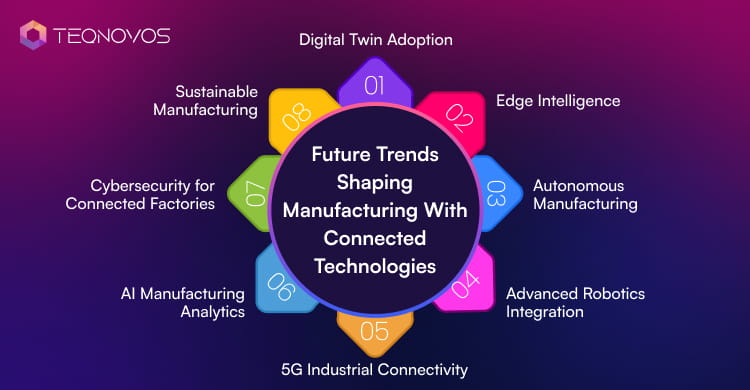
Future Trends Shaping Manufacturing With Connected Technologies
Manufacturing is moving toward more intelligent and connected operations. Factories collect data from machines and production systems. These developments are shaping the future of Industrial IoT in manufacturing and creating more adaptive production environments. Connected technology is expanding across industries beyond manufacturing. Similarly, the IoT in healthcare approach helps support remote monitoring and better data management.
1. AI Manufacturing Analytics
AI helps in analyzing large volumes of operational data. It assists in identifying patterns that may not be visible through manual monitoring. AI analytics can support equipment performance analysis and production planning. Businesses can combine IoT data with AI solutions to identify patterns and improve operational decisions.
Key impact:
- Identifies performance trends
- Supports faster operational decisions
- Improves predictive analysis
2. Digital Twin Adoption
Generates virtual representations of physical machines and factory environments. Manufacturers can use these models to test improvements. They also optimize processes before making changes to real operations.
Key impact:
- Improves process planning
- Supports virtual testing
- Helps optimize factory performance
3. Edge Intelligence
Edge computing allows data processing closer to the source where information is generated. In manufacturing environments, this helps connected devices process important data faster before sending it to central platforms.
Key impact:
- Enables faster responses
- Reduces unnecessary data transfer
- Supports real time monitoring
4. Autonomous Manufacturing
Connected systems combined with AI and automation are moving factories toward more autonomous operations. These systems can monitor processes and improve workflows with limited manual intervention.
Key impact:
- Improves process consistency
- Supports automated decision making
- Increases operational flexibility
5. Advanced Robotics Integration
Robotics is becoming more connected with manufacturing platforms. When combined with sensors and analytics systems, robots can perform tasks with improved accuracy. They also share valuable operational data with other factory systems.
Key impact:
- Improves production efficiency
- Supports complex manufacturing tasks
- Enables better human machine collaboration
6. 5G Industrial Connectivity
Reliable connectivity is becoming more important as factories connect more machines and devices. 5G technology can support faster communication. It also supports lower latency for connected manufacturing environments that require quick data exchange.
Key impact:
- Improves device communication speed
- Supports large scale connectivity
- Enables responsive automation systems
7. Sustainable Manufacturing
Manufacturers are using connected systems to monitor energy usage and production efficiency. IoT based monitoring can help businesses identify waste and improve resource management. Healthcare monitoring systems using IoT assist in connecting devices and support remote care workflows.
Key impact:
- Tracks energy consumption patterns
- Helps identify inefficient processes
- Supports sustainable operations
8. Cybersecurity for Connected Factories
It has become an essential part of IoT adoption as manufacturing systems become more connected. Businesses need stronger protection strategies to secure devices and operational data.
Key impact:
- Protects connected infrastructure
- Reduces security risks
- Supports safer IoT adoption
Future manufacturing environments rely on the combination of connectivity and secure digital systems. These technologies will continue to expand the role of IoT in Manufacturing. They help businesses create smarter and more efficient production operations.
Transform Manufacturing Operations With Connected Technology. Build Your Industrial IoT Solution!
Schedule a CallConclusion
IoT in Manufacturing is helping factories create more connected and efficient operations. Manufacturers can improve monitoring and automate processes. This helps them make better decisions with data. A reliable IoT approach allows businesses to build scalable systems. This supports future growth and changing production needs.
Teqnovos helps businesses build scalable IoT solutions for manufacturing. They align with their operational goals and future growth plans. Book your free consultation call with us to get started.