



























DPDP Implementation Roadmap for Software Companies: A Practical Guide
Software companies need more than policy updates to prepare for the Digital Personal Data Protection Act 2023 (DPDP Act). They need clear technical changes across products and data workflows. A DPDP Act implementation roadmap gives teams a structured way to plan those changes in the right order.
The roadmap connects privacy requirements with product architecture and engineering workflows. It also covers data collection and consent management along with access controls and retention rules. Software teams also need to review databases and APIs. They need to assess cloud infrastructure and third party integrations that process personal data.
This guide explains how software companies can move from compliance planning to practical implementation. It shows how teams can identify data flows and define technical controls. It also explains how they can test those controls and maintain implementation evidence as products continue to evolve.
What Makes a DPDP Roadmap Different From a Compliance Checklist?
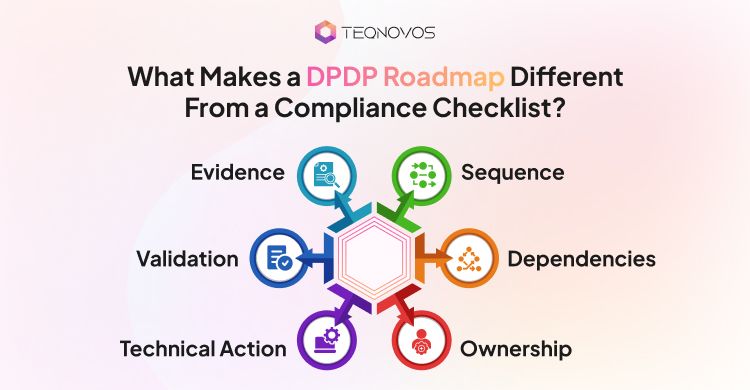
A compliance checklist shows what a software company needs to review. A roadmap turns those requirements into an ordered execution plan. A DPDP implementation roadmap also connects each task with ownership and technical dependencies.
A practical roadmap defines:
- Sequence: It shows which activities need to happen first. Data discovery needs to happen before teams design reliable deletion workflows.
- Dependencies: It identifies tasks that rely on earlier work. Consent controls depend on clear purpose mapping and known processing activities.
- Ownership: It assigns responsibility across product and engineering and security and compliance teams.
- Technical Action: It converts compliance requirements into specific product and system changes.
- Validation: It defines how teams test each control after implementation.
- Evidence: It identifies the records that prove a control worked as intended.
For organizations that need structured support during this process, DPDP implementation services can help translate regulatory requirements into practical workflows. These services focus on aligning privacy requirements with existing software architecture and operational processes.
Phase 1: Define DPDP Roles and Product Boundaries
The first phase of DPDP compliance for software companies is not technical implementation. It is role and scope definition. A software company needs to identify why it processes each category of personal data and whose instructions control that processing. This prevents engineering teams from building controls around an incomplete view of responsibility.
The Digital Personal Data Protection Act uses three important roles. A Data Fiduciary decides why and how personal data is processed. The Data Processor handles personal data on behalf of a Data Fiduciary. On the other hand, the Data Principal is the individual to whom the personal data relates.
Software companies can hold different roles across different processing activities.
- Customer-controlled data: A Software as a Service provider may process customer records under the instructions of its business customer. The provider can act as a Data Processor for that activity.
- Account data: The company may decide how it uses registration details and login information to operate its own platform. This activity can place the company in the Data Fiduciary role.
- Employee data: Human resources records and payroll information create a separate processing purpose that needs its own ownership.
- Marketing data: Newsletter subscriptions and campaign records need clear purpose ownership. Teams also need to know which business function controls the processing decision.
- Product analytics: Usage events can create another processing activity when they contain personal data or can be linked to an individual.
- Processor activities: Teams need to separate processing performed for customers from processing performed for the company itself.
The output of this phase is a clear responsibility map. It identifies each processing activity and the related role. It also assigns an internal owner before technical implementation begins.
Phase 2: Map Personal Data Across the Software Architecture
After defining roles and processing boundaries, a software company needs to identify every place where personal data enters the product and every system that receives or stores it. This phase of the DPDP Act implementation roadmap creates a technical view of the full data footprint. It also exposes hidden copies that may sit outside the primary application database.
The mapping process needs to cover:
- Collection points: Forms and account registration flows and support requests can introduce personal data into the product.
- Application Programming Interfaces: They can transfer personal data between internal services and external platforms.
- Backend services: Processing logic can copy or transform personal data before sending it to another system.
- Databases and replicas: Primary databases may hold the main record while replicas create additional stored copies.
- Caches and object storage: Temporary caches and file storage can retain personal data outside standard database tables.
- Analytics and data warehouses: Product events and reporting pipelines can create separate datasets linked to individual users.
- Logs: Application logs can capture identifiers or request data without teams intentionally treating them as personal data stores.
- Third party tools: Payment platforms, communication services, and analytics providers can receive data through integrations.
- Testing environments: Development or staging systems can contain personal data when teams copy production datasets.
- Exports and backups: Downloaded files and archived copies can remain after the live record changes or disappears.
The technical output is a usable personal data inventory. Each record can identify the data category and processing purpose. This inventory becomes the reference point for later implementation work. It shows where controls need to operate instead of assuming that personal data exists in one system only.
Phase 3: Convert DPDP Requirements Into Engineering Work
Once teams know their processing roles and data flows, they can convert legal obligations into technical work. This stage of DPDP Act compliance implementation uses privacy engineering. Privacy engineering means translating privacy requirements into product behavior and system controls that developers can build and test.
Each requirement needs a clear path from legal intent to technical execution.
- DPDP requirement: Define the obligation that affects the product. This can involve consent withdrawal or breach response.
- Product behavior: Describe how the application needs to respond. A withdrawn consent state may need to stop a specific processing activity.
- Engineering control: Convert the expected behavior into a development task. Teams may need a consent status service or a role based permission check.
- Validation method: Define how testers will confirm that the control works. A test can check if a deleted record disappears from every connected system covered by the workflow.
- Evidence record: Decide what record will show that the control operated. This can include system events or approval records.
Teams can then group these requirements into engineering workstreams. The final output is a technical implementation backlog. Each item has a defined requirement and expected product behavior. It also has an owner and validation method. This structured approach makes DPDP compliance implementation more practical by giving engineering teams executable work.
Phase 4: Build Purpose and Consent Into Product Workflows
Consent controls actual processing, not remain a checkbox or stored response. A DPDP implementation guide links consent to a specific processing purpose, and tracks changes to that permission.
A reliable workflow records:
- Processing purpose: The system links consent with the specific activity that relies on it. This prevents one consent record from being treated as permission for unrelated processing.
- Notice version: The product records which privacy notice the user saw before providing consent. This gives teams a reference when notices change over time.
- Consent status: The system maintains a clear state such as active or withdrawn. Backend services can use this state before starting consent dependent processing.
- Timestamp: The platform records when the user provided or withdrew consent. This creates a chronological record of the decision.
- Collection source: The consent record identifies where the decision originated. This could be an account flow or another approved interaction point.
- Withdrawal event: A withdrawal needs to trigger product logic instead of only updating a database field. The application can publish an event that tells connected services that the previous permission no longer applies.
- Downstream processing state: Services that depend on the original consent need to receive the updated state. Marketing automation or analytics workflows cannot continue using an outdated permission signal.
- Consent evidence: The system retains enough information to show what the user agreed to and when the decision occurred. It also records later changes to that state.
After withdrawal, teams must identify dependent services and confirm that processing has stopped. This makes consent an enforceable product control rather than a passive record.
Phase 5: Engineer Data Principal Rights Into the Product
A DPDP compliance roadmap needs to turn Data Principal rights into workflows that software systems can process and track. A Data Principal is the individual whose personal data is being processed. The workflow needs to move each request through defined system actions.
A rights workflow can include:
- Request intake: The product captures the request through an approved channel and creates a trackable case.
- Identity verification: The system confirms the requester before exposing or changing personal data.
- Request routing: The case moves to the teams or systems that hold the relevant information.
- Data retrieval: Connected systems locate records linked to the verified individual.
- Correction workflow: Approved changes update relevant records across connected systems.
- Erasure request: The workflow sends deletion instructions to systems covered by the request.
- Status tracking: The product records each action and current request stage.
- Completion evidence: Logs show which systems completed the required action.
- Exception handling: Teams record cases that cannot follow the standard workflow and document the reason.
This structure turns an individual request into a controlled process that teams can trace from submission through completion.
Phase 6: Control Retention and Deletion Across the Data Lifecycle
Effective DPDP Act compliance implementation needs to control how long personal data remains across every system. Deleting a record from the primary database may leave copies inside replicas, caches, analytics stores, and archives.
Software teams need a defined data lifecycle for each category of personal data.
- Retention schedules: Set approved storage periods based on purpose and operational need.
- Deletion jobs: Trigger removal when the retention period ends or another valid deletion condition applies.
- Connected systems: Extend deletion logic to replicas and exported files.
- Archives and backups: Apply documented retention rules so historical copies do not remain indefinitely.
- Deletion confirmation: Record whether each connected system completed the required action.
Deletion orchestration means coordinating removal across systems that hold related copies of the same personal data. This process gives teams a controlled way to manage data expiry across the full software environment.
Phase 7: Apply Security Safeguards Across the Application Stack
Strong DPDP compliance for software companies requires security controls that protect personal data at every technical layer. The focus is not on generic cybersecurity. Each control needs to reduce a specific exposure risk within the application.
Key safeguards include:
- Identity and Access Management: Controls who can access systems that store personal data.
- Role based access: Permissions limit users to the data required for their assigned responsibilities.
- Encryption: Protects personal data while stored and while moving between systems.
- Secret management: Managed secrets reduce exposure of database credentials and API keys.
- API security: Authentication and authorization protect personal data exchanged through Application Programming Interfaces.
- Database protection: Access policies and audit logs restrict sensitive records.
- Environment isolation: Development and testing systems remain separated from production data.
- Monitoring: Security events reveal unusual access or data movement.
- Incident detection: Alerts help teams identify possible personal data exposure quickly.
These DPDP security safeguards connect privacy requirements with real application risks and help teams protect personal data across the software stack.
Phase 8: Control Processors and Third Party Data Flows
A DPDP implementation roadmap also needs to cover personal data that leaves the company controlled application stack. Software companies often depend on external providers for hosting and customer communication. Each dependency creates another processing path that teams need to understand.
A processor review can cover:
- Cloud providers: Identify what personal data the platform stores or processes.
- Analytics tools: Check which user identifiers and events move into external platforms.
- Payment systems: Map the customer data shared during transaction processing.
- Support tools: Review data transferred through tickets and chat systems.
- External APIs: Track personal data sent through third party integrations.
- Subprocessors: Identify additional providers involved in the processing chain.
- Processor contracts: Define processing scope and security duties and deletion responsibilities.
- Vendor exit: Plan how personal data will be returned or deleted when the relationship ends.
This phase makes external data flows visible and manageable.
Build a DPDP-Ready Software Ecosystem With Expert Guidance. Turn DPDP Requirements Into Action!
Schedule a CallIntegrate DPDP Controls Into the Software Development Life Cycle
DPDP compliance can weaken when product changes create new personal data flows. Software companies embed privacy checks throughout the Software Development Life Cycle (SDLC). This makes privacy review part of normal delivery rather than a separate compliance exercise.
1. Requirements Review
Identify if a feature collects or uses personal data. Document the purpose of processing and the expected users or systems that will access it.
2. Architecture Review
Map data entry points, storage locations, and access paths. Confirm that data flows are necessary and limited to approved systems and users.
3. Development Standards
Define approved practices for collecting and transmitting personal data. Include requirements for data minimization and secure deletion.
4. Code Review
Check for unnecessary collection and personal data in logs. Review error handling and third-party service calls for privacy risks.
5. Privacy Testing
Verify that features follow approved requirements and enforce relevant user rights. Test access controls and deletion processes. Also check retention rules and data export functionality where applicable.
6. Pre-Release Checks
Confirm that privacy requirements are complete before deployment. Document and escalate unresolved issues. Define remediation timelines before approving the release.
7. Deployment Governance
Record privacy-relevant configuration changes and link them to approved release documentation. Ensure production settings match the reviewed design and logging controls.
8. Post-Release Monitoring
Detect unexpected data flows or behavioral changes. Review alerts and operational metrics to identify privacy issues after deployment.
9. Change Review
Reassess major updates that introduce new purposes or integrations. Repeat the privacy review when changes materially affect how personal data is collected or deleted.
This lifecycle approach keeps the DPDP Act implementation roadmap current as products evolve. It also provides a repeatable method for evaluating the DPDP Act impact on software development, supporting accountability and timely remediation throughout future releases.
Build Evidence That Shows the Controls Operated
A DPDP compliance roadmap needs records that show what happened after a privacy control was implemented. Policies describe intended practice. Evidence shows real execution across systems and teams.
Operational Evidence
Operational evidence records actions performed by software systems or internal teams. It gives reviewers a clear history of how privacy controls worked during normal operations.
- Consent records: Store consent status and withdrawal history.
- Deletion logs: Record when deletion workflows ran and which systems completed the action.
- Rights records: Track access and correction and erasure requests through each workflow stage.
- Access records: Show who received permission to view or manage personal data.
Governance Evidence
Governance evidence connects technical activity with internal oversight. It shows that changes and external dependencies received appropriate review.
- Processor records: Document approved vendors and their defined processing purpose.
- Release approvals: Link privacy related changes with reviewed software releases.
- Security records: Capture alerts and investigations related to possible personal data exposure.
- Incident records: Document response actions and ownership when a privacy incident occurs.
These records create a traceable implementation history. Teams can use that history during internal reviews instead of rebuilding evidence after an issue appears.
How to Prioritize DPDP Implementation Work
A large implementation backlog can contain technical changes and workflow updates. Effective DPDP Act compliance implementation needs a clear priority order. Teams can rank work by privacy exposure and system dependency.
Start With Higher Risk Processing
Teams can first identify systems that create greater privacy exposure. Personal data sensitivity and processing volume can influence priority. User facing workflows also deserve early attention when a failure could affect consent or erasure. Missing controls usually require faster action than improvements to safeguards that already work.
Identify Technical Dependencies
Some implementation tasks need to happen before others can begin. A deletion workflow may depend on complete data mapping. Consent controls may depend on clear purpose mapping. Changes that affect several services or databases also need early coordination. This prevents one unfinished dependency from blocking later phases.
Account for Delivery Complexity
Legacy architecture can increase implementation effort. External processors can also affect delivery when changes depend on third party systems. Teams need to consider development effort and validation requirements before setting timelines.
Build the Execution Order
The final priority sequence can combine privacy risk with technical dependency and implementation effort. This gives teams a practical order for moving high impact work forward without creating avoidable delivery bottlenecks.
DPDP Act Implementation Roadmap for Software Companies
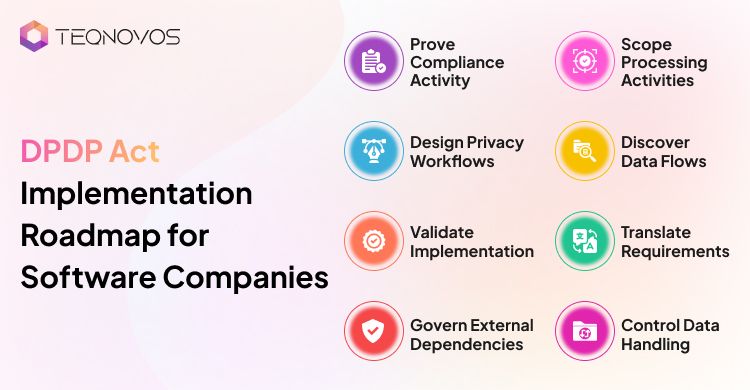
A complete DPDP Act implementation roadmap follows a structured sequence. Each phase prepares the foundation for the next step. This approach helps software companies move from identifying privacy requirements to building and maintaining working controls.
A DPDP compliance checklist for software development companies can help teams review important implementation areas before starting execution. However, the checklist works best when combined with a structured roadmap.
1. Scope Processing Activities
Define which personal data processing activities fall within the implementation scope. Identify responsible teams and clarify whether the company acts as a Data Fiduciary or Data Processor for each activity.
2. Discover Data Flows
Map where personal data enters the software environment and where it moves. Identify databases, integrations, storage locations, and other systems that process personal data.
3. Translate Requirements
Convert DPDP obligations into technical requirements. A DPDP implementation guide helps teams define product behavior, engineering tasks, and validation methods needed for each privacy requirement.
4. Design Privacy Workflows
Build product workflows for consent and user rights. Ensure applications can manage consent changes, correction, or deletion processes.
5. Control Data Handling
Implement controls across the data lifecycle. Manage retention and security safeguards across applications and connected systems.
6. Govern External Dependencies
Review processors and third party integrations and software changes. Maintain visibility into external data flows and future product updates.
7. Validate Implementation
Test whether privacy controls work as intended. Verify system behavior and confirm that implemented workflows meet defined requirements.
8. Prove Compliance Activity
Maintain records that demonstrate implementation progress. Store evidence such as consent records and review documentation.
This sequence gives software teams a practical path for managing DPDP requirements without treating compliance as a one time activity.
Need a Clear Path to DPDP Implementation? Turn Compliance Into Action!
Schedule a CallConclusion
A successful DPDP implementation approach requires more than documenting privacy policies. Software companies need to connect regulatory requirements with product behavior and technical controls. A clear DPDP Act implementation roadmap helps teams organize privacy activities and align product decisions with data protection requirements.
The right approach combines data visibility and continuous validation. It allows teams to understand where personal data moves and how implemented controls perform over time. Companies can use a DPDP implementation guide to align product teams and compliance teams around practical privacy workflows.
Teqnovos helps businesses plan and implement DPDP support. Translate compliance requirements into practical technical actions with us.