
- Hire a Developer
 Android Developers
  iOS Developers
  Angular Developers
  DevOps Developers
  Laravel Developers
  MEAN Stack Developers
  MERN Stack Developers
  NestJS Developers
  NodeJS Developers
  NextJS Developers
  NuxtJS Developers
  Python Developers
  ReactJS Developers
  VueJS Developers
  WordPress Developers
  Shopify Developers
  BigCommerce Developers
  Salesforce Developers
 - AI Development
- Industries








Get in Touch
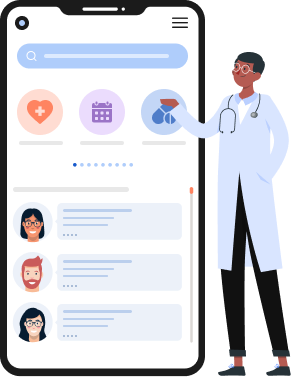
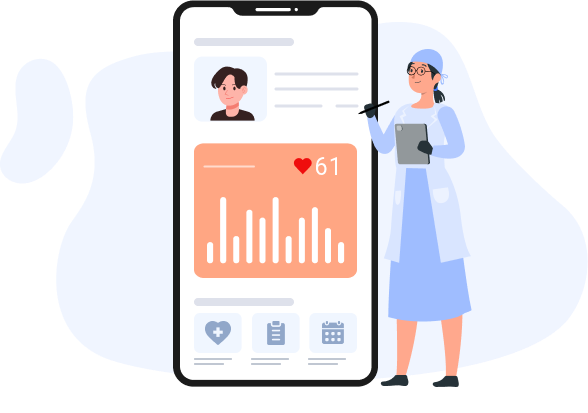
The Foundation Behind Successful Healthcare Software Products
Healthcare software product development starts with understanding a problem and creating a solution around real user needs. The process involves planning and designing. It also involves developing and improving software that fits healthcare workflows through healthcare app development services.
Healthcare products differ from regular software because they handle sensitive information and operate in complex care environments. Teams need to consider compliance and system integration during development.
Healthcare product development can involve solutions such as telehealth platforms, electronic health record systems, remote monitoring software, and patient engagement applications. Each product requires a different approach based on its users and operational requirements.
Common Healthcare Software Products Businesses Build
Healthcare software products are designed around specific healthcare needs. Each solution requires the right workflows and features to support healthcare operations.
Patient Payment Systems
Simplifying financial workflows with a patient payment system. It manages bills, deductibles, and online payments. Keeps payment details visible for patients and supports smoother workflows for healthcare providers.
- Patient balance tracking
- Copay and deductible payments
- Online payment collection
- Payment plan management
Remote Patient Monitoring Systems
Extend care beyond the clinical setting with remote patient monitoring software. It assists in collecting health data through connected devices. This allows care teams to track patient conditions and manage care.
- Connected device integration
- Health data tracking
- Patient monitoring dashboards
- Alert management
Healthcare Interoperability Solutions
Connect fragmented healthcare systems with healthcare interoperability solutions. Secure data exchange between different platforms. This improves communication through a structured and data integration approach.
- EHR and EMR connectivity
- HL7 and FHIR data exchange
- Data mapping
- Secure information sharing
Electronic Health Record Systems
Create organized patient data access to manage digital patient information across healthcare workflows. Modern platforms may require electronic medical record modernization to improve data access and system performance.
- Patient record management
- Clinical documentation
- Provider workflows
- Secure data access
Telehealth Platforms
Improving remote care delivery with virtual consultations between patients and healthcare professionals. These solutions require telehealth EHR integration to connect virtual care with existing healthcare workflows.
- Video consultations
- Appointment scheduling
- Patient communication
- Digital prescriptions
Patient Engagement Applications
Strengthening patient relationships with a patient engagement application to improve communication between healthcare providers and patients. It supports reminders and better participation in ongoing care activities.
- Appointment reminders
- Secure messaging
- Health tracking
- Patient notifications

1

2

3

4

5

6

7

8
Build a Healthcare Product Ready for Future Needs
Turn your healthcare software product development solution idea into a secure and scalable solution with a structured development approach.
How Healthcare Software Supports Sustainable Development Goals
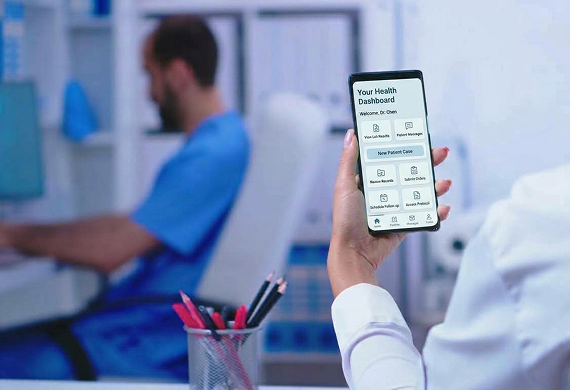
Healthcare software plays an important role in digital healthcare transformation. Sustainable development goals in healthcare depend on how products are designed, developed, and integrated into healthcare systems.

Better Access
Digital healthcare solutions can reduce barriers to care by improving access through telehealth, remote monitoring, and patient engagement tools. These approaches support more inclusive healthcare experiences.

Remote Care
Remote healthcare solutions allow providers to monitor patients outside traditional settings. They support continuous care management and contribute to sustainable development goals healthcare through better availability.

Health Equity
Inclusive software design considers different user needs, accessibility requirements, and healthcare challenges. These principles support sustainable development goals in healthcare by creating more equitable digital care experiences.

Product Longevity
Sustainable software requires scalable architecture, flexible design, and regular improvements. A strong healthcare product development approach helps products adapt to changing healthcare needs.

Data Flow
Connected healthcare systems improve information exchange between platforms. Healthcare interoperability reduces data gaps and supports more efficient healthcare operations through better data availability.

Resource Efficiency
Digital healthcare products can reduce manual processes and improve workflow efficiency. Better system design helps healthcare teams manage resources and deliver more coordinated services.

Future Ready
Sustainable healthcare software focuses on long term usability, maintenance, and adaptability. Products built with future needs in mind can continue supporting healthcare goals as requirements change.
Why Choose Teqnovos for Healthcare Software Product Development?
Teqnovos works with businesses that need clear product strategy and reliable execution. The team focuses on user needs and product workflows. Their approach to healthcare software product development services combines planning and support for modern solutions.
Strong understanding of healthcare product workflows
Experience with patient facing and provider facing platforms
Practical approach to digital health product planning
Focus on usable and scalable healthcare solutions
Clear product discovery for faster decision making
Support for feature planning and roadmap definition
Structured approach to MVP planning and scope control
Better alignment between business goals and product direction
Early attention to healthcare compliance requirements
Support for secure data handling and access control
Product planning that considers privacy and risk areas
Clear focus on responsible healthcare software delivery
Experience with connected healthcare platform workflows
Support for EHR, EMR, and third party integrations
Practical planning for interoperability requirements
Long term support for product improvements and scaling
Build a Secure Healthcare Software Product Ready for Future Growth
Teqnovos delivers healthcare software product development services with secure planning and design approaches. Build scalable healthcare product development solutions aligned with modern healthcare needs.
Build Compliance Into Healthcare Software Development
Protecting healthcare data and workflows, compliance planning plays an important role in healthcare product development solutions. Healthcare products do not follow one universal compliance path. Requirements depend on the users and target market. A strong healthcare software product development solutions approach considers these requirements early to reduce risks and support smoother product delivery.
Define Requirements
Teams need to identify the compliance needs before building the software. The right approach depends on how the product will be used.
- Data privacy controls
- Secure data storage
- Encrypted communication
- Controlled information sharing
Manage Access
Healthcare platforms need clear access rules to ensure users can only view information related to their responsibilities. Proper access management improves security and accountability.
- Role based access control
- User authentication
- Permission management
- Session security controls
Maintain Records
Audit trails help healthcare teams track important actions within software systems. They support better monitoring and improve visibility into system activity.
- User activity tracking
- Data access records
- System change history
- Security event monitoring
Consider Regulations
Different products may need to follow different regulations based on their purpose and level of risk. Early planning reduces compliance challenges later.
- Health Insurance Portability and Accountability Act considerations
- General Data Protection Regulation requirements
- Food and Drug Administration guidelines, where applicable
- Software as a Medical Device classification needs
Healthcare Product Design and Development Approach
Healthcare product design focuses on building experiences that fit real workflows and meet the needs of patients and administrators. A strong healthcare product design and development approach balances usability and operational requirements. A user focused approach can be seen in healthcare application development, where product usability and workflow planning shape the final experience.

User Focus
Healthcare products serve different user groups with different goals. Patient applications need simple journeys, while clinical platforms require efficient workflows for healthcare professionals.
- Patient focused experiences
- Clinician friendly workflows
- Role based user journeys
- Clear information presentation

Workflow Design
Healthcare software needs to support real world processes instead of adding unnecessary complexity. Understanding clinical workflows helps teams create products that fit daily healthcare operations.
- Workflow mapping
- Task based navigation
- Reduced manual steps
- Better decision support

Accessible Experience
Accessibility plays an important role in healthcare product adoption. Products need to consider different user abilities. They also must create experiences that are easy to understand for the users.
- Simple interface design
- Readable information layouts
- Support for diverse users
- Better digital accessibility

Error Prevention
Healthcare software needs to reduce mistakes during tasks. Clear design choices can help users complete actions with better accuracy and confidence. This approach improves workflow reliability.
- Clear user guidance
- Validation checks
- Confirmation steps
- Consistent interactions
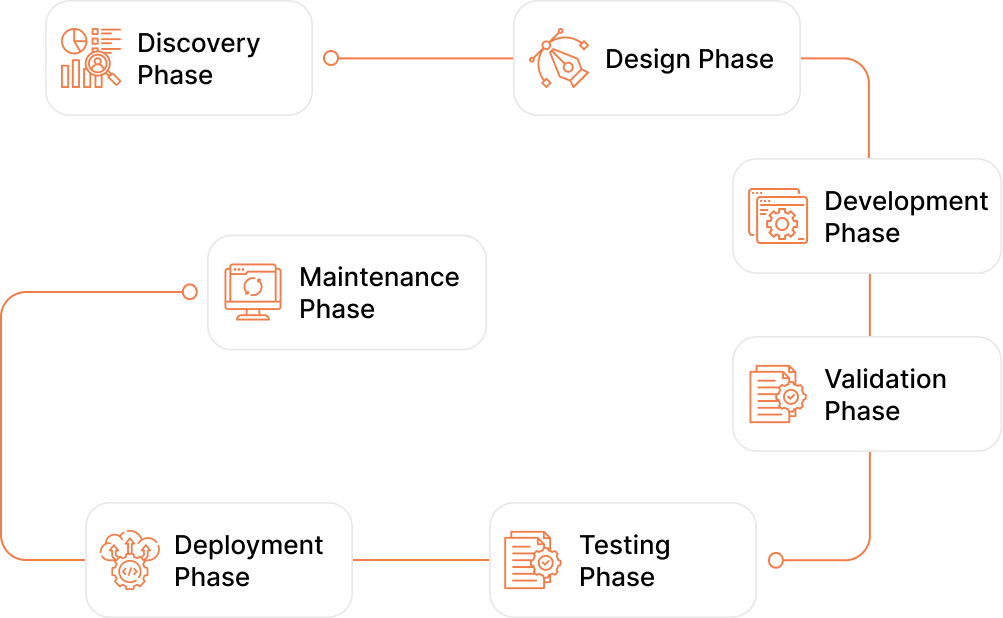
Discovery Phase
Define the foundation, start with identifying the main healthcare problem and product goals before the development starts. Analyze workflows and technical needs to create clear product directions. This stage helps businesses decide on the right features and development approach.
Design Phase
Creating meaningful experiences, the design phase transforms healthcare requirements into practical user journeys. A strong healthcare product design and development approach focuses on usability to create better digital healthcare experiences.
Development Phase
Build the core healthcare platform and workflows defined during planning. Teams create secure software foundations that can support future improvements. Solutions may include connected care platforms or require interoperability solutions for smoother data exchange.
Validation Phase
Check if the healthcare software meets business goals and operational requirements. It confirms that the product works effectively before wider adoption. The development approach depends on product complexity and long term scalability goals.
Testing Phase
Testing evaluates software reliability and performance across different healthcare scenarios. Healthcare products require detailed testing because they manage sensitive information. Testing may include functionality checks and usability assessments before deployment.
Deployment Phase
Deploy the healthcare product into real environments with controlled releases and performance monitoring. Teams focus on system stability and user onboarding. Thus, operational readiness ensures smoother adoption after launch.
Maintenance Phase
Keeps healthcare software updated as technology requirements and healthcare processes change. Continuous improvements help products remain scalable and aligned with evolving healthcare environments.
Common Mistakes in Healthcare Software Product Development
Building healthcare software requires careful planning and a clear understanding of user needs. Many product challenges occur when teams skip important steps. Avoiding these mistakes helps businesses create reliable healthcare software product development strategies. A structured approach improves product quality and creates a stronger foundation for future growth.

Skipping Research
Building without understanding healthcare workflows
Missing real user needs and expectations
Creating features without clear purpose
Poor alignment between product goals and user requirements

Delaying Compliance
Treating compliance as a final step
Missing important privacy and security considerations
Creating risks during data handling
Increasing rework during later development stages

Ignoring Integration
Planning integrations after development starts
Creating disconnected healthcare systems
Limiting data exchange between platforms
Reducing product scalability and flexibility
Overloading Releases
Adding too many features in the first version
Increasing development complexity and timelines
Making user adoption more difficult
Reducing focus on core product goals
What makes Teqnovos different
Scalable Digital Solutions To Power Business Growth
Business success is our benchmark. At Teqnovos, we design and develop custom mobile applications that solve real operational challenges. Our solutions enhance customer experiences and support long-term scalability. By aligning technology with your workflows and market needs, we ensure every solution delivers lasting value.
About Teqnovos
Teqnovos’ team provides custom mobile app solutions to gain a competitive advantage in a growing market. Digital readiness helps businesses build loyalty and scale sustainably. Businesses are moving toward digital experiences that support convenience and speed. Mobile app development plays a key role in meeting these expectations. A well-planned app helps improve customer engagement and repeat purchases. It also gives businesses better control over branding, operations, and data. Book a free consultation with us to become a powerful growth channel in the market.

Frequently Asked Questions
It is the process of developing and improving software solutions for healthcare needs. The platform focuses on creating products that support patients and healthcare organizations through secure digital workflows.
The main stages include product discovery and design. It also includes development and maintenance. Each stage helps teams create software that aligns with user needs and healthcare workflows.
Healthcare software handles sensitive health information and operates within complex healthcare environments. It requires a stronger focus on data security and compliance. It also needs to focus on interoperability and workflow accuracy.
Not every healthcare application follows the same compliance requirements. The applicable regulations depend on the product purpose and role within the healthcare ecosystem.
Healthcare software development cost depends on factors such as product complexity and required features. Integrations and security requirements also play an important role. Compliance needs and ongoing maintenance requirements also affect the cost.
It allows different healthcare systems to exchange and use information securely. It improves data availability and reduces manual processes. This helps healthcare teams create more connected workflows.
Healthcare product design affects how easily patients and administrators can complete important tasks. A strong healthcare product design and development approach focuses on simple workflows and clear information delivery.
They support by improving access to care. It also enables remote monitoring and creates more efficient healthcare workflows through connected digital solutions.
Businesses need to look for consultants who understand healthcare workflows and product strategy. They also need to understand compliance planning and system integration needs. The right partner should focus on building solutions that fit long term business and user goals.